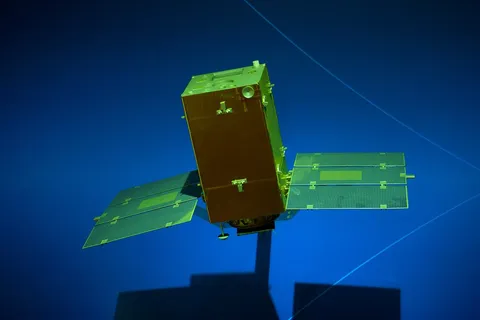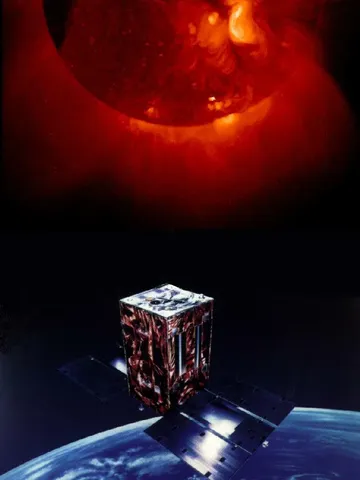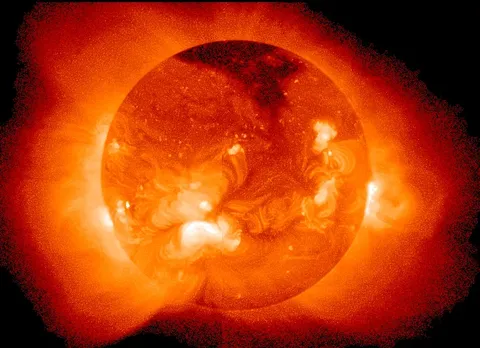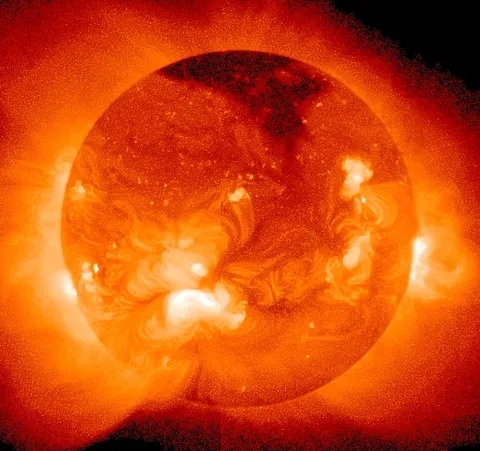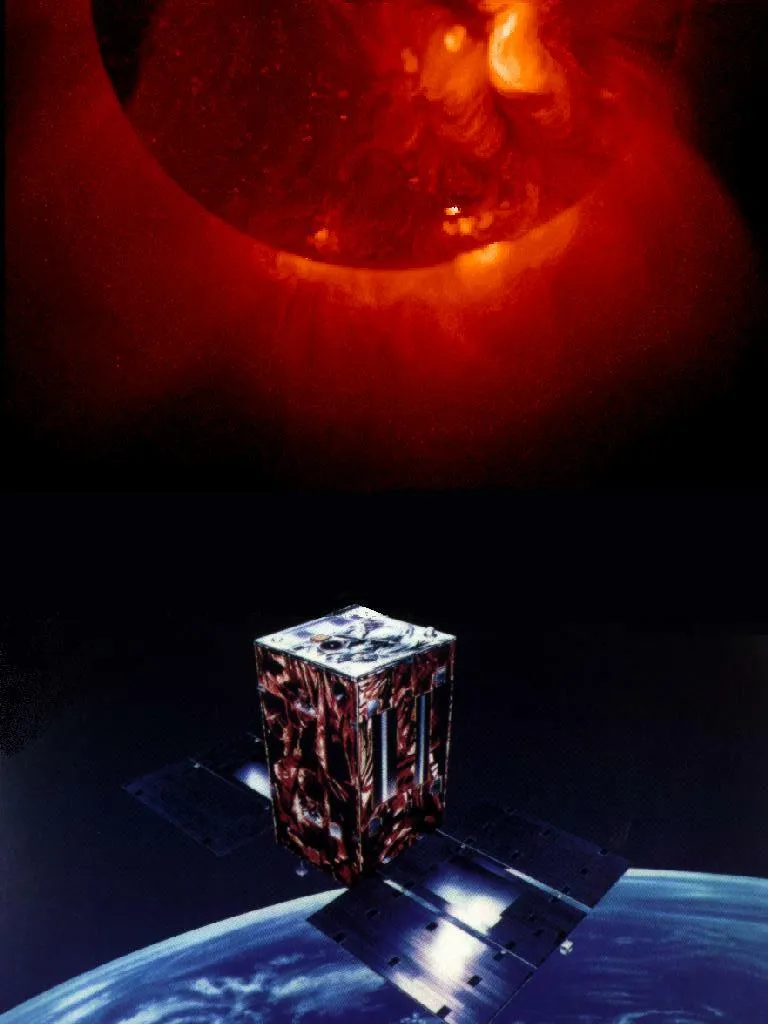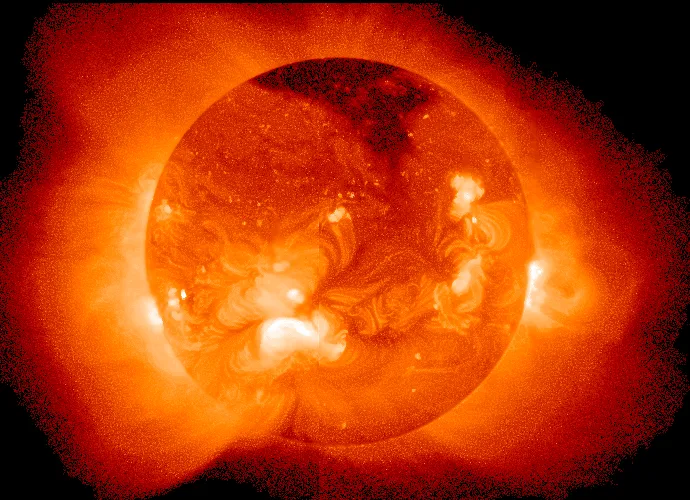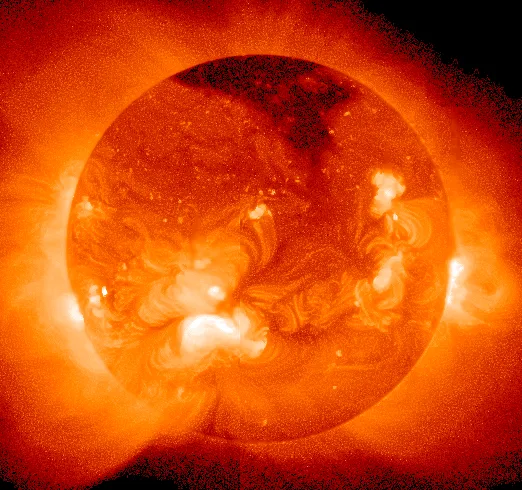
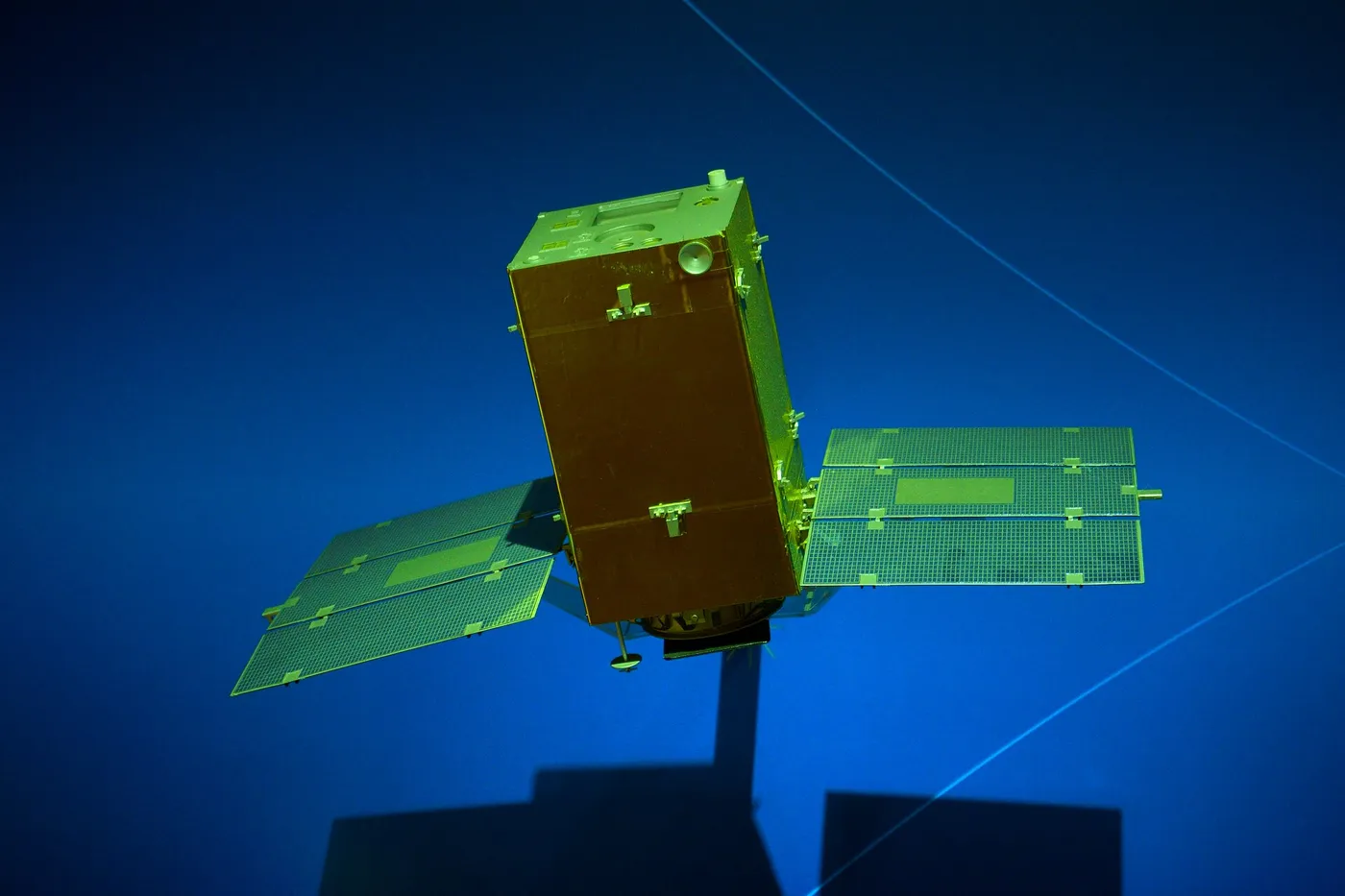

Yohkoh — the name means sunbeam — was a Japanese solar observatory that watched the Sun in X-rays continuously for a decade, covering nearly a full eleven-year activity cycle from one maximum to the next.
Its soft X-ray telescope produced images of the corona of unprecedented clarity, showing the magnetic loops that structure it in constant motion — brightening, reconnecting and erupting. The resulting time-lapse sequences turned the corona from a static photograph into a visibly dynamic system, and they were widely used in teaching for years.
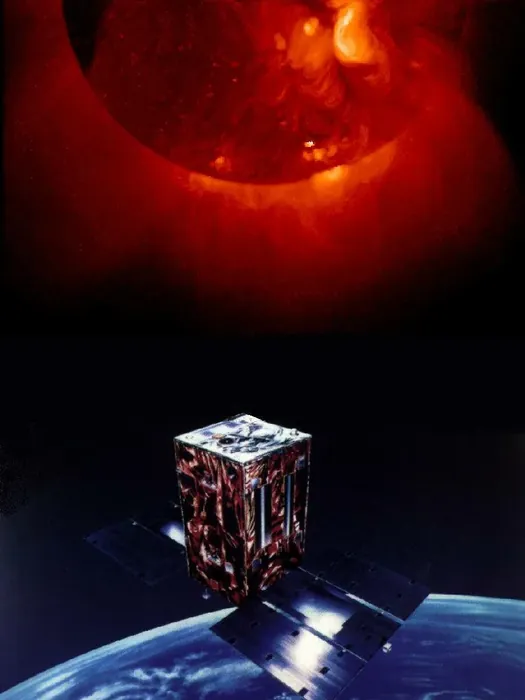
It settled a long-running argument about solar flares by observing the cusp-shaped structures predicted by magnetic reconnection models — the process in which oppositely directed magnetic fields break and rejoin, releasing enormous energy. Seeing the geometry directly largely ended the debate.
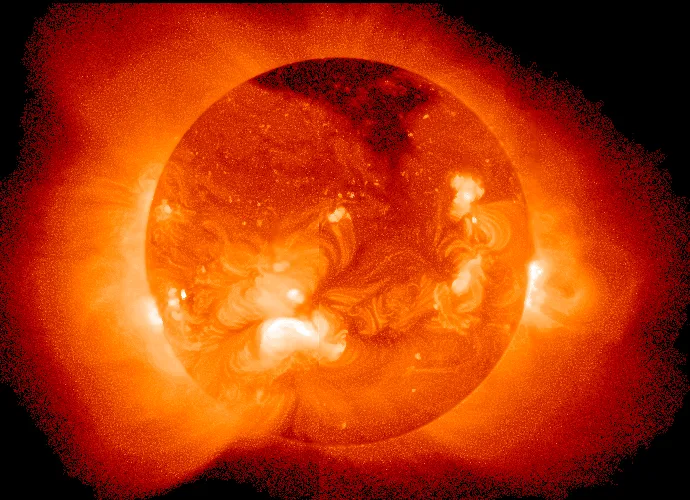
It was a genuinely international instrument despite its Japanese leadership, carrying American and British hardware, and it established the collaboration that produced its successor Hinode a decade later.
Its end was banal and avoidable. During an annular solar eclipse in 2001 the spacecraft lost its lock on the Sun, the batteries discharged while it tumbled, and it never recovered — a decade of continuous observation ended by a few minutes of shadow.