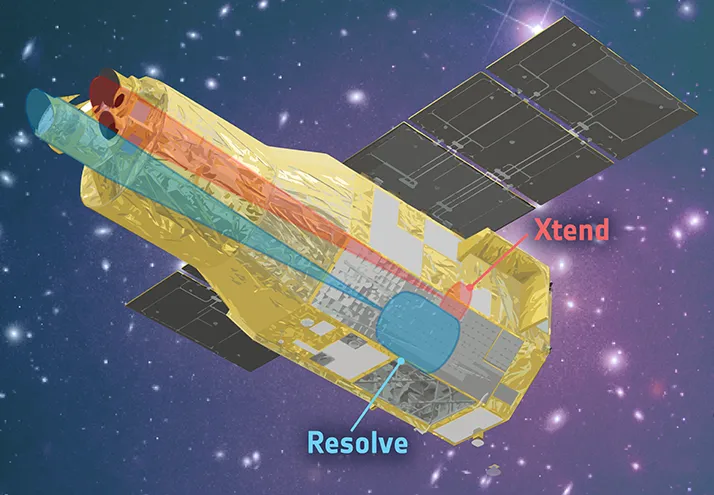
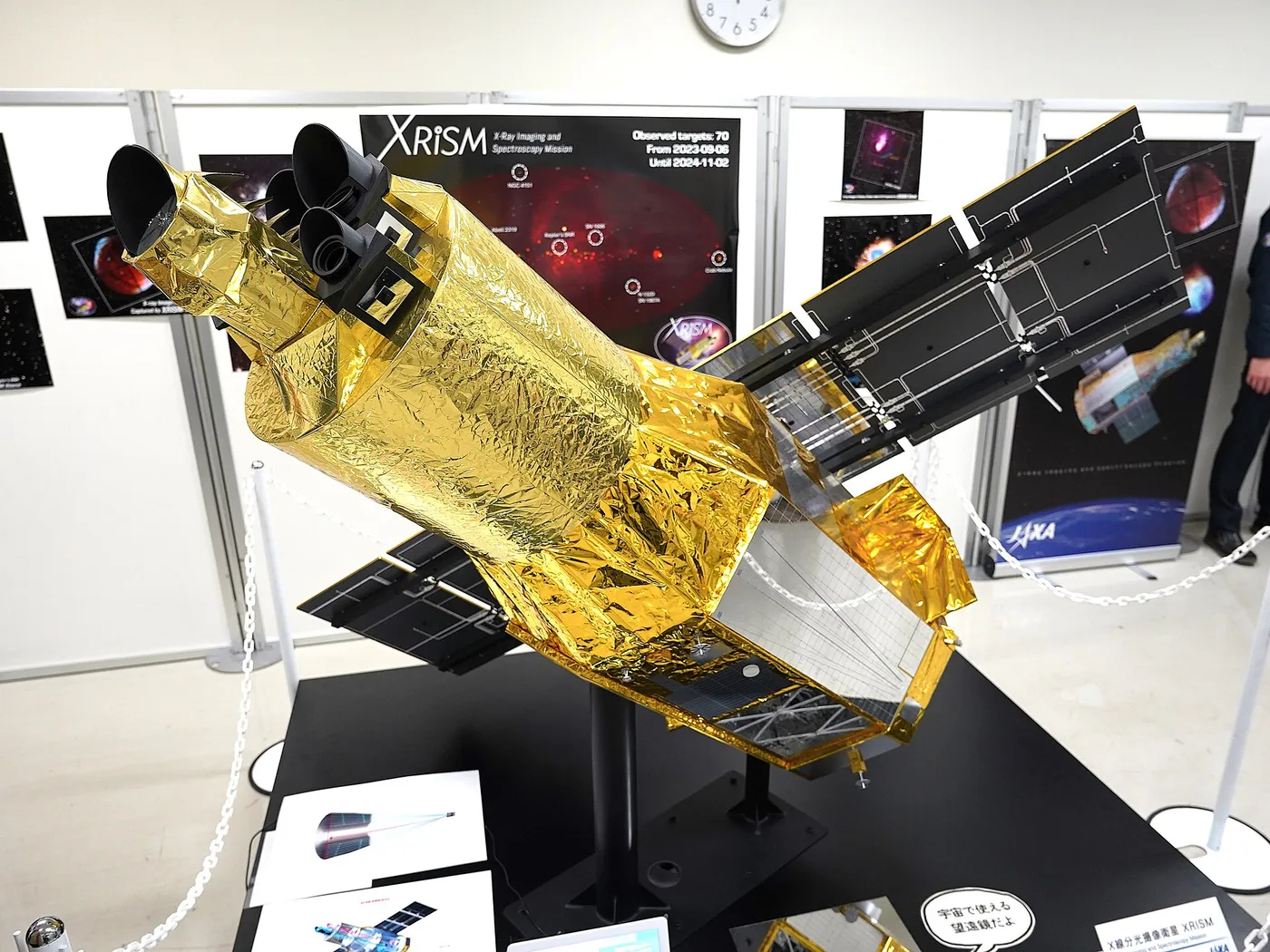

XRISM exists because its predecessor was destroyed by a software error. Hitomi launched in 2016 carrying the first X-ray microcalorimeter to reach orbit, worked beautifully for about a month, and then a chain of attitude-control faults — a bad star-tracker reading, a misconfigured thruster table — spun it up until it tore itself apart.
In that month it had returned one observation that justified the instrument entirely: a spectrum of the Perseus galaxy cluster showing that the hot gas within it is far less turbulent than models had assumed. A single measurement overturned a standard assumption about cluster physics.
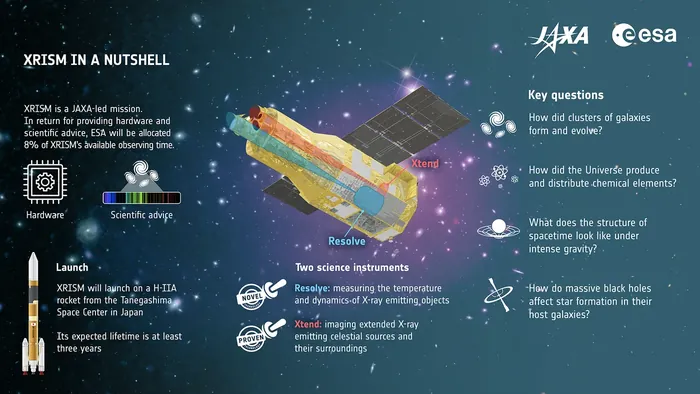
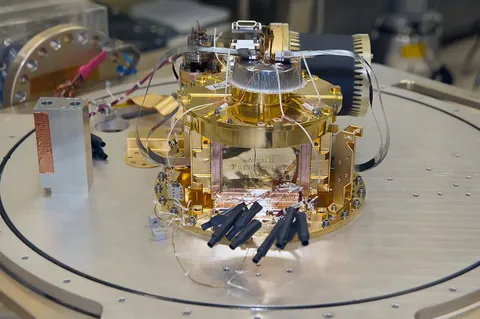
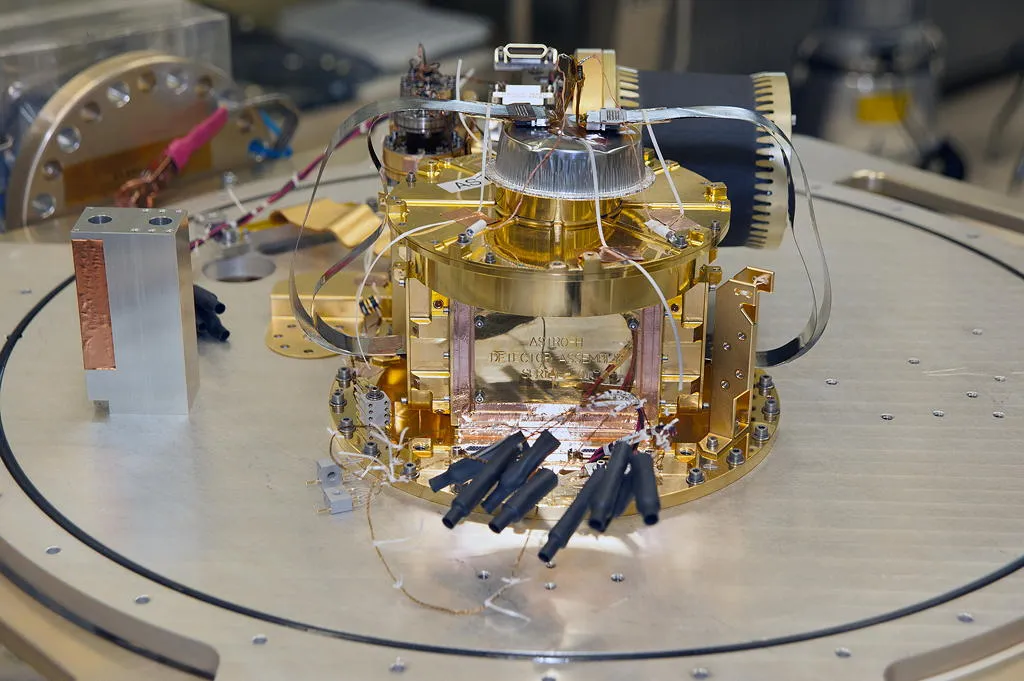
A microcalorimeter measures the energy of each X-ray photon by detecting the tiny temperature rise it causes in a detector cooled to about fifty millikelvin — a fiftieth of a degree above absolute zero. It gives spectral resolution roughly thirty times better than conventional X-ray detectors, turning smooth bumps into forests of individual lines.
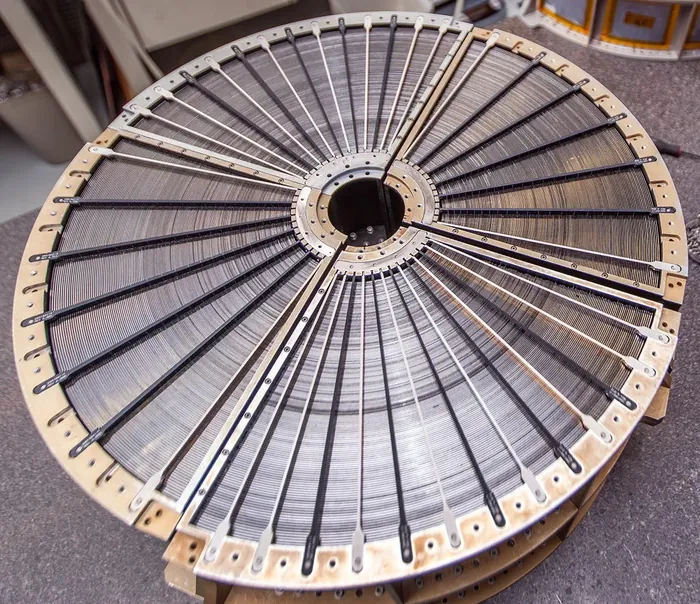
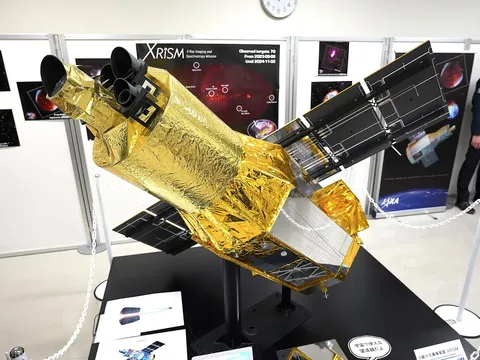
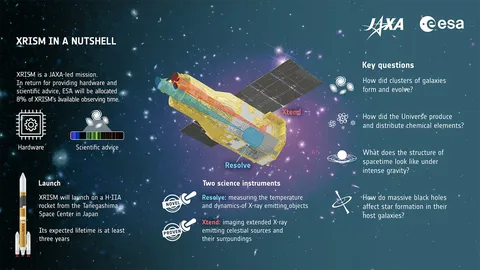
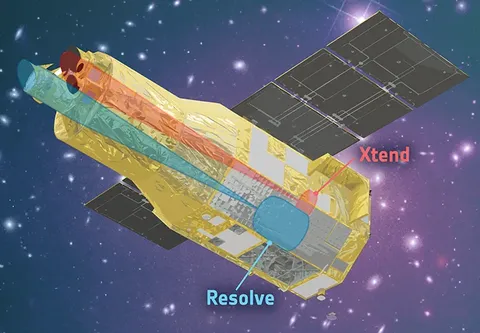
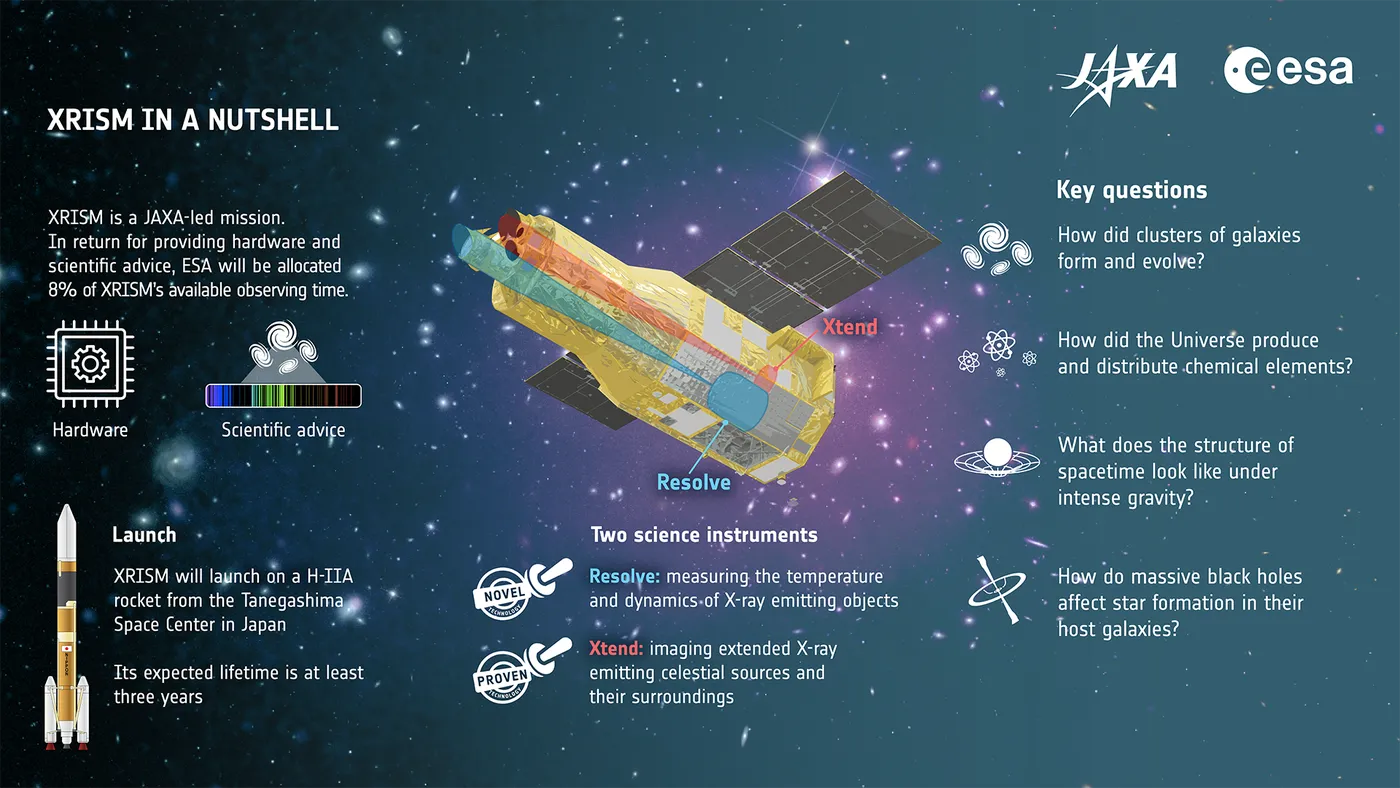
XRISM, launched in 2023, flies essentially the same instrument, rebuilt with corrected software and procedures. Its early results have measured the motions of hot gas in clusters and around black holes with a precision that had been theoretically available for twenty years and practically unobtainable.
The mission is led by Japan with substantial NASA and ESA participation. It carries the accumulated work of three previous attempts — two earlier Japanese missions also lost microcalorimeters to launch failure and a coolant leak — which makes it, in a quiet way, one of the most persistent efforts in observational astronomy.