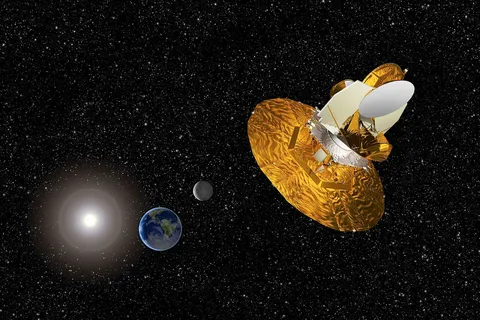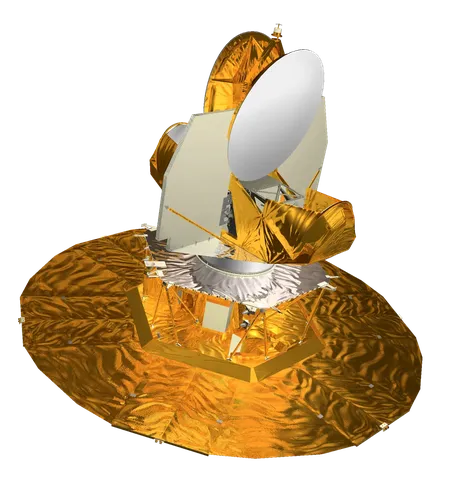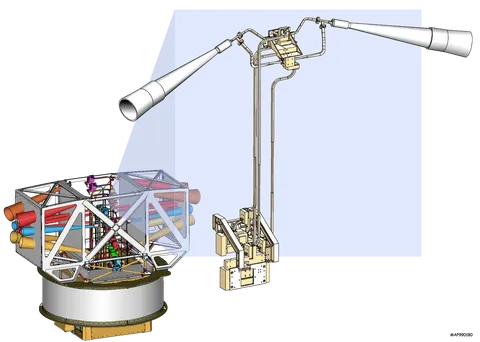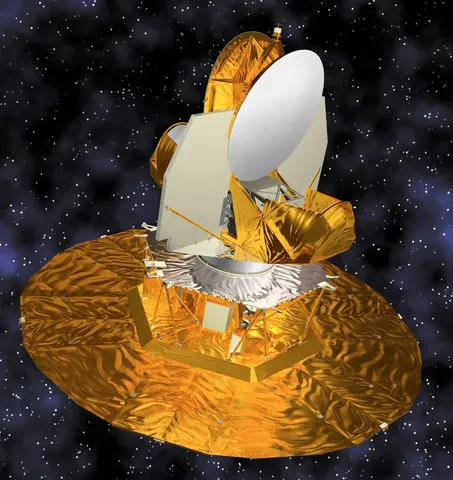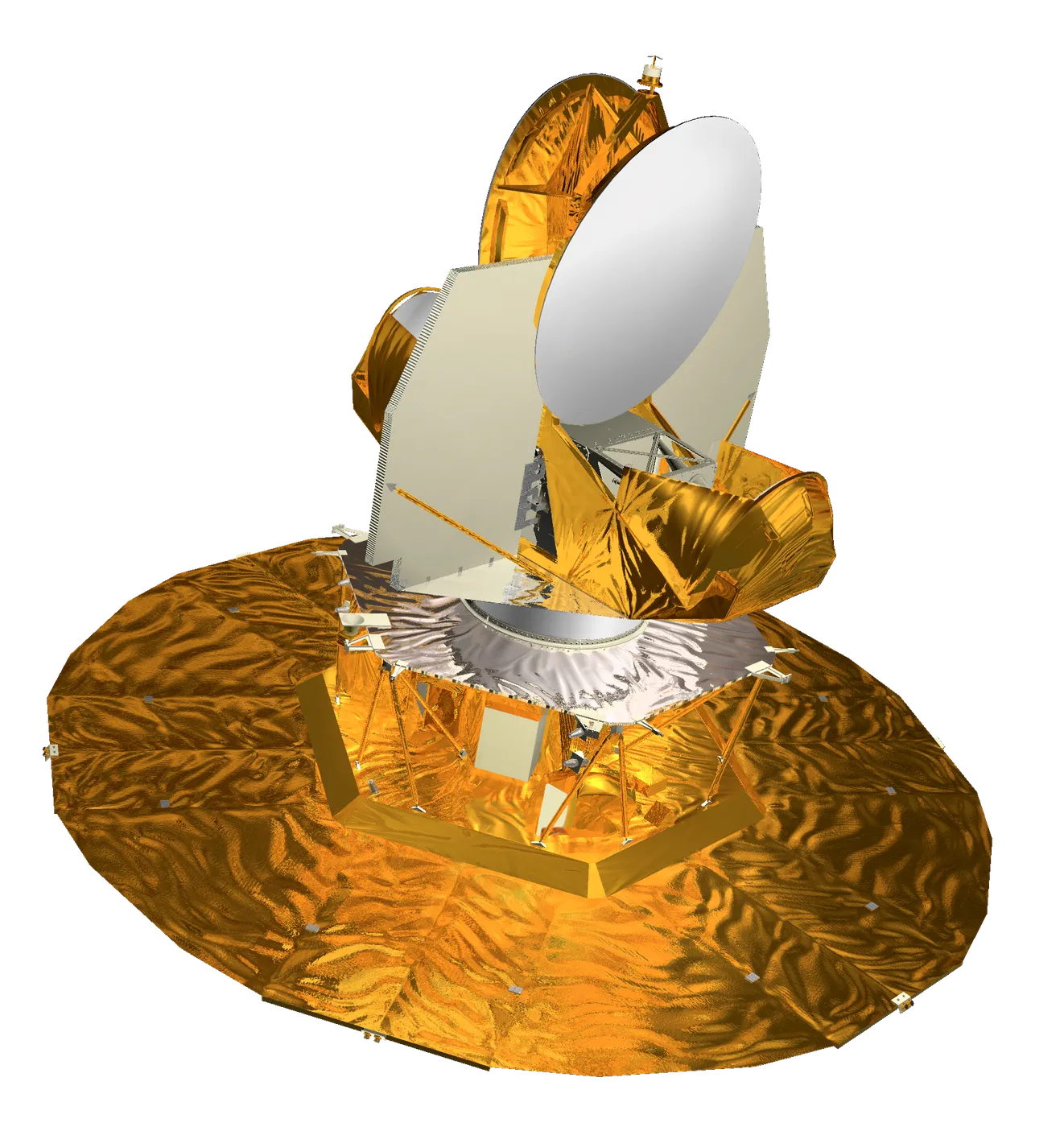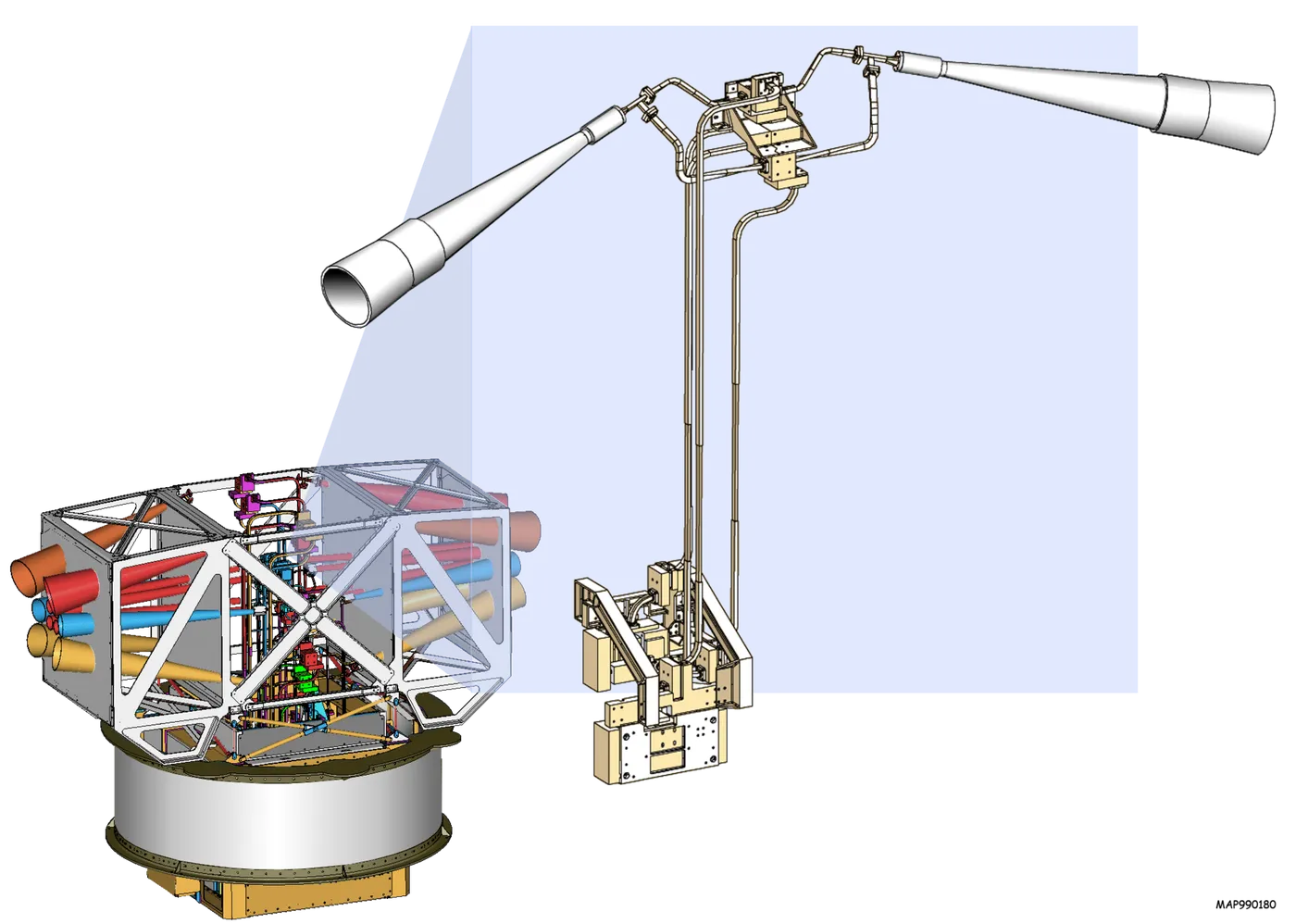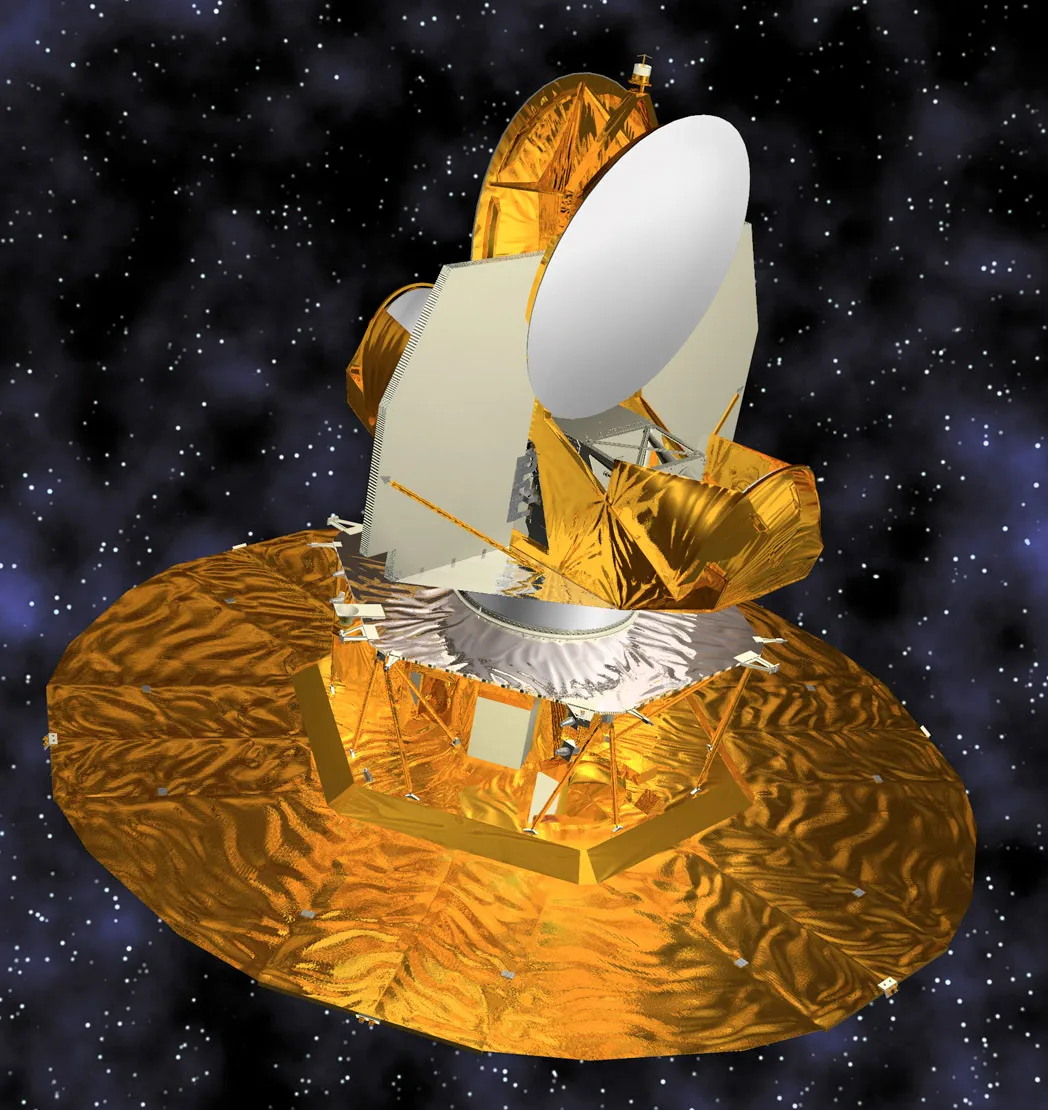

WMAP took COBE's blurry map of the infant universe and brought it into focus. Where its predecessor measured temperature variations at a resolution of about seven degrees, WMAP resolved features a fraction of a degree across, and the pattern of hot and cold patches encodes an extraordinary amount of information about the universe's composition and history.
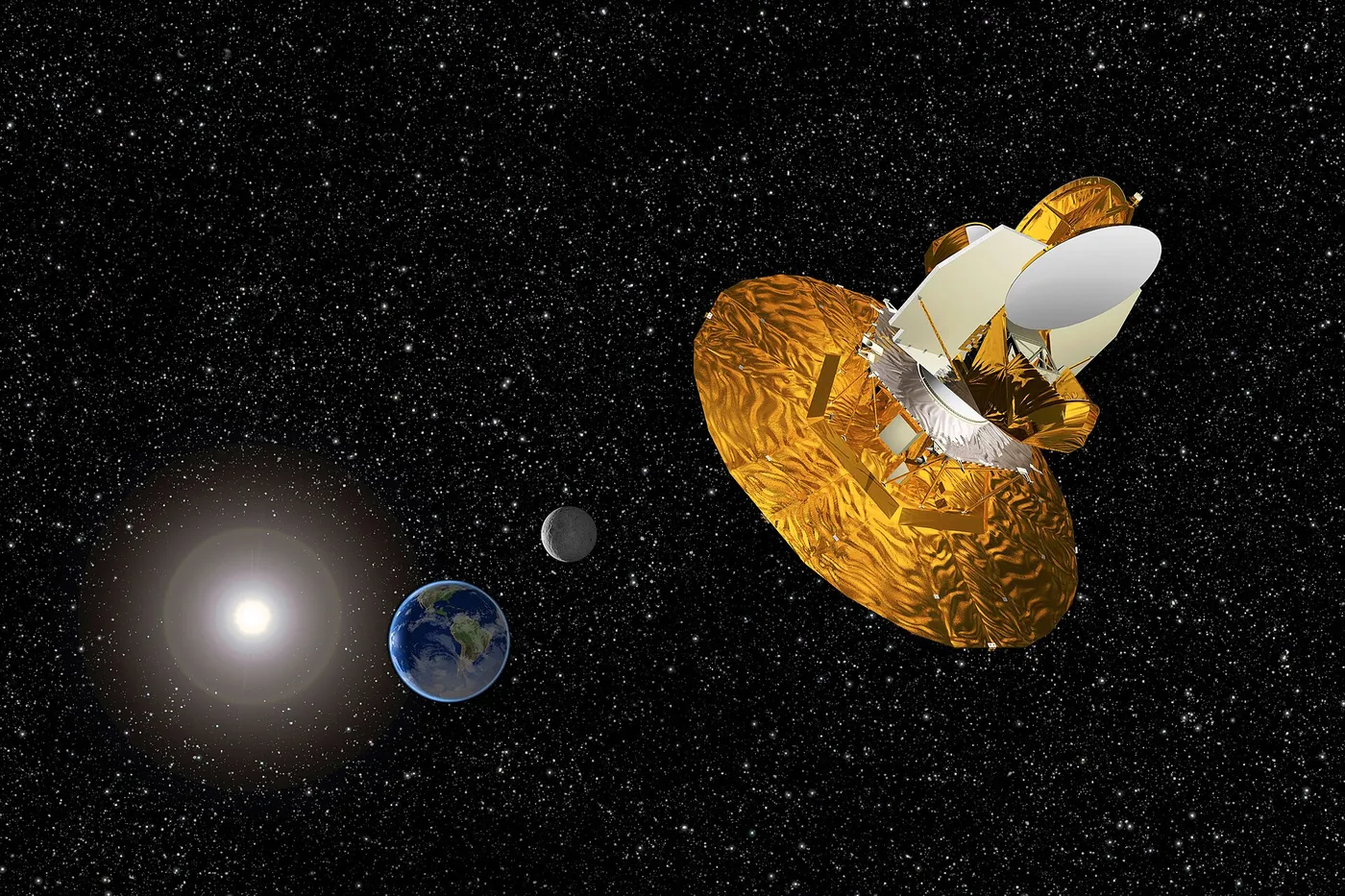
It flew to the Lagrange point 1.5 million kilometres beyond Earth, in the planet's shadow with respect to the Sun, where it could keep its instruments cold and stable and scan the whole sky repeatedly over years — averaging out noise until the faint pattern emerged clearly.
The results established what cosmologists call the concordance model. The universe is 13.77 billion years old, geometrically flat, and made of roughly 4.6 per cent ordinary matter, 24 per cent dark matter and 71 per cent dark energy. Those numbers, once contested to within a factor of two, became known to a few per cent.
It also supported inflation — the hypothesis that the universe underwent a period of exponential expansion in its first fraction of a second. The specific statistical pattern of the temperature variations matches what inflation predicts, and matches poorly what the alternatives predict.
The mission ran nine years and was ranked by the American Physical Society among the most significant results in physics of its decade. Its final data release in 2012 remains a standard reference, and its successor Planck refined the same numbers further — with one notable exception, an unresolved disagreement about the expansion rate that has become known as the Hubble tension.