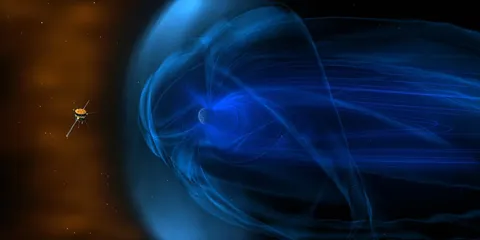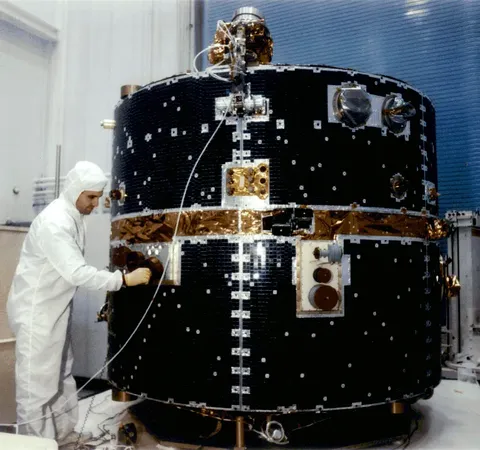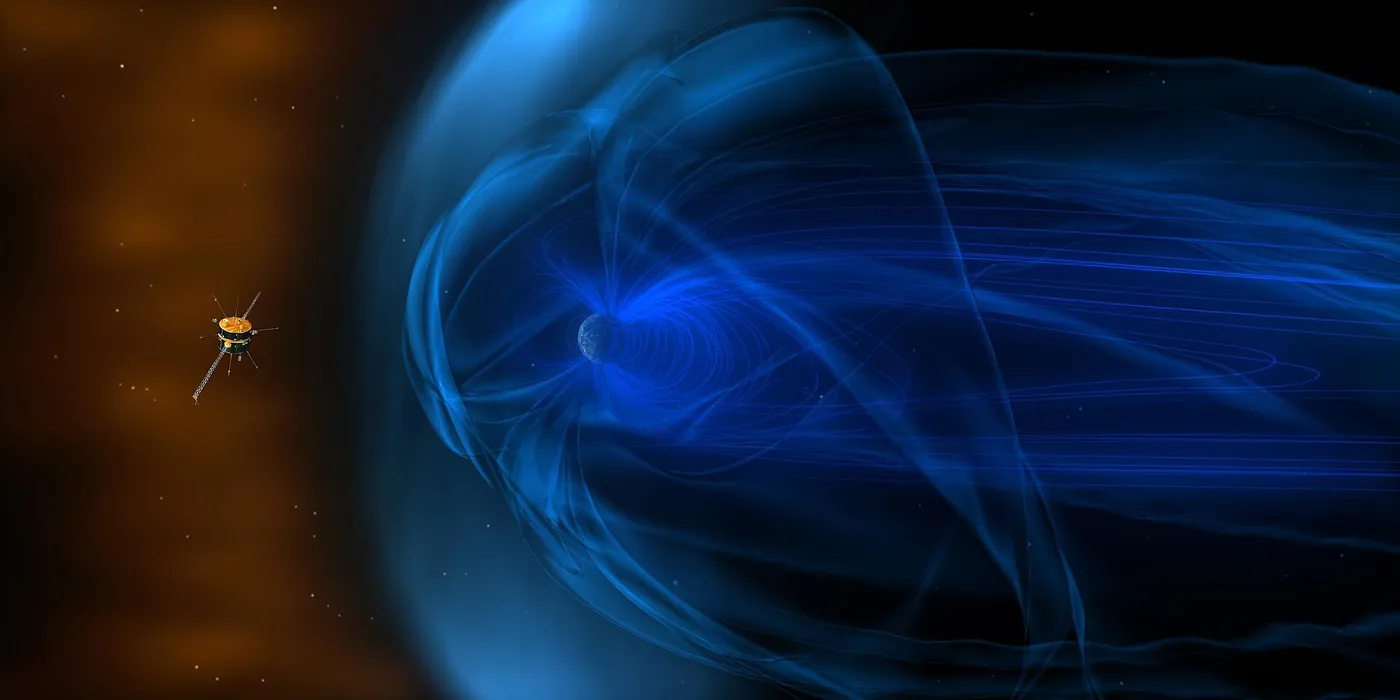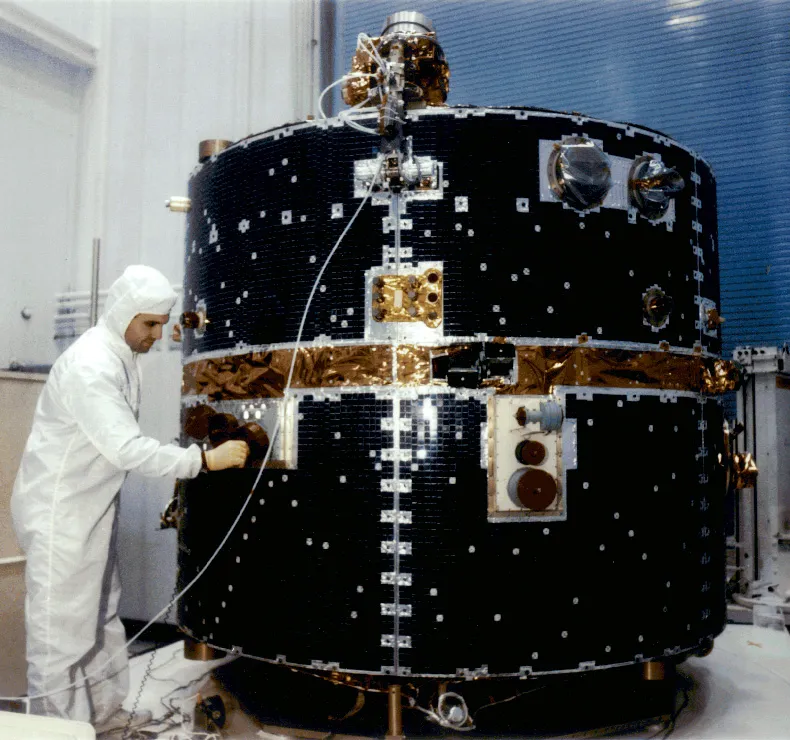
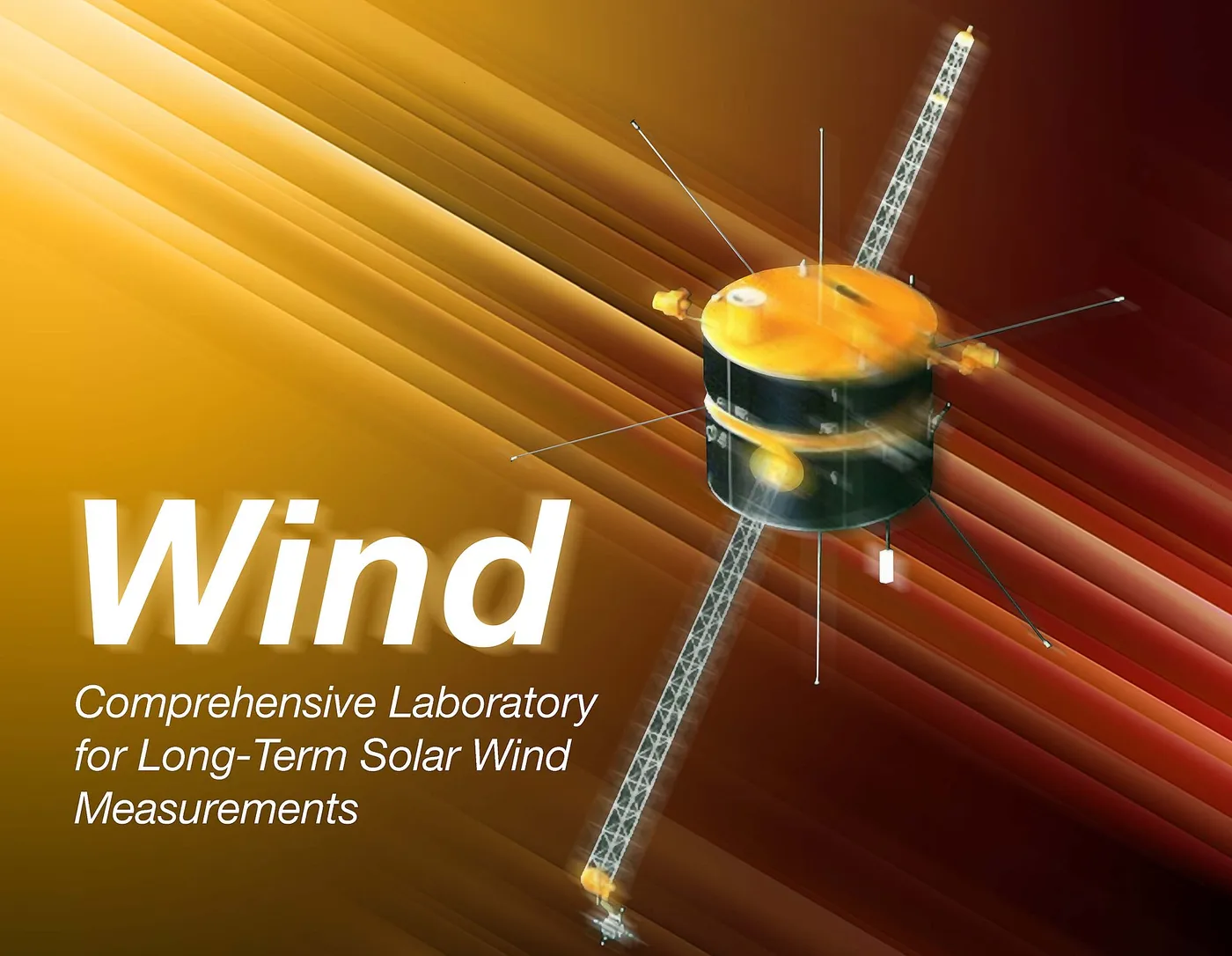

Wind measures the solar wind before it reaches us. Stationed at the Lagrange point about 1.5 million kilometres sunward of Earth, it samples the stream of charged particles and magnetic field flowing outward from the Sun roughly an hour before that material arrives at the planet.
That hour is the basis of practical space weather forecasting. Grid operators, satellite controllers and airlines get an hour's notice of an incoming disturbance because spacecraft like this one are sitting upstream measuring it directly.
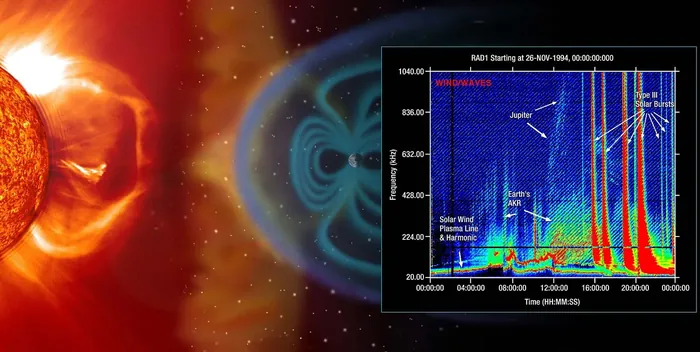
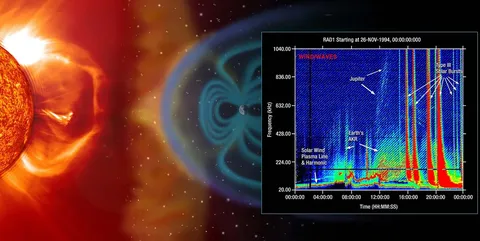
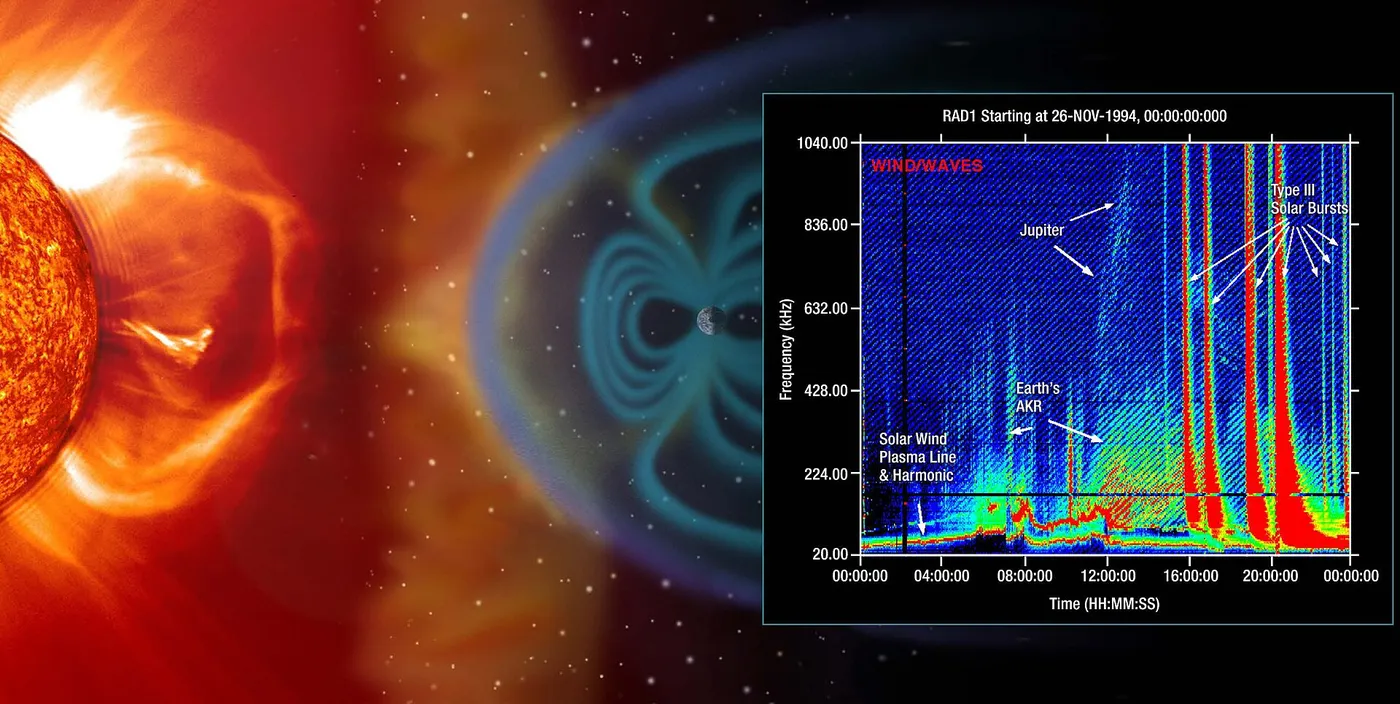
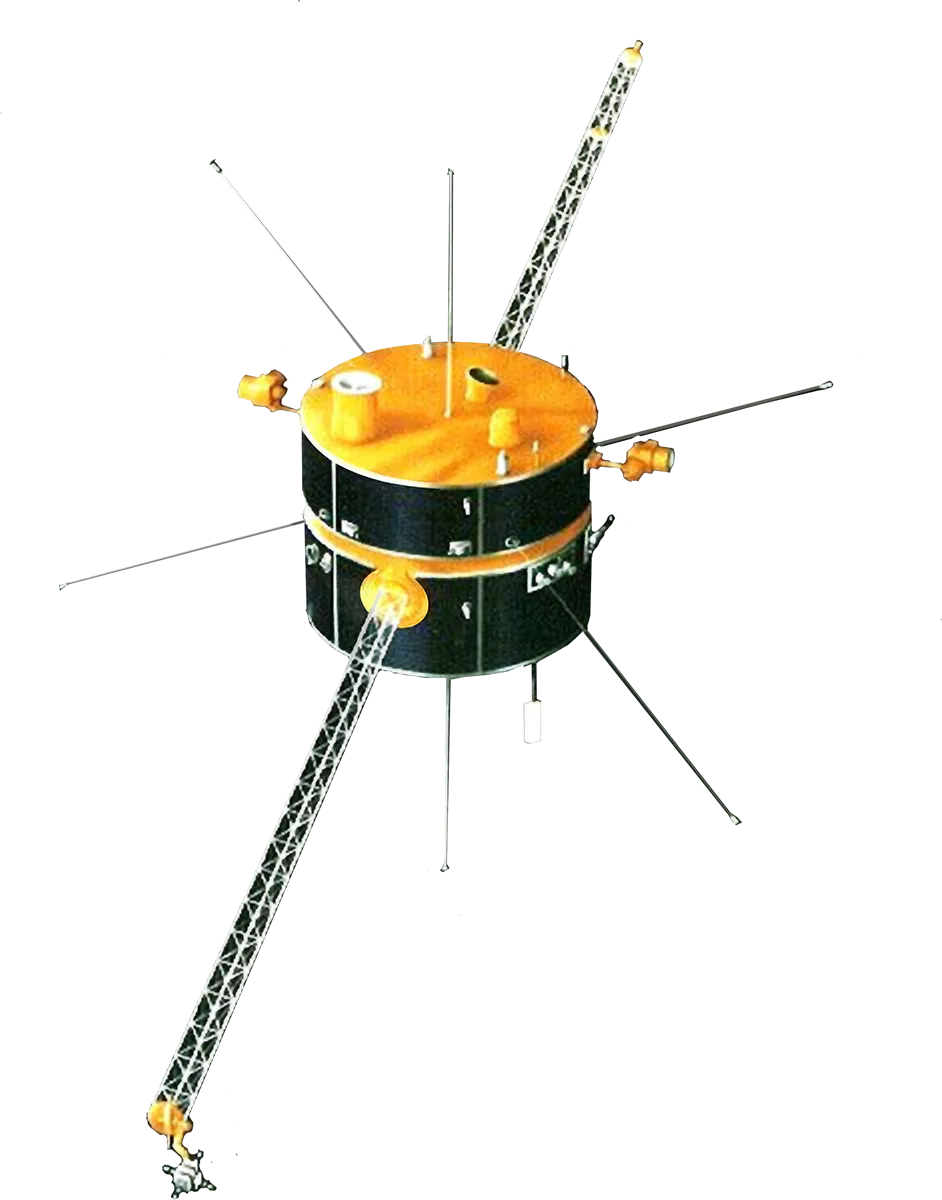
Its scientific instruments are unusually comprehensive, covering plasma, magnetic fields, energetic particles and radio waves, which has made it the standard reference for solar wind conditions in thousands of papers. Its radio instrument also tracks disturbances propagating outward by the emission they generate.
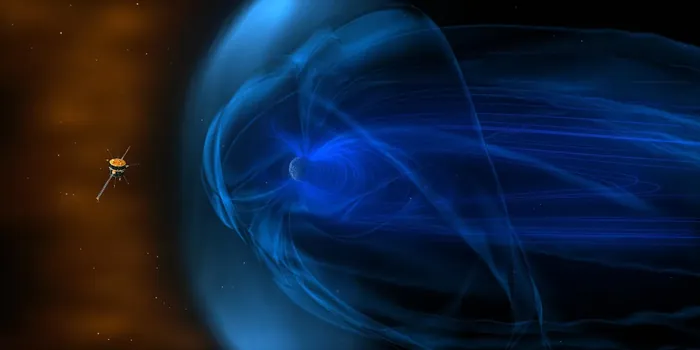
It took an elaborate route to its station, spending its first years in a complicated series of lunar gravity assists — a trajectory design of some artistry that allowed it to survey the magnetotail before settling at the Lagrange point in 2004.
It has now been operating for over thirty years and holds enough propellant for decades more. Along with ACE and SOHO it forms an ageing upstream sentinel line that the space-weather community has spent years warning is overdue for replacement.