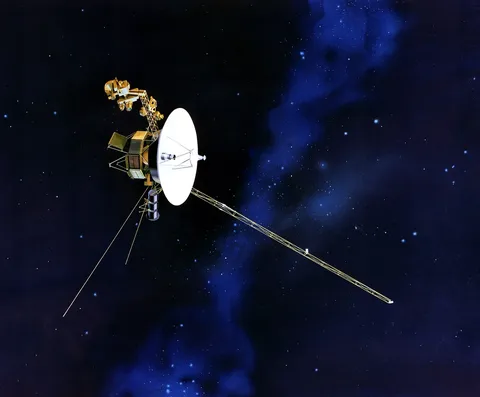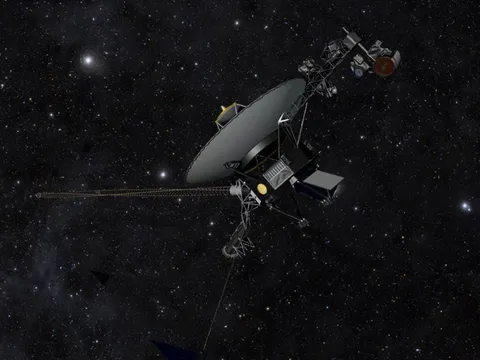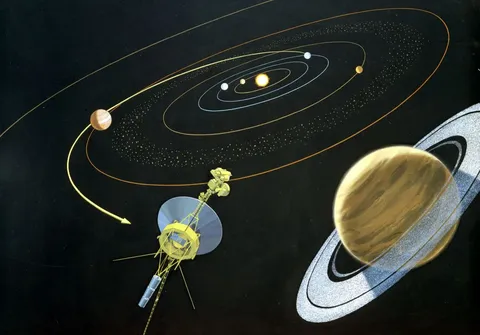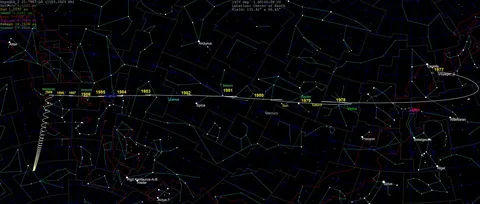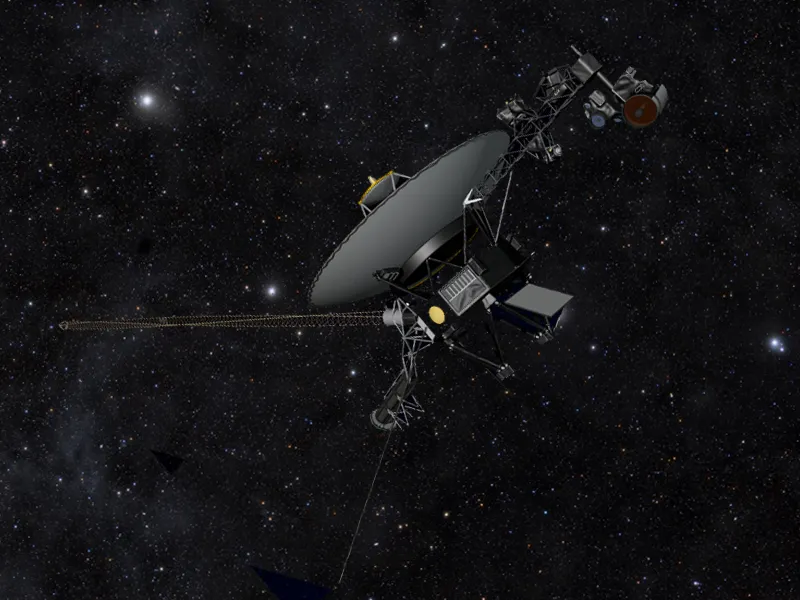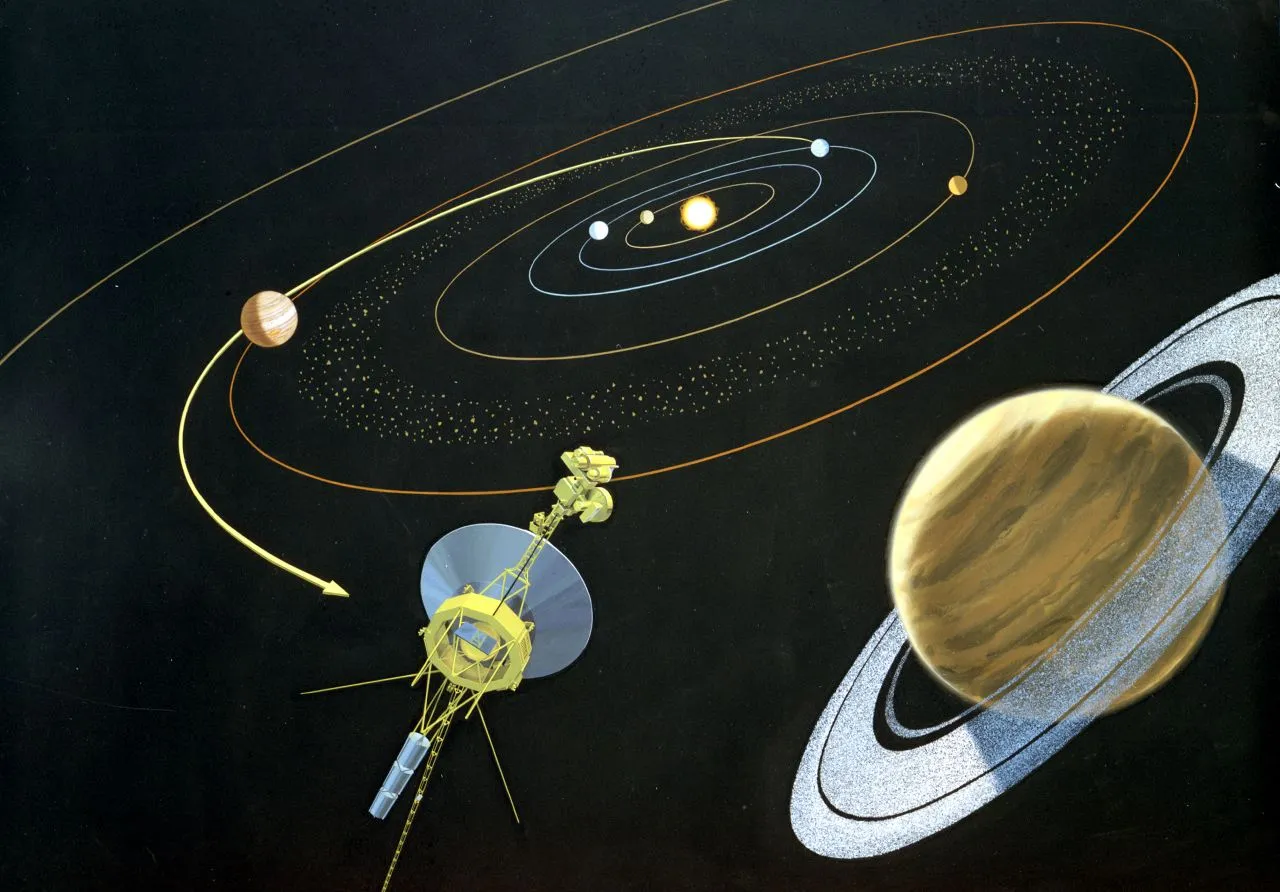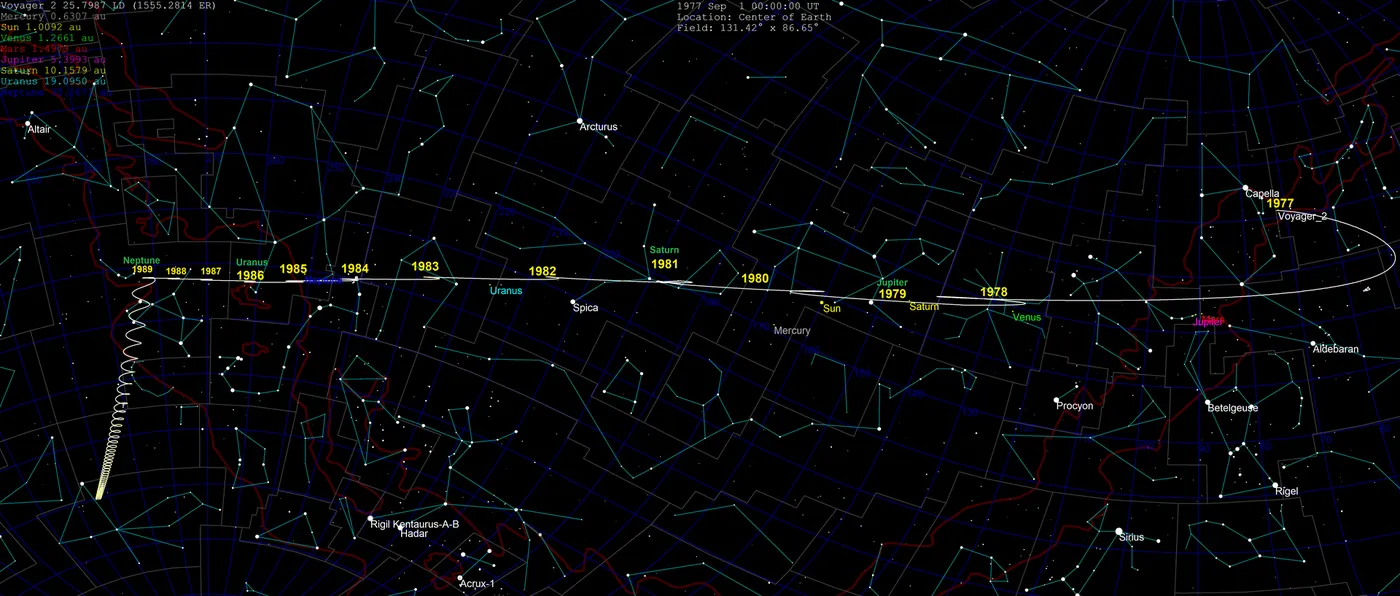
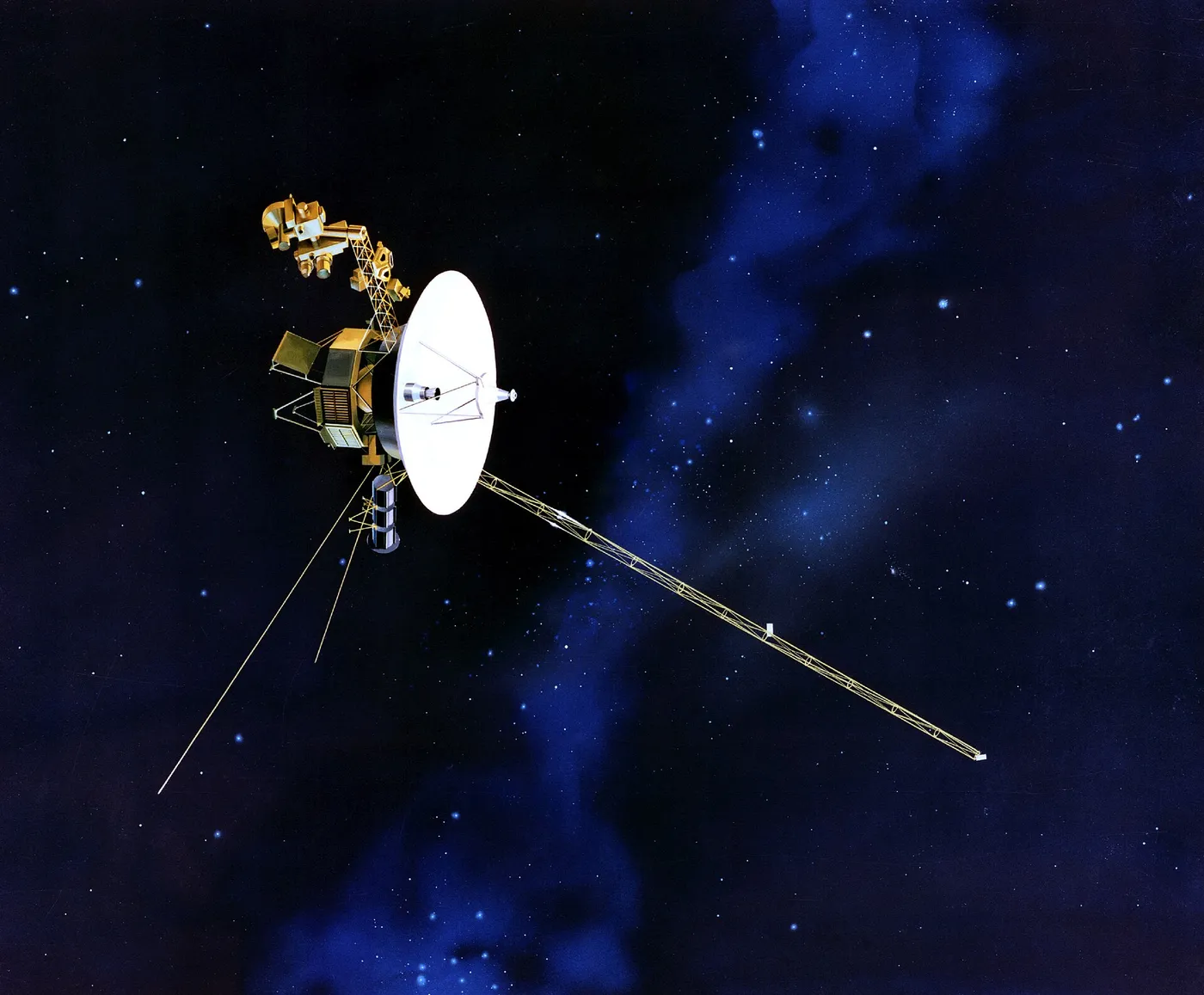

Voyager 2 is the only spacecraft to have visited Uranus and Neptune, and it remains so nearly forty years later. It could make the journey because of an alignment of the outer planets that occurs roughly once every 176 years and happened to fall in the late 1970s — a coincidence a JPL graduate student named Gary Flandro noticed in 1965 while calculating trajectories.
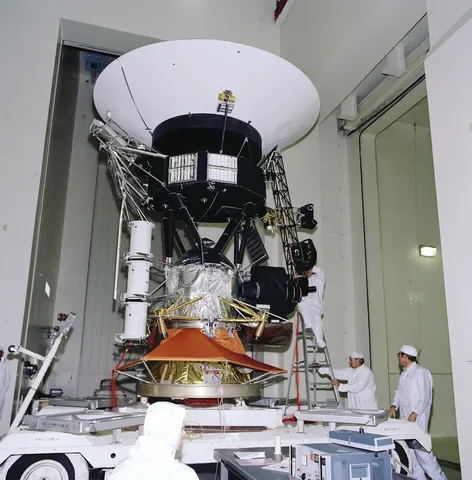
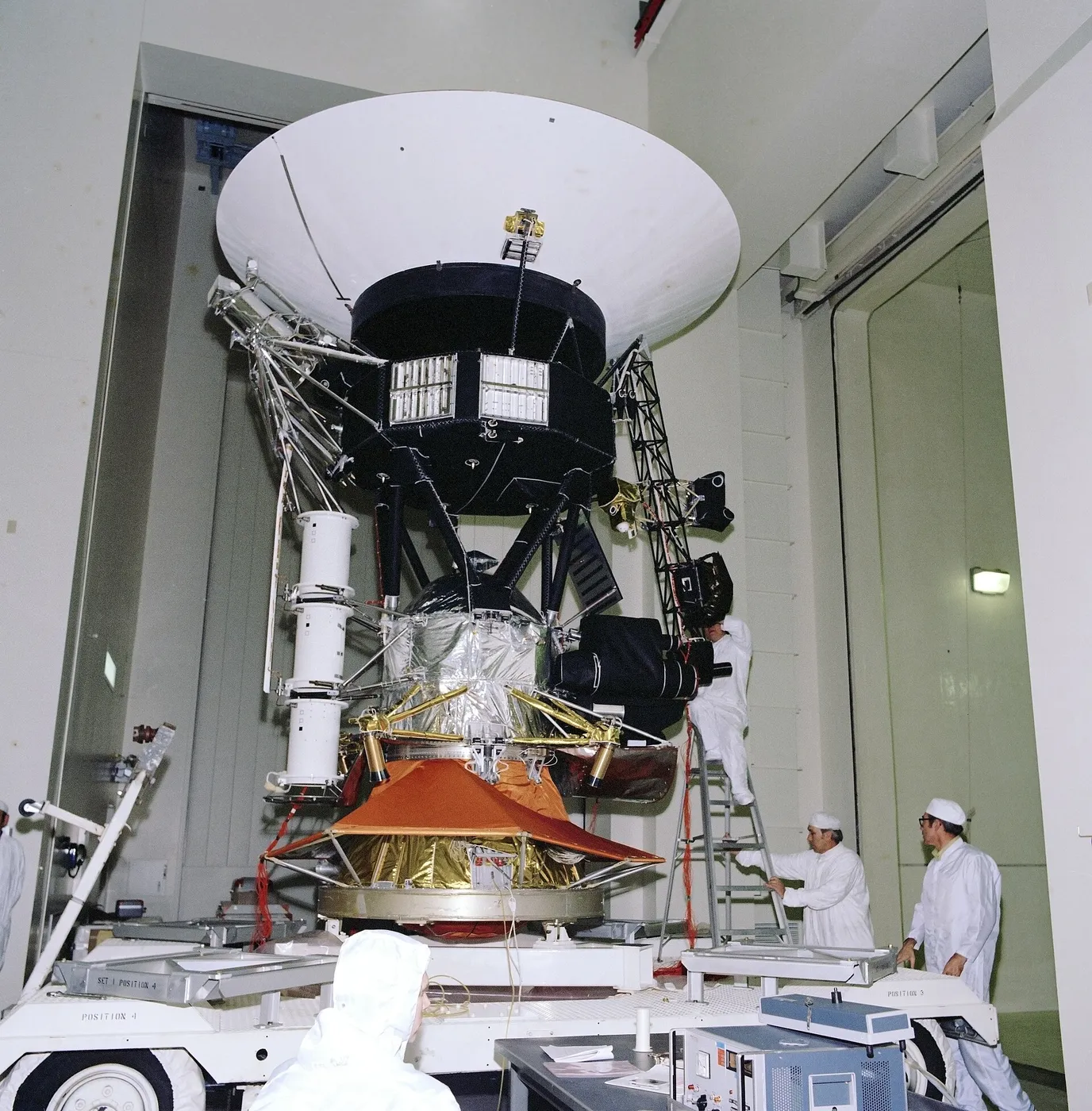
The full Grand Tour was proposed, priced and cancelled as too expensive. What flew instead was a pair of spacecraft officially chartered only for Jupiter and Saturn, built by engineers who quietly specified components durable enough for a much longer journey and hoped the extensions would be funded later. They were.
At Uranus in 1986 it found a planet tipped on its side, orbited by moons of startling violence — Miranda, a small icy world apparently shattered and reassembled, with a cliff some twenty kilometres high. The encounter was overshadowed within days by the loss of Challenger, and much of the science reached the public years later.
At Neptune in 1989 it discovered the Great Dark Spot, winds of some 2,000 kilometres per hour — the fastest in the solar system — and, on the moon Triton, geysers of nitrogen erupting from a surface at minus 235 degrees Celsius. A world that cold had no business being geologically active, and explaining Triton has occupied planetary scientists ever since.
It entered interstellar space in November 2018 and continues to report, on ageing instruments powered by decaying plutonium, from beyond the Sun's magnetic bubble. Engineers have been switching off heaters and instruments one at a time to stretch the power budget into the 2030s, nursing a 1970s machine across the boundary of the solar system by increments.