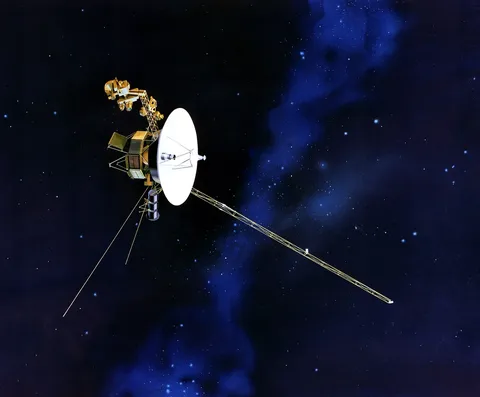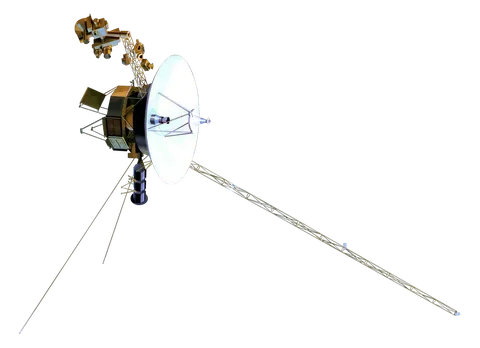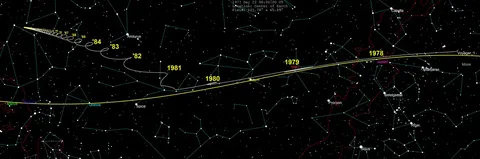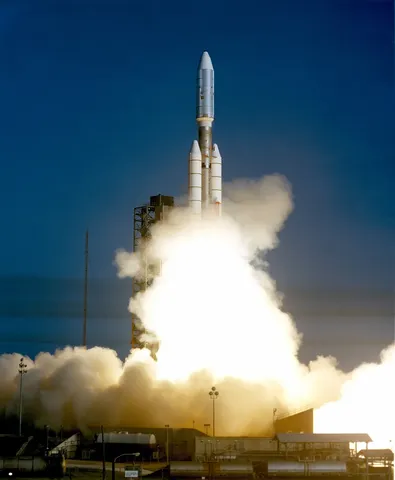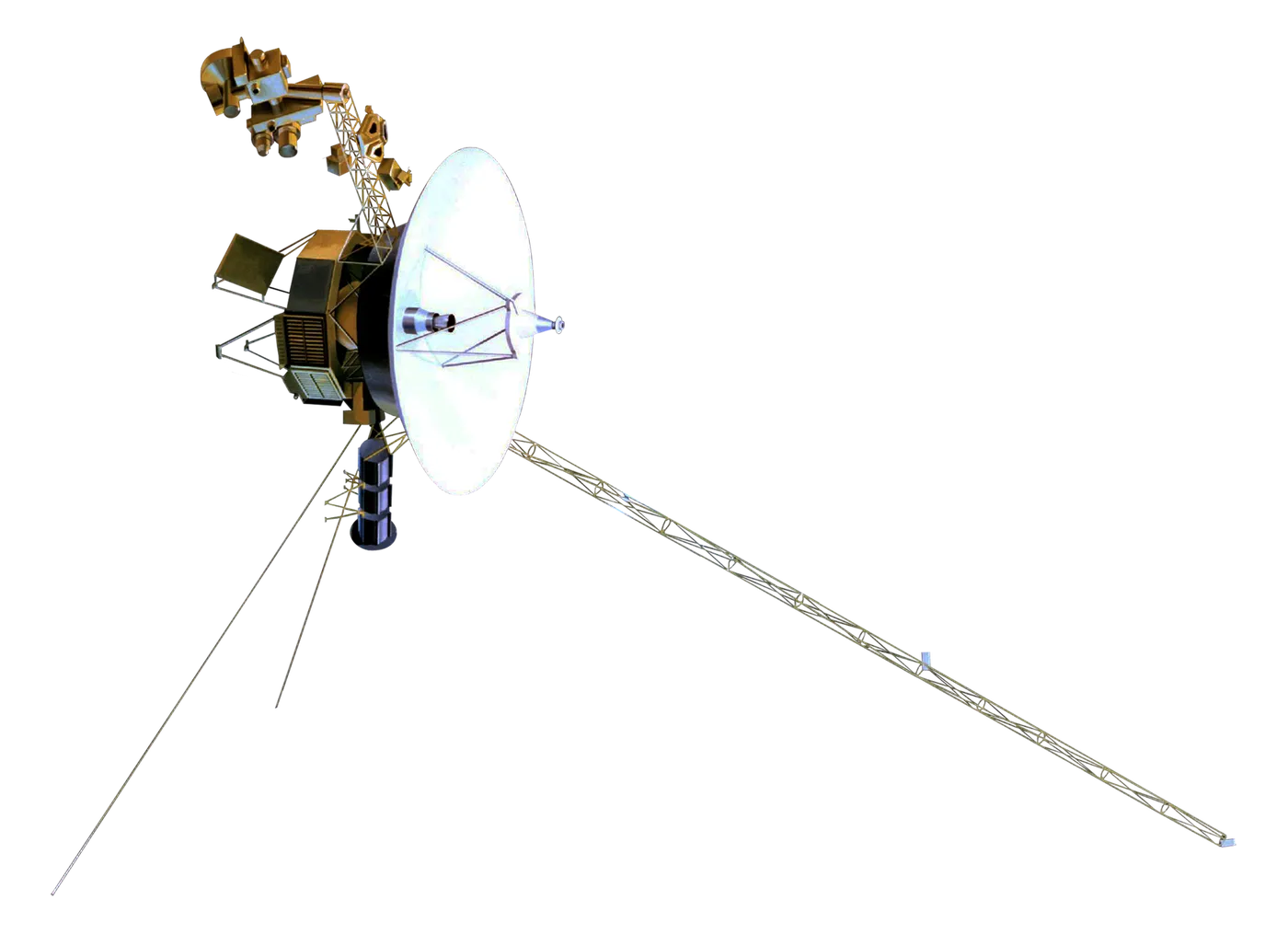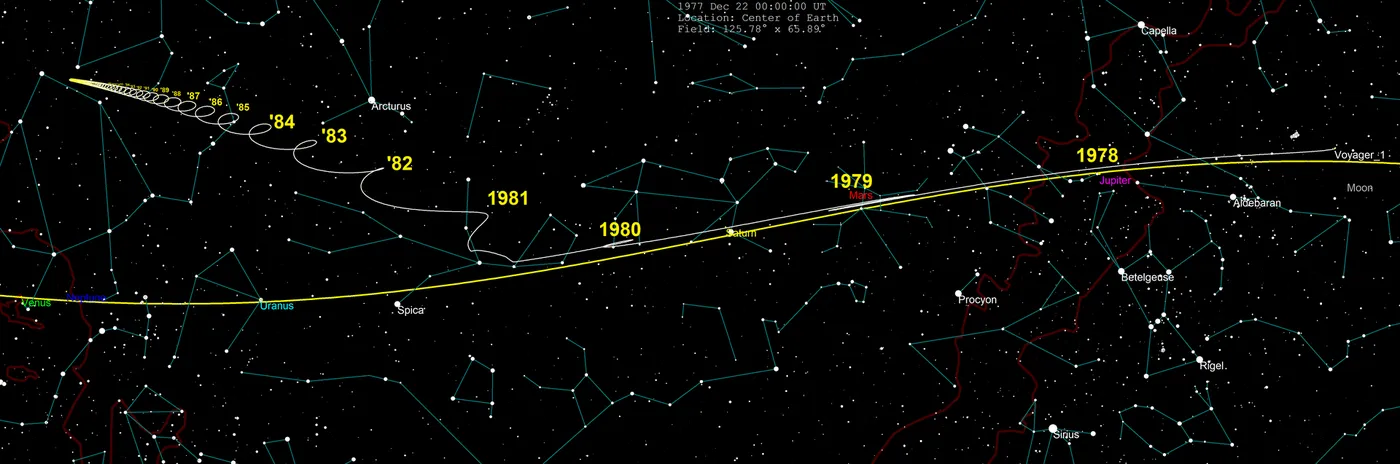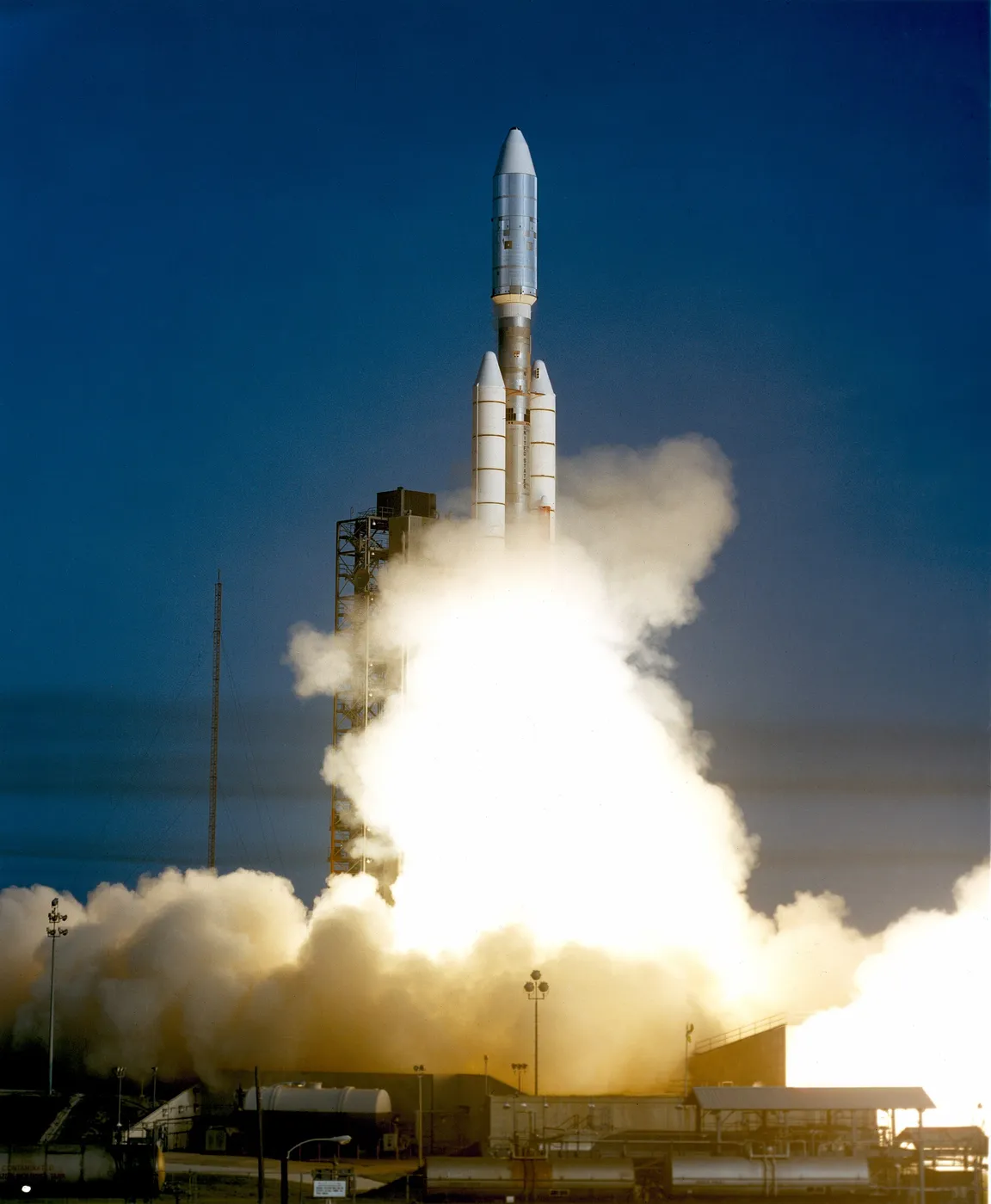
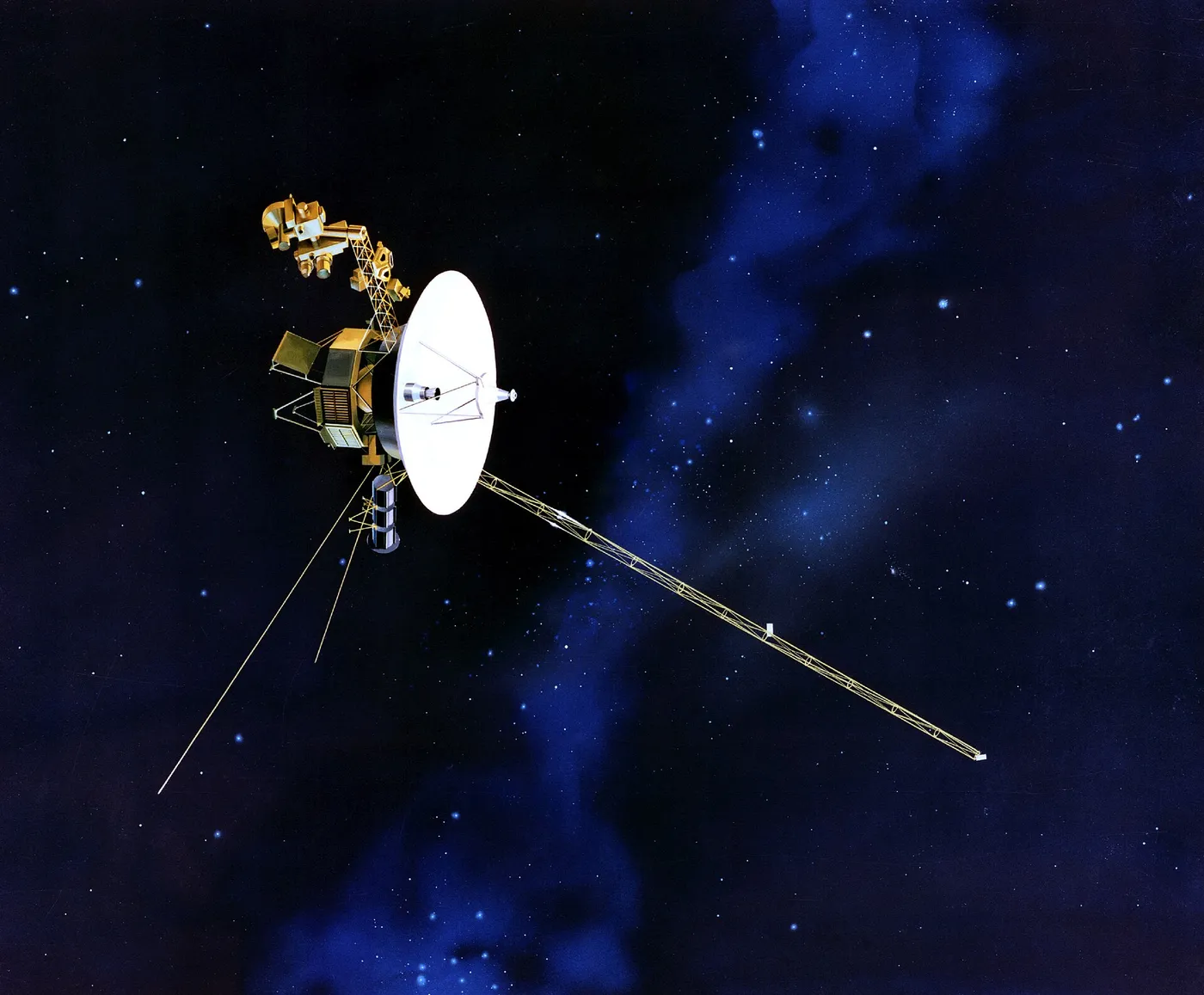

Voyager 1 launched sixteen days after Voyager 2 and overtook it, taking a faster route to Jupiter and Saturn. At Jupiter in March 1979 it returned the first detailed images of the Galilean moons, and a navigation engineer named Linda Morabito, stretching the contrast on a star-field frame to find reference points, noticed a crescent-shaped smudge on Io's limb.
It was a volcanic plume 300 kilometres high. Io turned out to be the most volcanically active body in the solar system, its interior kneaded molten by Jupiter's tides — a phenomenon that had been predicted in a paper published just days earlier and which nobody expected to see confirmed within a week.
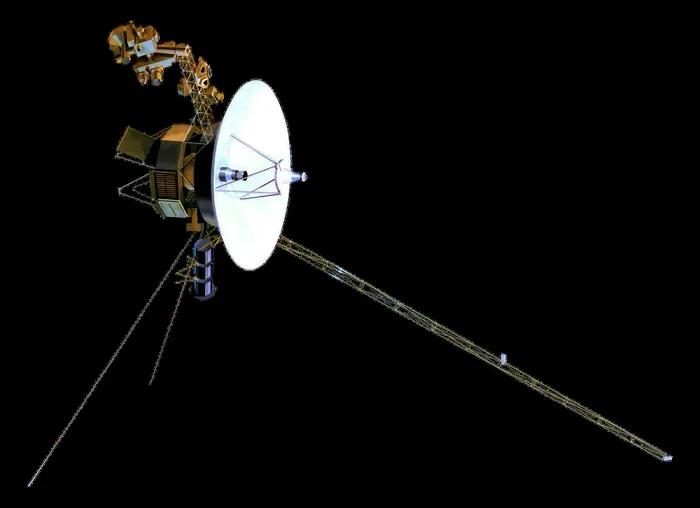
At Saturn the mission made a deliberate sacrifice. Titan, wrapped in a thick nitrogen atmosphere, was judged too scientifically important to skip, and the close pass required bent the trajectory sharply out of the plane of the planets — foreclosing any possibility of continuing to Pluto. Voyager 1 became an escaping spacecraft rather than a tourist.
In February 1990, at Carl Sagan's persistent urging and over objections that it was scientifically pointless, the cameras were turned back for a family portrait of the solar system. In one frame the Earth occupies less than a pixel, caught in a stray band of scattered sunlight — the Pale Blue Dot, and the text Sagan wrote about it has probably done more for public understanding of our situation than any other single passage in space literature.
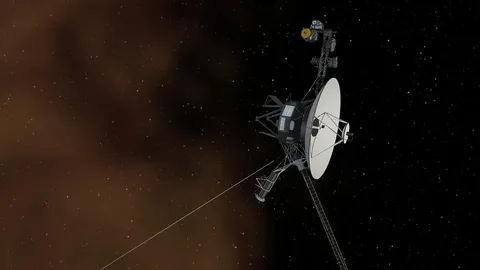
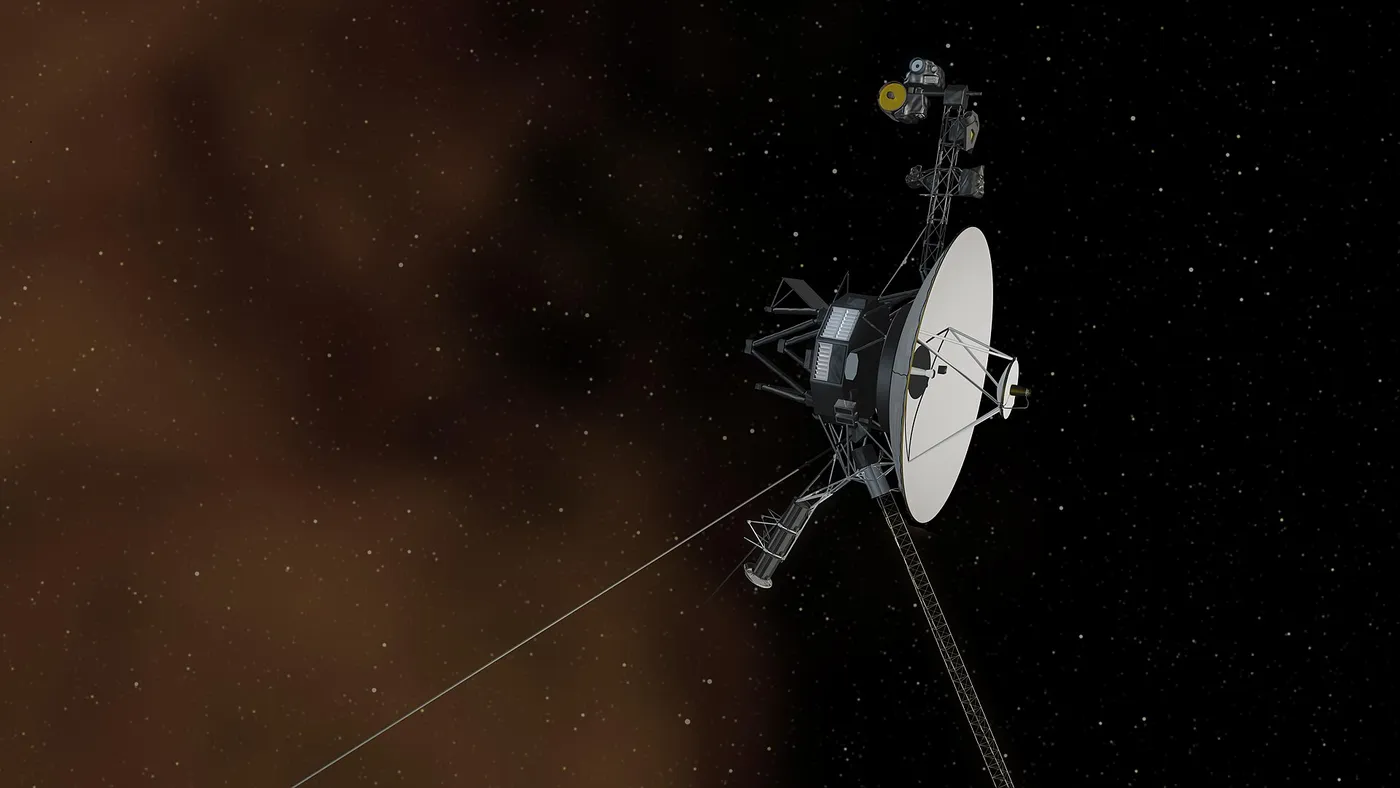
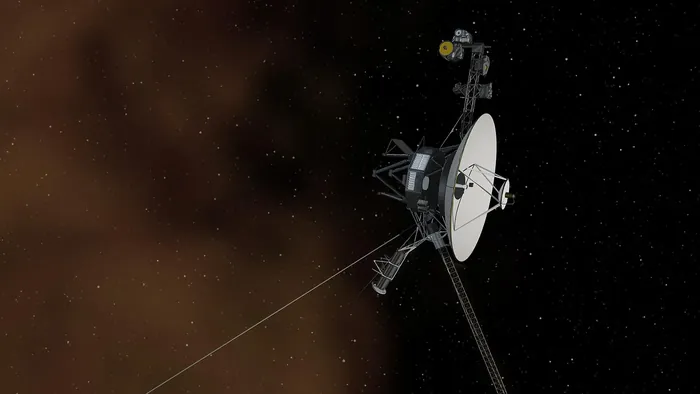
It crossed into interstellar space in August 2012, the first human object to do so, and is now more than 24 billion kilometres away, its signal taking around 23 hours to arrive and its plutonium supply dwindling. It carries a gold-plated record of Earth's sounds and images, aimed at nobody in particular, on the reasoning that a message with no plausible recipient is still worth sending.