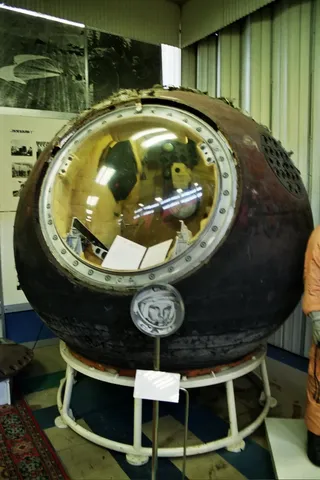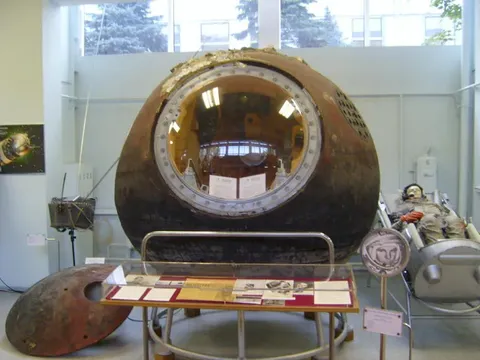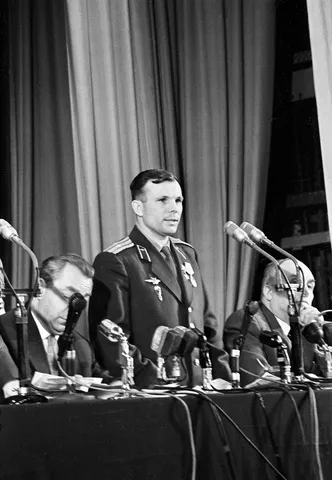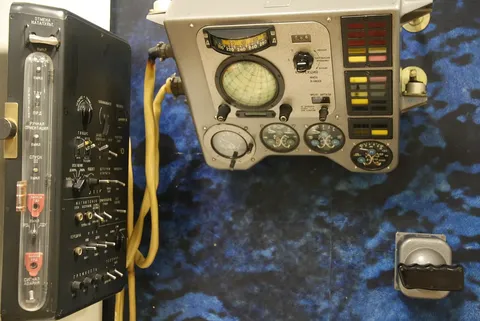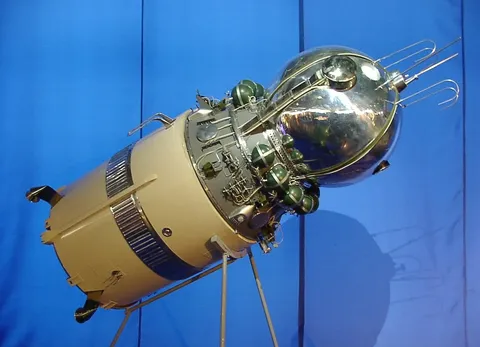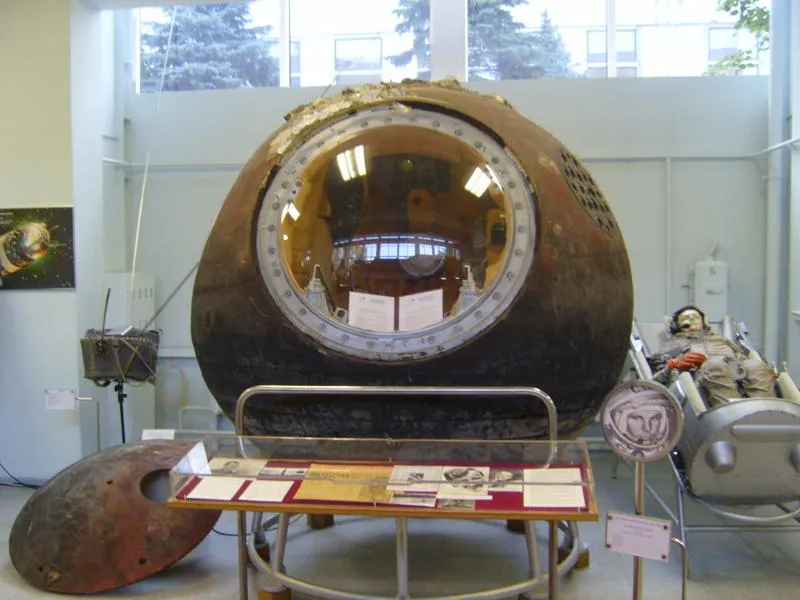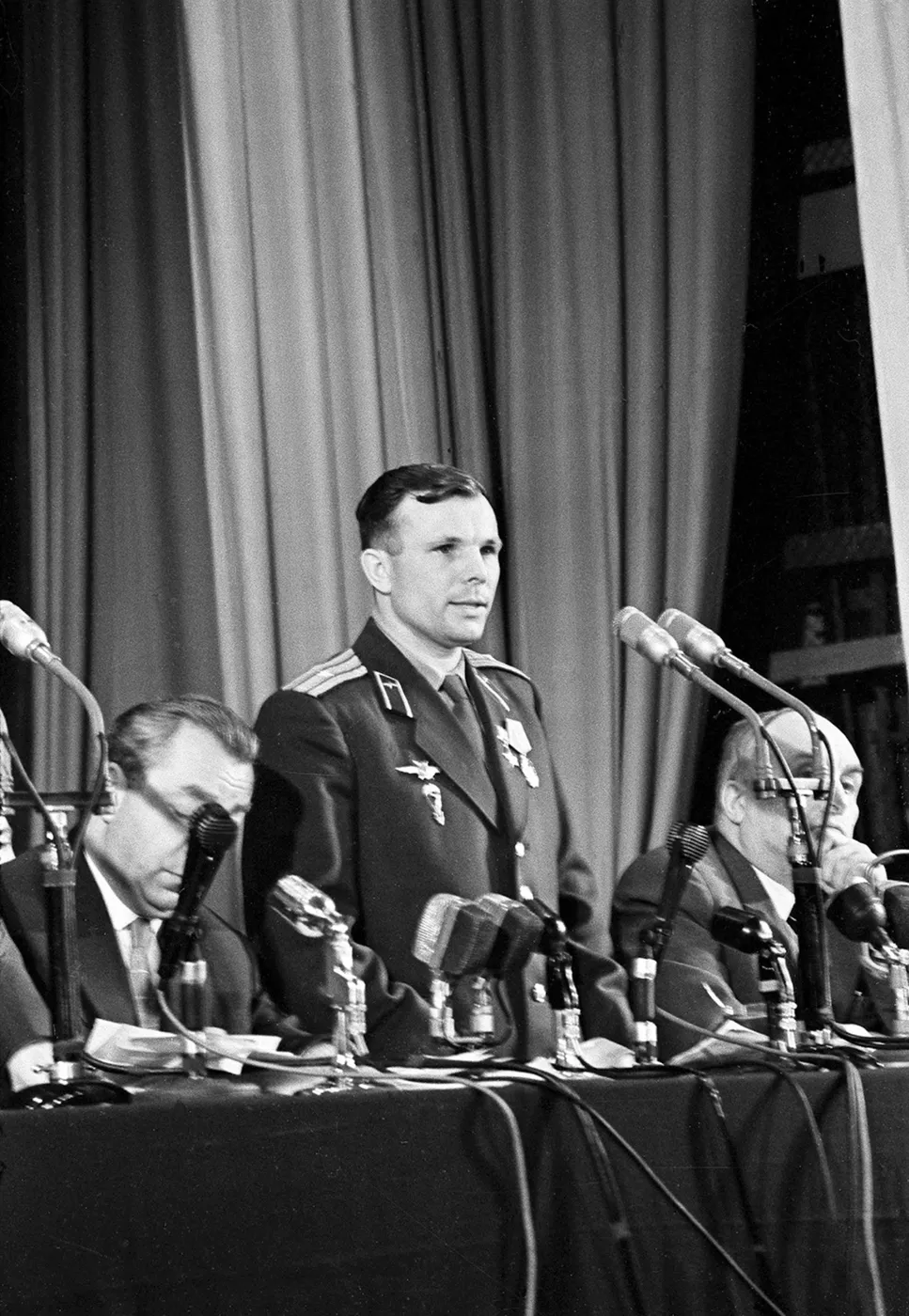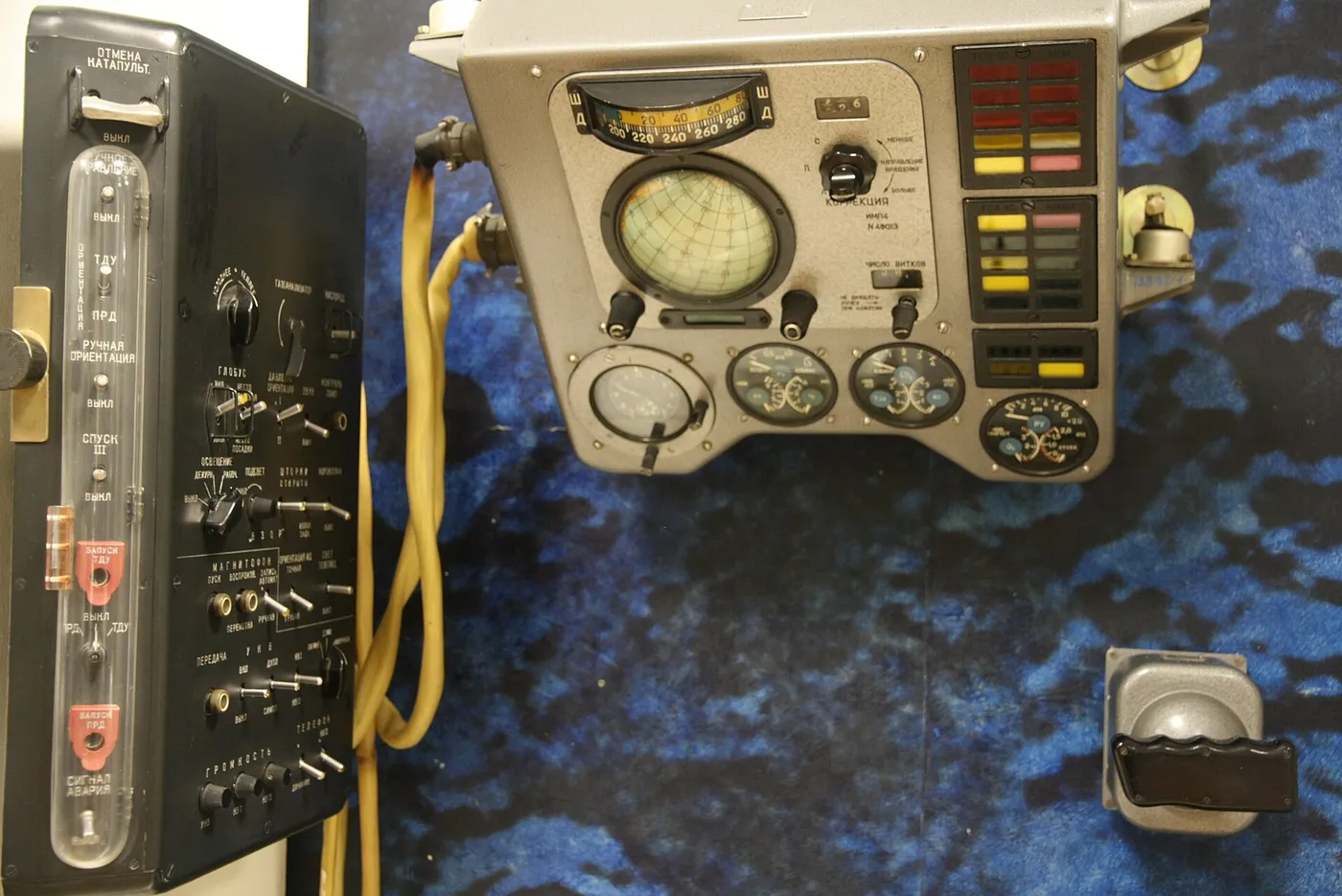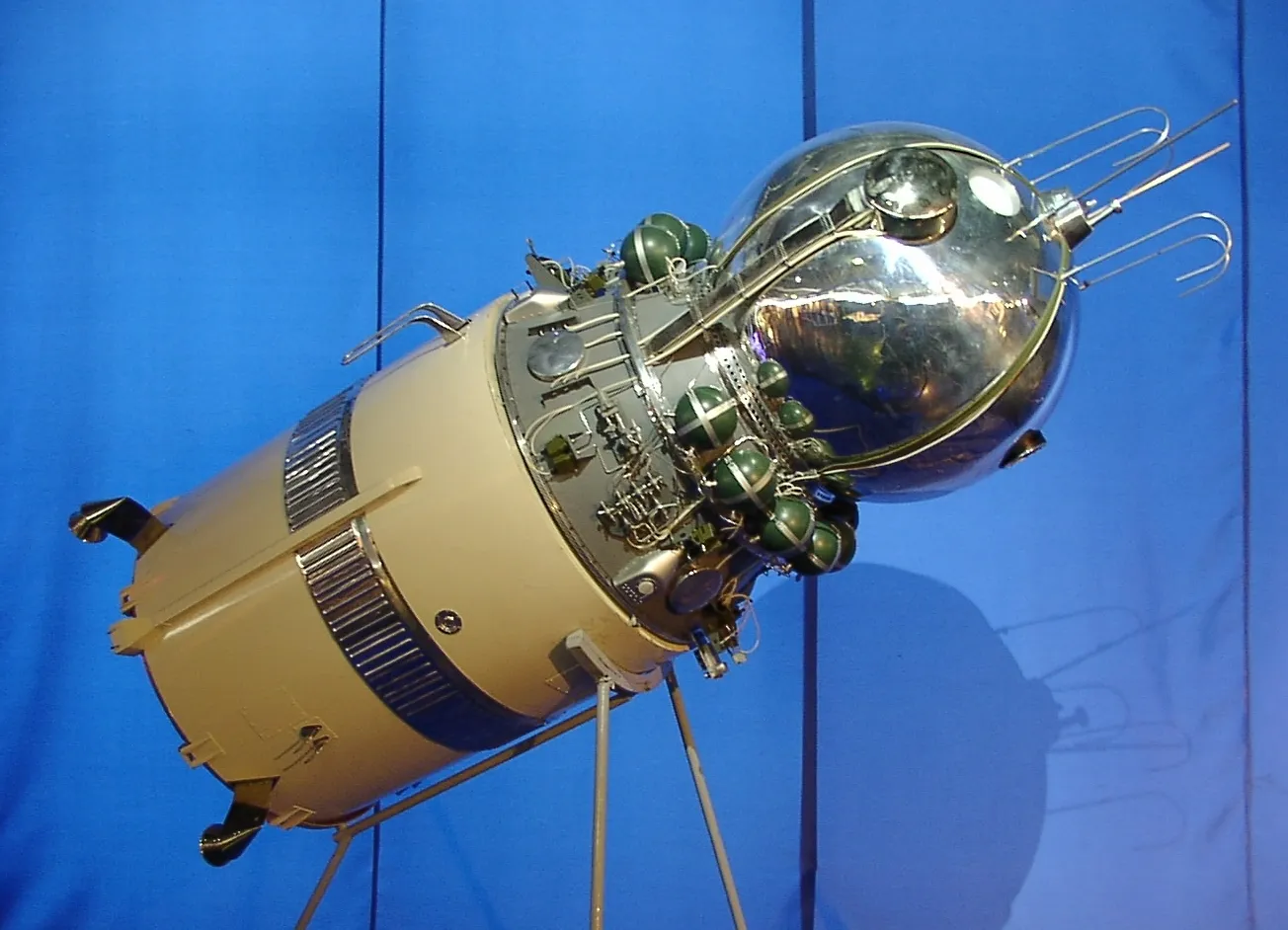
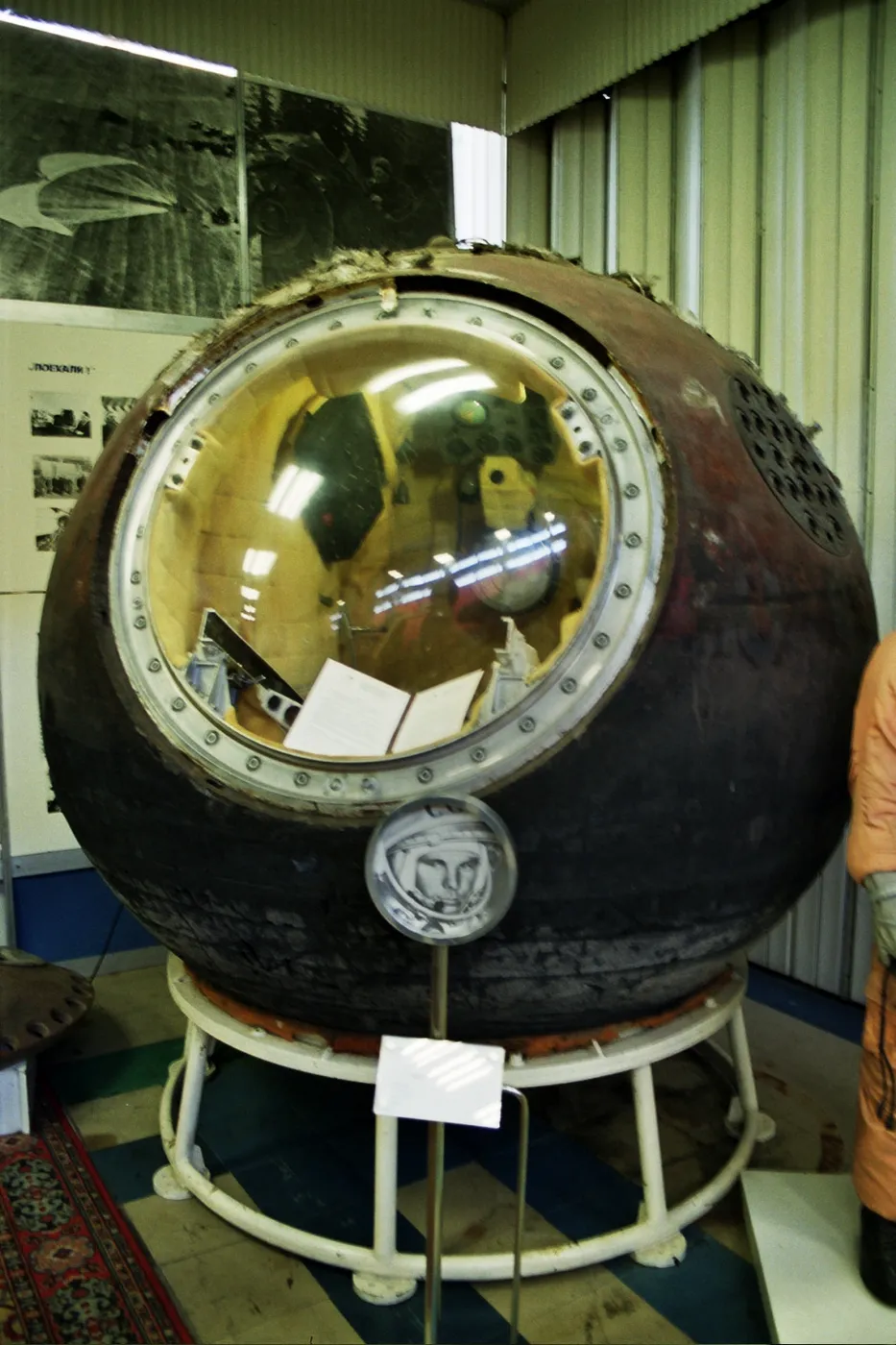
By 1961 the Vostok programme had already flown dogs and instrumented mannequins; the remaining question was whether a human being could endure spaceflight at all. Doctors genuinely did not know whether a pilot could think or function in prolonged weightlessness, so Vostok 1 was built to fly itself — Yuri Gagarin's manual controls were deliberately locked, with an override code sealed in an envelope aboard the capsule for use only in an emergency. Gagarin, a 27-year-old air-force pilot, was chosen from a shortlist of six finalists; his composure and warmth under testing made him the favourite, with Gherman Titov named as his backup.
On the morning of 12 April 1961 the R-7-derived Vostok-K lifted off from Baikonur, Gagarin marking the moment with a cheerful "Poyekhali!" — "Let's go!" Over the next 108 minutes he completed a single orbit of the Earth under the call sign Kedr ("Cedar"), becoming the first human to see the planet from space and to experience sustained weightlessness. Crucially for the mission's central objective, he kept observing and reporting throughout, proving that a pilot could remain clear-headed and capable in orbit.
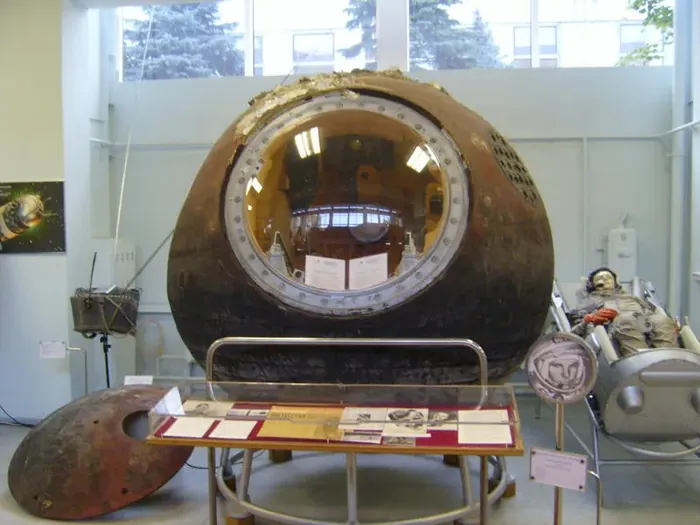
The return was not entirely smooth: the equipment module was slow to separate, and the capsule tumbled sharply for several minutes until the connecting straps burned away. As planned, Gagarin ejected at about seven kilometres' altitude and came down under his own parachute, landing in a field near Engels where a startled farmer and her granddaughter were among the first people to greet a returning cosmonaut. Because international rules required a pilot to land inside their craft, the Soviets at first concealed the separate landing — but nothing could dim the achievement. Gagarin came home a global hero, and the flight had proven beyond argument that a person could go to space and return alive.
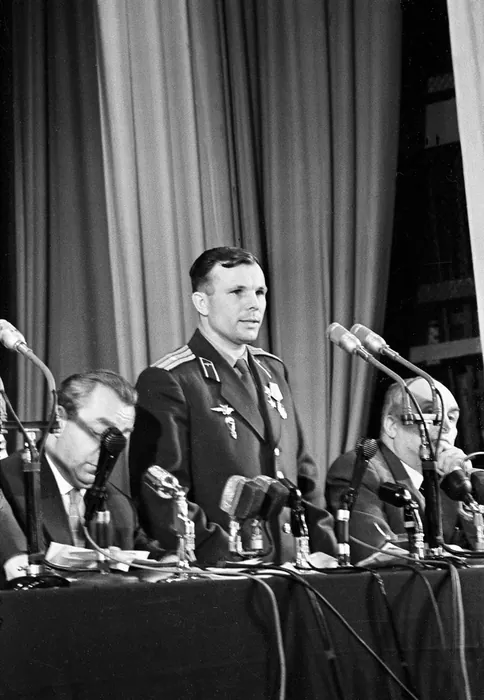
The Soviet Union told the world afterwards. There was no live broadcast and no announcement before launch, and the flight was revealed only once Gagarin was safely down — the standard practice of a programme that published its successes and buried its failures. The concealment of his separate landing, done to satisfy a rule requiring pilots to come down inside their craft, was maintained for years.
He never flew again, and it cost him. Considered too valuable to risk, he was moved into training and administration, grew frustrated, and fought his way back to flight status in fighters. On 27 March 1968, on a routine training sortie in a MiG-15, his aircraft crashed and he was killed at 34. The cause was disputed for decades before evidence pointed to a larger jet passing too close and flipping his aircraft with its wake. The date, though, has outlived both the man and the politics: 12 April is now marked as the International Day of Human Space Flight, and as Yuri's Night in parties held around the world — including, for many years, aboard the International Space Station, where Russian and American crews have celebrated the flight together.