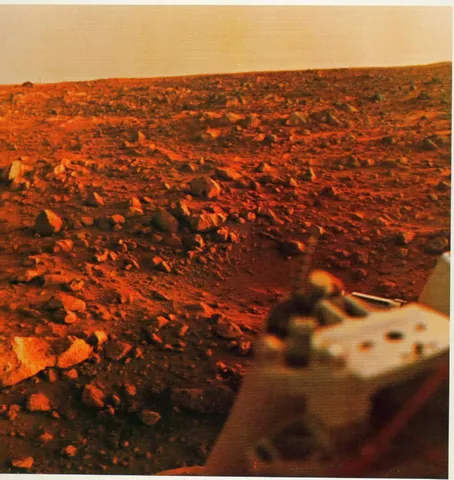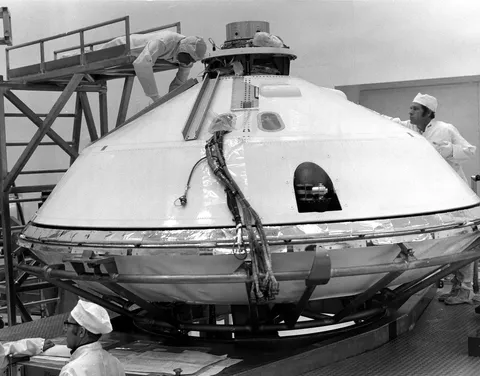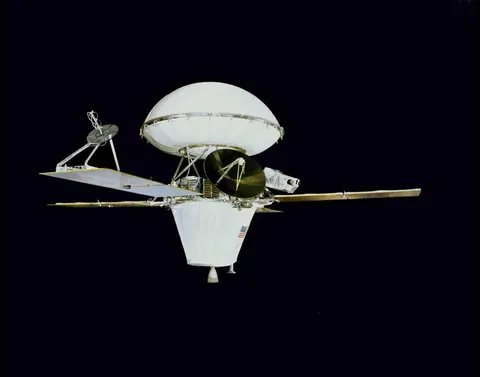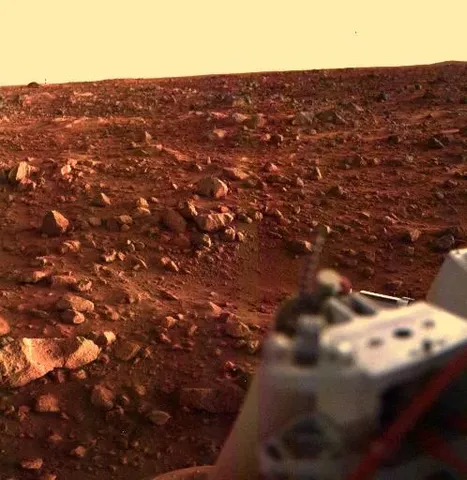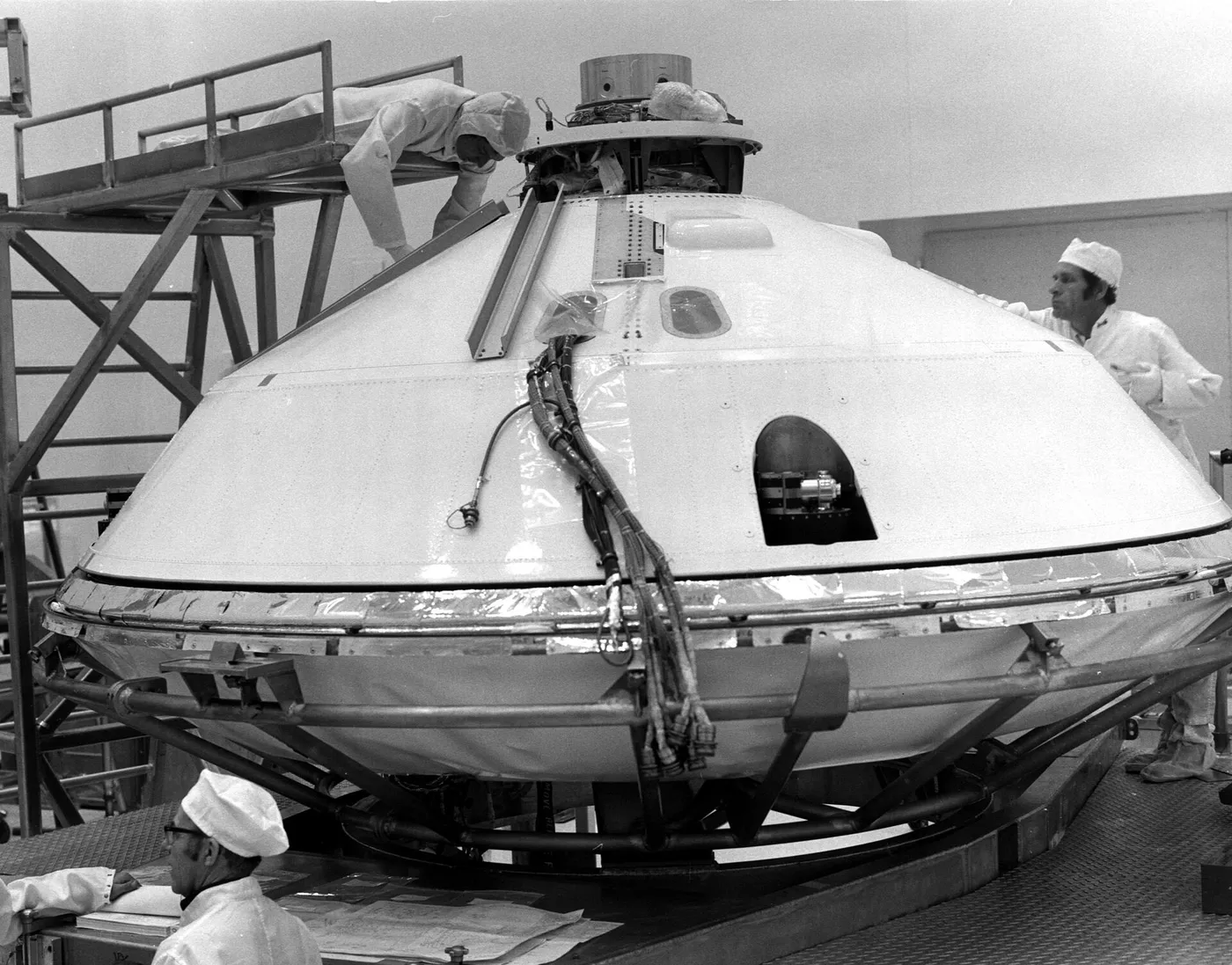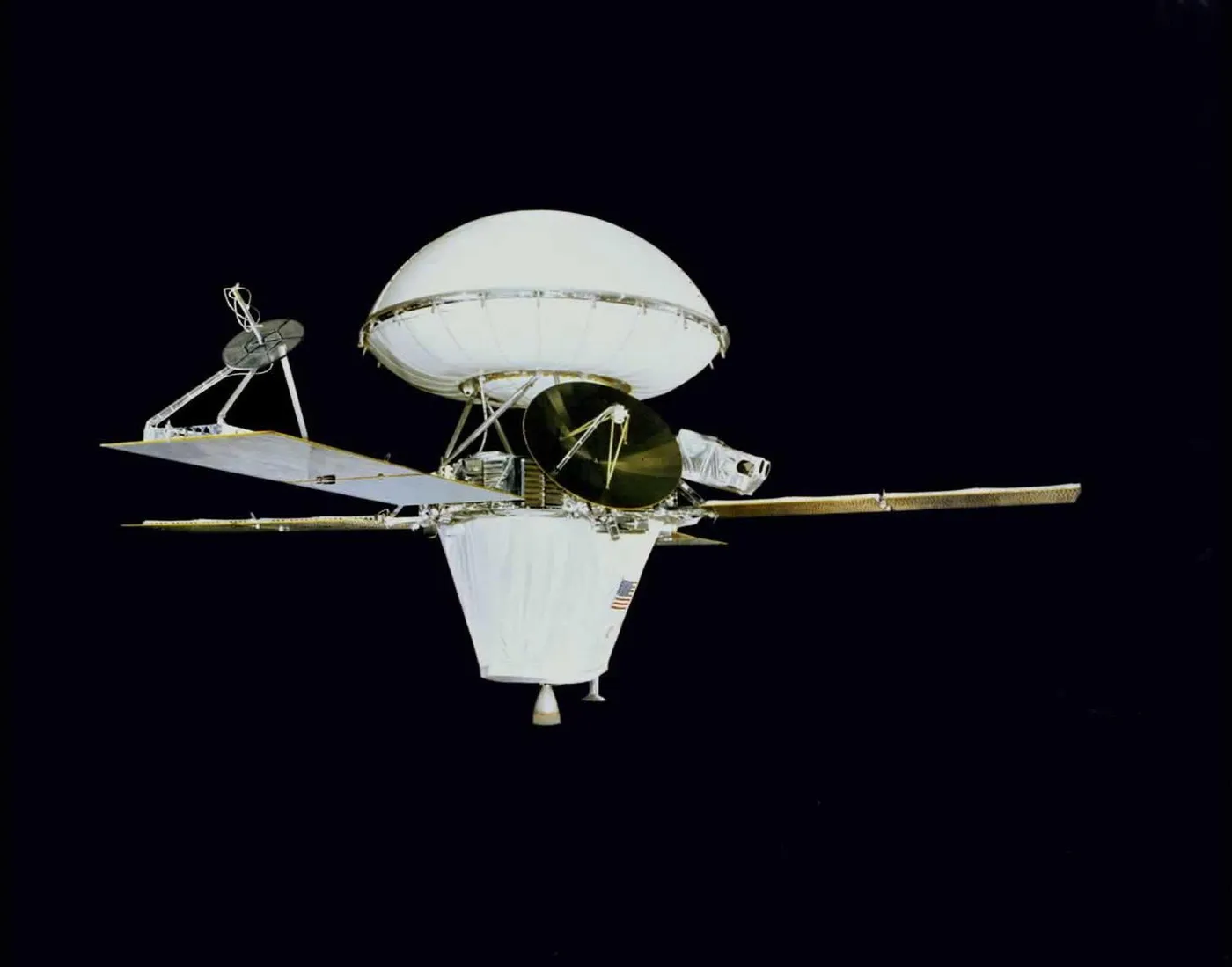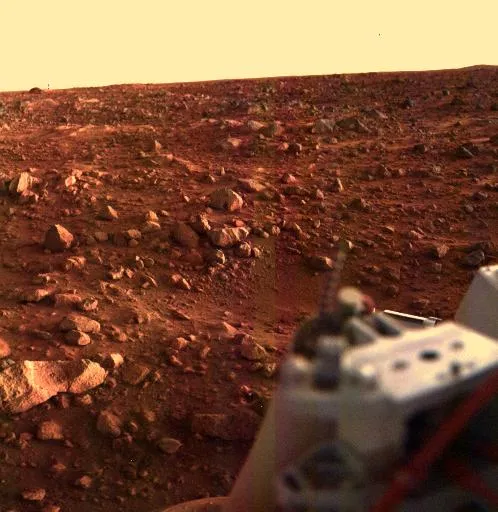
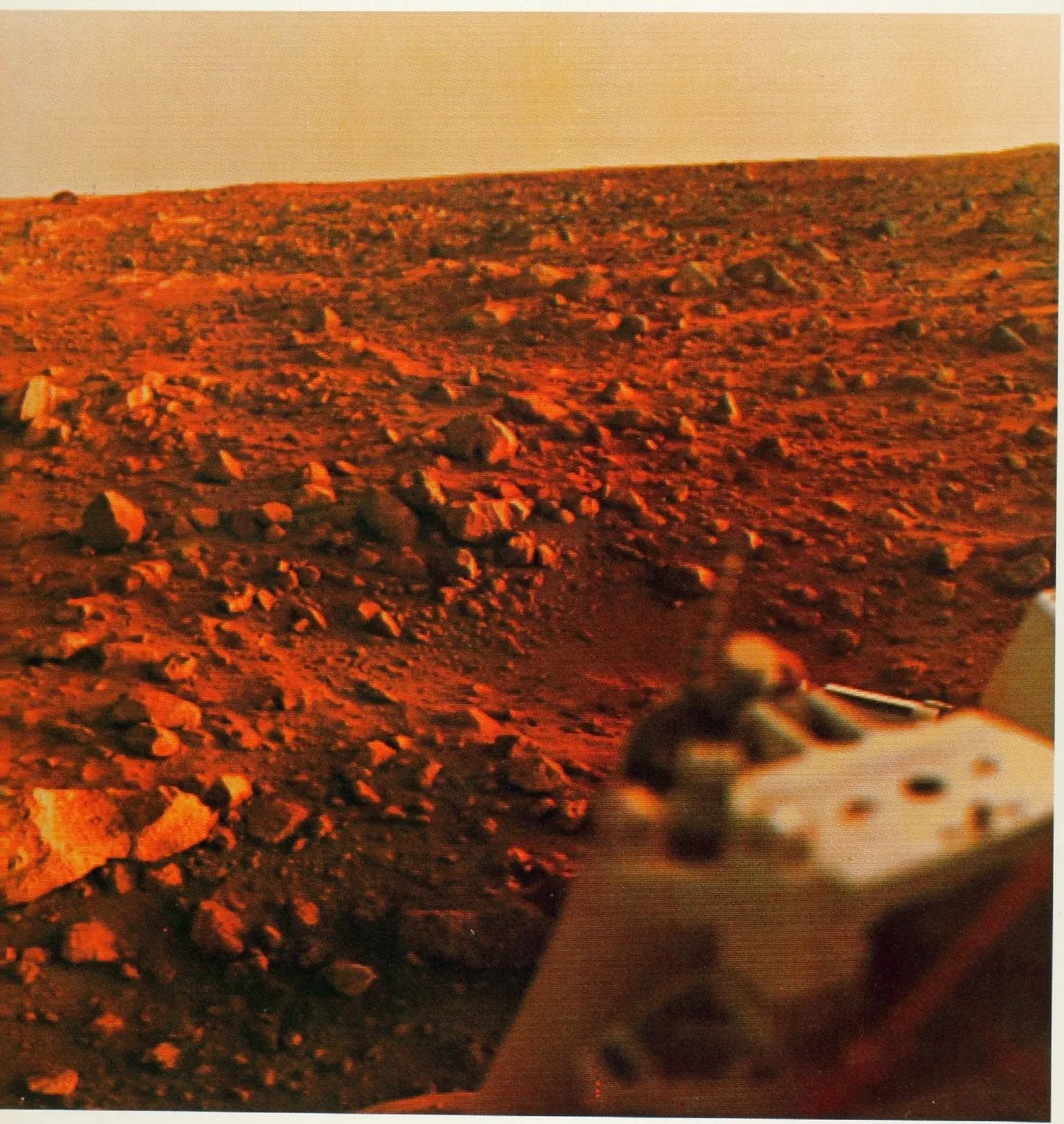

Viking 1 landed on Mars on 20 July 1976, seven years to the day after Apollo 11, and returned the first photograph ever taken from the surface of another planet. The image came down line by line over several minutes: a rock-strewn plain, a horizon, and — a detail that startled everyone — a sky the colour of butterscotch rather than the blue the artists had painted.
Getting there had required nerve. The orbiter arrived first and spent weeks photographing the intended landing site, which turned out to be far rougher than the pre-mission data suggested; the landing was postponed and the target moved twice while geologists argued about boulder counts. There was no way to steer during descent and no way to see the ground until it was too late.
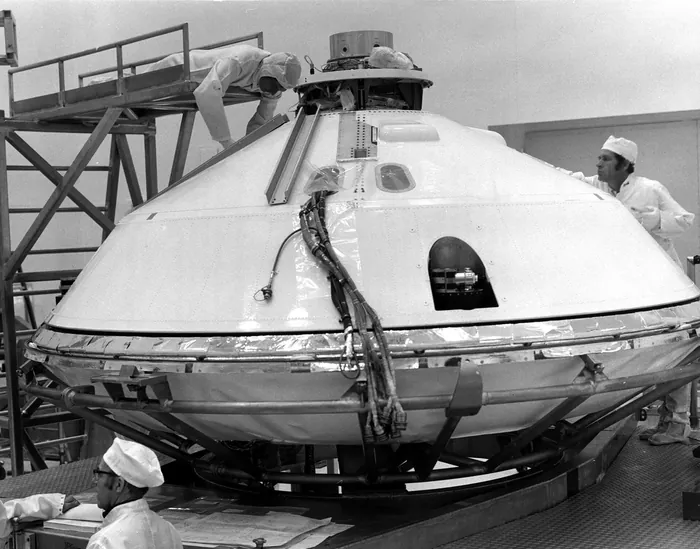
The lander carried the most ambitious biology package ever flown: three experiments designed to detect metabolism in Martian soil, plus a gas chromatograph and mass spectrometer to look for organic molecules. The results were maddening. One experiment, the labelled release, produced exactly the signal a biologist would predict from living organisms — and then failed to repeat it on a heated control sample in the way life should.
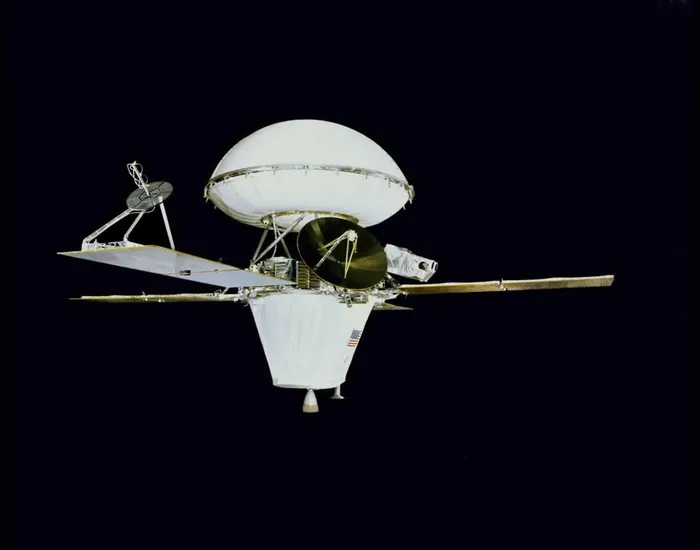
But the chromatograph found no organic compounds at all, at parts-per-billion sensitivity, and the consensus settled on chemistry rather than biology — a highly reactive soil, probably containing perchlorates, oxidising the nutrients. Gilbert Levin, who designed the labelled release, argued until his death in 2021 that he had detected life. Most scientists disagree; almost all concede the results are not entirely closed.
The lander operated for more than six years, far beyond its 90-day design life, and fell silent in 1982 after a faulty command overwrote its antenna-pointing software. It was renamed the Thomas Mutch Memorial Station for the mission's imaging leader, and a plaque waits at the National Air and Space Museum to be carried to Mars and mounted on it by whoever gets there first.