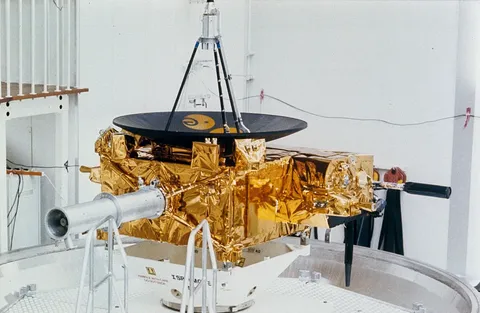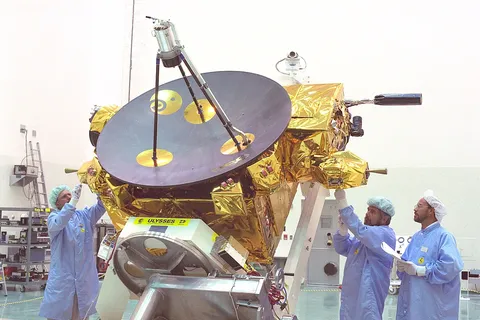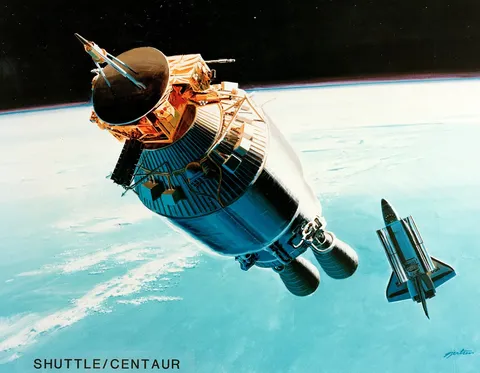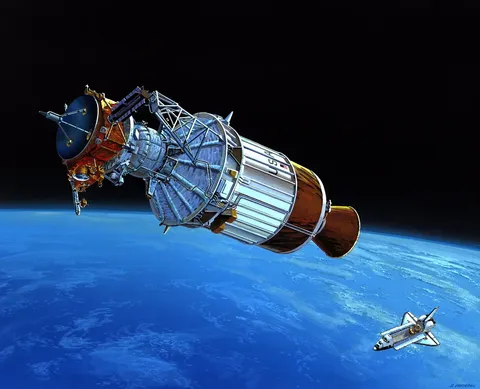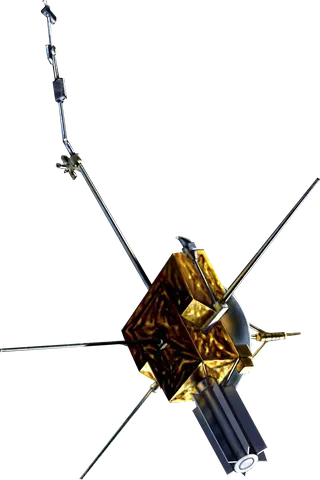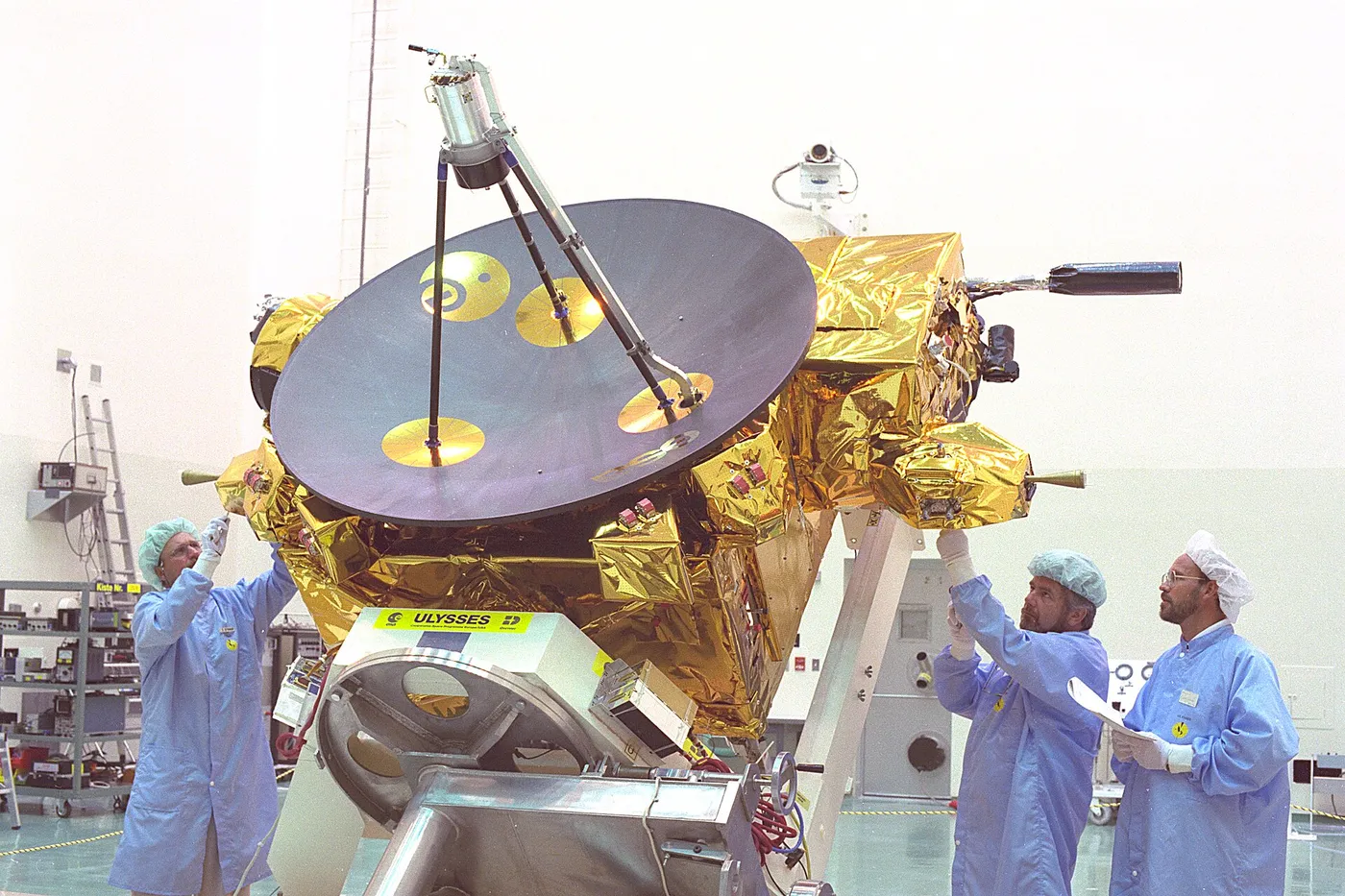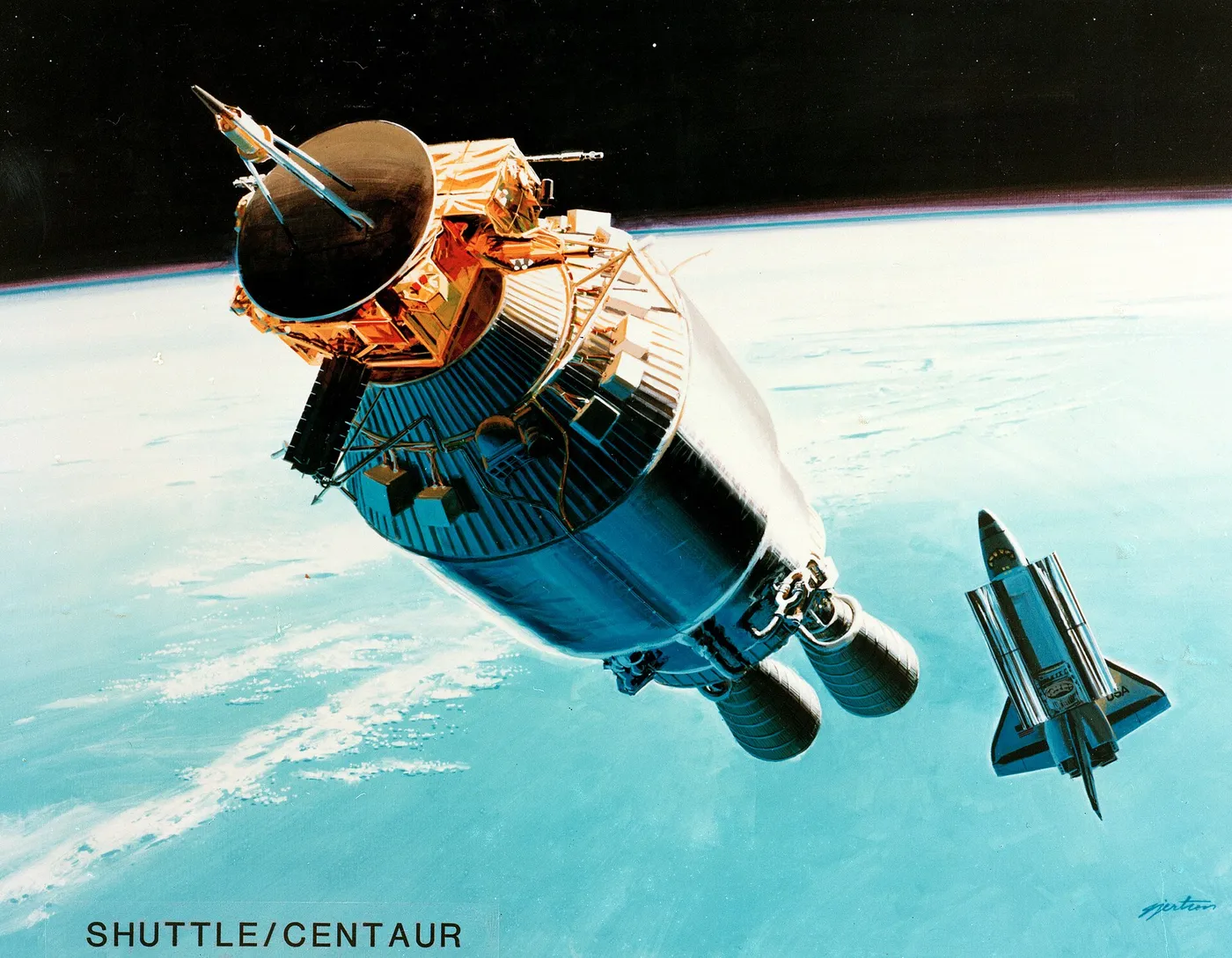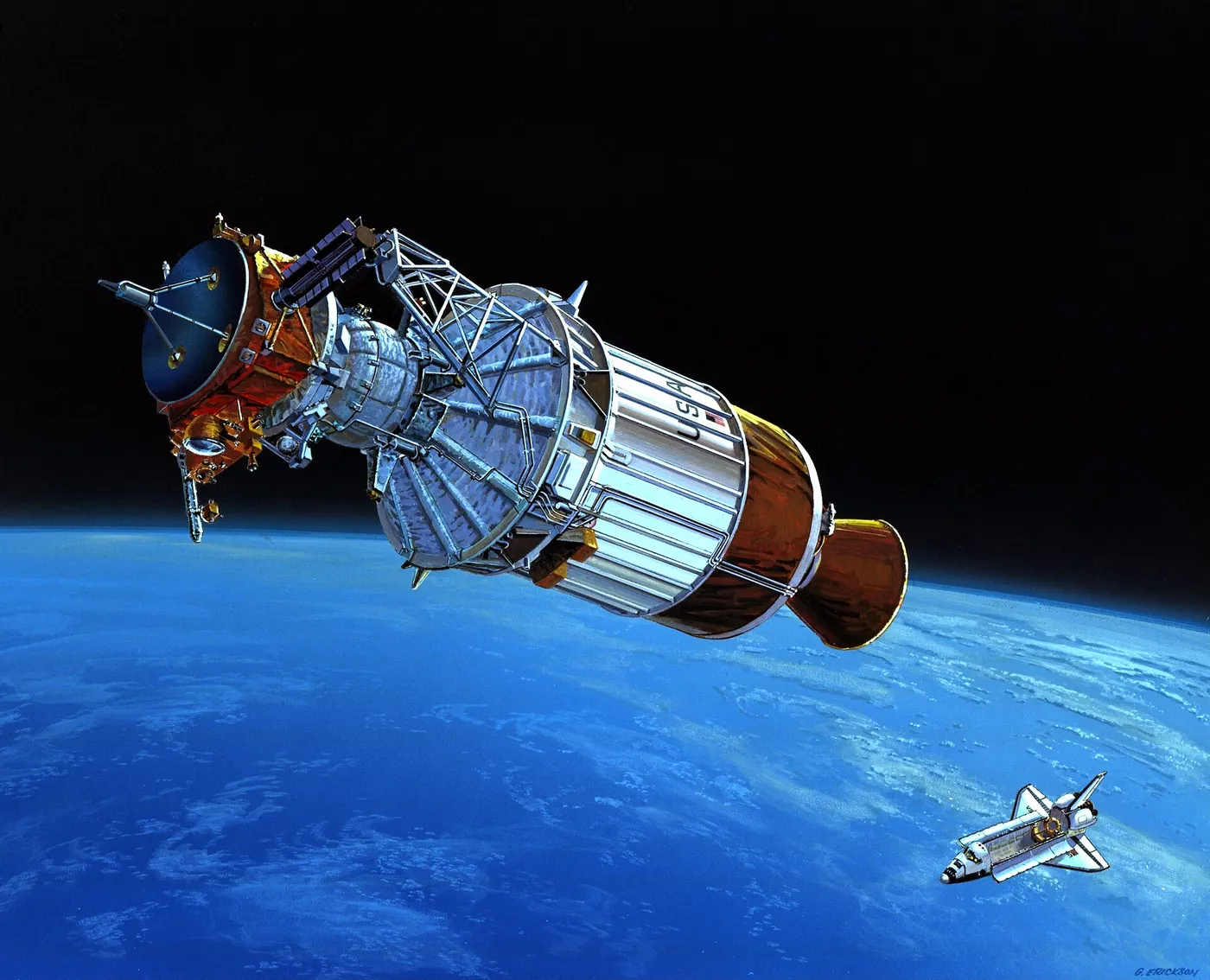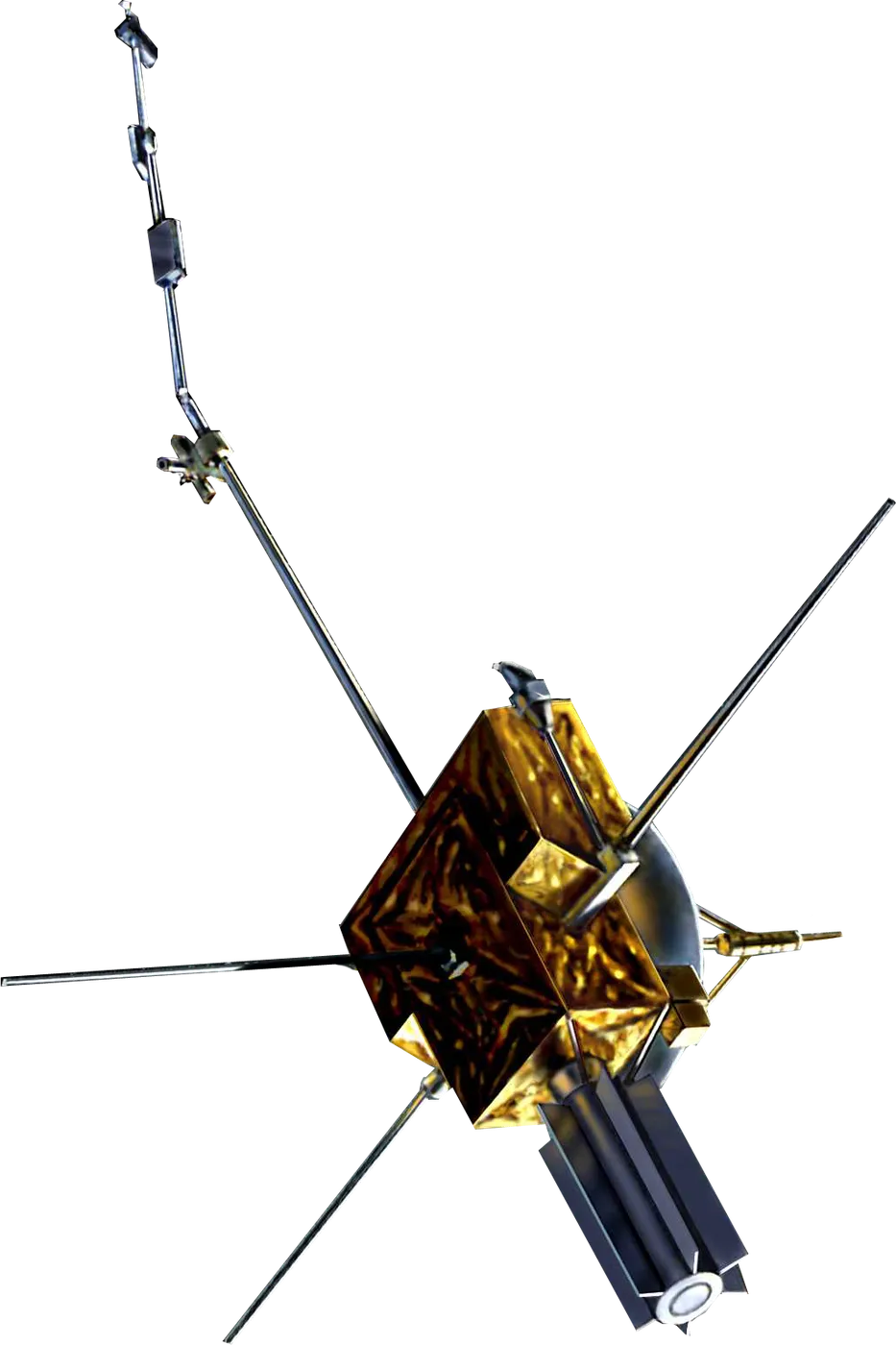
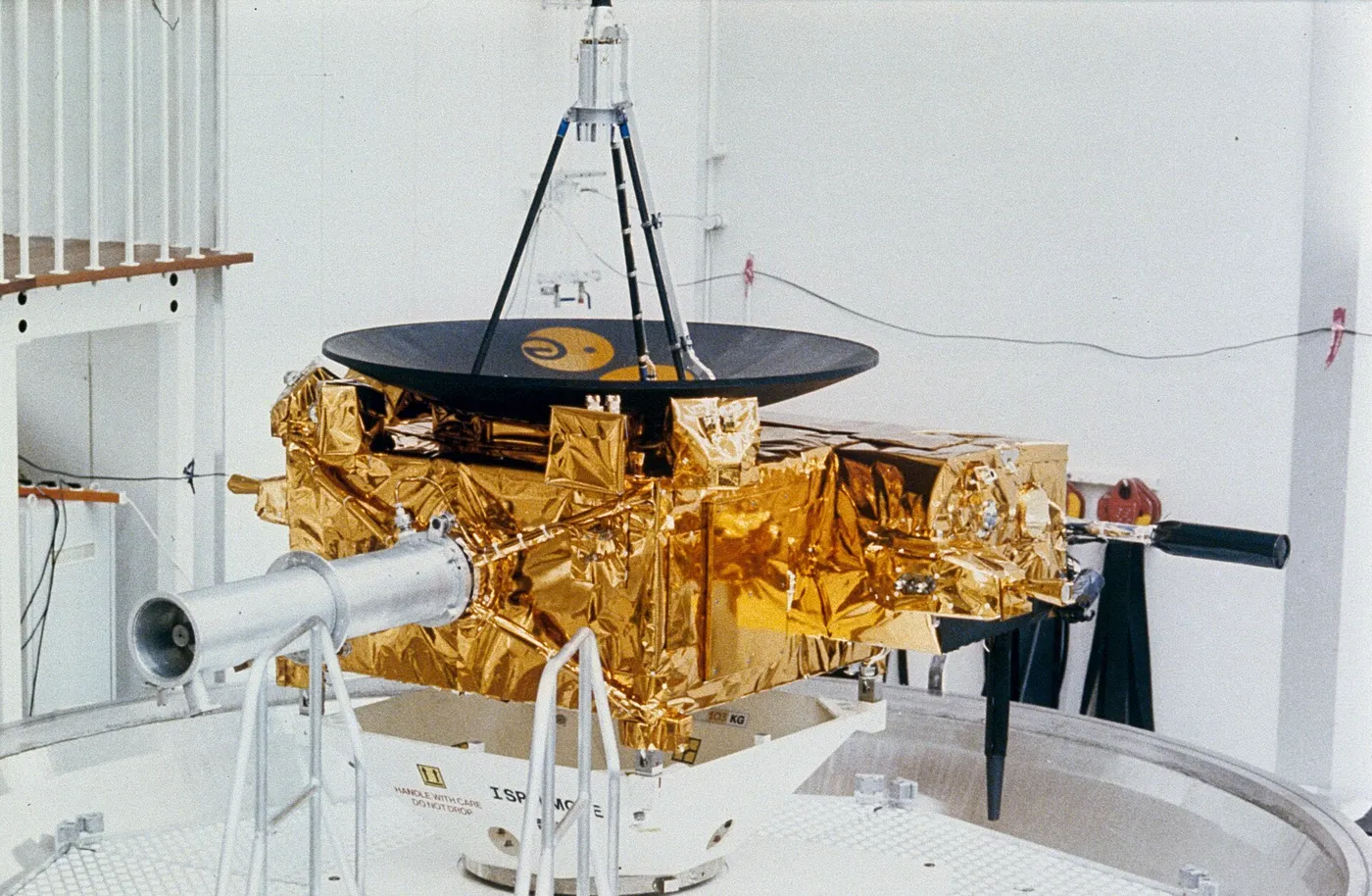

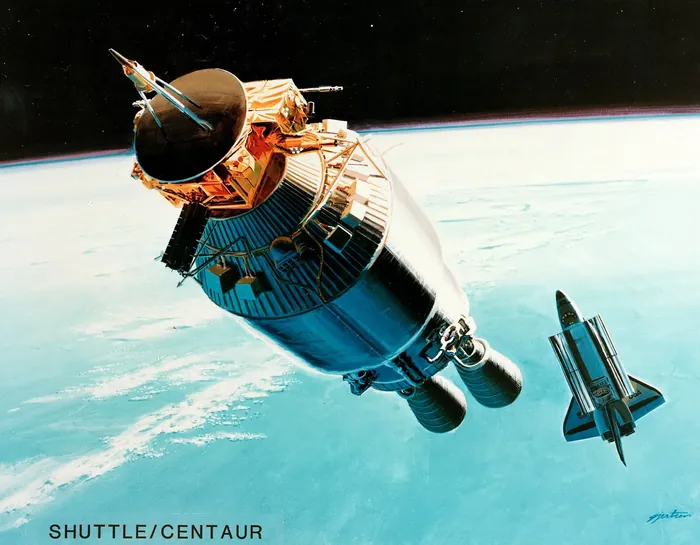
Every spacecraft before Ulysses had flown more or less in the plane in which the planets orbit, which meant that after decades of solar physics nobody had ever looked at the Sun's poles. Getting out of that plane requires more energy than reaching any planet, so the mission went to Jupiter first and used its gravity to be flung steeply south.
The spacecraft was built in Europe and operated jointly with NASA, and it carried no camera at all — its instruments measured particles, magnetic fields, radio waves and dust, the invisible physics of the heliosphere. It made three sets of polar passes between 1994 and 2008, covering most of a solar cycle.
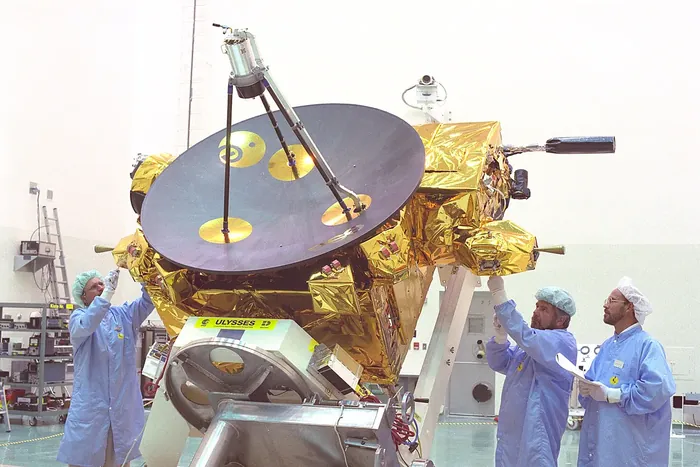
It found the solar wind to be a two-speed phenomenon: a fast, steady stream of some 750 kilometres per second pouring from the open magnetic field at high latitudes, and a slower, gustier flow near the equator. The structure of the Sun's magnetic field turned out to be far simpler at the poles and far messier in between than models had assumed.
It also blundered into good luck three times, passing through the ion tails of comets Hyakutake, McNaught and another — in the Hyakutake case detecting the tail some 500 million kilometres from the nucleus, establishing that comet tails are far longer than anyone had imagined.
The end came slowly. Its plutonium power source decayed to the point where it could no longer both run instruments and keep the hydrazine fuel from freezing in the lines. Controllers nursed it through a final year of operations by cycling heaters, and shut it down in June 2009 after eighteen years — three times its design life.