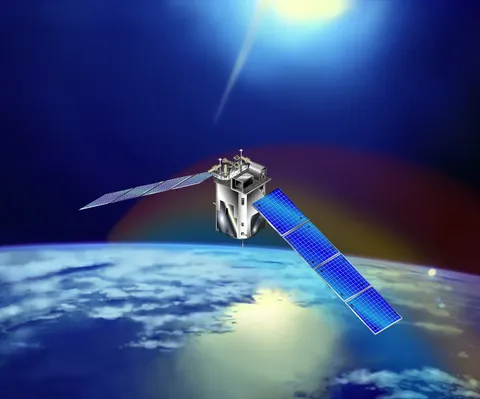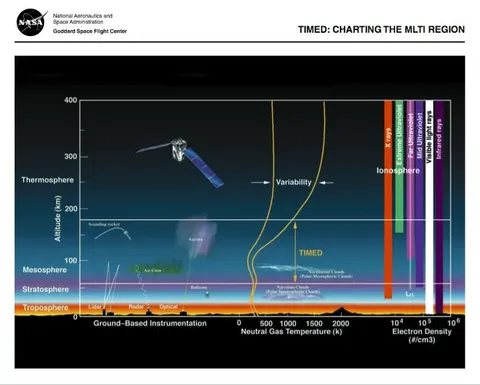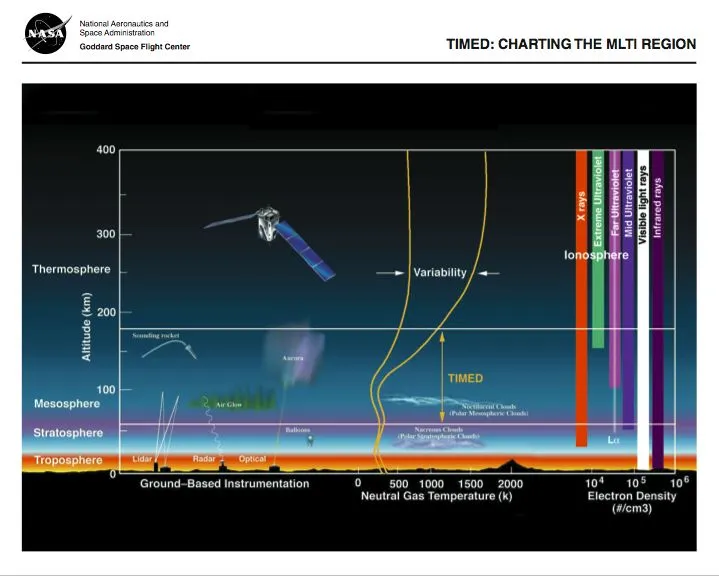
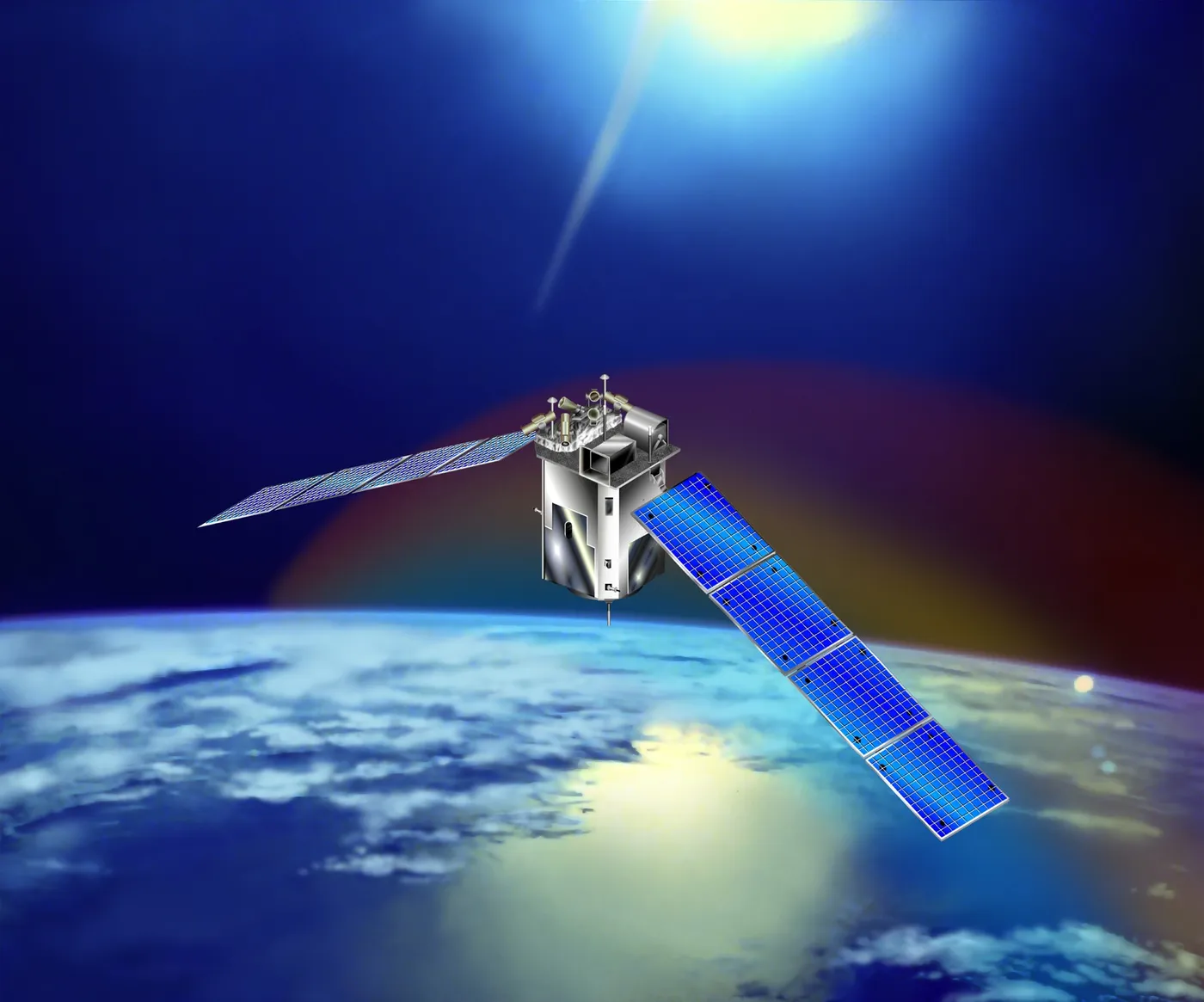

TIMED studies the least accessible part of the atmosphere. Between about 60 and 180 kilometres up, the air is too thin for aircraft or balloons and too thick for satellites to orbit — a region sampled only briefly by sounding rockets before this mission, despite being where meteors burn, aurorae glow and satellite drag originates.
It matters practically because that layer expands and contracts with solar activity, changing the drag on everything in low orbit. Predicting where a satellite or a piece of debris will be next week depends on modelling a region that was, until recently, largely unmeasured.
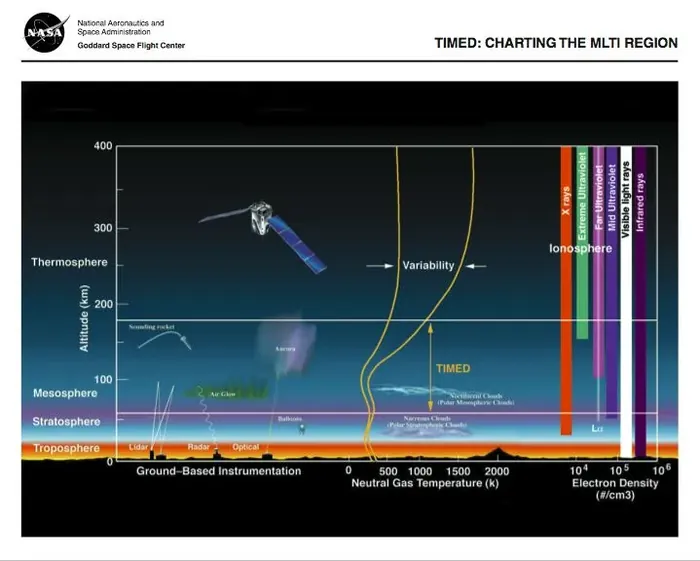
The mission found the region far more variable than expected, and strongly influenced from below as well as above — waves generated by weather in the lower atmosphere propagate upward and deposit energy there, coupling tropospheric conditions to the edge of space in ways that had been theorised but not observed.
It has also documented a long-term cooling and contraction of the upper atmosphere, a predicted consequence of rising carbon dioxide: the same gas that warms the lower atmosphere radiates heat away efficiently at high altitude. The upper atmosphere is shrinking as the surface warms.
Launched in 2001 and still operating well past twenty years, it has covered two full solar cycles — the minimum required to separate solar-driven variation from long-term trends, and the reason its longevity has scientific rather than merely sentimental value.