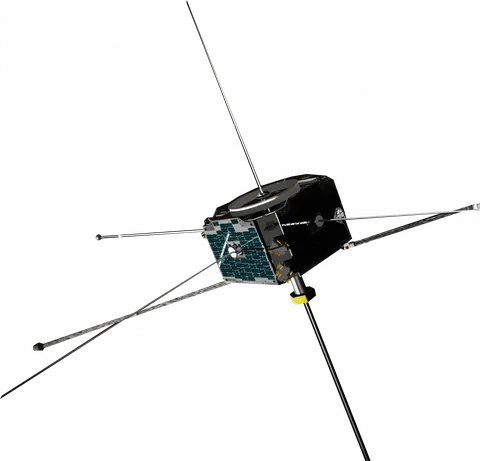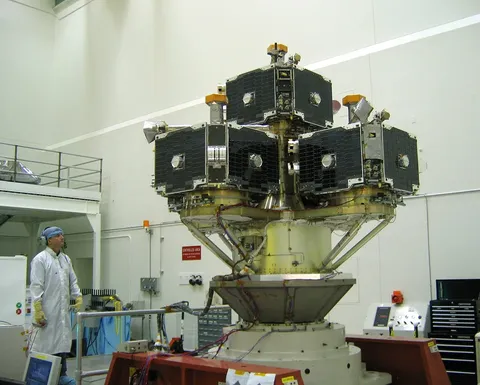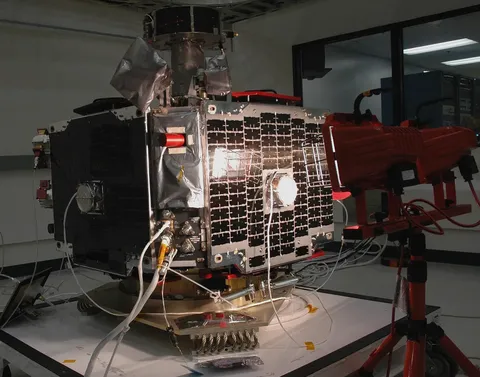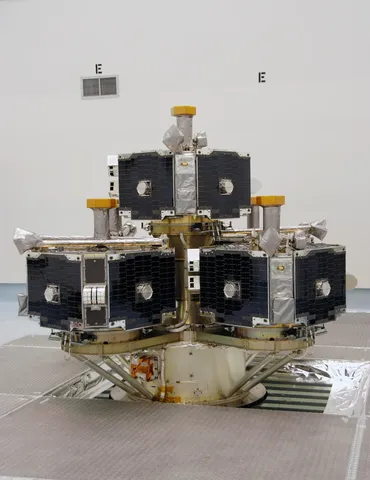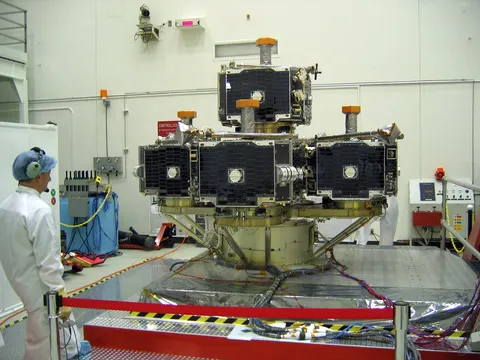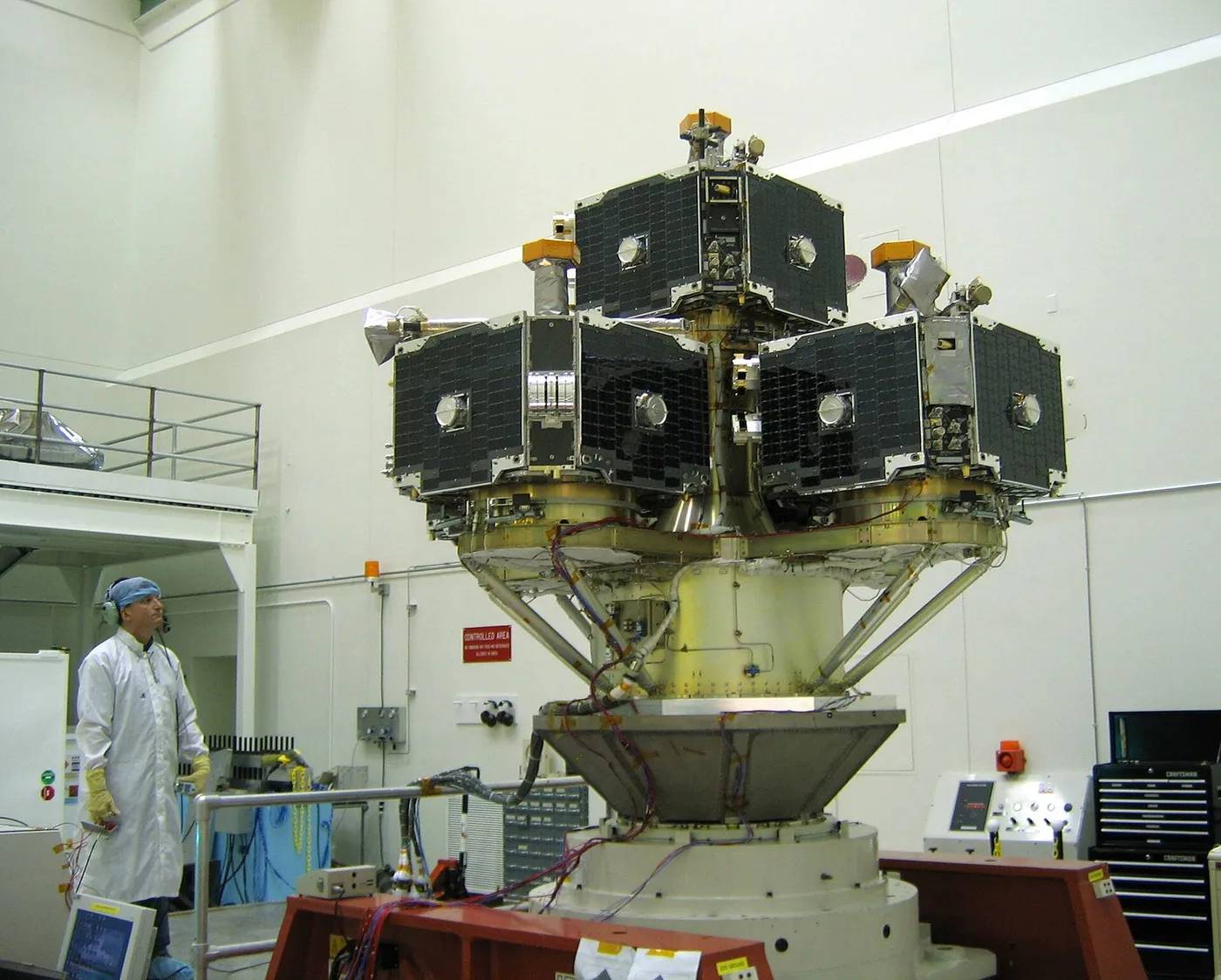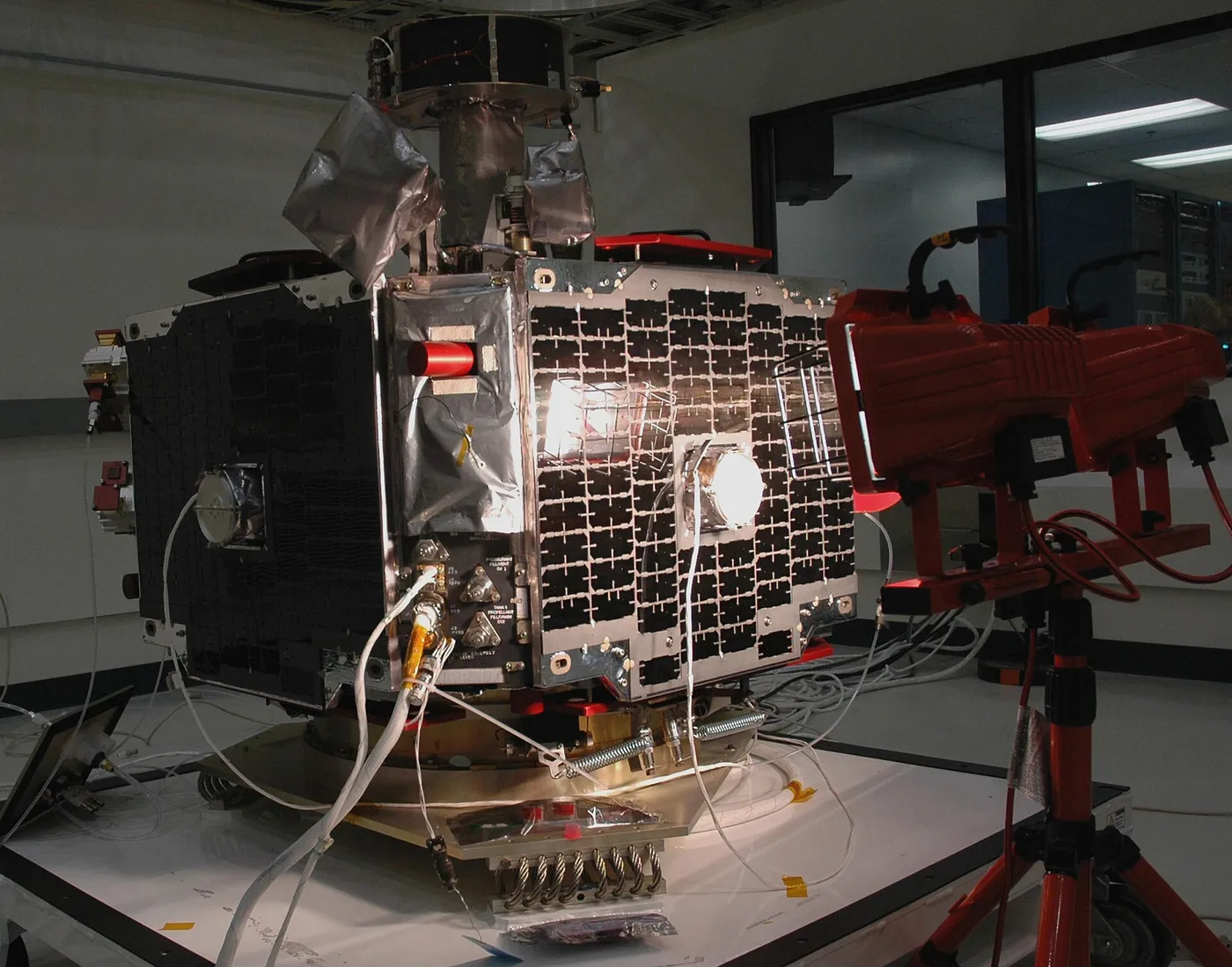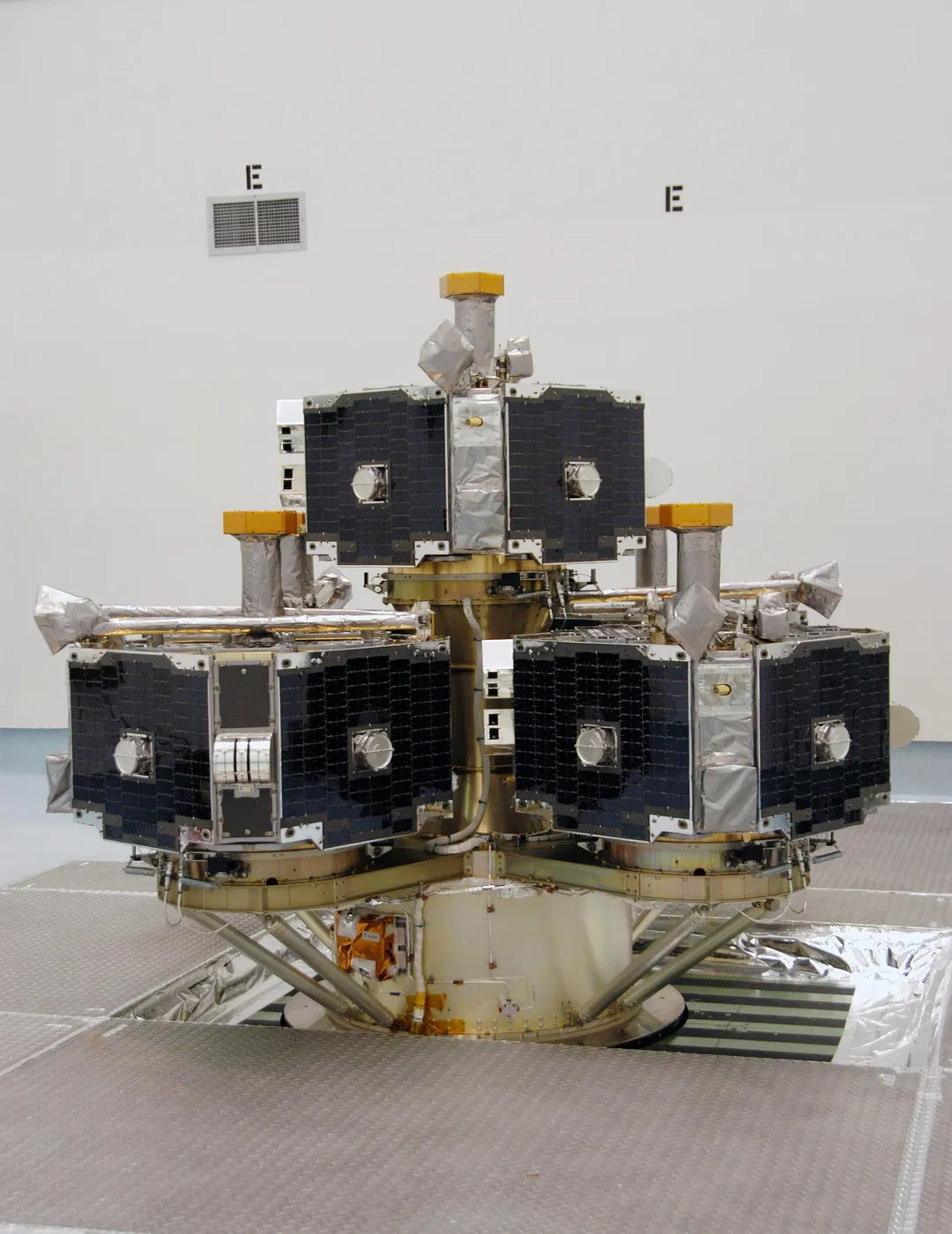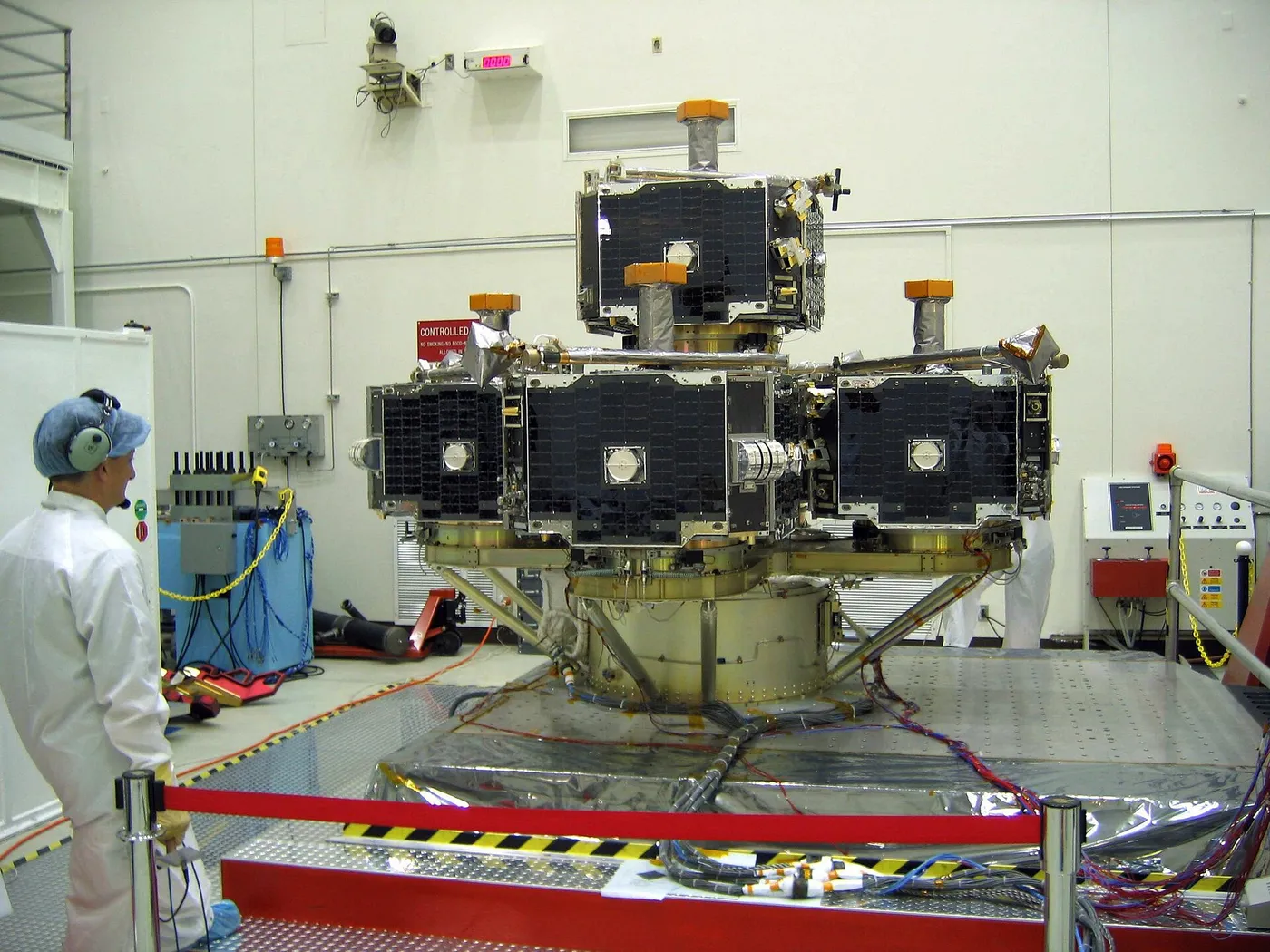
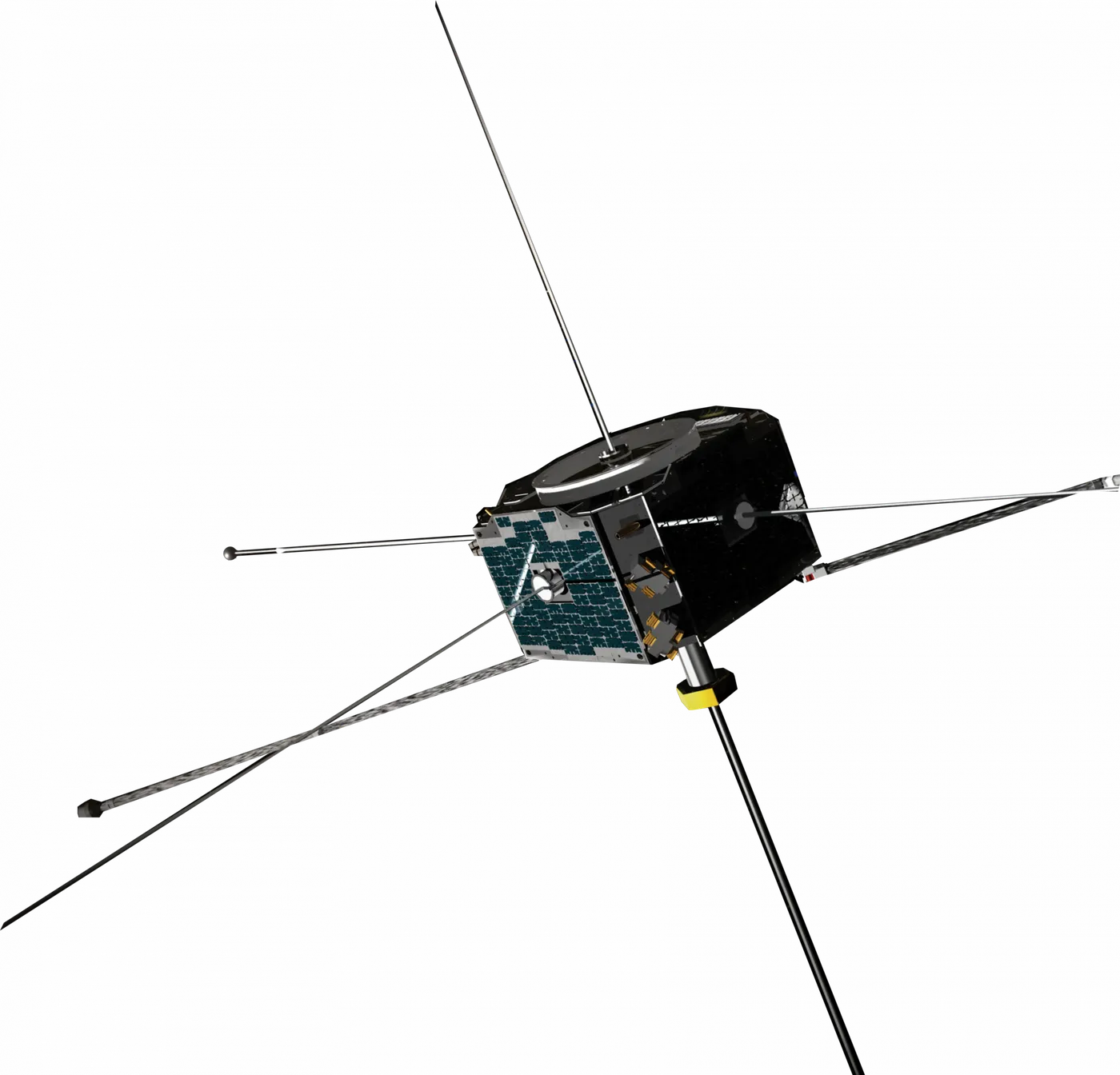

THEMIS was five identical spacecraft launched on one rocket to solve a specific argument. Substorms — the sudden brightening of the aurora that releases energy stored in the magnetotail — were known to begin somewhere, but two competing theories placed the trigger in different regions, and no single spacecraft could distinguish them.
The answer requires timing. If the disturbance appears first far down the tail and propagates inward, one model is right; if it appears first near the Earth and propagates outward, the other is. Five probes strung along the tail, combined with ground-based auroral cameras across Canada and Alaska, could measure the sequence directly.
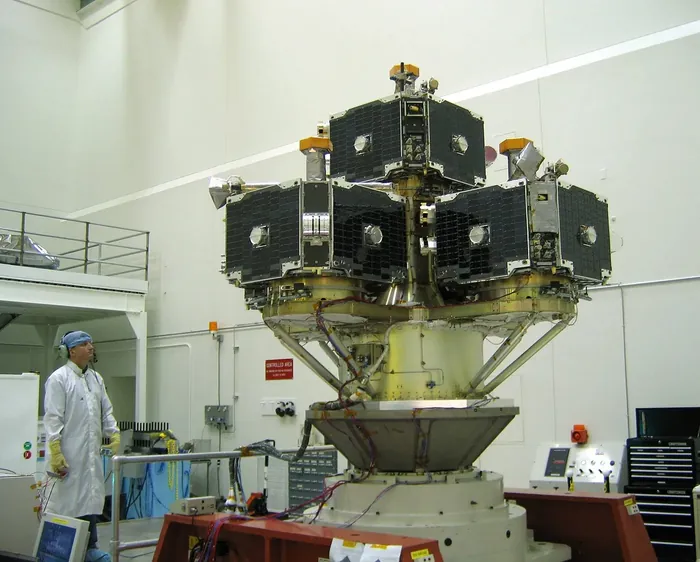
The result, published in 2008, favoured magnetic reconnection about a third of the way down the tail as the trigger, with the auroral brightening following about a minute and a half later. It did not end the debate entirely, but it constrained it sharply.
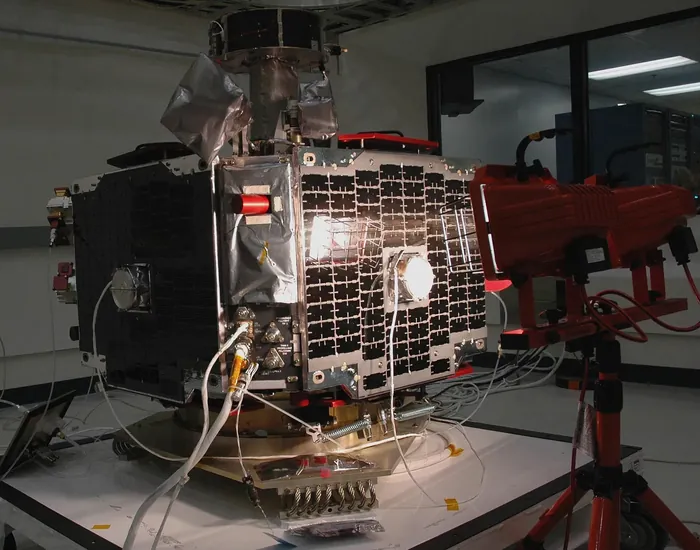
The mission then did something unusual with its surplus. Two of the five probes were redirected out of Earth orbit to the Moon, where they were renamed ARTEMIS and have since spent well over a decade studying the lunar plasma environment and the solar wind — a second mission obtained essentially for the cost of the fuel.
The remaining three continue to operate in Earth orbit. The approach — multiple identical cheap spacecraft measuring one system simultaneously — has become standard in heliophysics, and MMS applied it later at much finer scales.