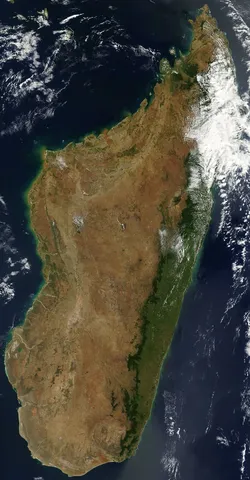
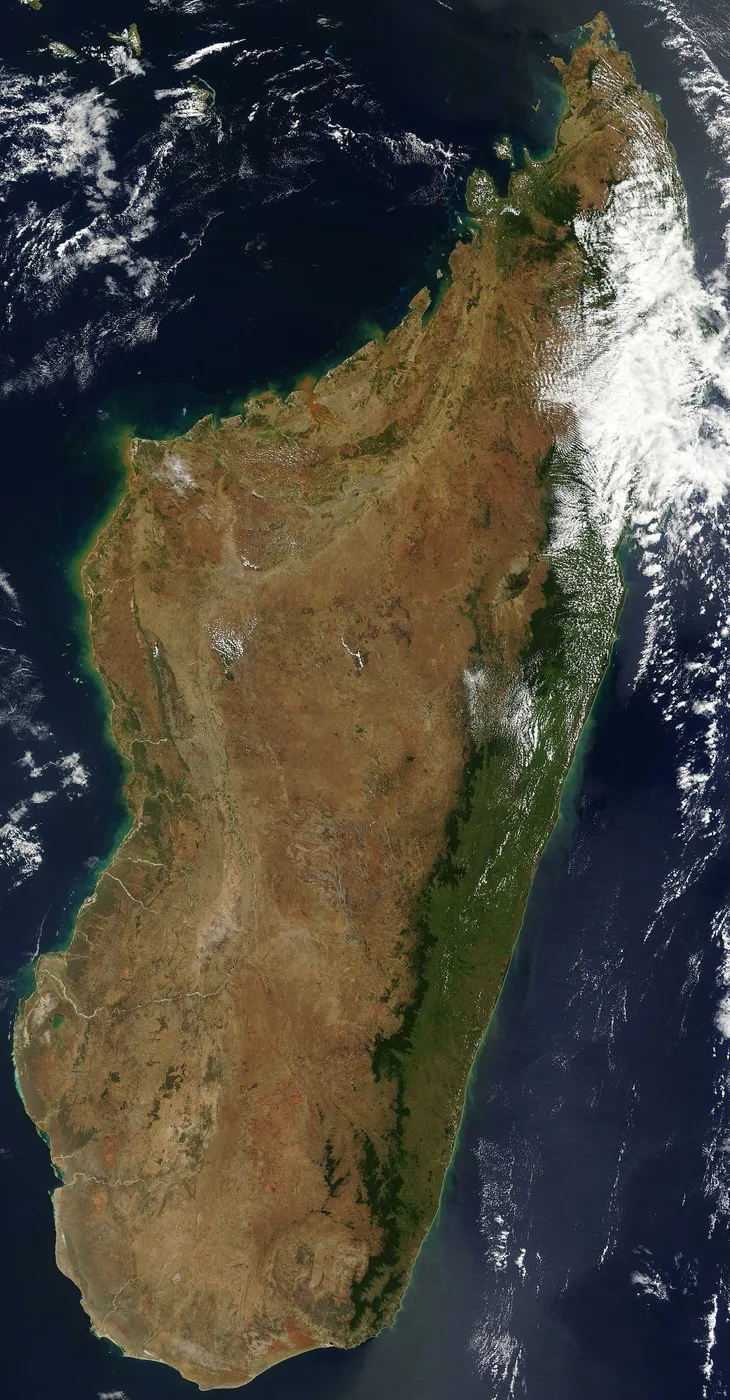

Terra was the flagship of NASA's Earth Observing System, designed on the premise that the planet had to be studied as a single interacting system rather than as separate disciplines. It carries five instruments looking at land, ocean, atmosphere, radiation and pollution simultaneously from the same platform.
Its most influential instrument is MODIS, which images the entire Earth every one to two days in 36 spectral bands. That combination of frequent global coverage and spectral breadth made it the workhorse for tracking vegetation, fires, snow cover, algal blooms, aerosols and sea surface temperature.
Another instrument, MISR, views each scene from nine angles simultaneously, which allows aerosol properties and cloud heights to be determined in ways a single view cannot. A third measures the radiation budget — how much solar energy the planet absorbs against how much it radiates away — which is the fundamental quantity in climate.
Its data underpins operational services well beyond research: wildfire detection systems, agricultural monitoring, air quality forecasting and volcanic ash warnings for aviation all draw on it. Much of it is distributed freely and within hours of acquisition.
Designed for six years, it has operated for more than twenty-five, and its orbit has been allowed to drift as fuel ran low — degrading the consistency of its measurements but extending the record. Together with Aqua it has produced one of the longest continuous global environmental datasets in existence.