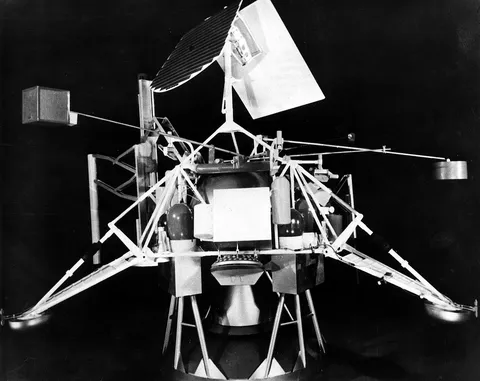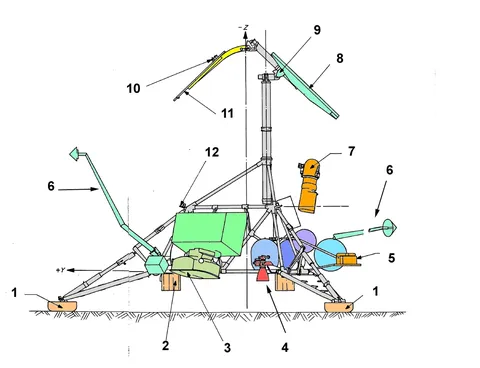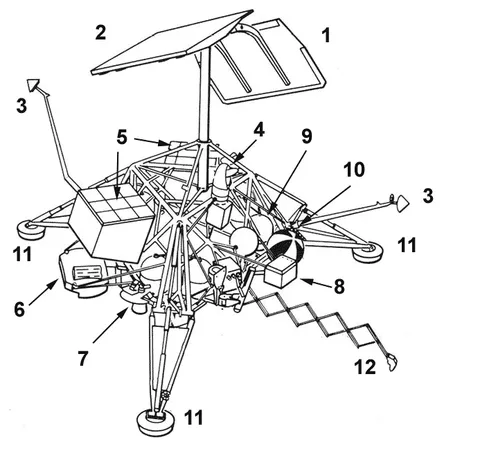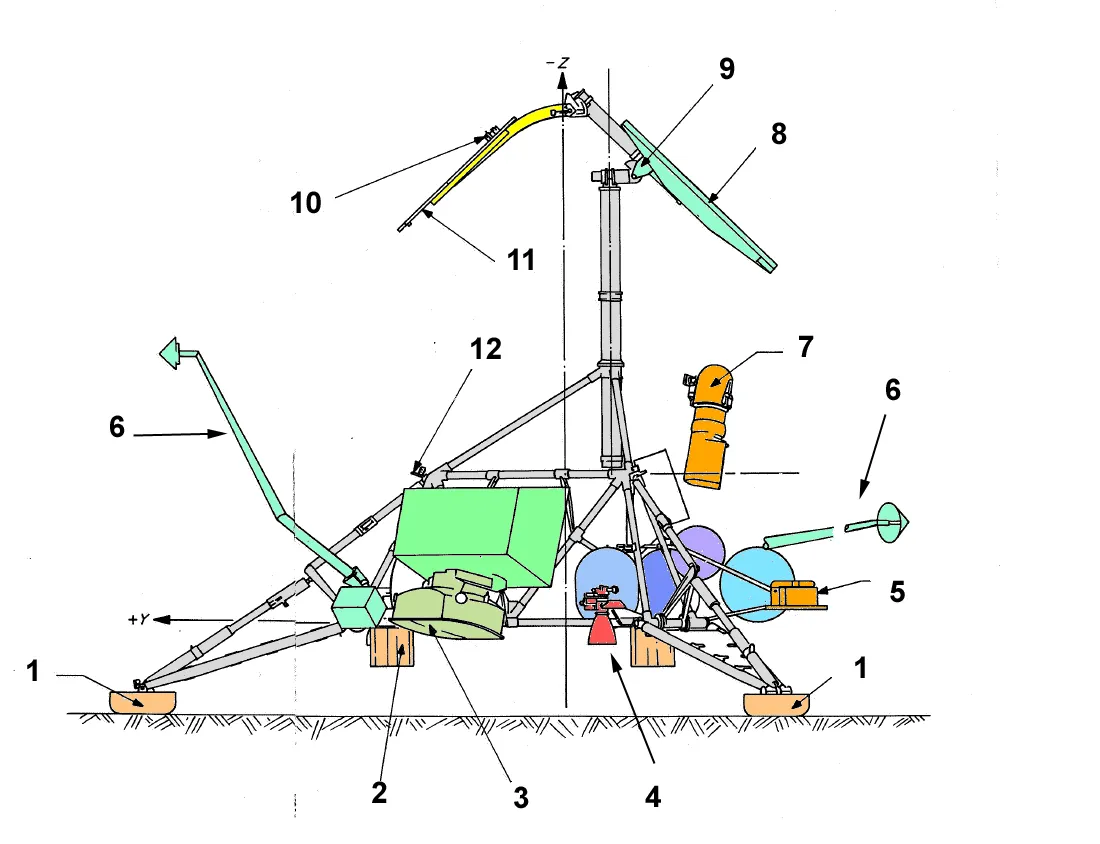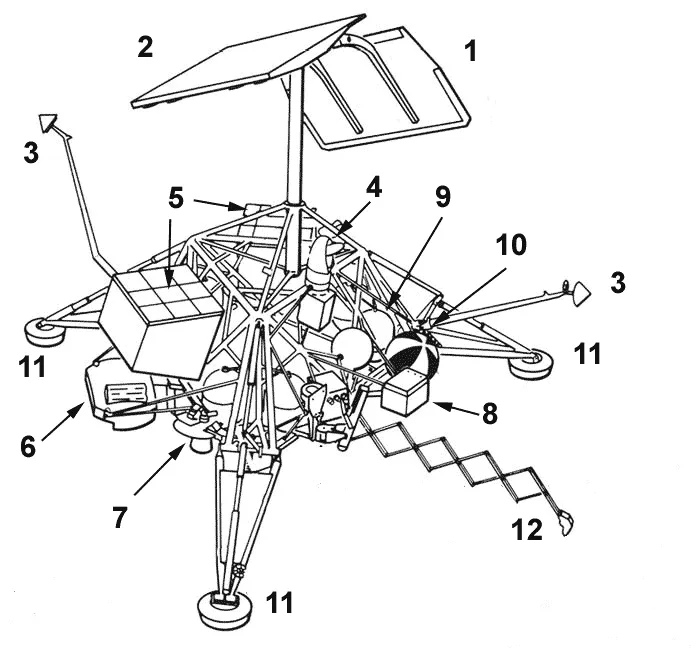
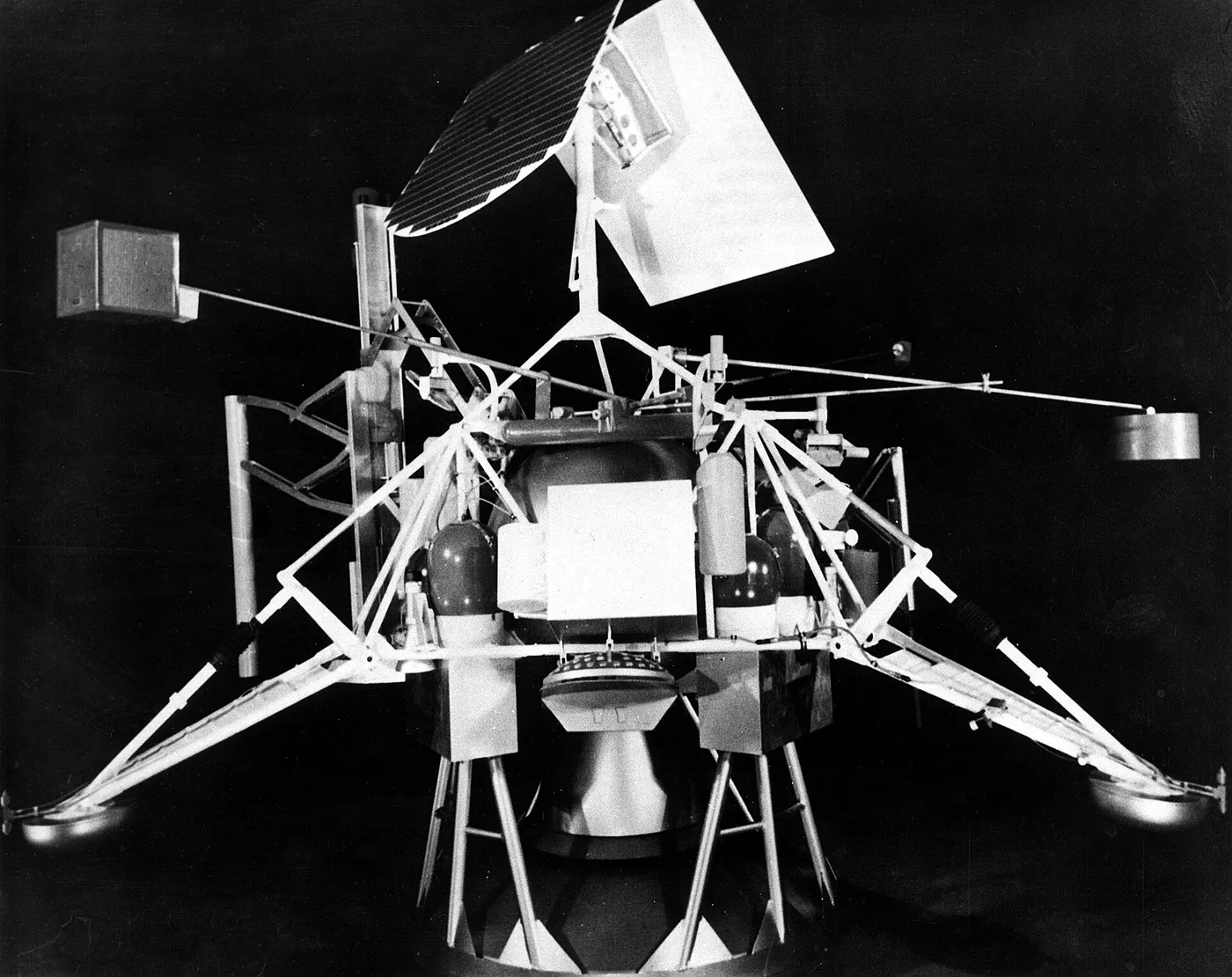

Surveyor 2 was lost because one engine did not light. On the way to the Moon the spacecraft fired its three vernier thrusters for a mid-course correction, and one of them failed to ignite — leaving the other two pushing against nothing on one side and setting the vehicle spinning.
Controllers tried repeatedly over the following hours to restart the dead engine, sending commands more than sixty times as the spacecraft tumbled faster. None of them worked, and by the time the retro-rocket was due to fire the vehicle was rotating far too quickly for a controlled descent to be possible.
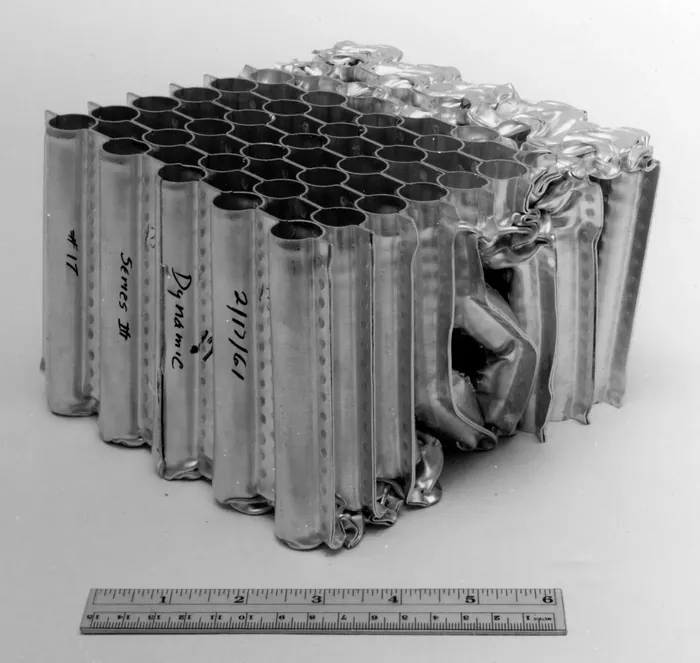
It struck the Moon southeast of Copernicus crater in September 1966 at something over 9,000 kilometres per hour, three days after launch and three months after its predecessor had landed perfectly.
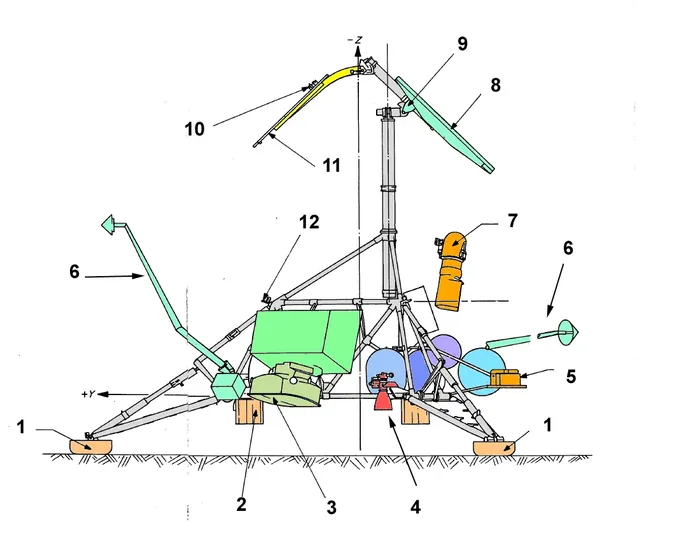
The failure was traced to the ignition circuitry of the vernier engine, and the fix — better ignition monitoring and a modified engine — was applied to the remaining spacecraft in the series. Surveyor 3 flew successfully seven months later.
It is worth remembering how unforgiving this period was. Of the seven Surveyors, two failed; of the preceding nine Rangers, six failed entirely. Every landing site Apollo eventually used was certified with data bought at that rate, and the programme's schedule absorbed the losses because the alternative was sending astronauts to ground nobody had characterised.