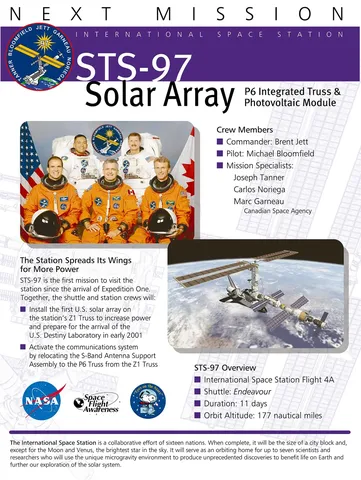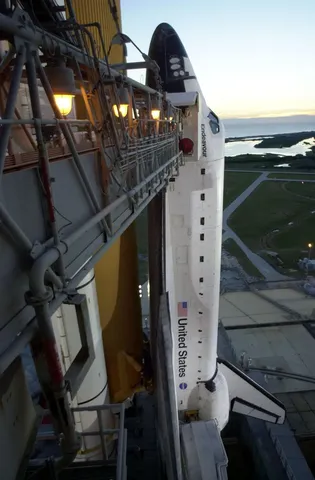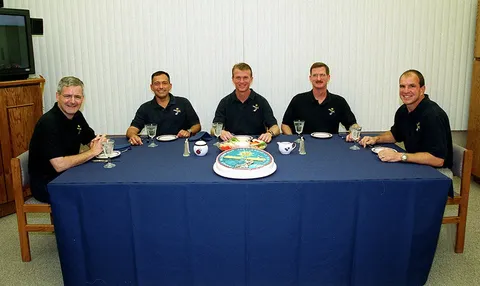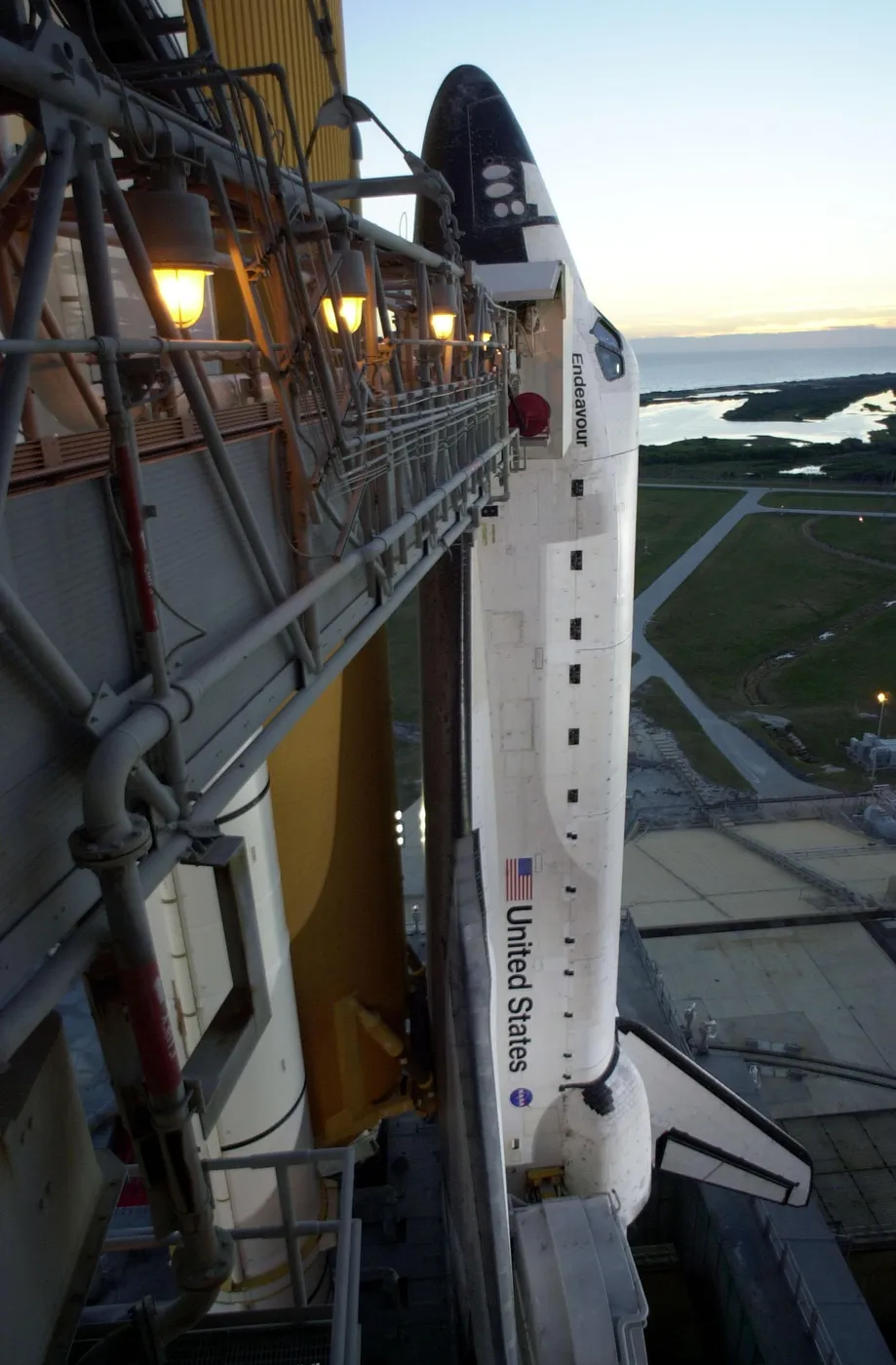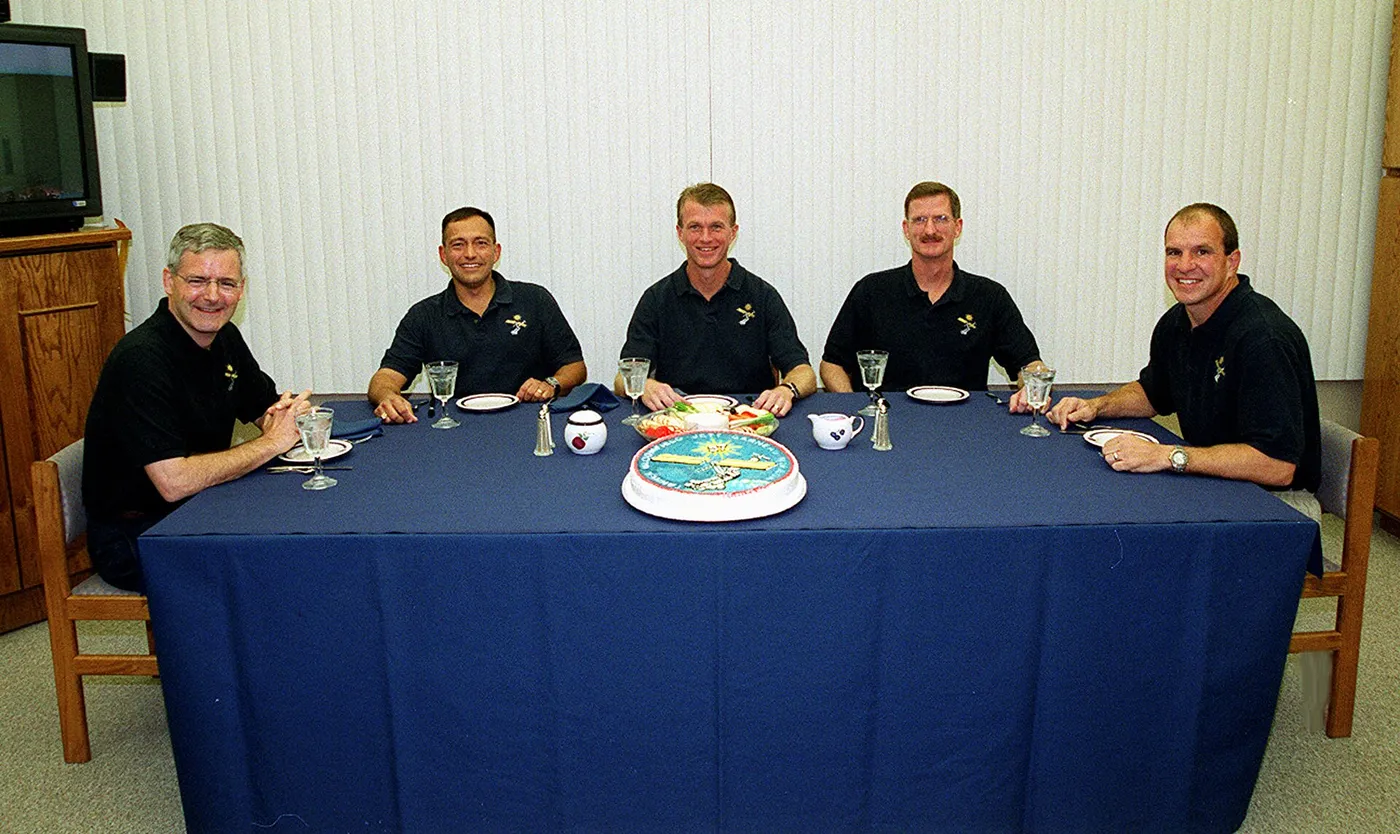
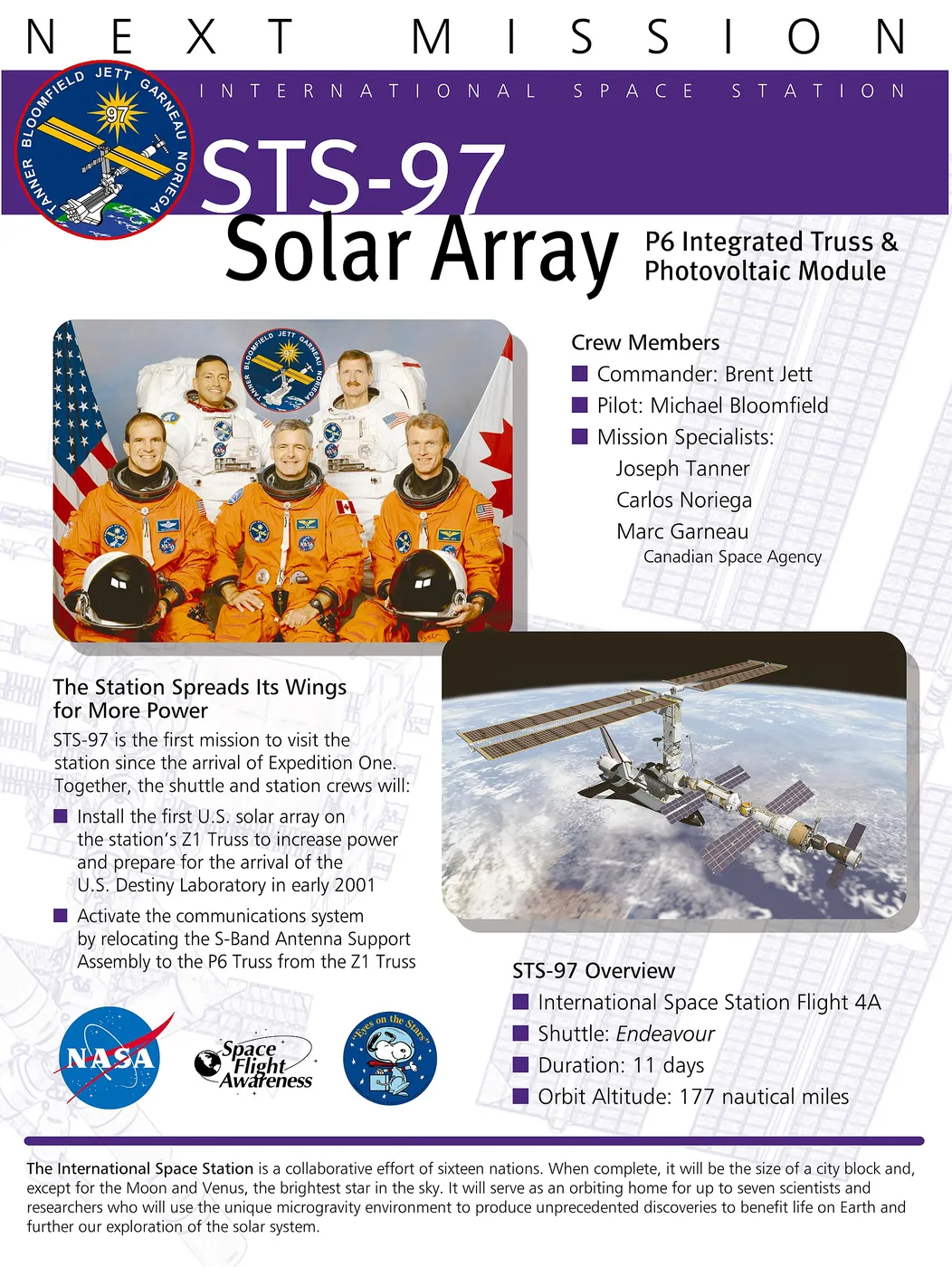

Endeavour delivered the International Space Station's first large solar arrays in December 2000, a mission that dramatically increased the outpost's power just as its first crew was settling in. The crew of five attached a truss segment carrying a pair of giant wings and unfurled them to their full length, more than sixty metres tip to tip.
The deployment did not go entirely smoothly — one array failed to tension properly and had to be coaxed into place — but the new panels roughly quadrupled the station's electricity, enabling the addition of laboratories and more crew. This was the first Shuttle visit while the station was permanently inhabited, and the visiting and resident crews greeted each other through the hatch, a small milestone in what would become years of continuous human presence.

Endeavour arrived at the station in December 2000 carrying the wings. The P6 truss held two solar arrays that unfurled to more than seventy metres tip to tip, and switching them on multiplied the station's available power several times over — the difference between a camping trip and a laboratory.
Unfolding them was fraught. The arrays deployed from concertina-folded blankets under spring tension, and on the first wing the tensioning wire jumped off its pulley, leaving a section of blanket loose and the whole structure liable to oscillate. Controllers commanded a partial retraction and redeployment, and Joe Tanner and Carlos Noriega went outside to coax it — delicate work with a fragile, live structure that could not be allowed to whip.
The mission also brought the first visit to a crewed station: Bill Shepherd's Expedition 1 had been aboard for a month. By plan the hatches stayed shut for most of the flight, since the airlock arrangement made opening them awkward, and the two crews initially talked through a window. When the hatches finally did open, the residents were handed fresh food and, more to the point, the electricity that would let their successors do science instead of housekeeping.