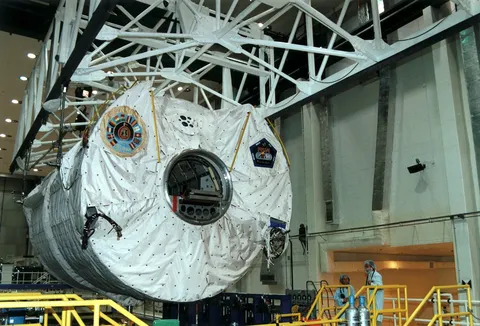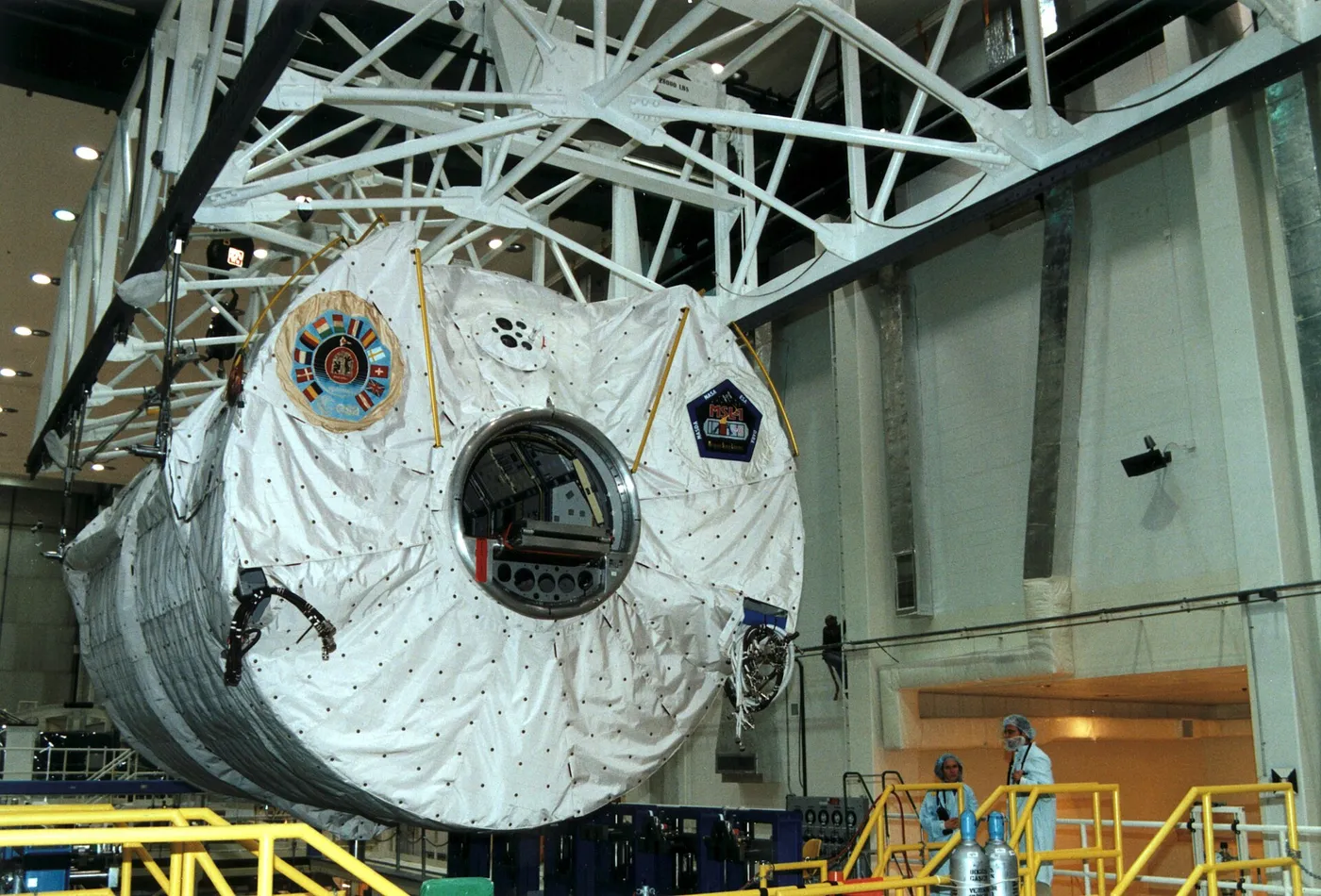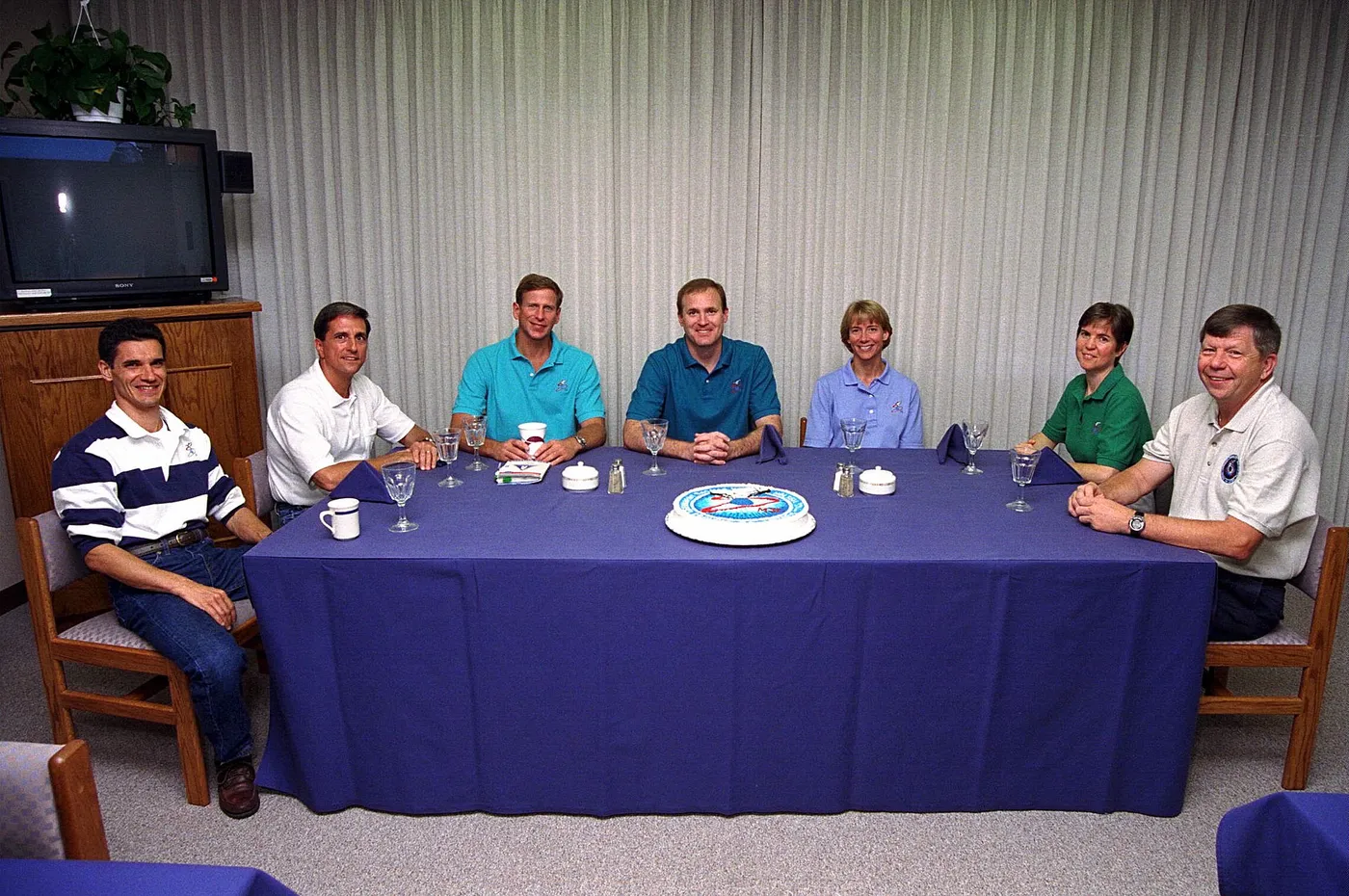
Columbia reflew the Microgravity Science Laboratory in July 1997, completing the mission that a fuel-cell fault had cut short that spring. In an unusual move, NASA sent up the same orbiter, the same seven-person crew and the same payload to finish the research the earlier flight had barely begun — the first time a mission was essentially repeated in full.
This time everything worked. Across nearly sixteen days the crew ran a broad program of combustion, materials and fluid-physics experiments, studying how flames burn and metals solidify without gravity. The successful reflight recovered the science lost in April and demonstrated the fleet's flexibility, turning an embarrassing early return into a model of how the programme could recover from a setback without abandoning its scientific goals.
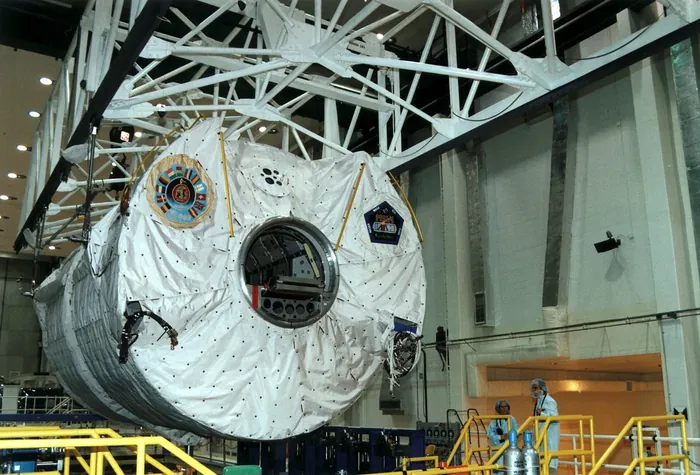
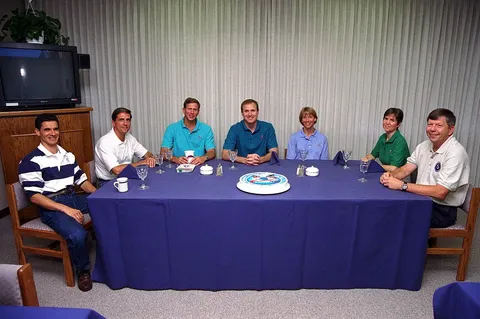
In July 1997 Columbia flew the same mission twice. STS-94 was a deliberate rerun of STS-83, cut short in April by a failing fuel cell: the identical orbiter, the identical Microgravity Science Laboratory, and all seven of the identical crew, reflown after the fastest turnaround the programme ever achieved.
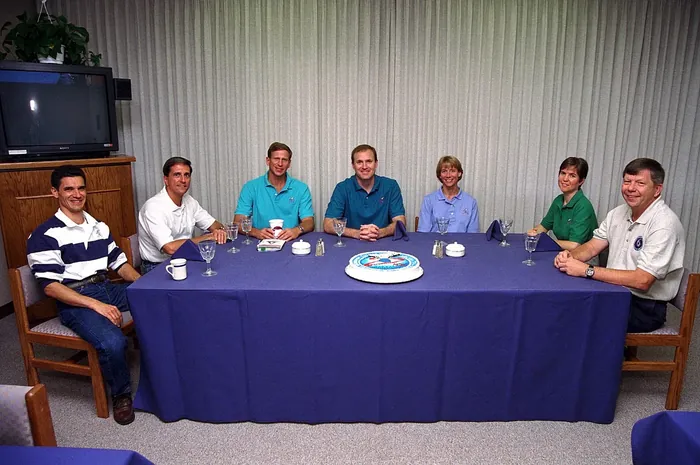
The economics made it obvious once someone said it aloud. The hardware was built, the experiments were integrated, and the astronauts were trained to a level no new crew could reach in a year; refurbishing the orbiter and flying again cost a fraction of starting over. NASA even kept the payload's original designation, and the crew joked about the world's longest launch delay.
This time everything ran. Over nearly sixteen days the crew worked shifts around the clock on combustion science — flames in weightlessness burn as slow spheres, revealing chemistry that gravity normally hides — along with metal solidification and protein studies. Commander Jim Halsell had the unusual distinction of commanding the same mission twice in one year, and the reflight remains a small, sane footnote in a programme not always known for either quality.