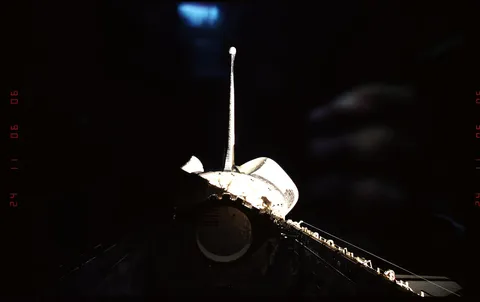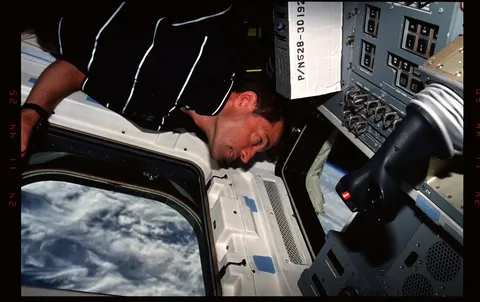
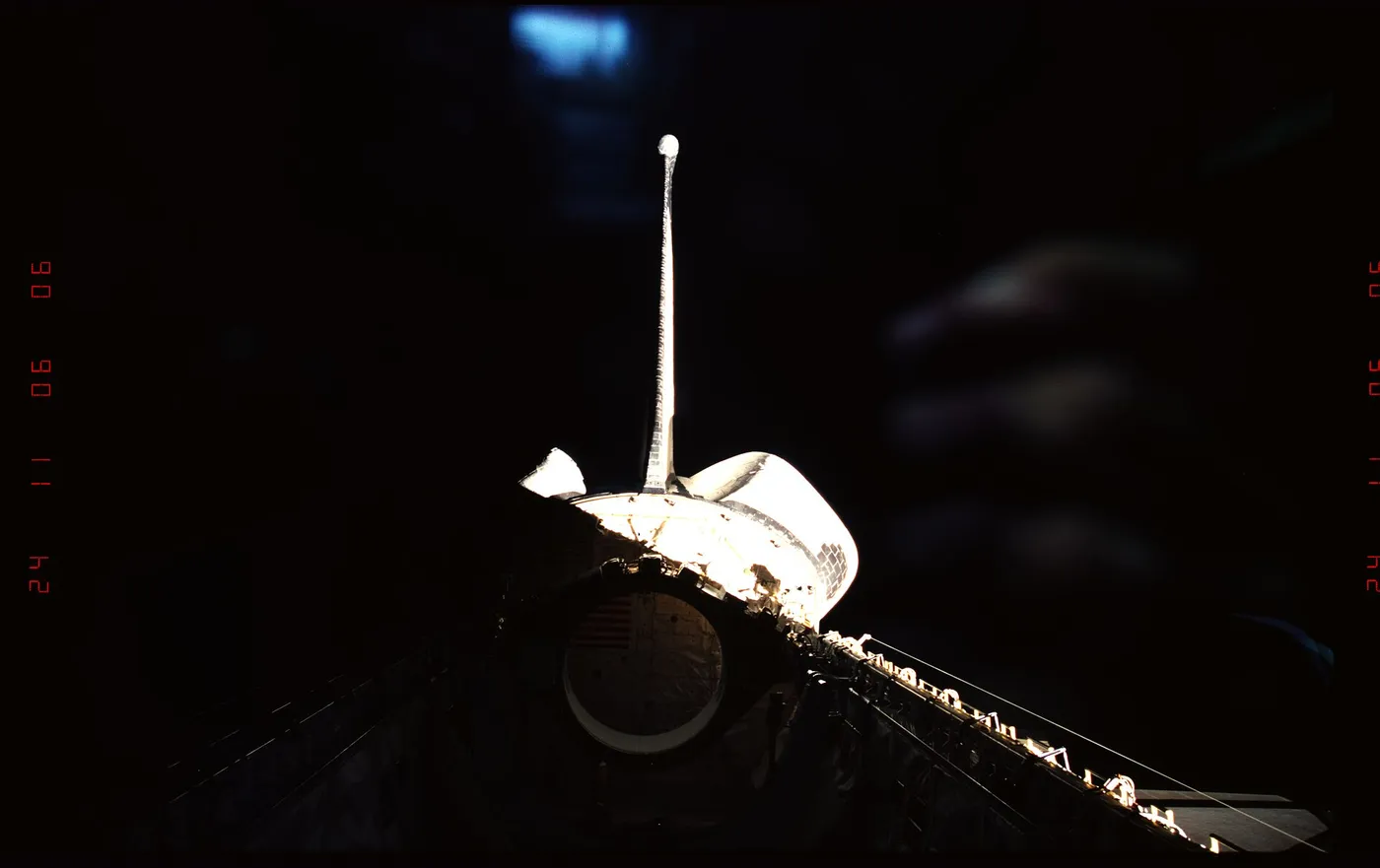
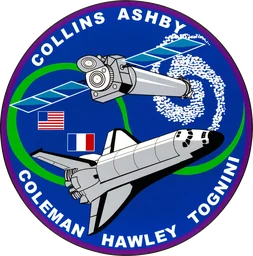
Columbia deployed the Chandra X-ray Observatory in July 1999, launching the third of NASA's Great Observatories and the heaviest payload the Shuttle ever carried to orbit. Chandra would open a sharp new window on the violent universe of black holes, exploding stars and superheated gas, complementing Hubble's view in visible light.
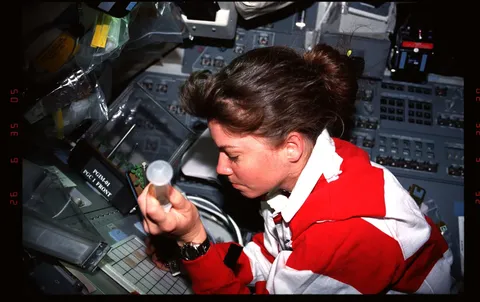
The flight is also remembered for a fraught ascent: a fuel leak and an electrical short in the first seconds after liftoff came uncomfortably close to forcing an emergency return, and only careful management brought Columbia safely to orbit. Commanding the mission was Eileen Collins, the first woman to command a Shuttle flight, a milestone that drew wide attention. Chandra went on to a long and productive career studying the high-energy cosmos.
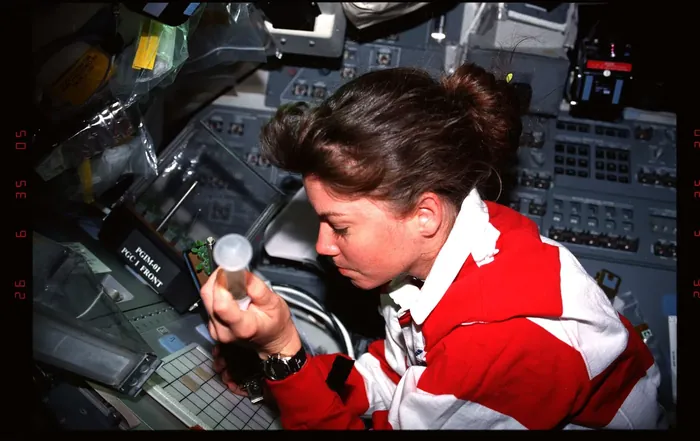
Eileen Collins commanded this mission, the first woman ever to command a spacecraft, four years after becoming the first to pilot one. She had been given the assignment in a White House ceremony, and the symbolism was heavy enough that she was careful to talk mostly about the payload.
The launch nearly killed them. Five seconds after ignition a gold-plated pin, no bigger than a fingernail, worked loose inside one main engine and punched through three of the hydrogen cooling tubes in its nozzle, opening a leak. At almost the same instant a short circuit knocked out the primary controllers on two of the three engines, leaving them running on their backups. Losing a controller and a leak on the same engine would have meant an abort across the Atlantic; as it was, the engines burned slightly oxygen-rich, ran out early, and put Columbia into orbit some seven metres per second slow — the narrowest launch margin of the programme after Challenger.
What they carried justified the risk. Chandra was the heaviest payload the Shuttle ever lifted, an X-ray observatory with mirrors polished to a smoothness measured in atoms, designed to see the hottest and most violent processes in the universe. It has since imaged the shock waves of supernovae, weighed dark matter in colliding galaxy clusters, and watched matter disappear into black holes — and it is still working, decades past its planned life.