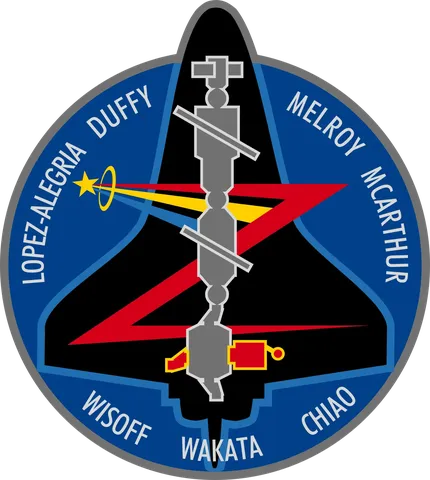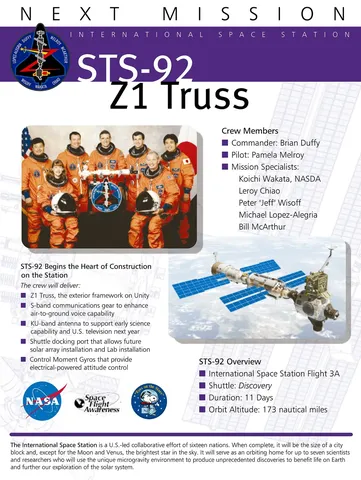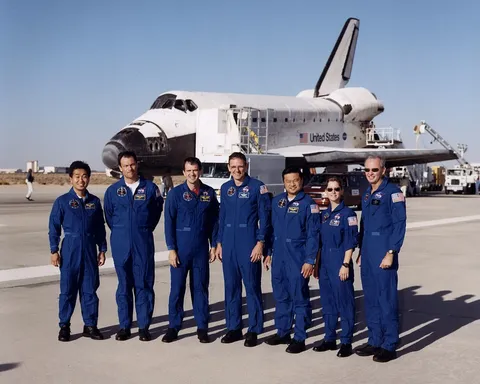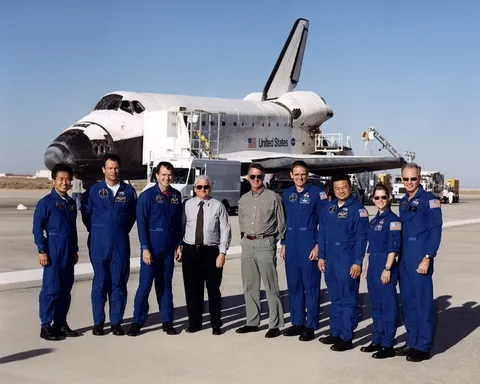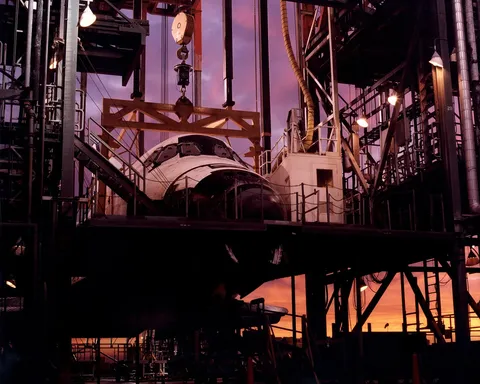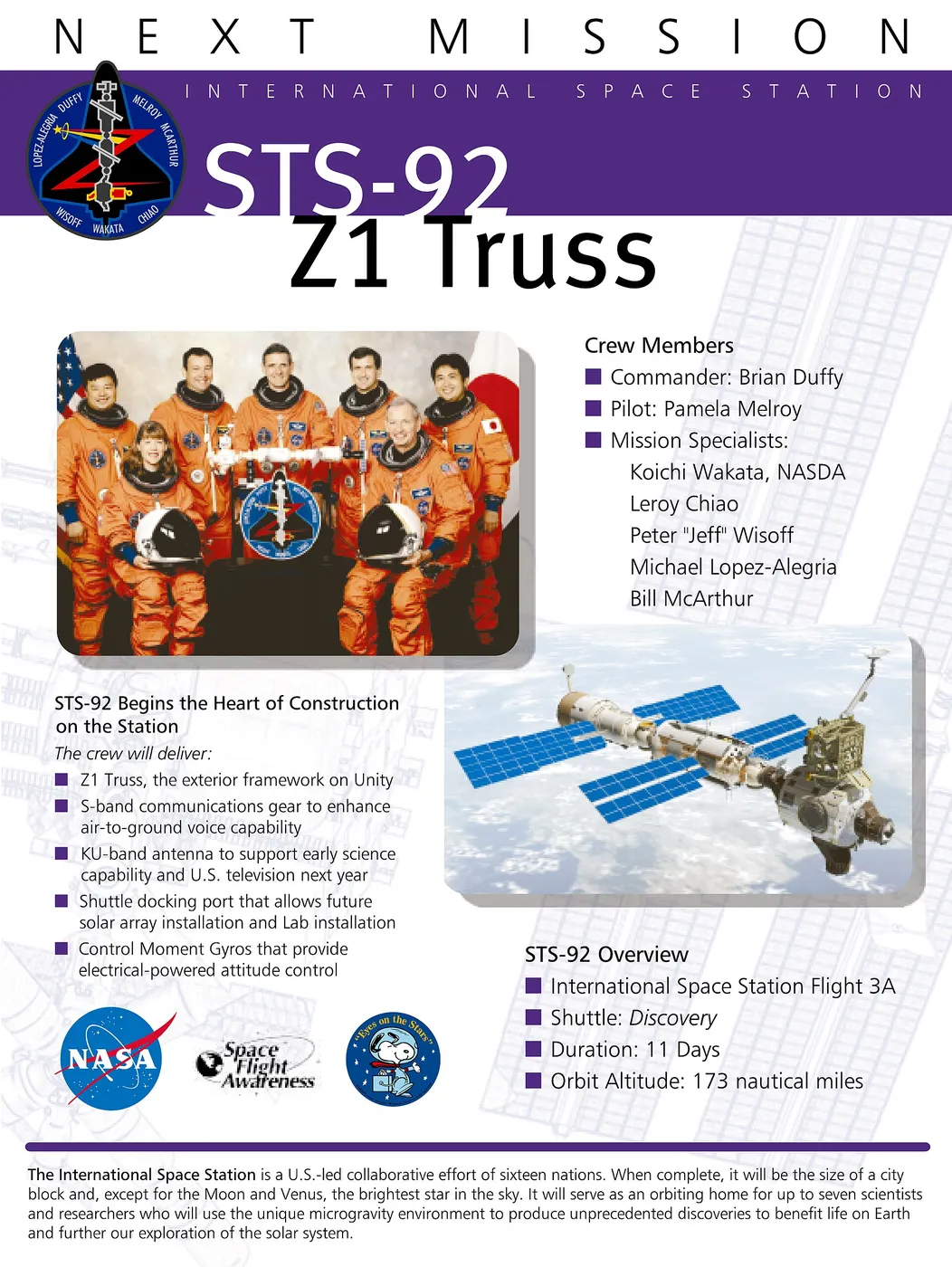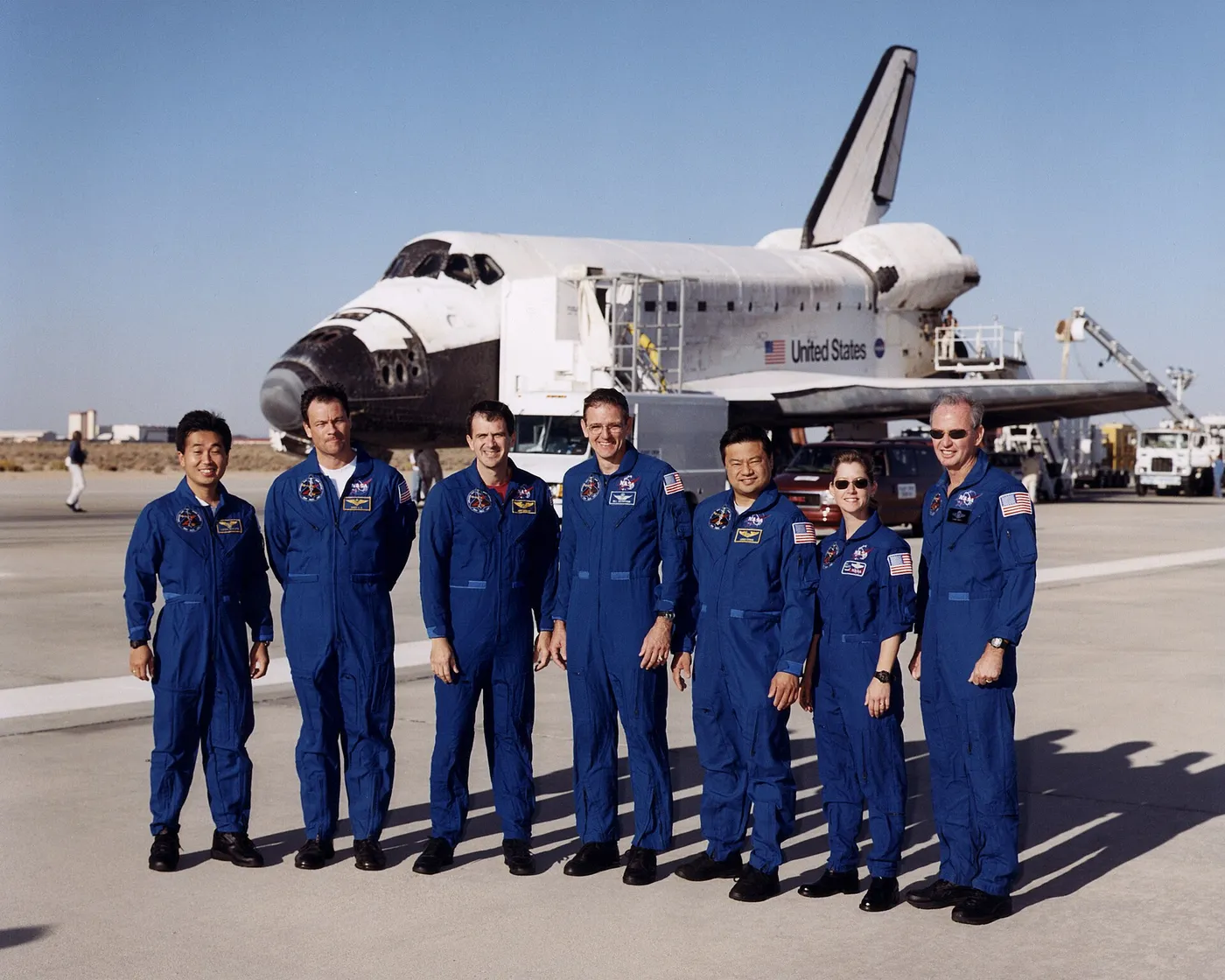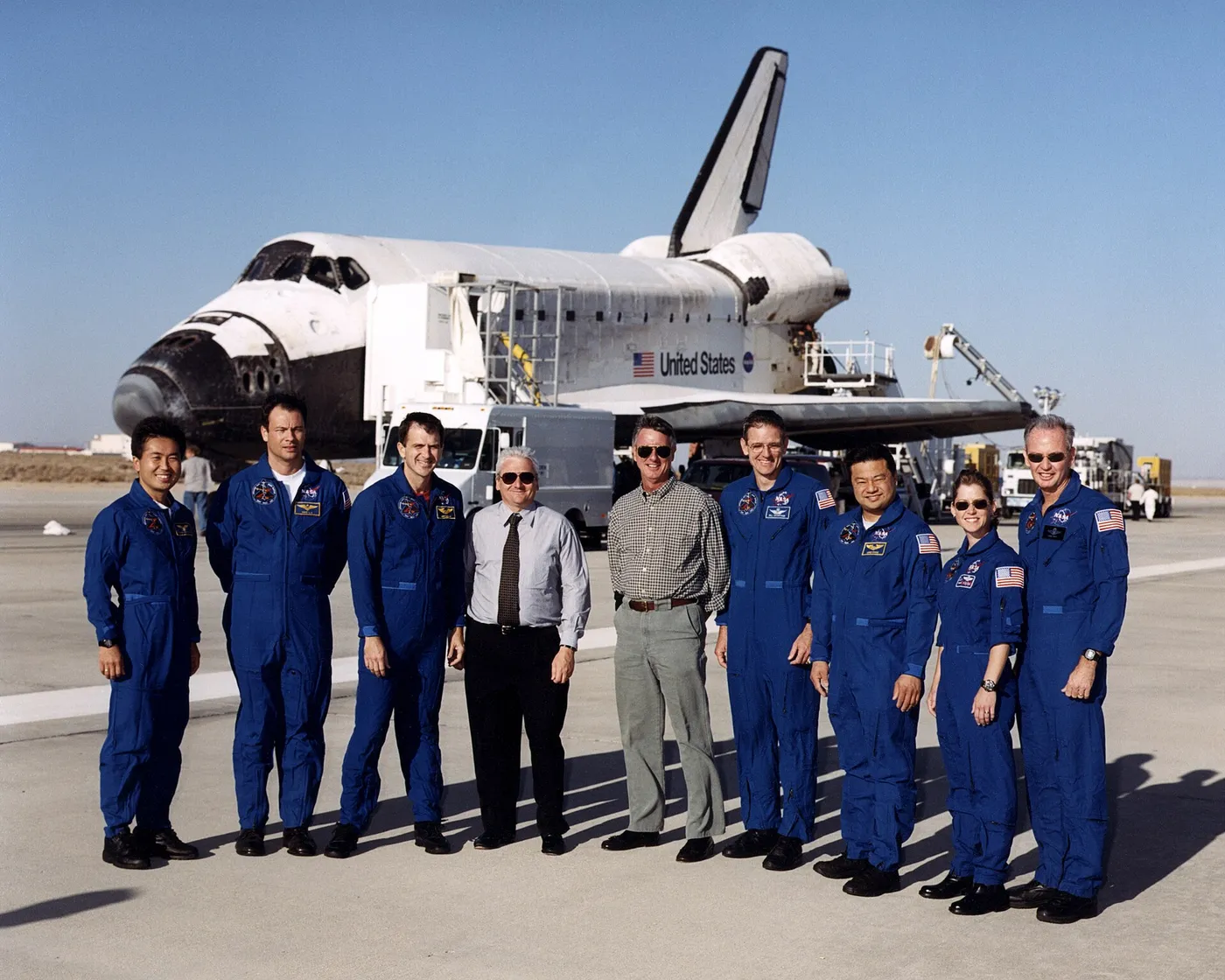
Discovery flew a major assembly mission to the International Space Station in October 2000, delivering a key structural segment and a docking port in the final push before permanent habitation. The crew of seven attached a truss element carrying gyroscopes and communications gear, along with a connector that would let future Shuttles dock more easily.
Four spacewalks were needed to bolt the new hardware in place and wire it into the station, an intensive campaign of outdoor work that previewed the assembly marathon ahead. The flight was also the hundredth Shuttle mission, a milestone reached just as the fleet's central purpose became clear: building and sustaining the station. Its work set the stage for the first resident crew, who would arrive at the outpost within days of Discovery's return.
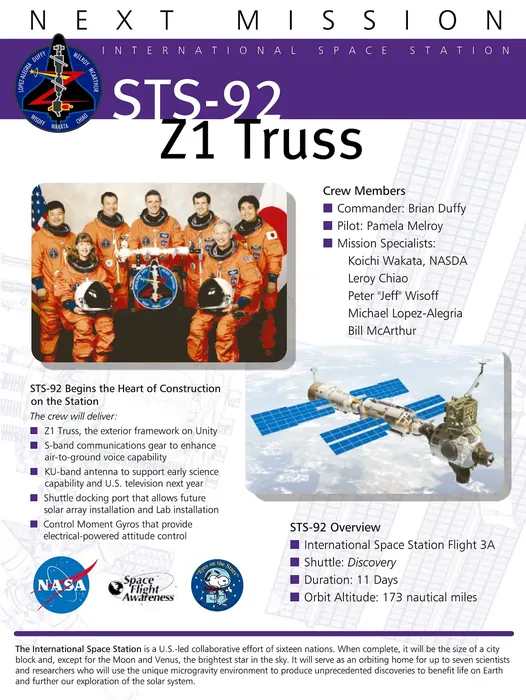
This was the hundredth flight of a Space Shuttle, and NASA marked it by doing something almost entirely unglamorous: bolting a girder and a docking adapter onto a station that nobody yet lived in. The Z1 truss carried gyroscopes and communications gear, and the mission's four spacewalks were the assembly work that made permanent occupation possible.
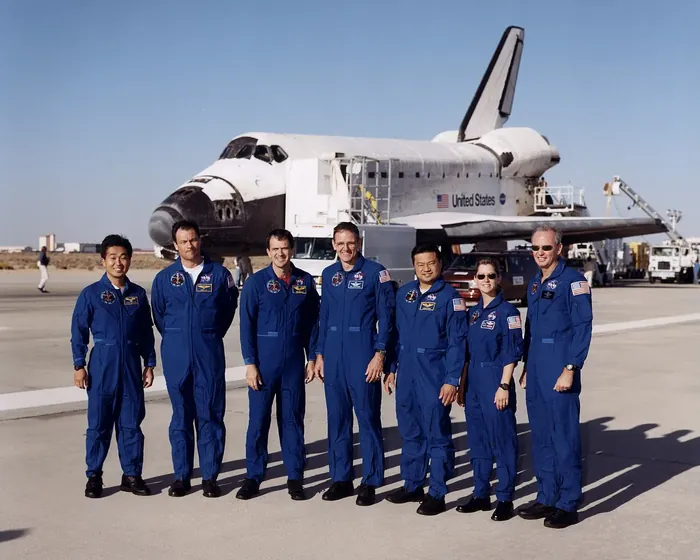
The timing was deliberate. Discovery's crew were the last people to visit the International Space Station while it was still empty; the first resident crew, Bill Shepherd with Yuri Gidzenko and Sergei Krikalev, launched on a Soyuz nineteen days later and moved in. Everything this mission installed — attitude control gyros, the antenna for high-rate communications, the port a Shuttle would dock to — was infrastructure the residents would depend on from their first night.
It says something about how the programme had changed that its hundredth flight involved no satellites, no telescope and no records. The Shuttle had become a construction vehicle, and its crews spent their days doing careful, repetitive, physically punishing work in a vacuum so that other people could live above the atmosphere continuously — which they have now done, without a break, ever since.