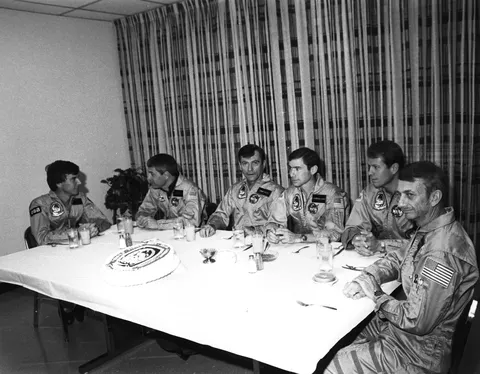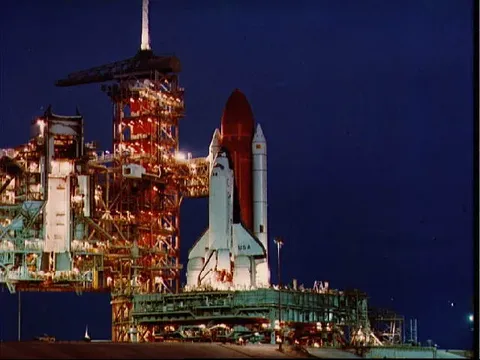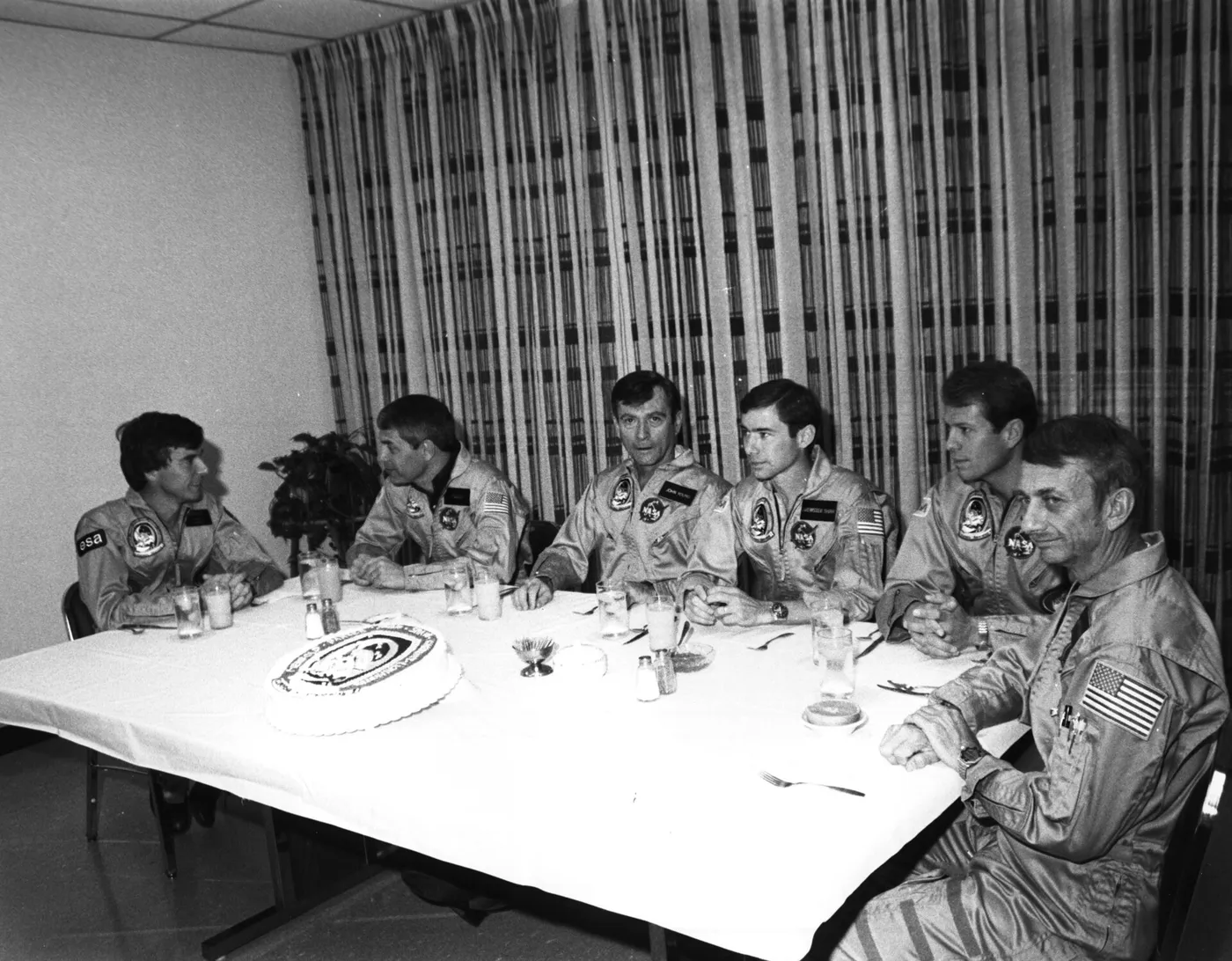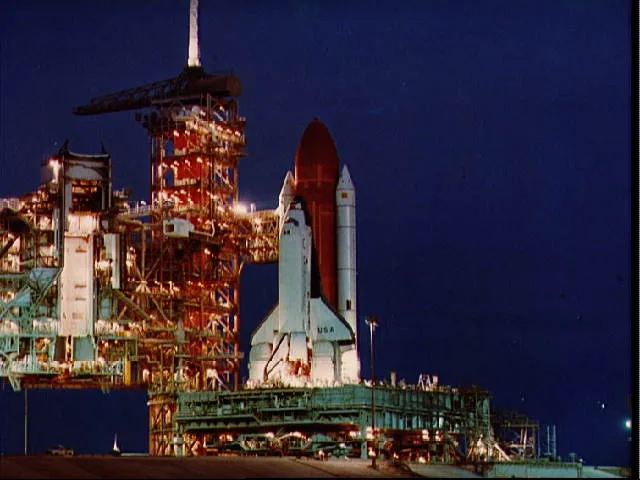
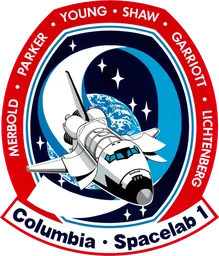
In November 1983 Columbia carried the largest crew yet — six people — and a European-built laboratory that transformed the Shuttle from a delivery truck into a flying research institute. Spacelab, a pressurised module bolted into the payload bay, let scientists work in shirtsleeves on dozens of experiments in physics, biology and astronomy. Among the crew was Ulf Merbold of West Germany, the first non-American to fly on a US spacecraft.
Commanding the ten-day marathon was John Young, making his sixth spaceflight, a span that reached back to the two-man Gemini capsules and the surface of the Moon. The mission nearly ended in disaster when two flight computers failed and a fuel leak sparked a small fire during re-entry, but Columbia landed safely, and Spacelab's success opened a laboratory in orbit that would fly for years.
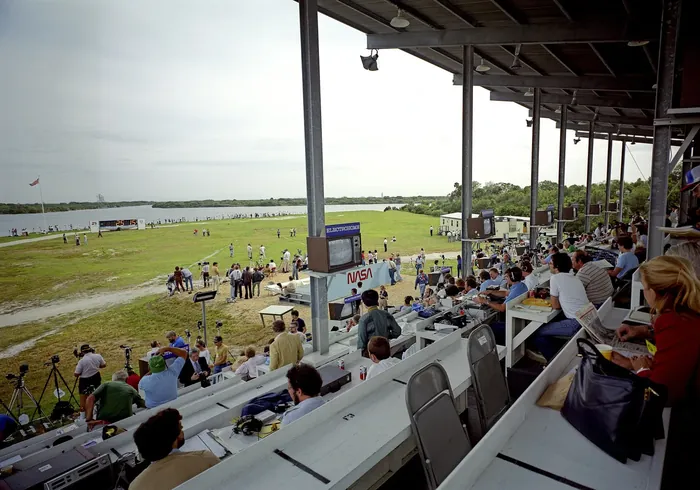
This was the flight that turned the Shuttle's cargo bay into a laboratory. Spacelab was Europe's contribution to the programme — a pressurised module built in Bremen, carried in the bay and reached through a tunnel — and its first flight carried six people, the largest crew yet flown, working in shifts around the clock for ten days.
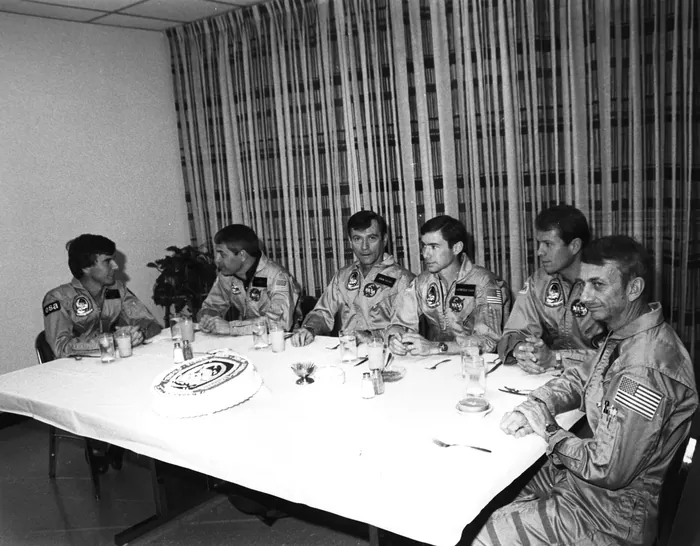
It also broke a barrier quietly: Ulf Merbold, a West German physicist, became the first ESA astronaut in space and the first non-American to fly aboard a US spacecraft. More than seventy experiments ran in the module, and the science community got, for the first time, a laboratory it could design for rather than a capsule it had to beg space in.
The landing nearly ended in disaster. Preparing for re-entry, two of Columbia's five general-purpose computers failed within minutes of each other and an inertial measurement unit dropped out; John Young, commanding his sixth and final flight, held the orbiter in space for hours while the problem was understood. Worse was found on the ground: two of the auxiliary power units had caught fire during descent, leaking hydrazine. Young said afterwards that had he known, he would have been far more frightened than he was.