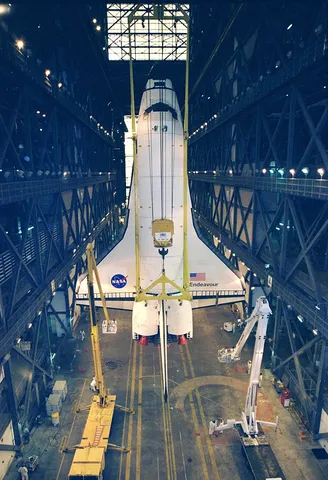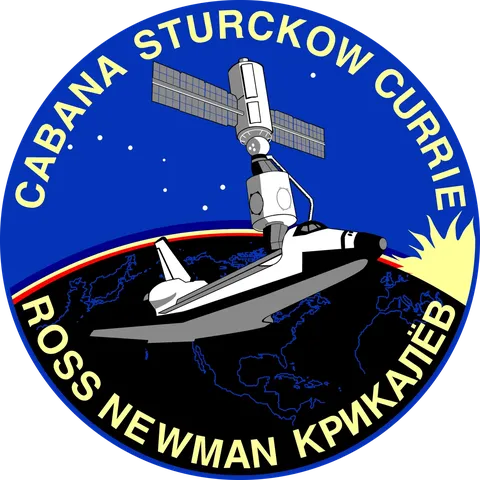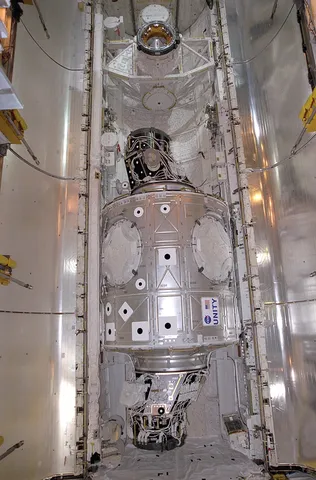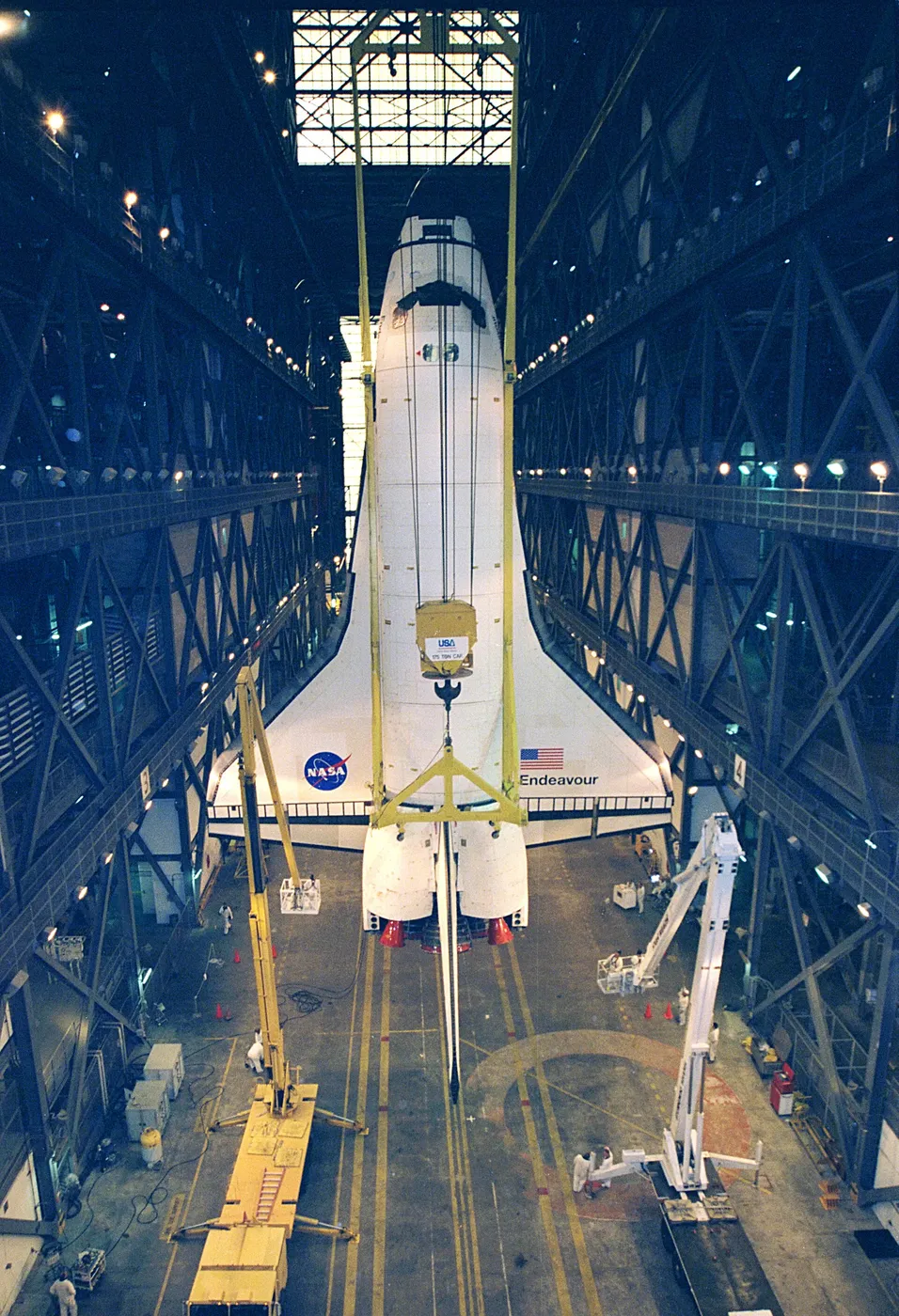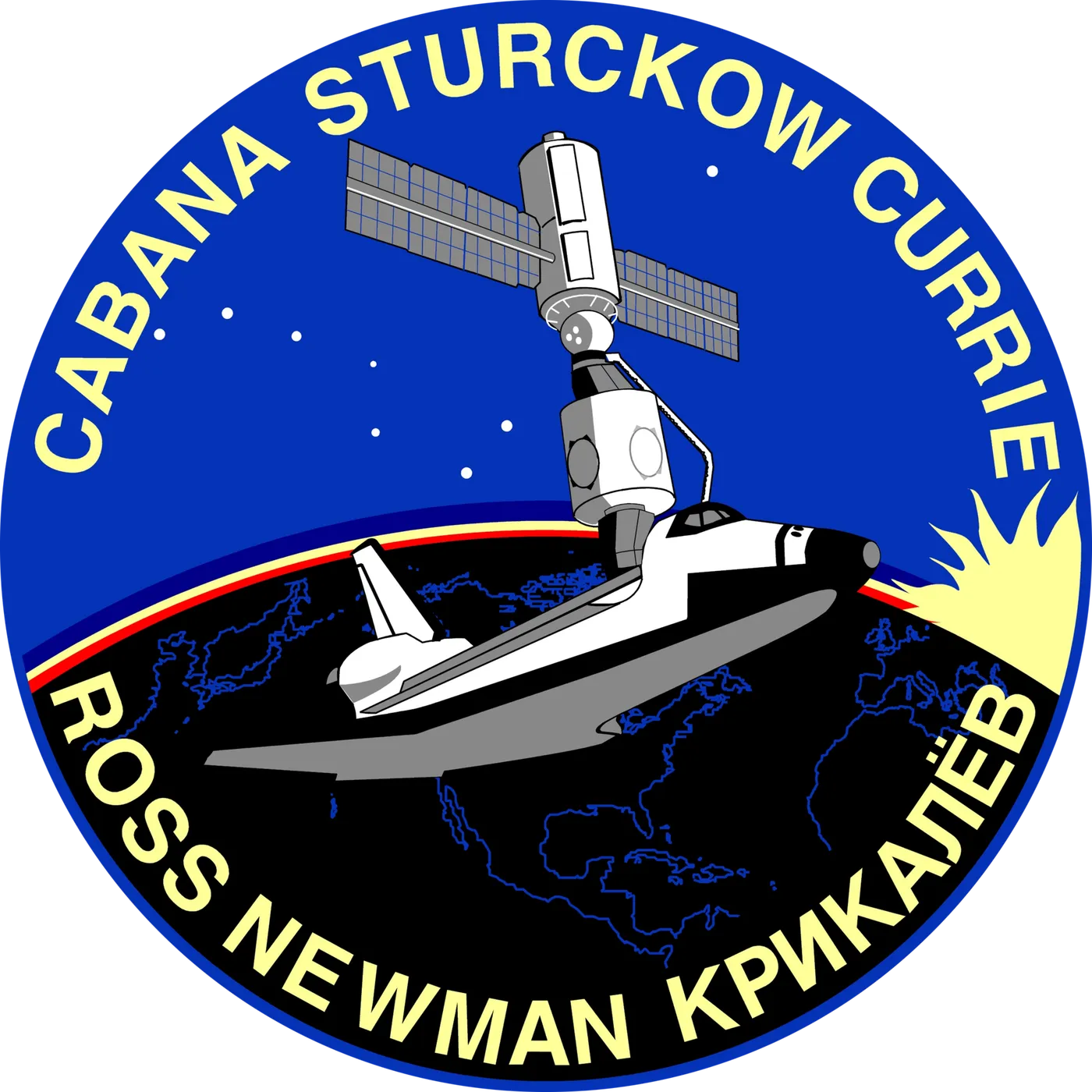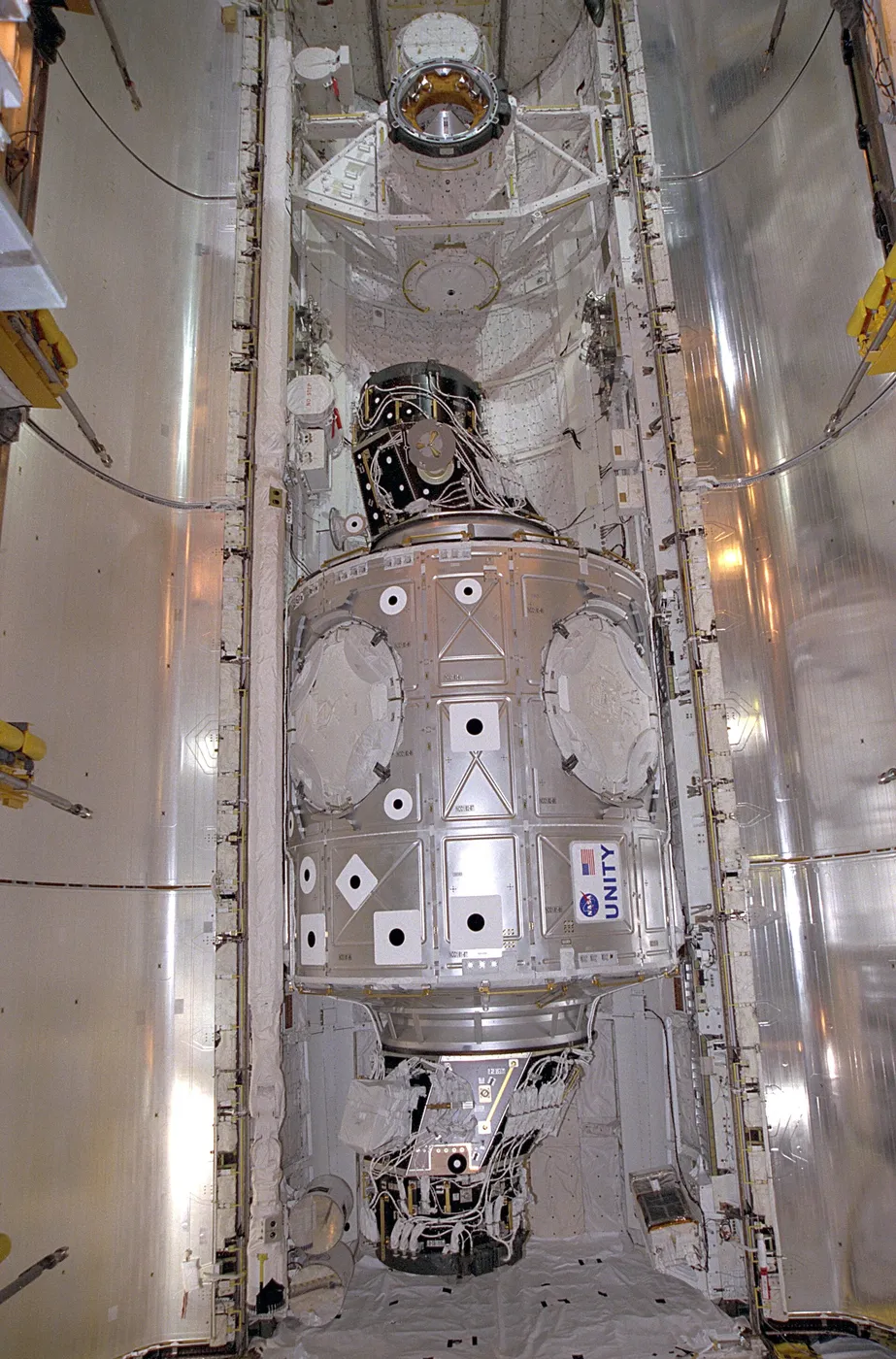
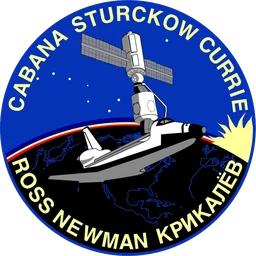
In December 1998 Endeavour launched the first American component of the International Space Station, beginning the largest construction project ever attempted in orbit. The crew of six captured the Russian-built Zarya module, already in orbit, with the robotic arm and mated it to the American-built Unity connecting node they had carried up, joining the first two building blocks of the station.
Across three spacewalks the astronauts connected cables and fittings between the modules, bringing the nascent outpost to life. Cosmonaut Sergei Krikalev, who years earlier had been the first Russian to fly on the Shuttle, was aboard, embodying the partnership now made concrete in hardware. The mission turned years of planning and Mir-era rehearsal into the physical beginning of a station that would grow, piece by piece, across the coming decade.
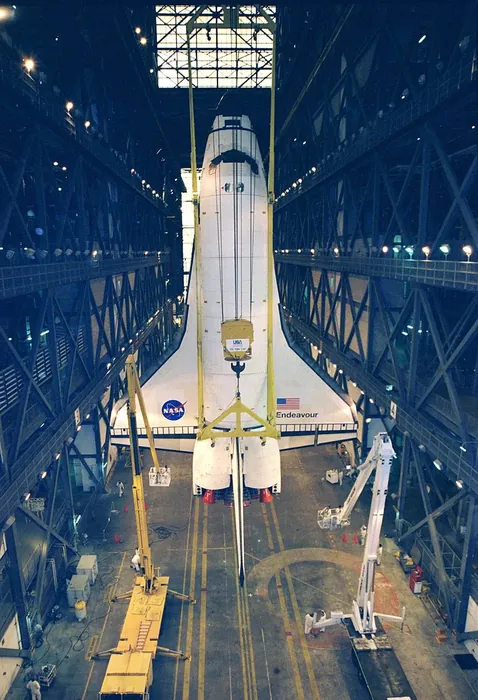
The International Space Station began, physically, with this flight. In December 1998 Endeavour chased down Zarya — a Russian-built, American-funded power and propulsion module launched on a Proton two weeks earlier — caught it with the robotic arm, and bolted it to Unity, the first American element, in the payload bay. Two nations' hardware, joined by an astronaut at a control station, became a station.
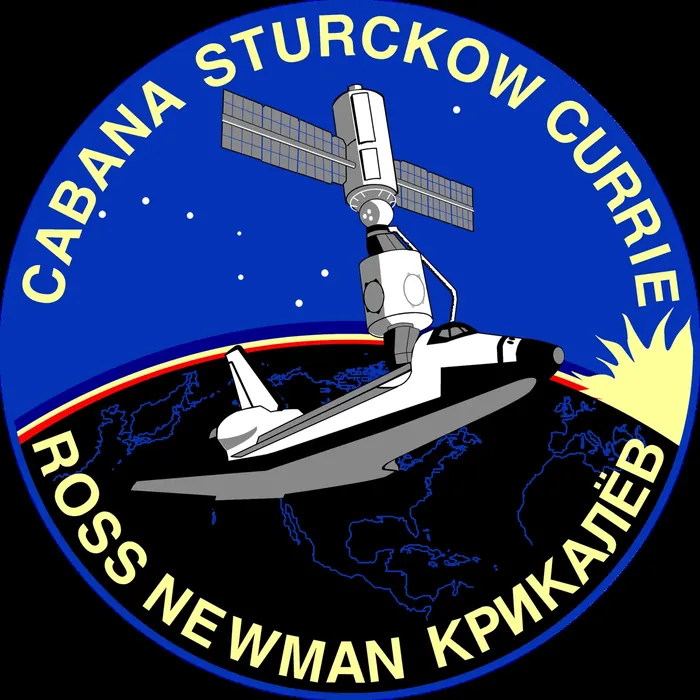
Three spacewalks by Jerry Ross and James Newman connected the plumbing and the cabling that made the pieces one machine, work far harder than the animations suggested; connectors resisted, and the pair spent more than twenty-one hours outside across the flight. Nancy Currie flew the arm for the delicate business of mating two modules with centimetres of margin.
Then came a small piece of choreography that said everything about the project. When the hatches opened, commander Bob Cabana and Sergei Krikalev — the cosmonaut who had flown the first Shuttle-Mir exchange five years earlier — entered the station together, side by side, so that neither could be described as having been first. Humans have lived aboard continuously since November 2000.