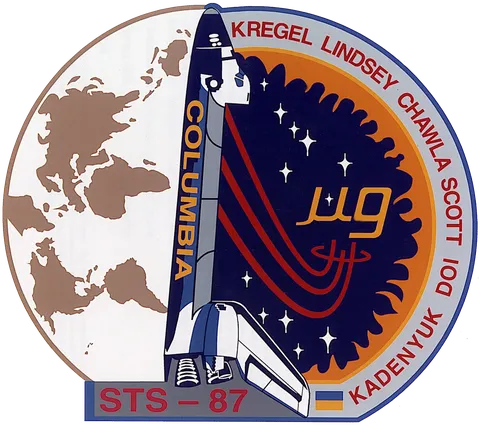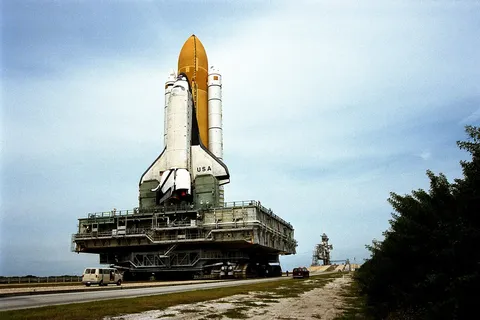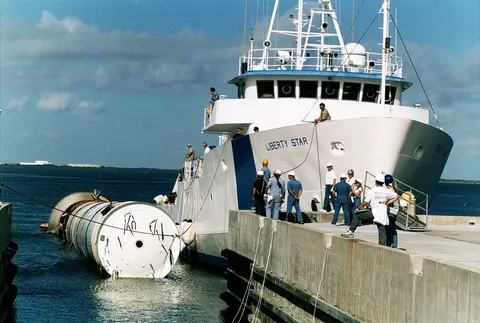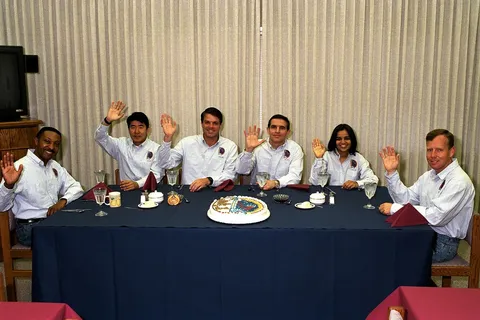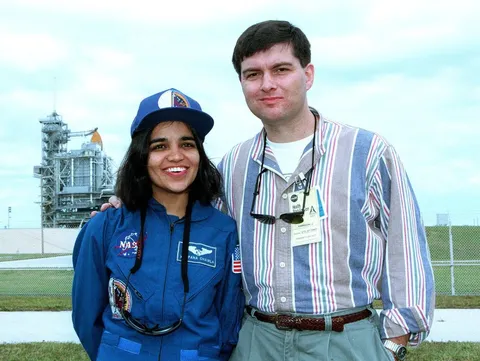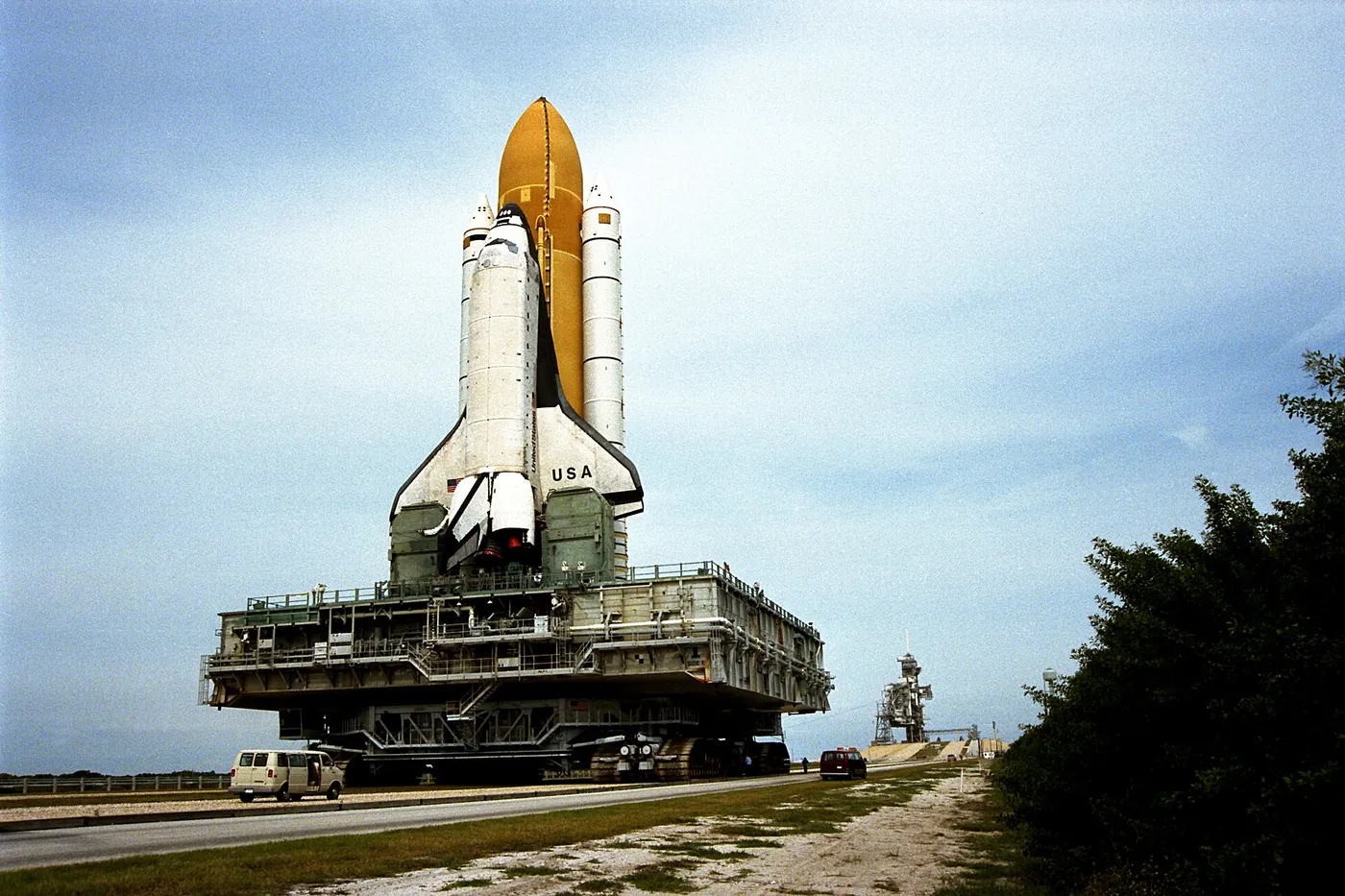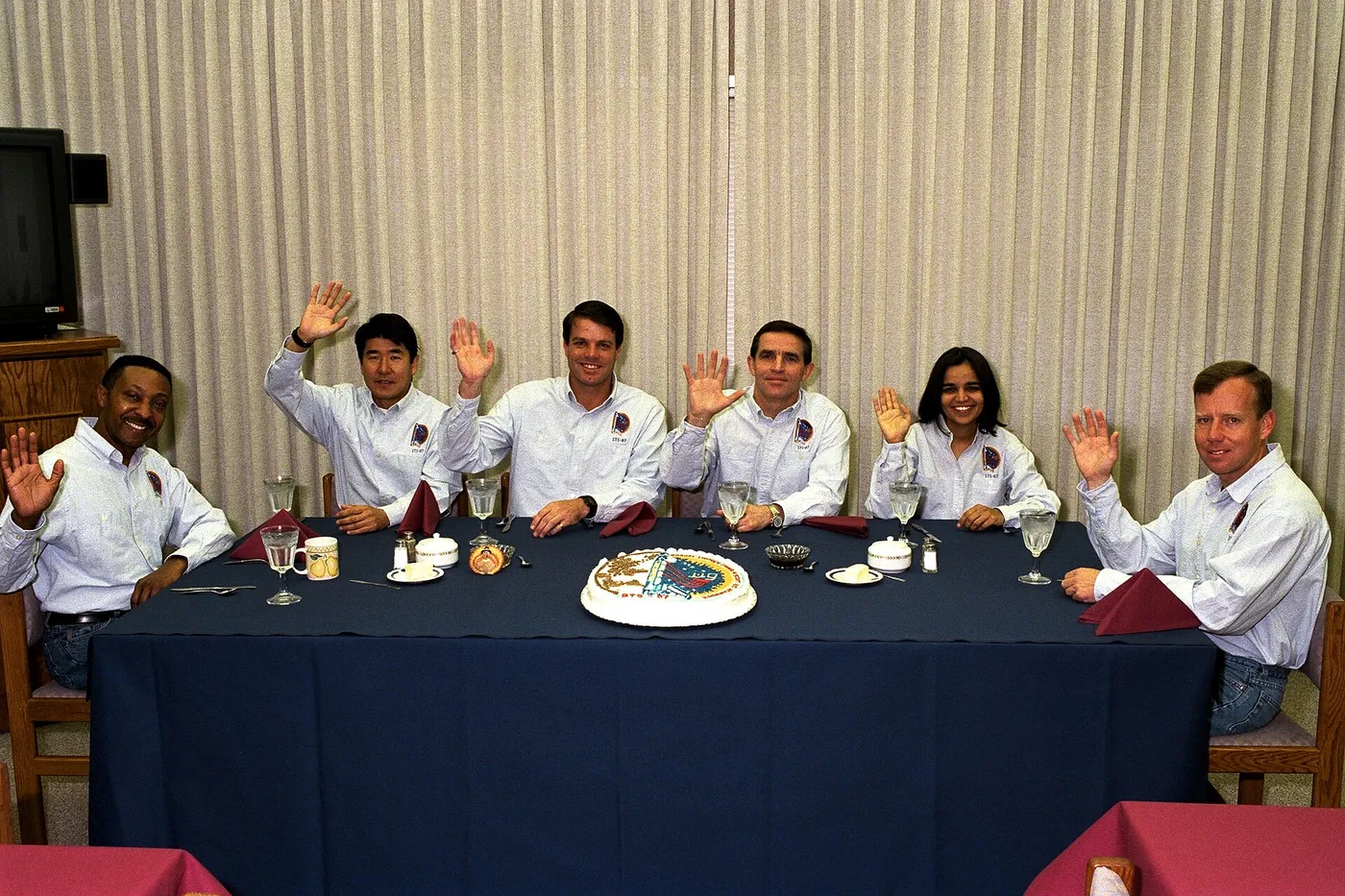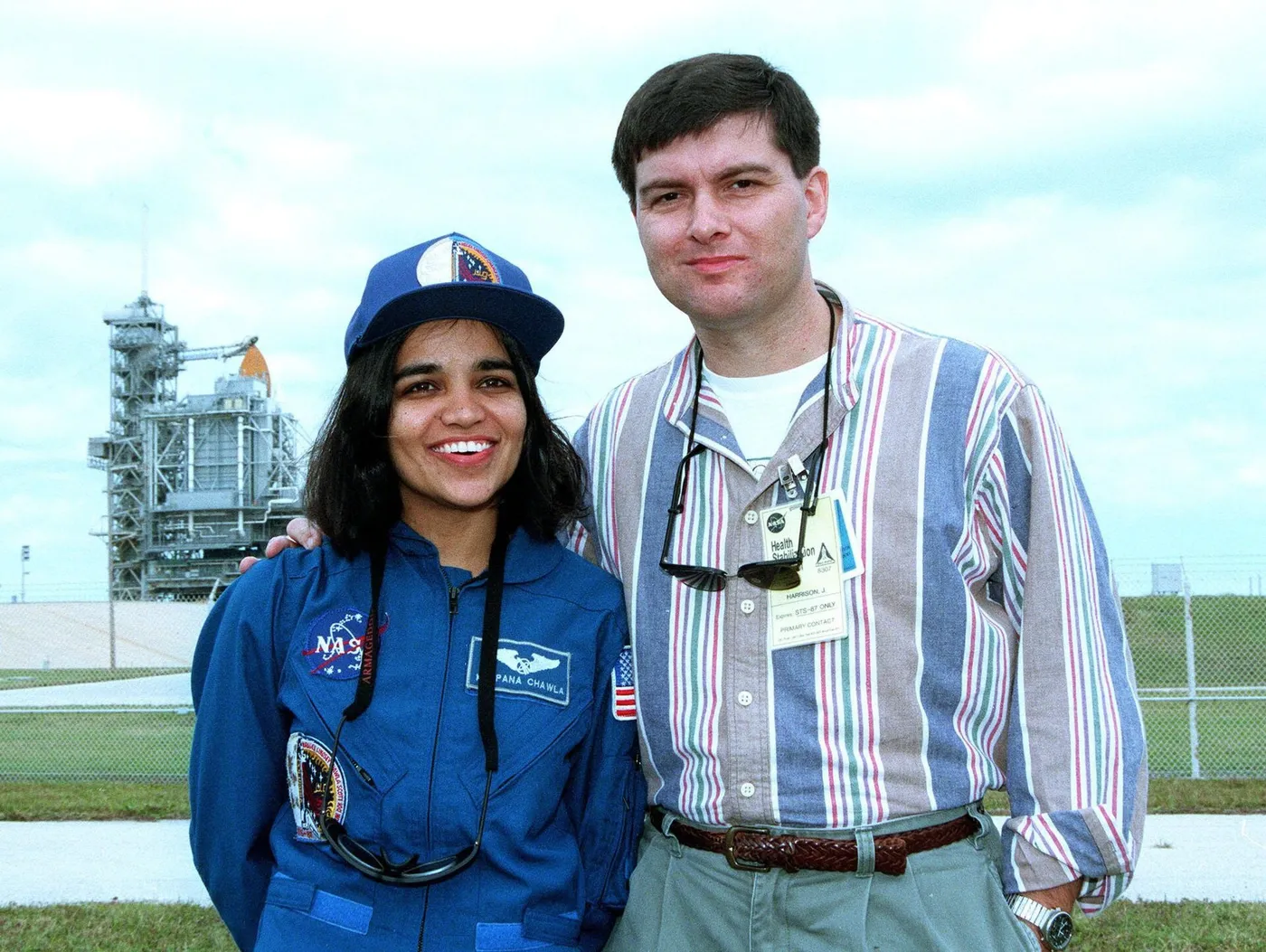
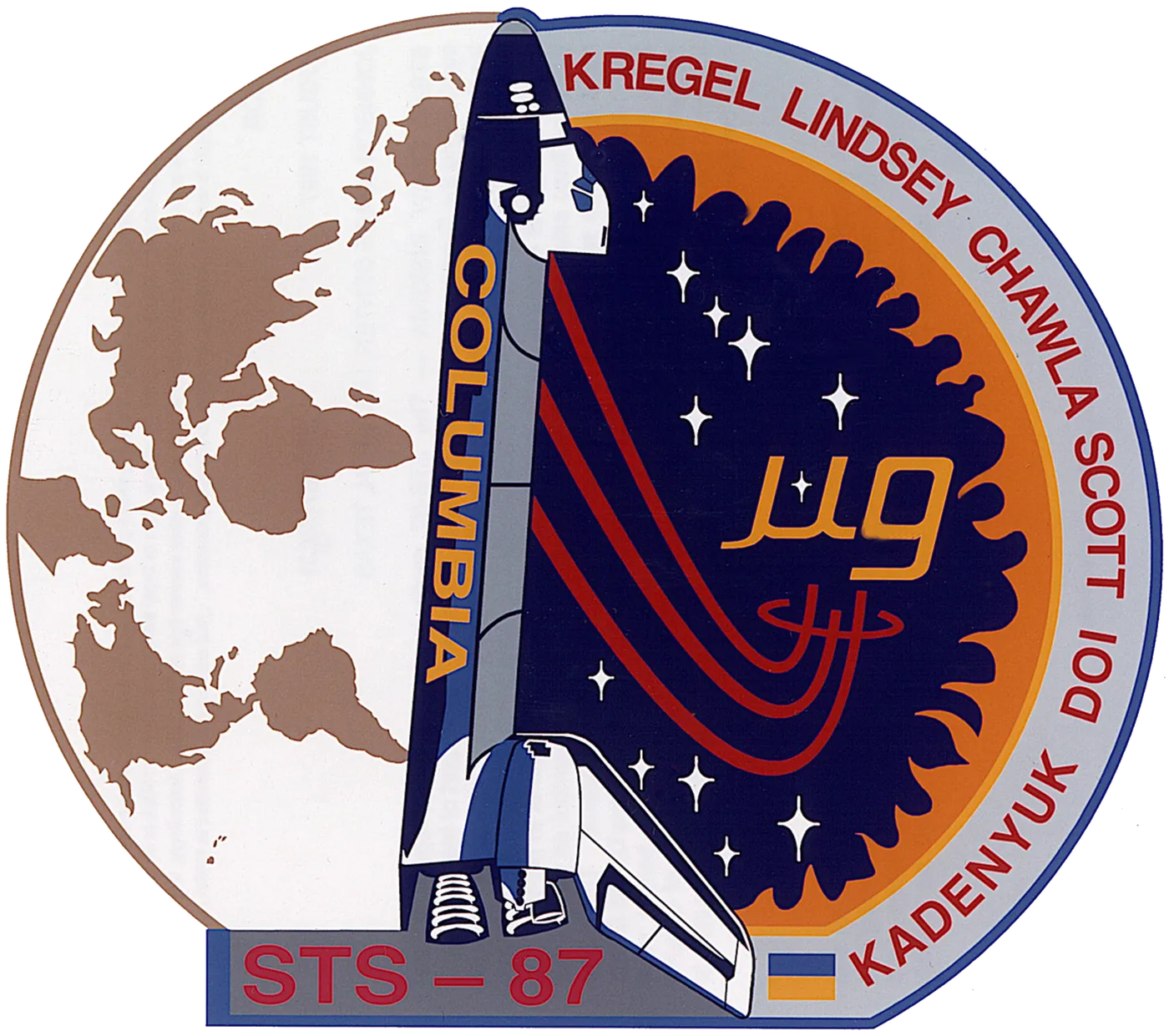
Columbia flew the fourth United States Microgravity Payload in November 1997, a materials-science mission that also carried a pair of notable firsts. Kalpana Chawla became the first woman of Indian origin to fly in space, and Takao Doi made the first spacewalk by a Japanese astronaut.
The flight ran into trouble when a free-flying solar-observation platform, released on the robotic arm, began tumbling after a procedural error and could not be caught normally. Doi and Winston Scott went outside and captured the spinning satellite by hand, a tense retrieval that salvaged the hardware. The crew of six also tested tools for the coming space station across the sixteen-day mission, blending science, international milestones and an improvised rescue in a single busy flight.
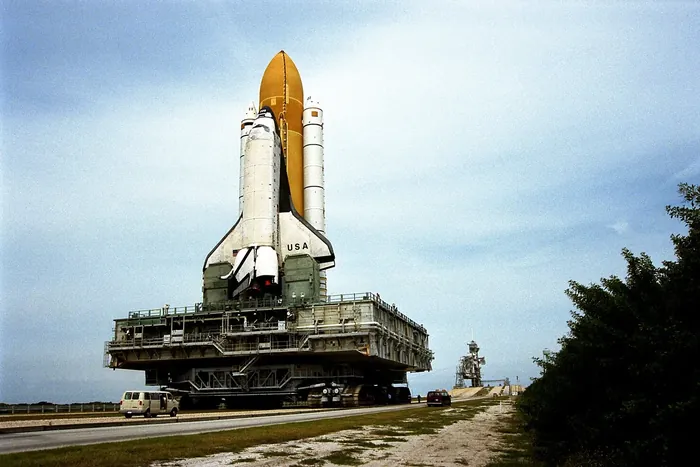
Kalpana Chawla flew this mission as the first woman born in India to reach space. She had grown up in Karnal watching aircraft, taken a degree in aeronautical engineering when few women in the country did, emigrated, and arrived at NASA by way of a doctorate and a commercial pilot's licence. Her presence on the crew was front-page news across India.
The flight went wrong around her. Deploying the Spartan solar-observation satellite, the spacecraft failed to execute its activation manoeuvre; Chawla, operating the robotic arm, attempted to regrapple it and instead set the 1,400-kilogram satellite slowly tumbling out of reach. What followed was one of the more remarkable improvisations of the era: Winston Scott and Takao Doi went outside and caught the drifting satellite with their gloved hands, steadying it between them until the arm could take hold.
Chawla was blamed in the immediate coverage and largely exonerated later — reviews found the procedures and software had set her up to fail — and she flew again six years afterwards, on Columbia's final mission. Her name is now carried by schools, scholarships, a supercomputer and a ridge on Mars.