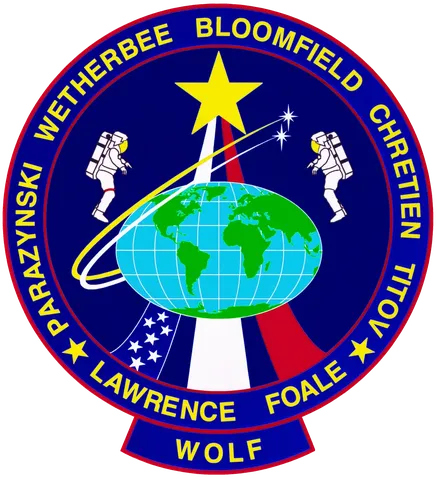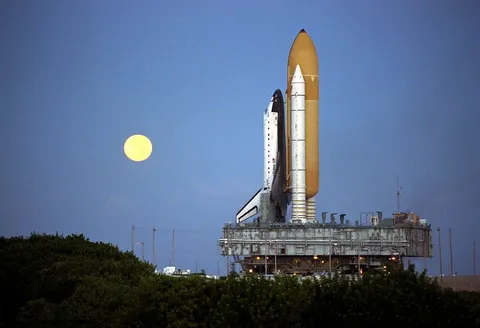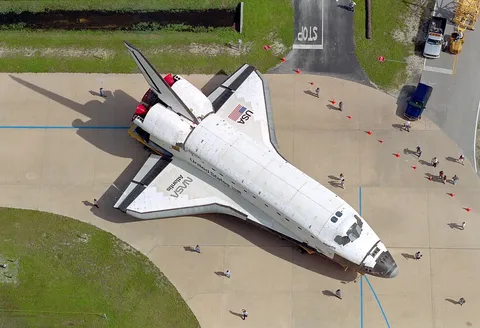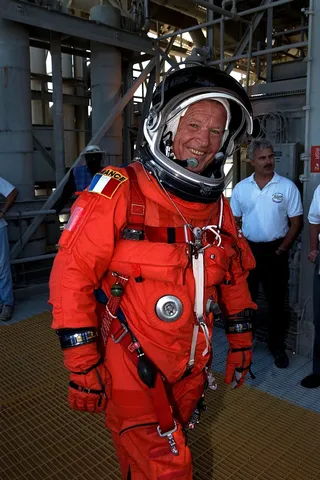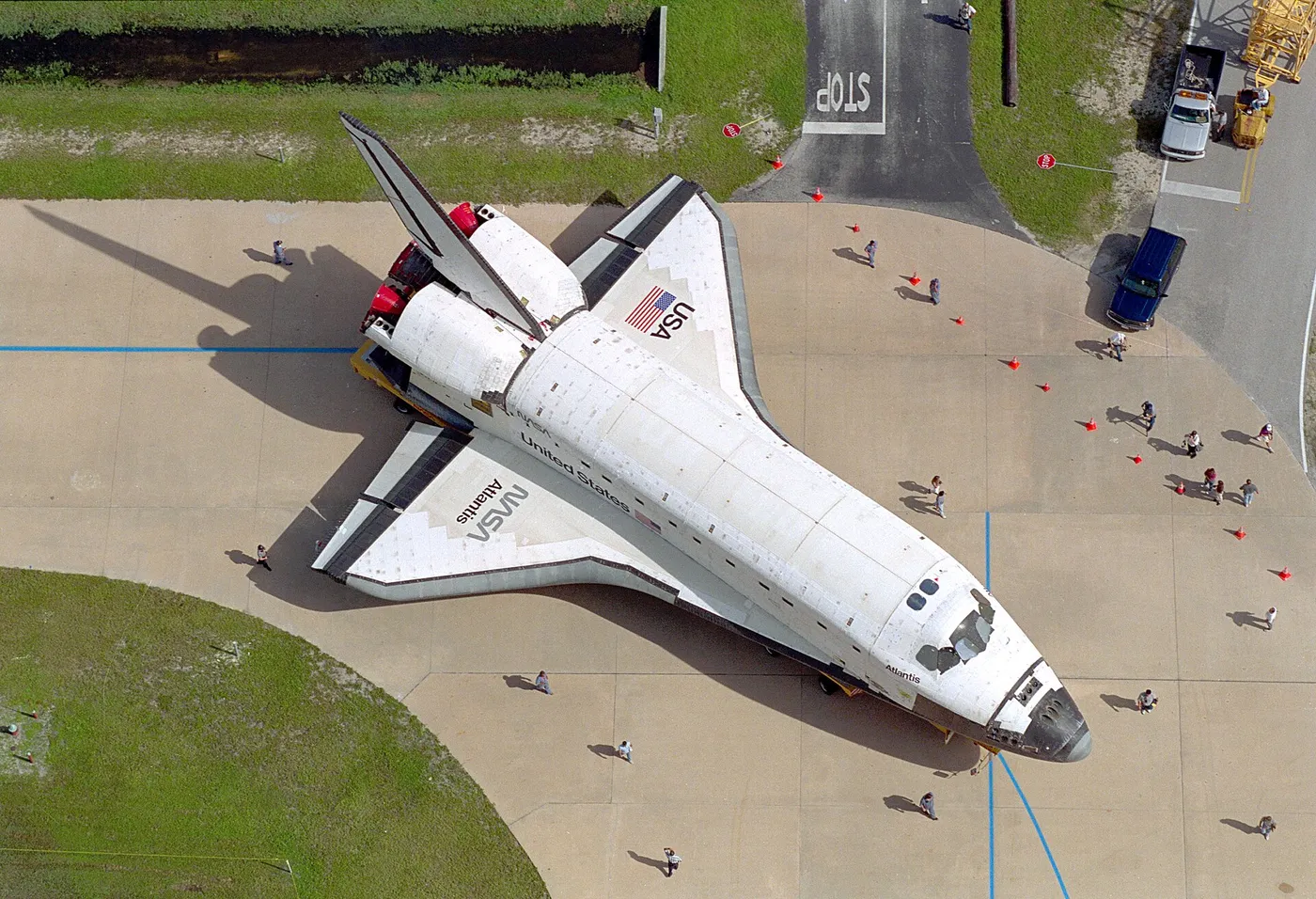
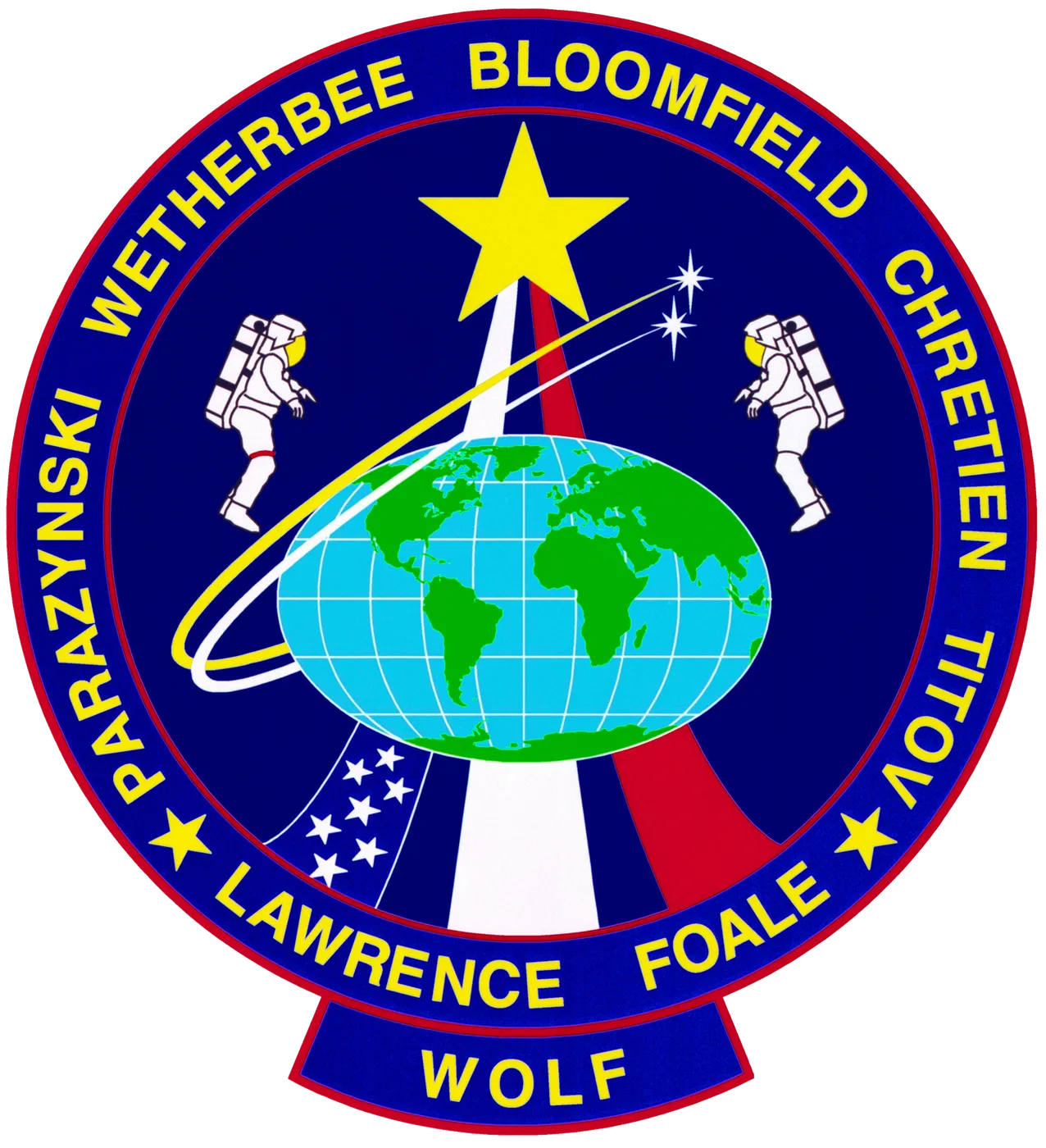
Atlantis flew the seventh Shuttle-Mir docking in September 1997, exchanging crew members and carrying out a spacewalk that symbolised the depth of the partnership. The mission delivered astronaut David Wolf to Mir and returned Michael Foale, whose stay had included the dangerous collision of a cargo ship with the station that summer.
During the docked phase, an American and a Russian ventured outside together on the first joint US-Russian spacewalk staged from the Shuttle, retrieving experiment packages and testing a sealant for patching a punctured module. The seven-person international crew reflected how integrated operations had become. With the station only a year from its first assembly flights, these Mir missions were teaching both nations how to live, work and repair spacecraft together in orbit.
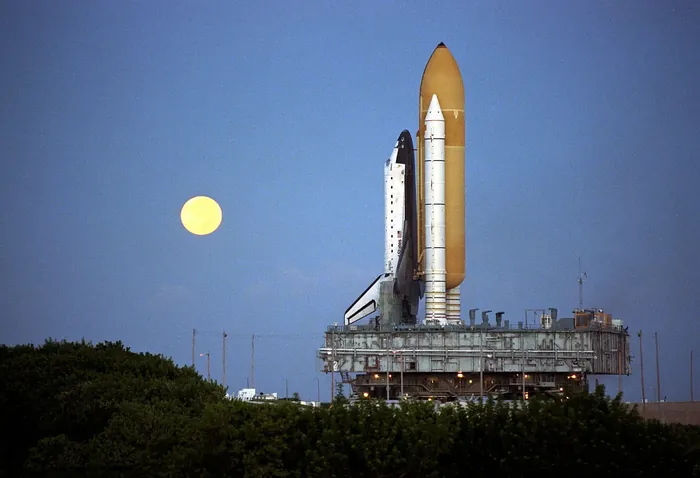
Atlantis arrived at Mir in September 1997 at the worst moment in the station's life. In February a fire had burned for minutes in an oxygen generator, filling the modules with smoke; in June an unmanned Progress freighter had struck the Spektr module during a manual docking test, puncturing the hull and forcing the crew to cut cables and seal it off while the station tumbled and lost power. Congress was openly asking whether Americans should still be flying there.
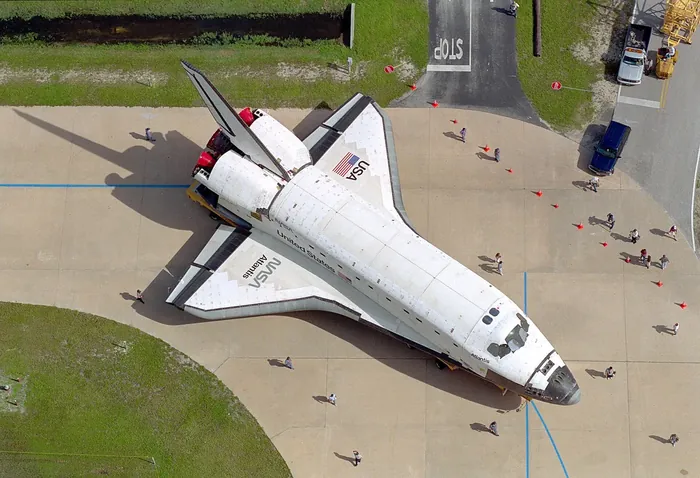
NASA decided they should, and this flight carried the consequences: a replacement attitude-control computer, a spare oxygen generator, and David Wolf to take over from Michael Foale, who had lived through the collision and helped to save the station by calculating its spin from the movement of the stars past a window.
The spacewalk was a first of its own. Vladimir Titov went outside with Scott Parazynski to retrieve exposure experiments and test a cap for sealing a punctured module — the first EVA conducted by a Russian from an American spacecraft, in Russian-built suits' American counterparts, five years after the two programmes had begun learning each other's checklists.