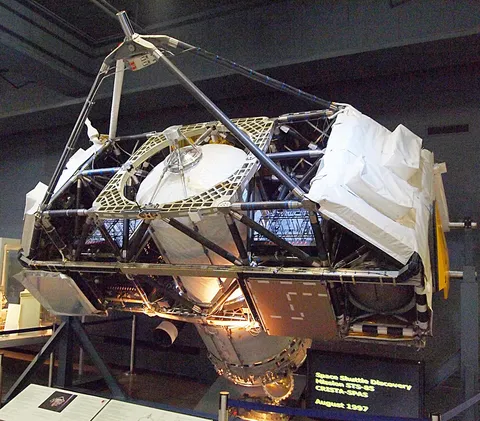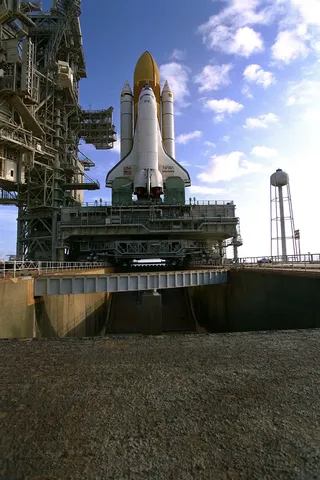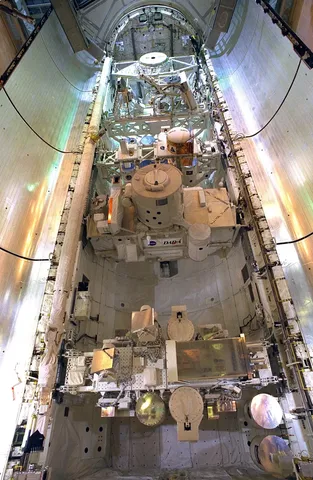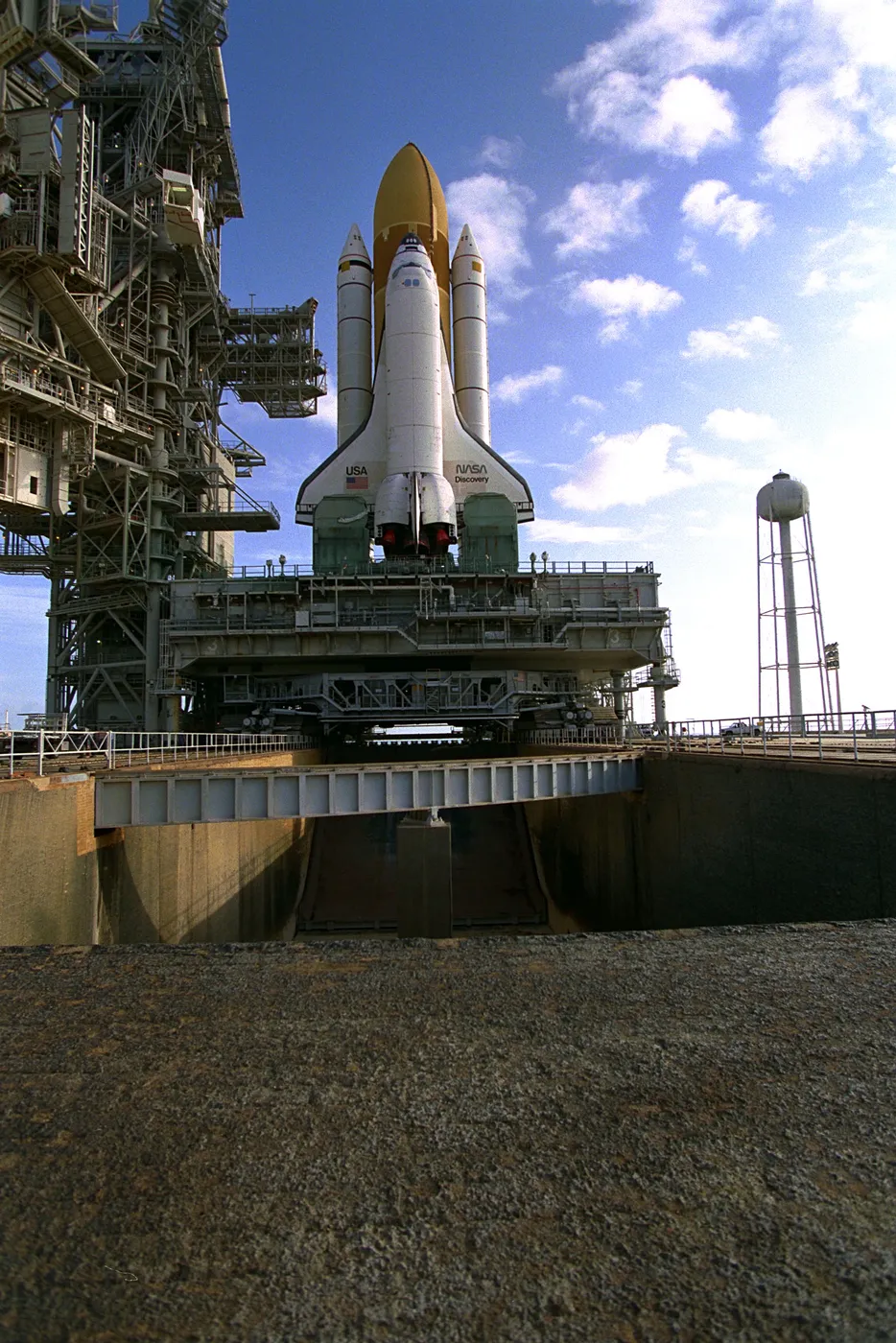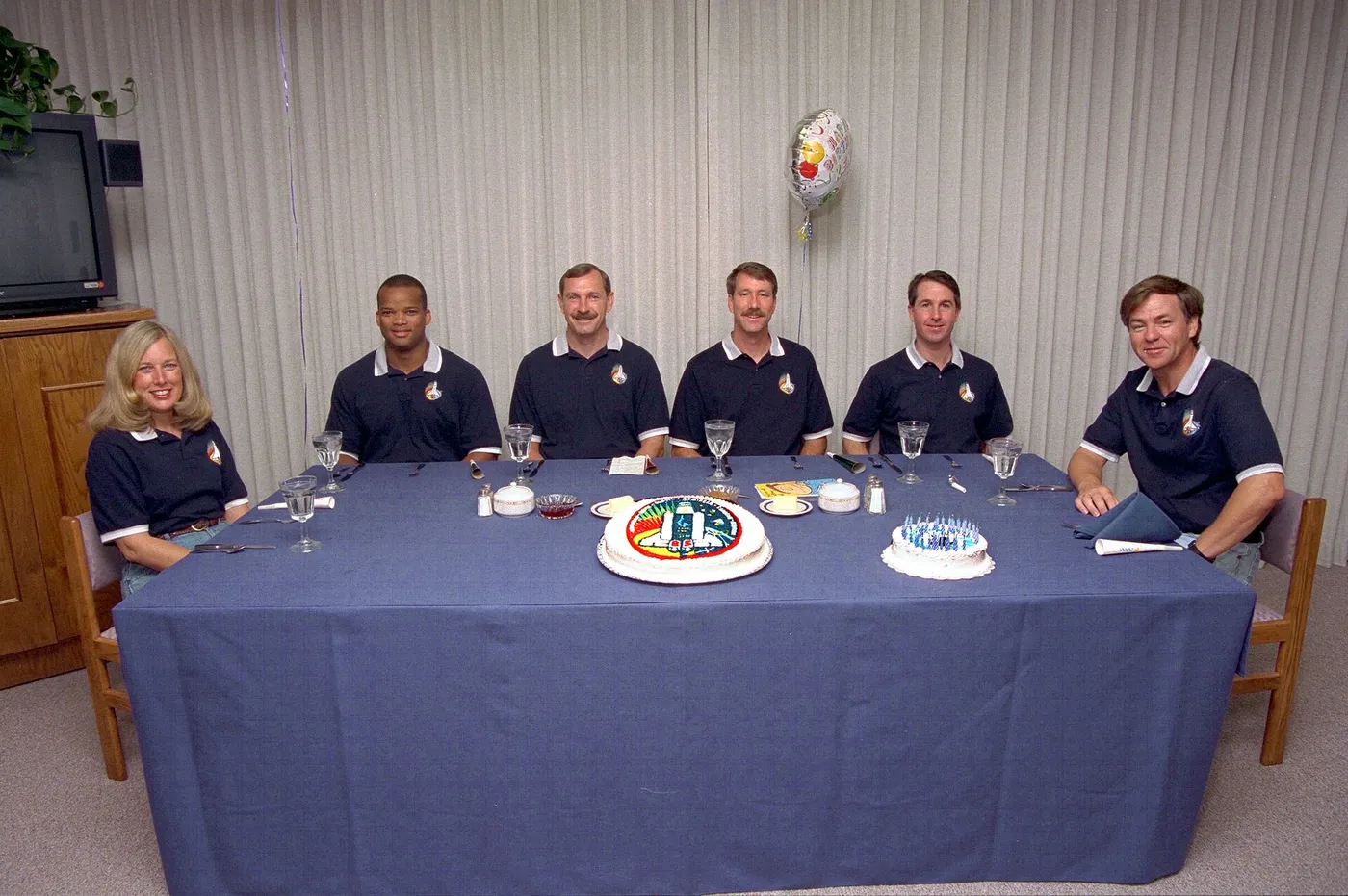
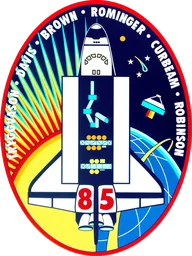
Discovery's August 1997 flight combined atmospheric science with a look ahead to new technologies. The crew of six deployed and later retrieved a free-flying platform that studied the middle atmosphere and the way pollutants and natural processes shape the air high above the surface, extending a series of such measurements across the years.
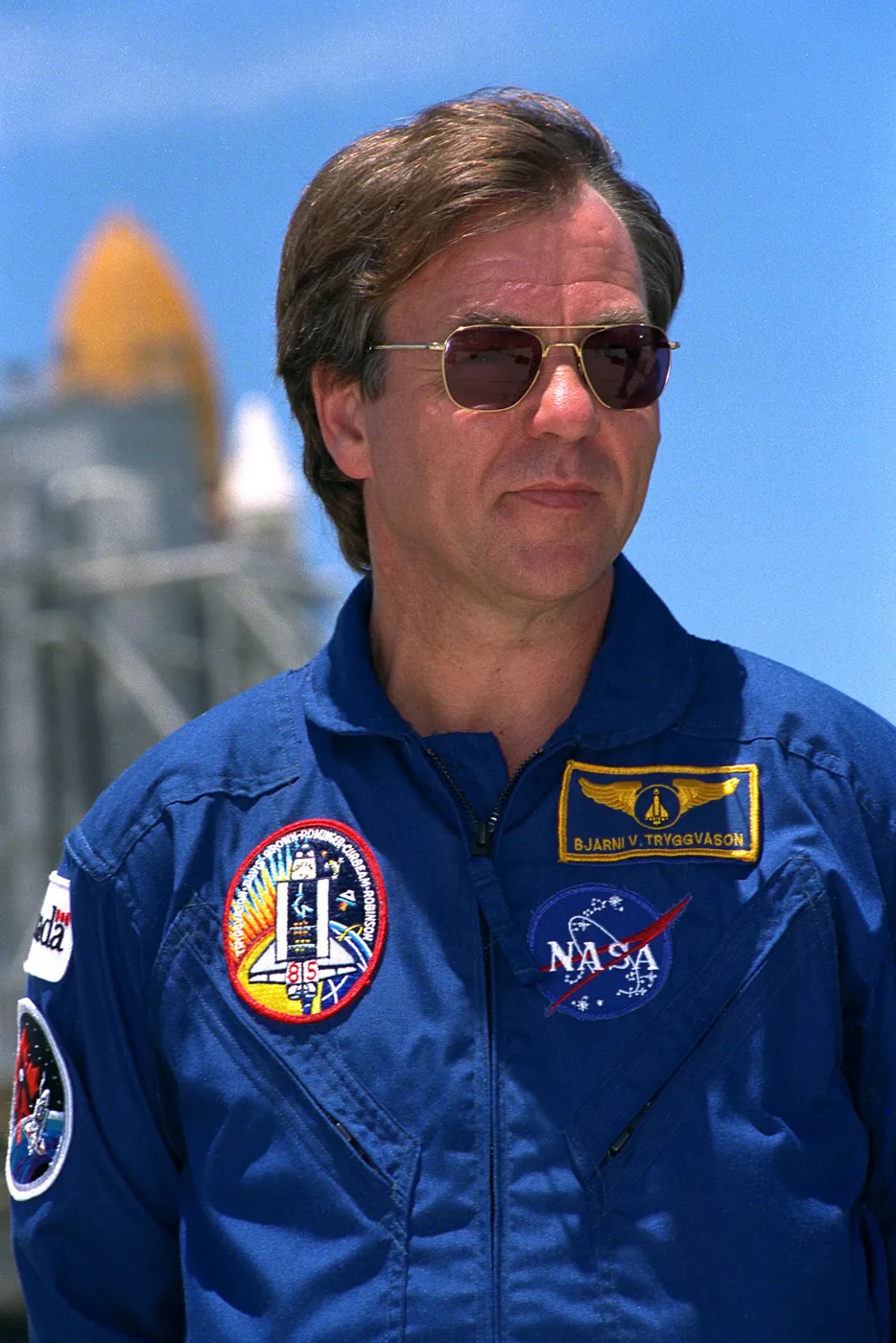
The mission also tested a Japanese-built robotic-arm system, a small-scale trial of manipulator technology intended for the International Space Station's Japanese laboratory. Canadian astronaut Bjarni Tryggvason flew to study how vibrations disturb delicate experiments. At nearly twelve days, the flight blended ongoing Earth observation with hardware demonstrations for the station era, a characteristic mix for the fleet in the years just before assembly began.
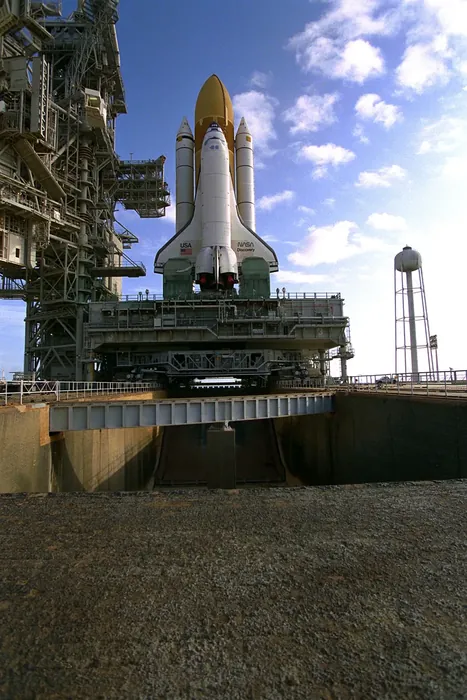
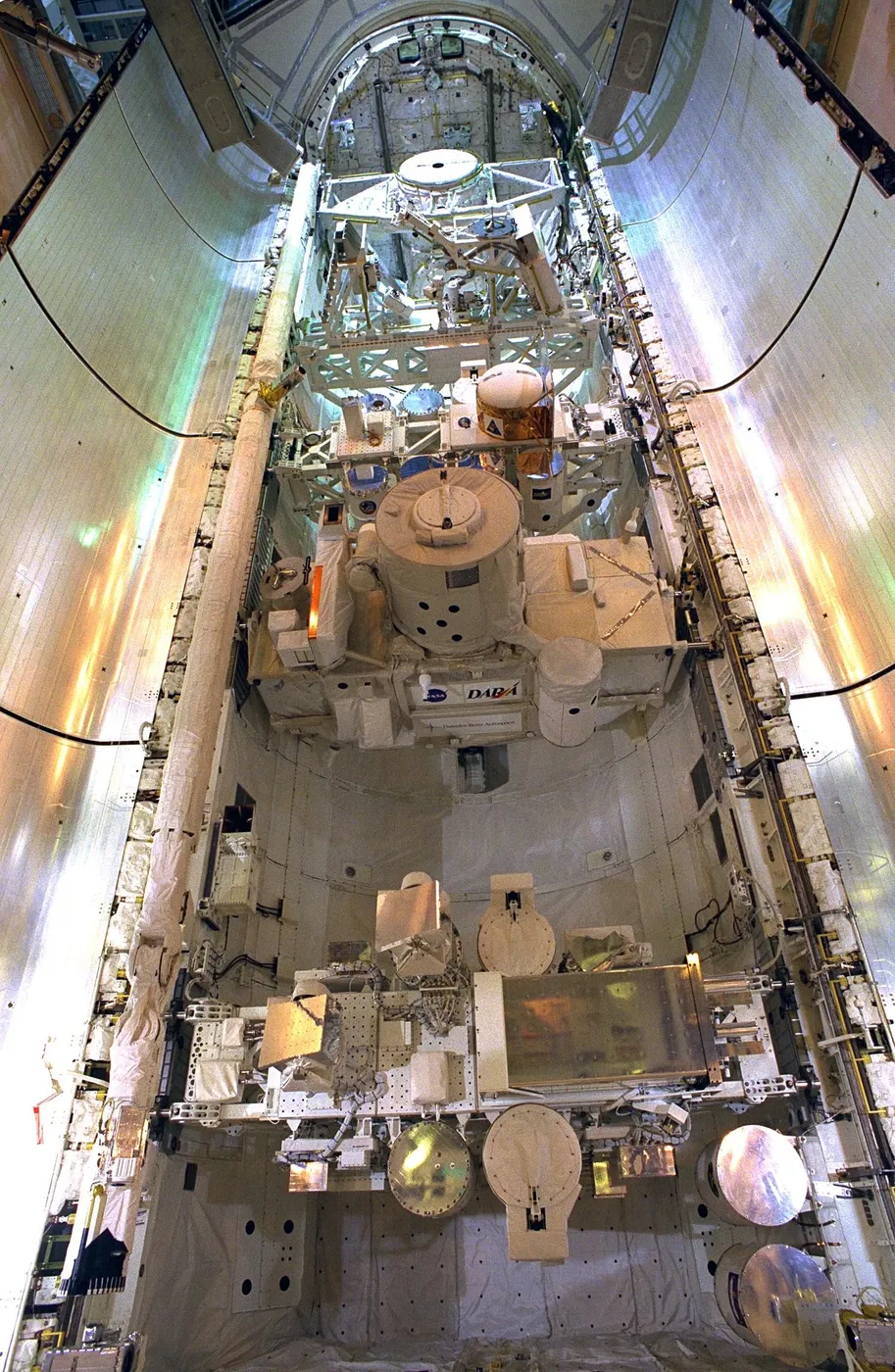
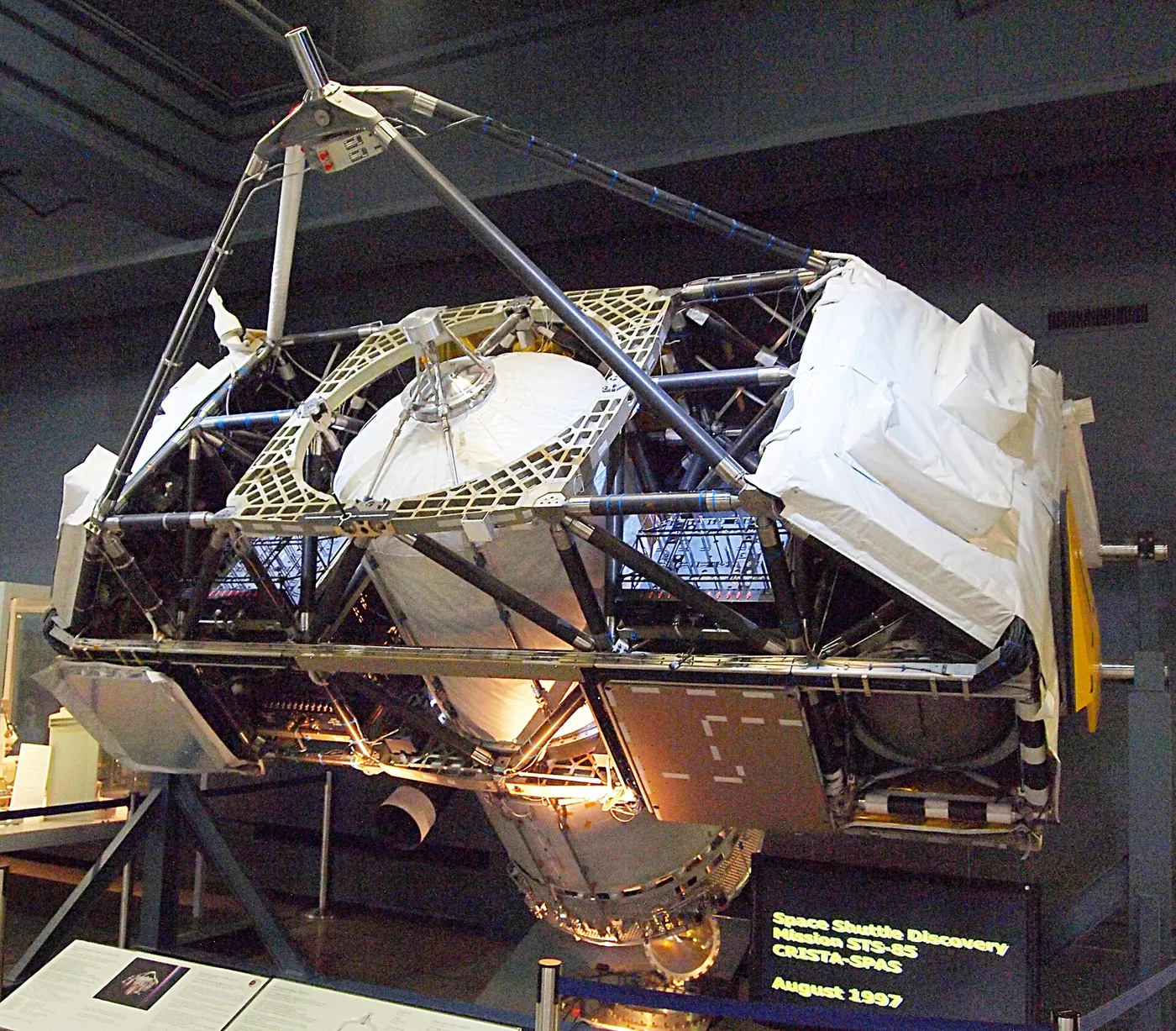
Discovery flew a German infrared telescope on a free-flying platform in August 1997, releasing it for nine days of measurements of the middle atmosphere before recapturing it — the second flight of an instrument whose fine-resolution maps of trace gases complemented the broader ATLAS surveys.
The flight also carried a prototype of the Japanese robotic arm intended for the space station's exposed facility, exercised in the payload bay to test its control laws and its handling of payloads. Small manipulator tests like this were how each partner agency proved its own hardware before committing it to a structure everyone else depended on.
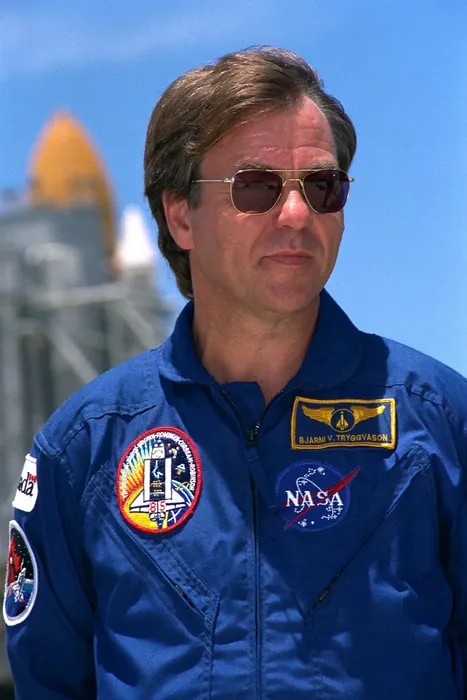
Bjarni Tryggvason, a Canadian, flew an apparatus he had spent years developing: an active vibration isolation mount that floats an experiment free of its rack, cancelling the constant low-level jostling of a crewed spacecraft. Versions of the idea are now standard on the station, where the most sensitive experiments effectively hover inside their own enclosures.