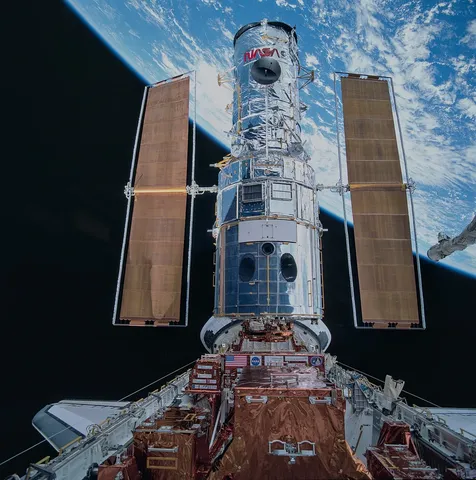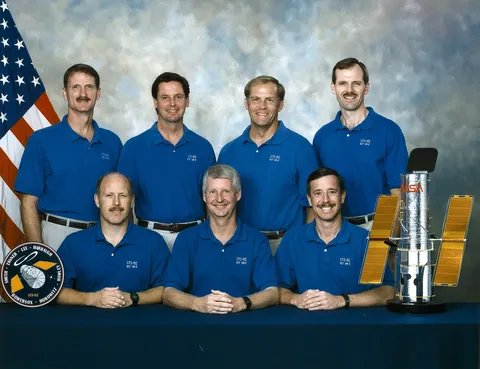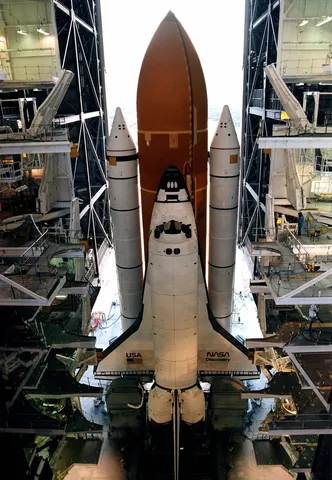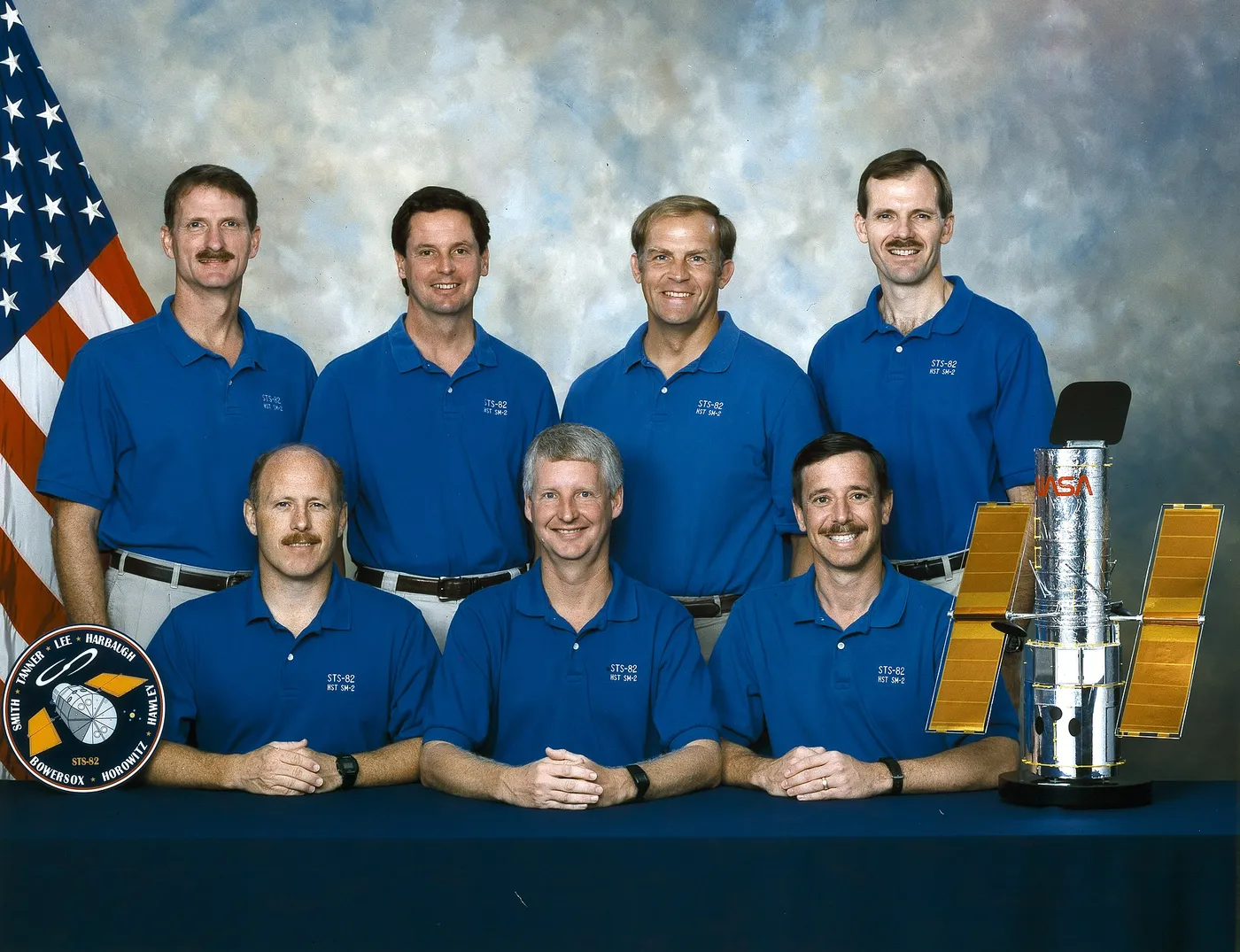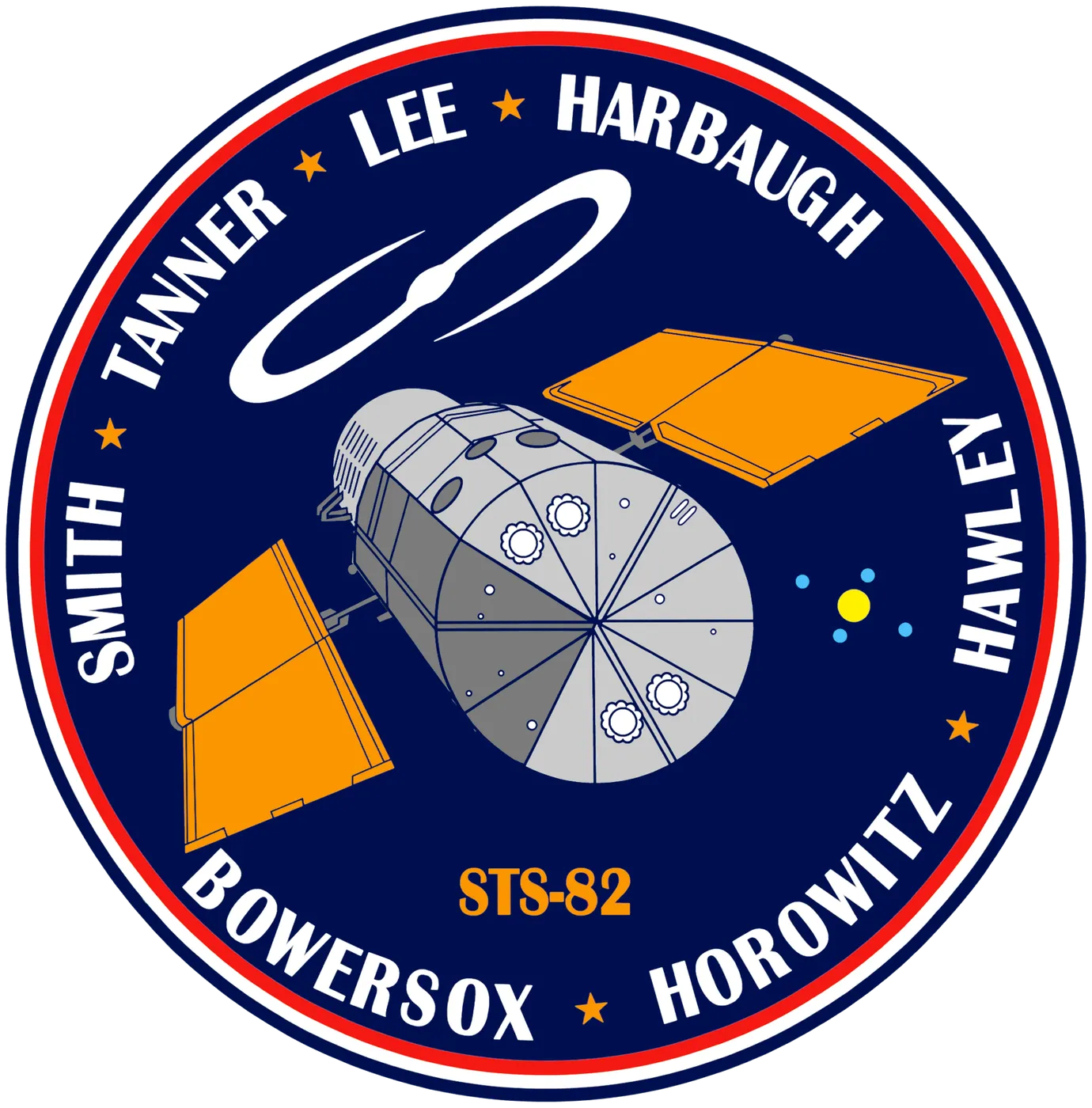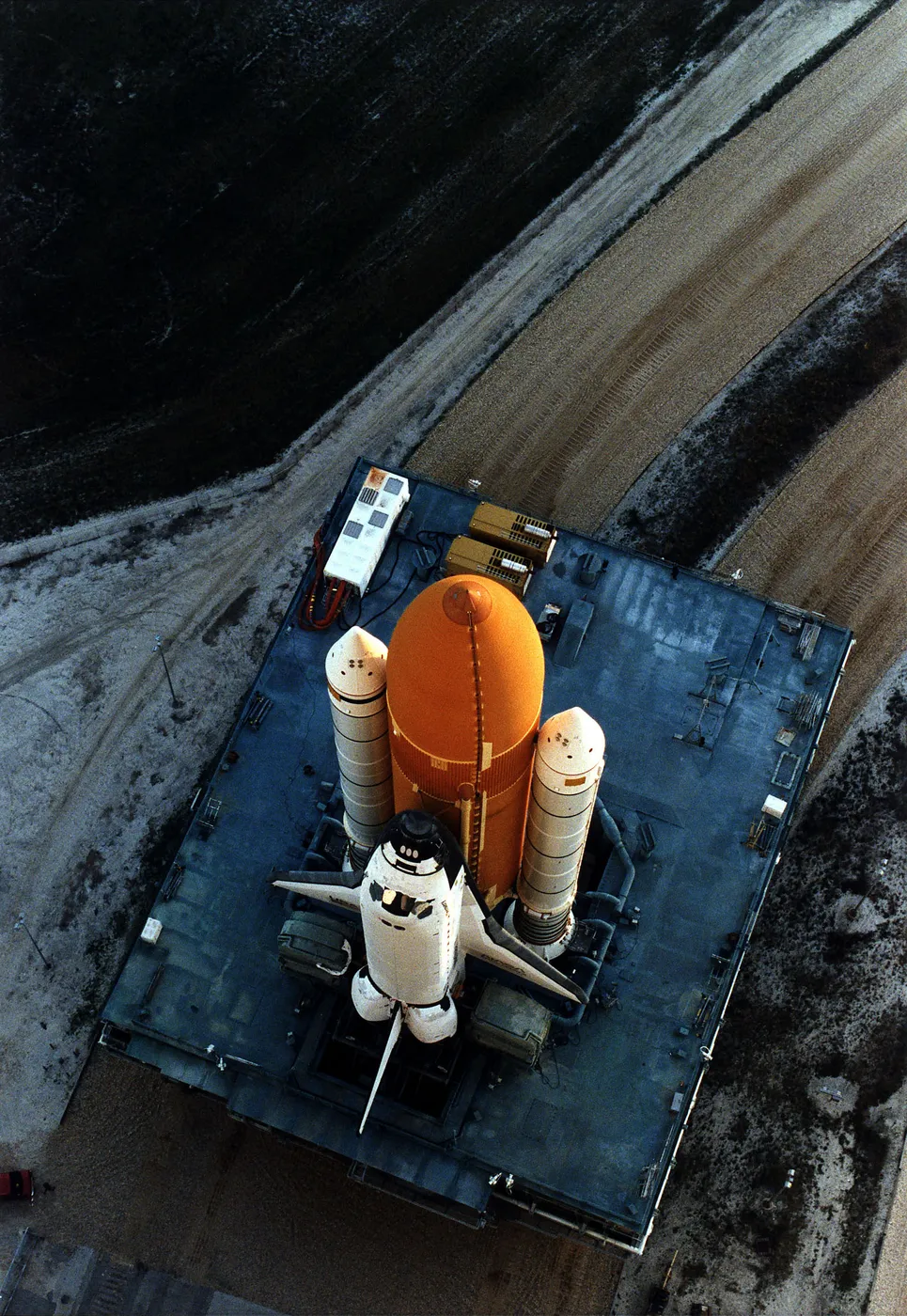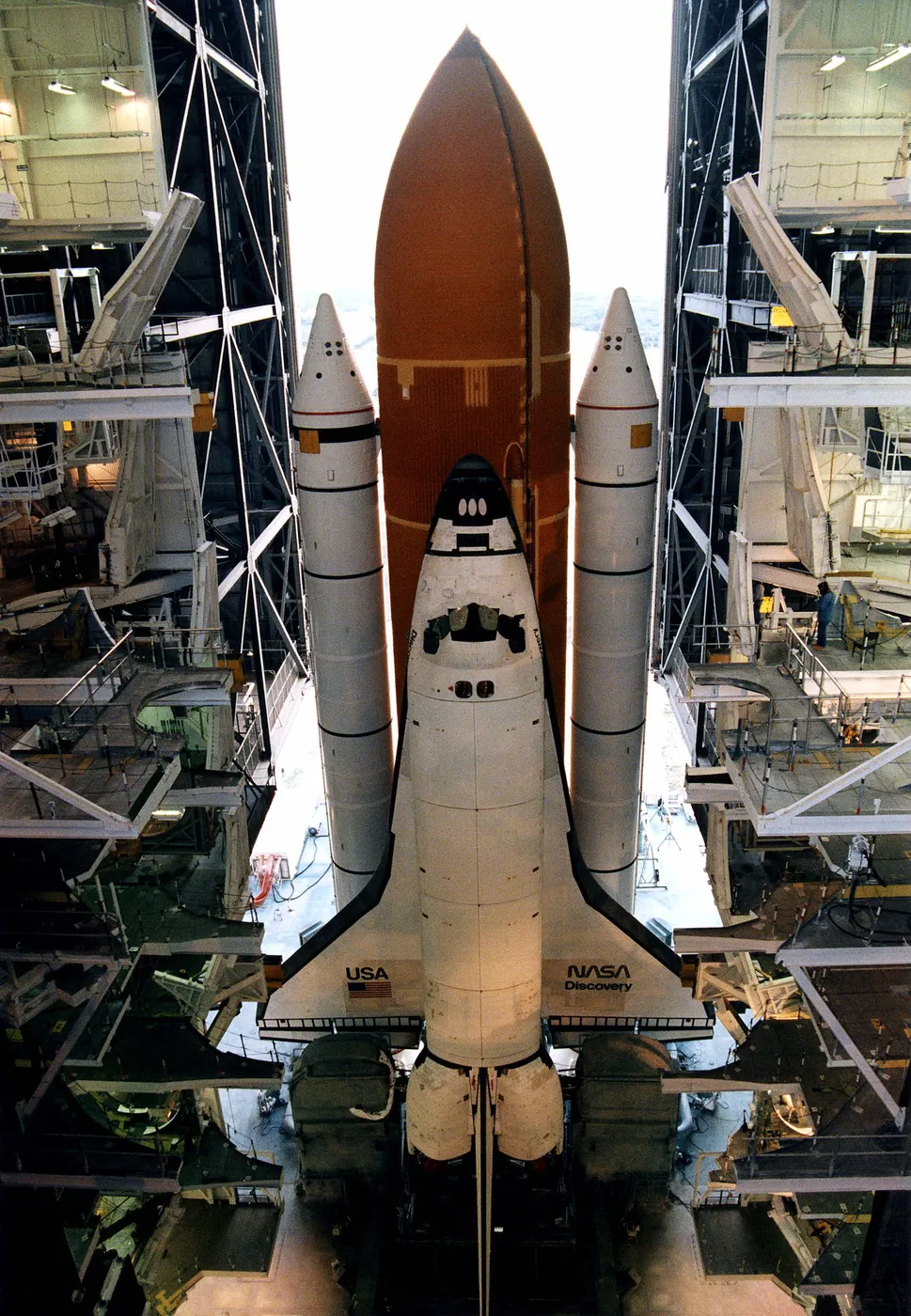
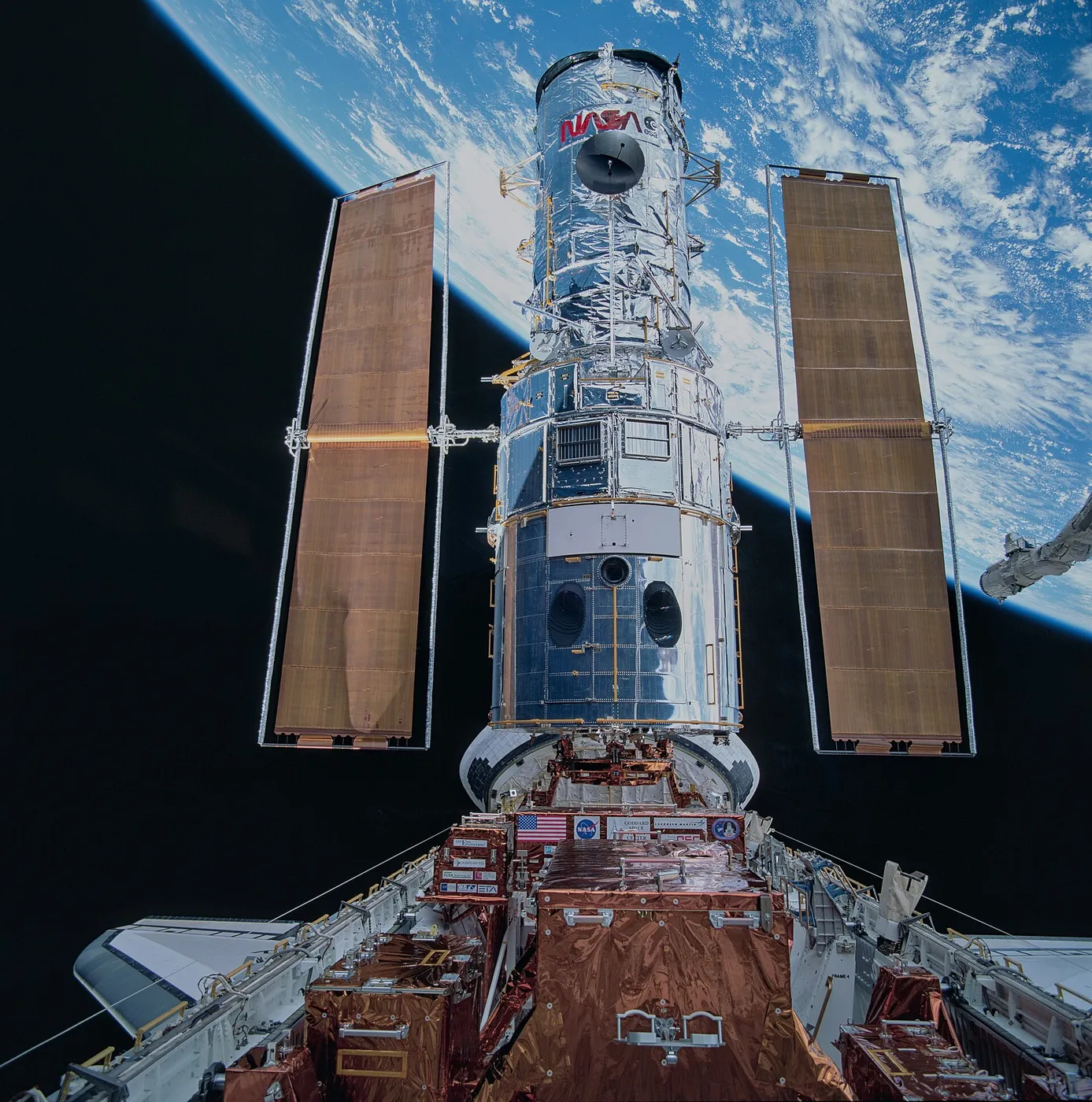
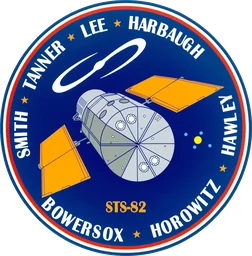
Discovery returned to the Hubble Space Telescope in February 1997 for the second servicing mission, upgrading the observatory to keep it at the frontier of astronomy. Over five spacewalks the crew of seven installed two powerful new instruments — a spectrograph and an infrared camera — that extended Hubble's vision into new colours of light and let it probe the chemistry and motion of distant objects.
The spacewalkers also replaced worn components and, finding the telescope's insulation degrading in the harsh space environment, improvised patches to protect it. When the crew boosted Hubble to a slightly higher orbit and released it, the telescope was measurably more capable than before. The mission confirmed a pattern: roughly every few years, a Shuttle crew would visit Hubble and renew it, keeping a 1990 observatory scientifically current for decades.
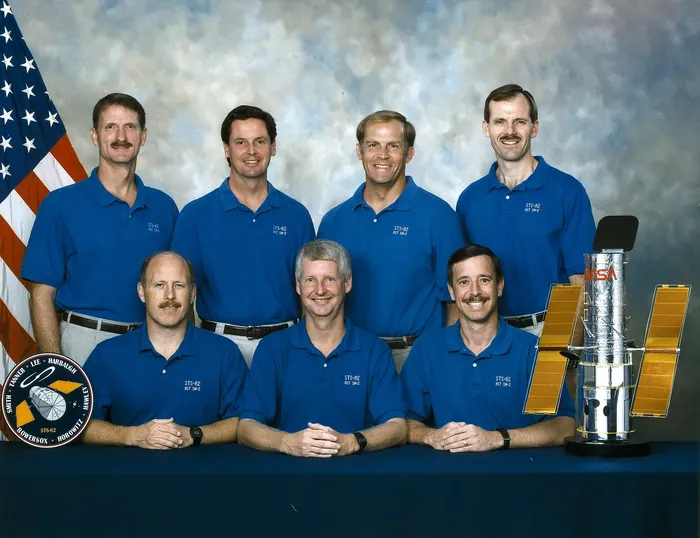
Hubble's second servicing mission in February 1997 was about turning a rescued telescope into a better one. Where the 1993 flight had fitted corrective optics to fix the mirror flaw, this crew came to upgrade the instruments outright, installing a spectrograph and a near-infrared camera that let the observatory see wavelengths it had never been built to handle.
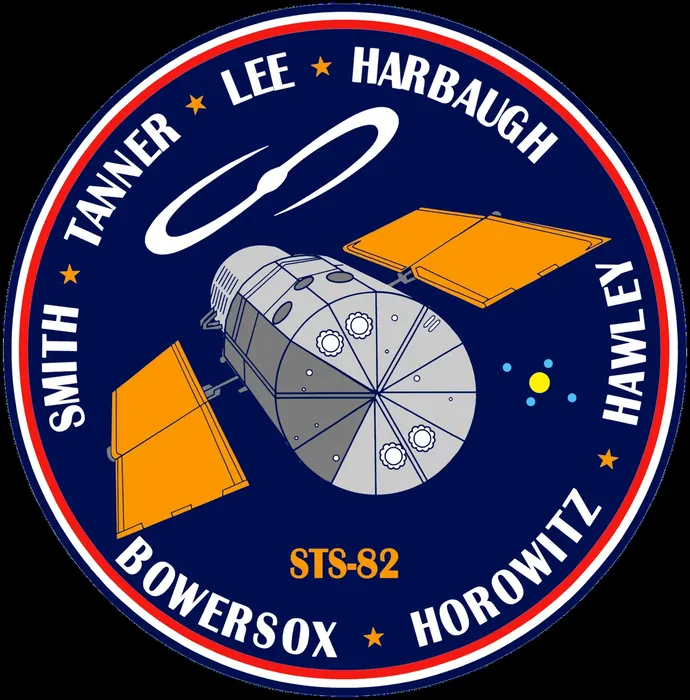
The work ran to five spacewalks over five days, and midway through it the astronauts noticed something not on any checklist: the insulation blanketing the telescope's sun-facing side had cracked and curled away after seven years of thermal cycling. Left alone it would have let temperatures swing far outside the instruments' limits.
So they improvised. Working from materials aboard the orbiter, the ground and the crew designed patches overnight and added an unscheduled spacewalk to fit them, and Discovery finished by boosting Hubble into a higher orbit before letting it go. It is a small story compared with the drama of the first repair, but it established the pattern that kept the telescope alive for three decades: a serviceable observatory, visited roughly every three years by people who could see problems nobody had predicted.