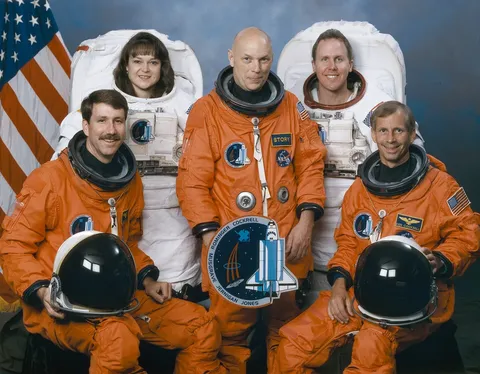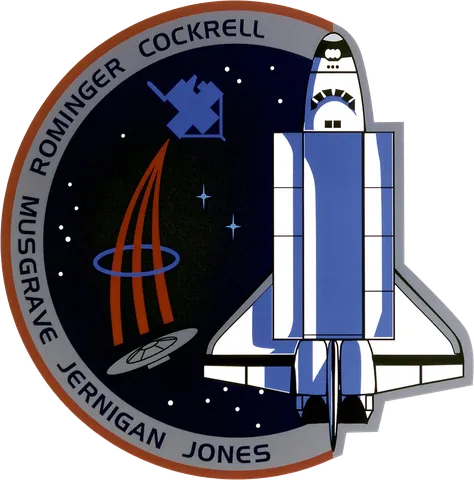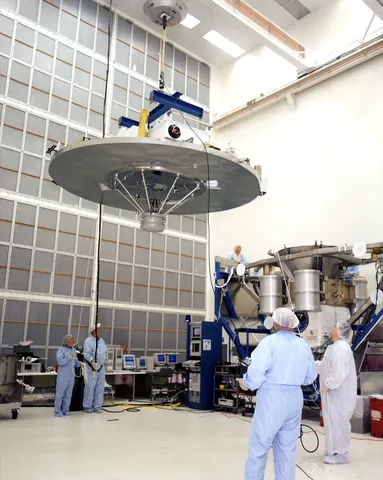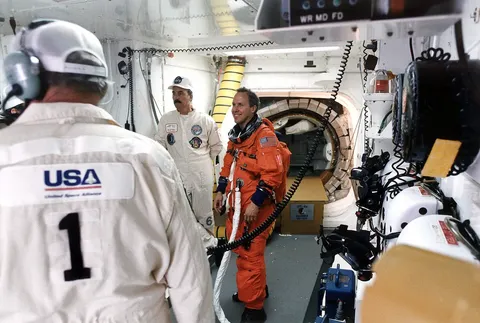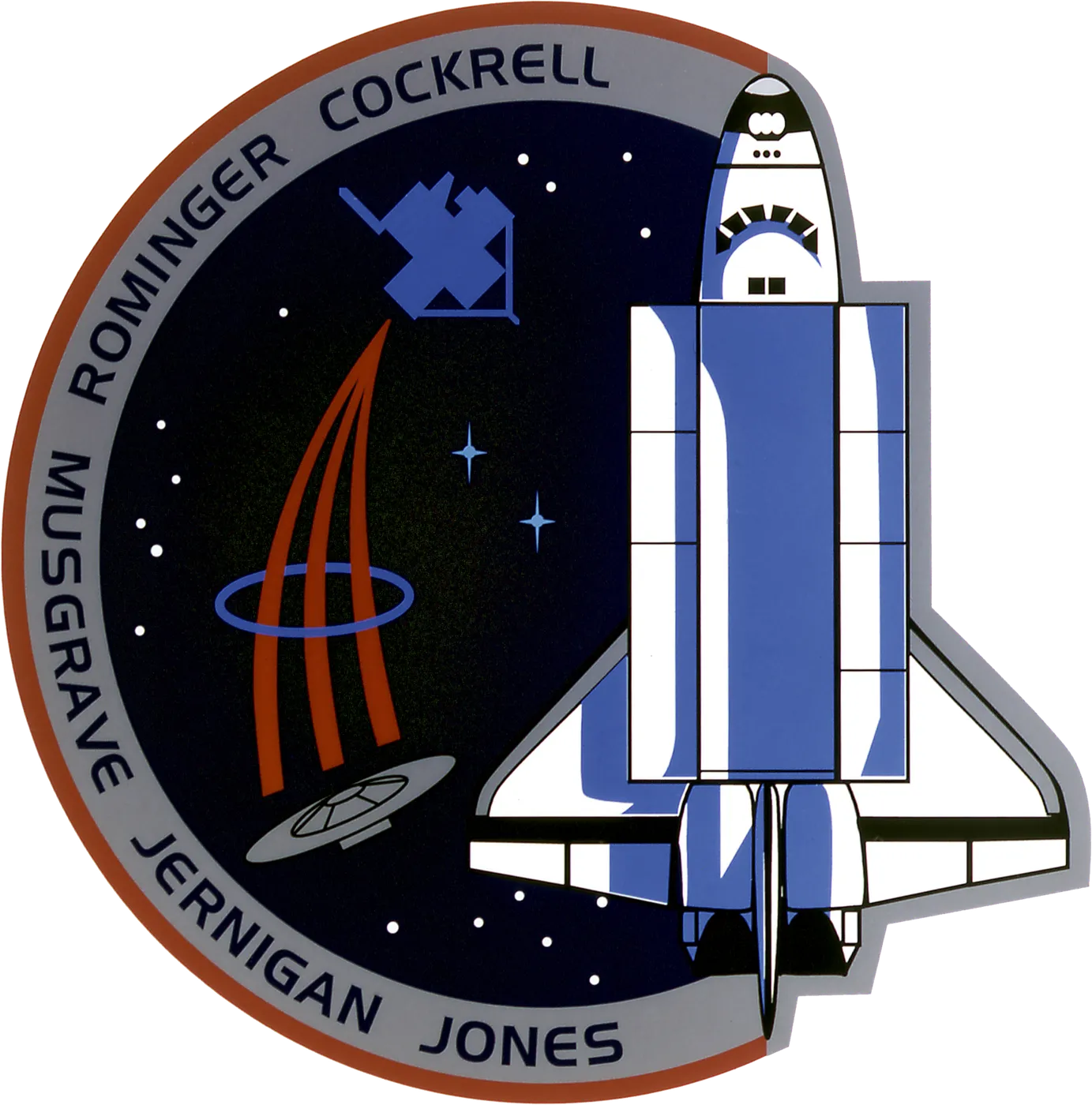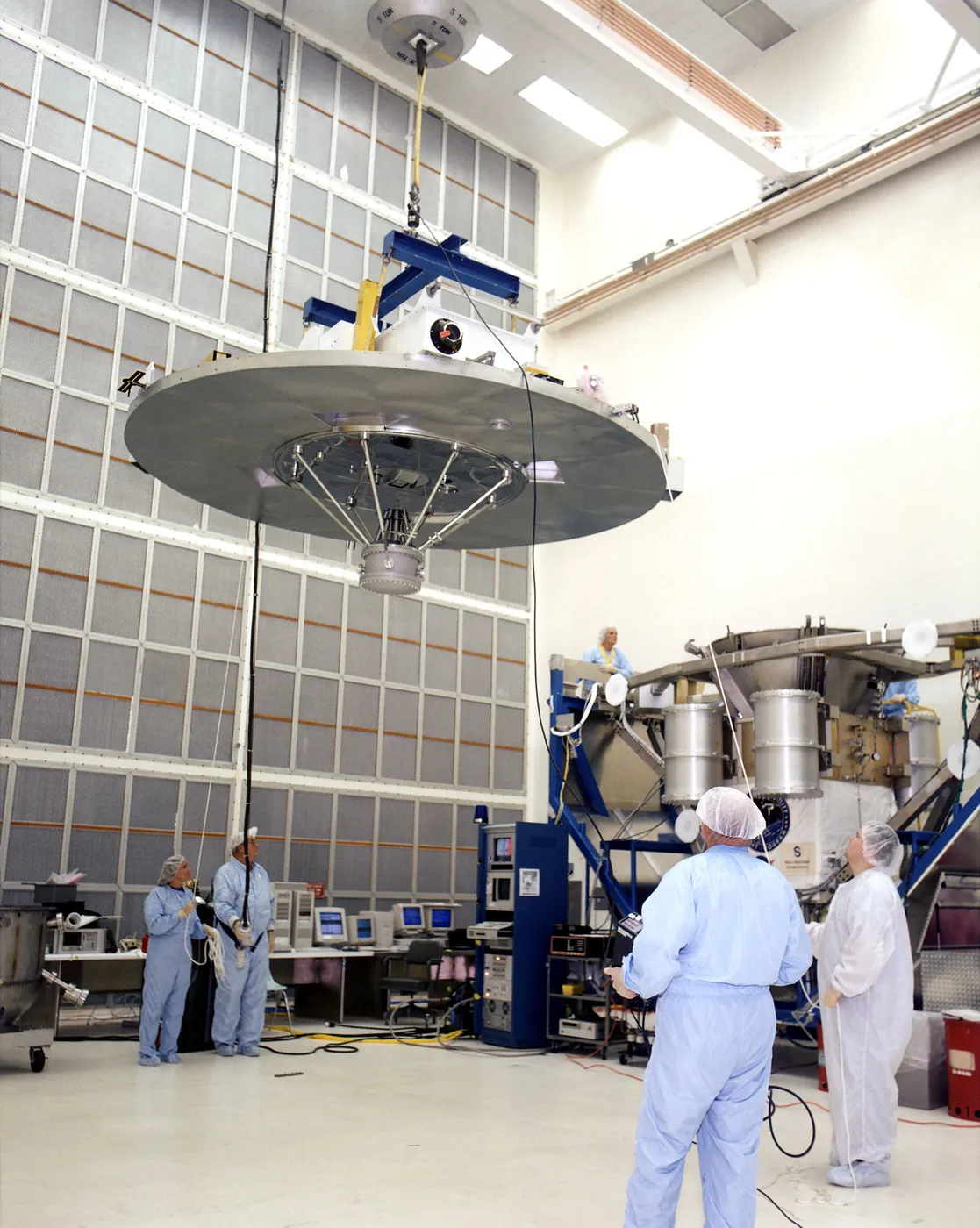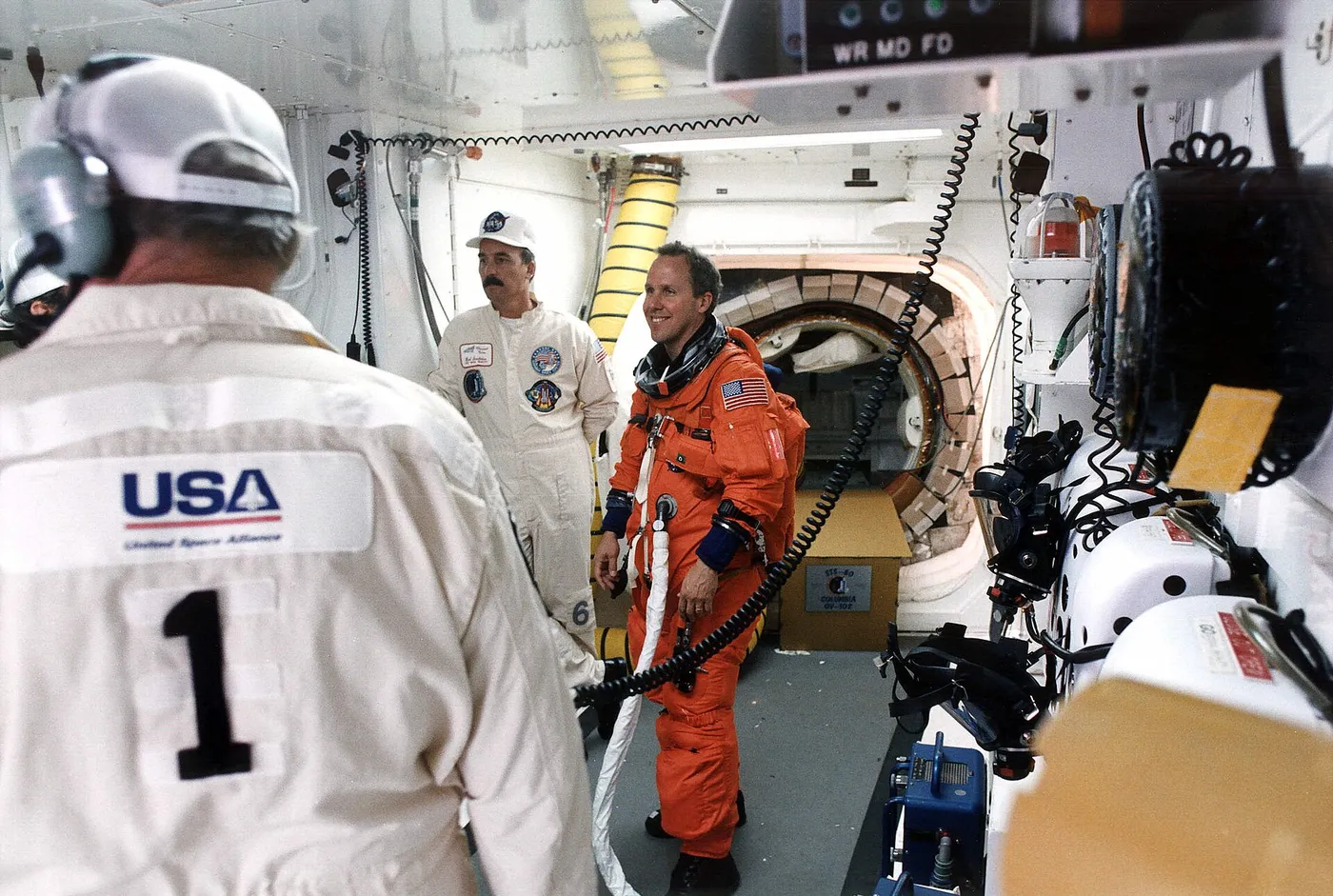
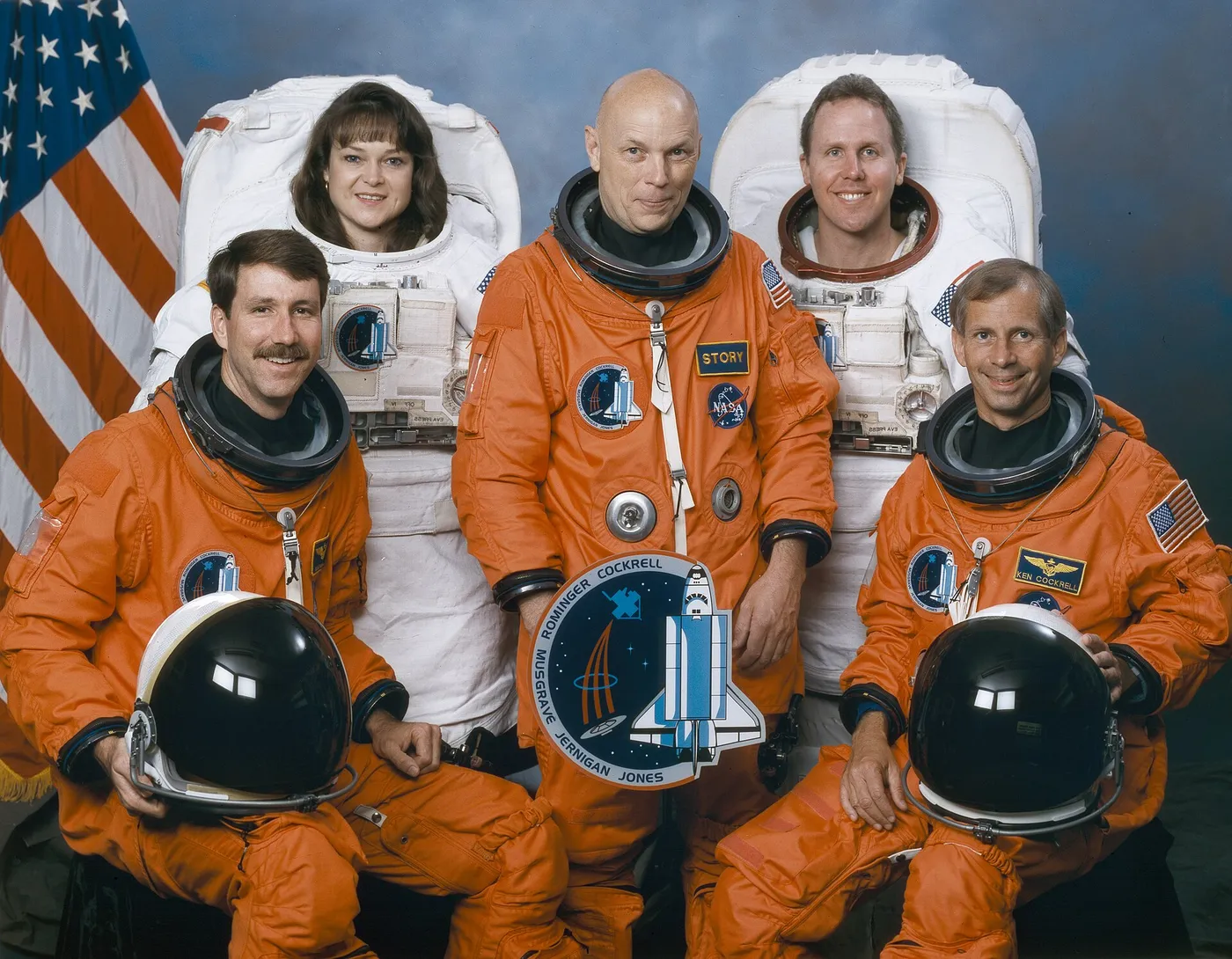
Columbia flew the longest Shuttle mission in history in November 1996, keeping its crew of five in orbit for nearly eighteen days. The flight deployed and retrieved two free-flying platforms — one an ultraviolet and far-ultraviolet telescope studying hot stars and interstellar gas, the other a Wake Shield disk growing semiconductor films in an ultra-pure vacuum.
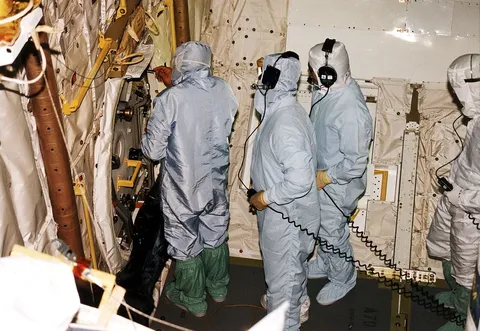
The mission carried veteran Story Musgrave, making his sixth spaceflight at nearly sixty-one and becoming the oldest person to fly on the Shuttle to that point. Two planned spacewalks had to be cancelled when a jammed hatch trapped the airlock shut, a frustrating loss of practice for station assembly, but the record-setting flight still delivered strong astronomical and materials science across its many days aloft.
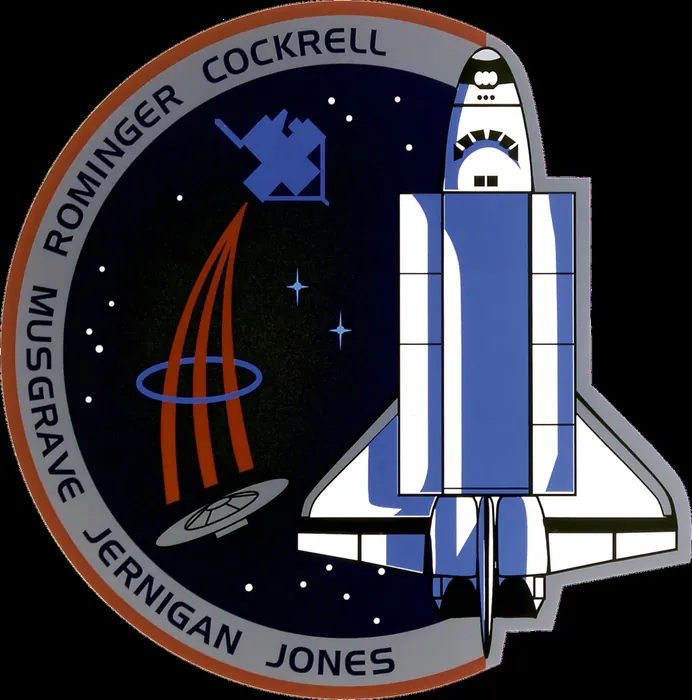
Columbia flew the longest Shuttle mission in history in November 1996 — seventeen days and sixteen hours, a record that was never broken. The flight deployed and retrieved two free-flying observatories: a German ultraviolet telescope that observed for a fortnight, and the Wake Shield Facility growing semiconductor films in its self-made vacuum.
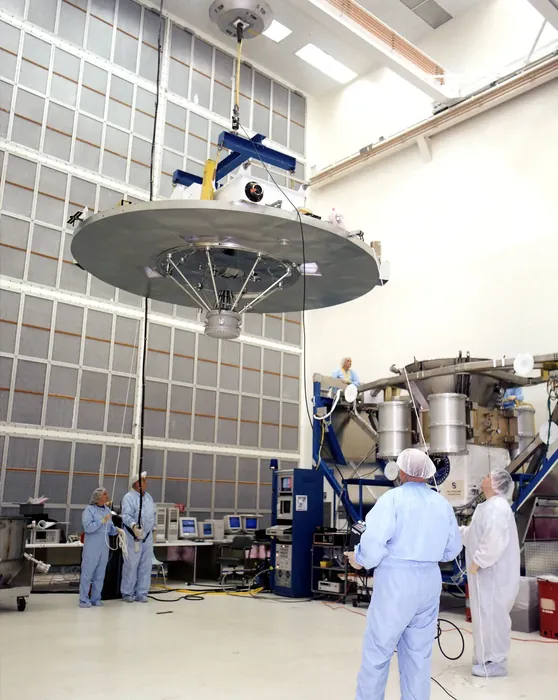
Aboard was Story Musgrave, at 61 the oldest person to have flown to that date and making his sixth flight — a record he shared with only a handful of others, and he remains the only person to have flown aboard all five orbiters. A surgeon, mathematician and former Marine with seven degrees, he had led the Hubble repair three years earlier.
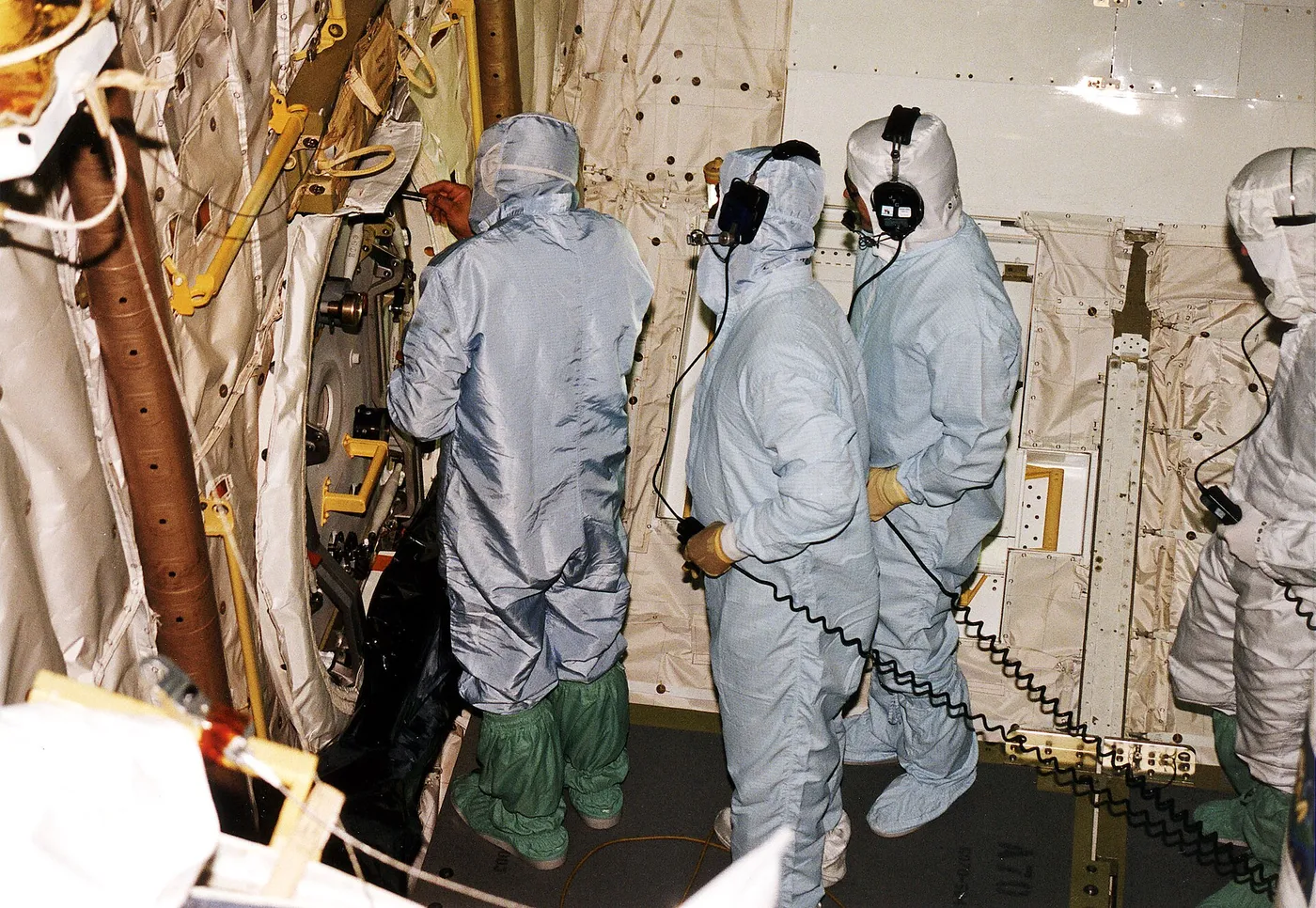
Two spacewalks were scheduled and neither happened. The outer airlock hatch would not open, defeating the crew across two attempts, and the planned rehearsals for station assembly were abandoned. Engineers found the cause after landing: a loose screw had worked its way into the actuator mechanism and jammed it — one small fastener, again, costing an entire objective.