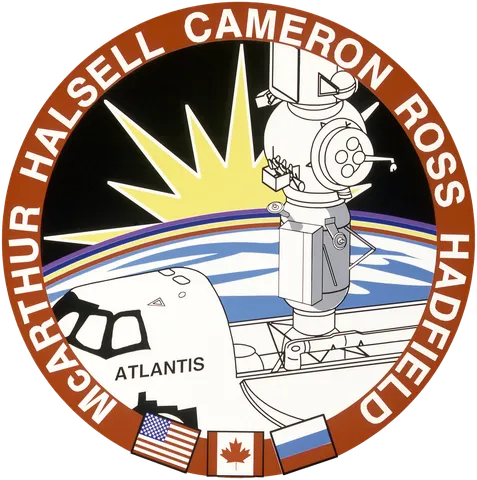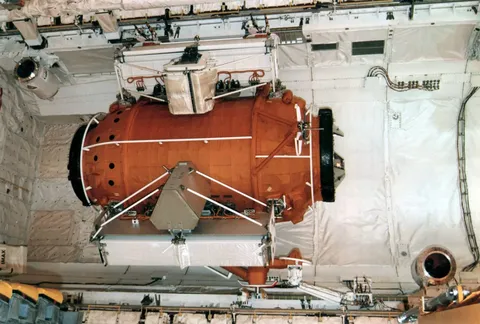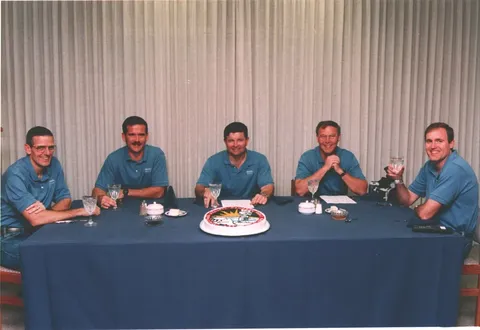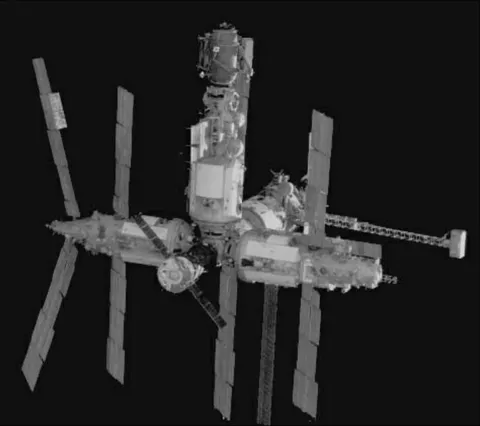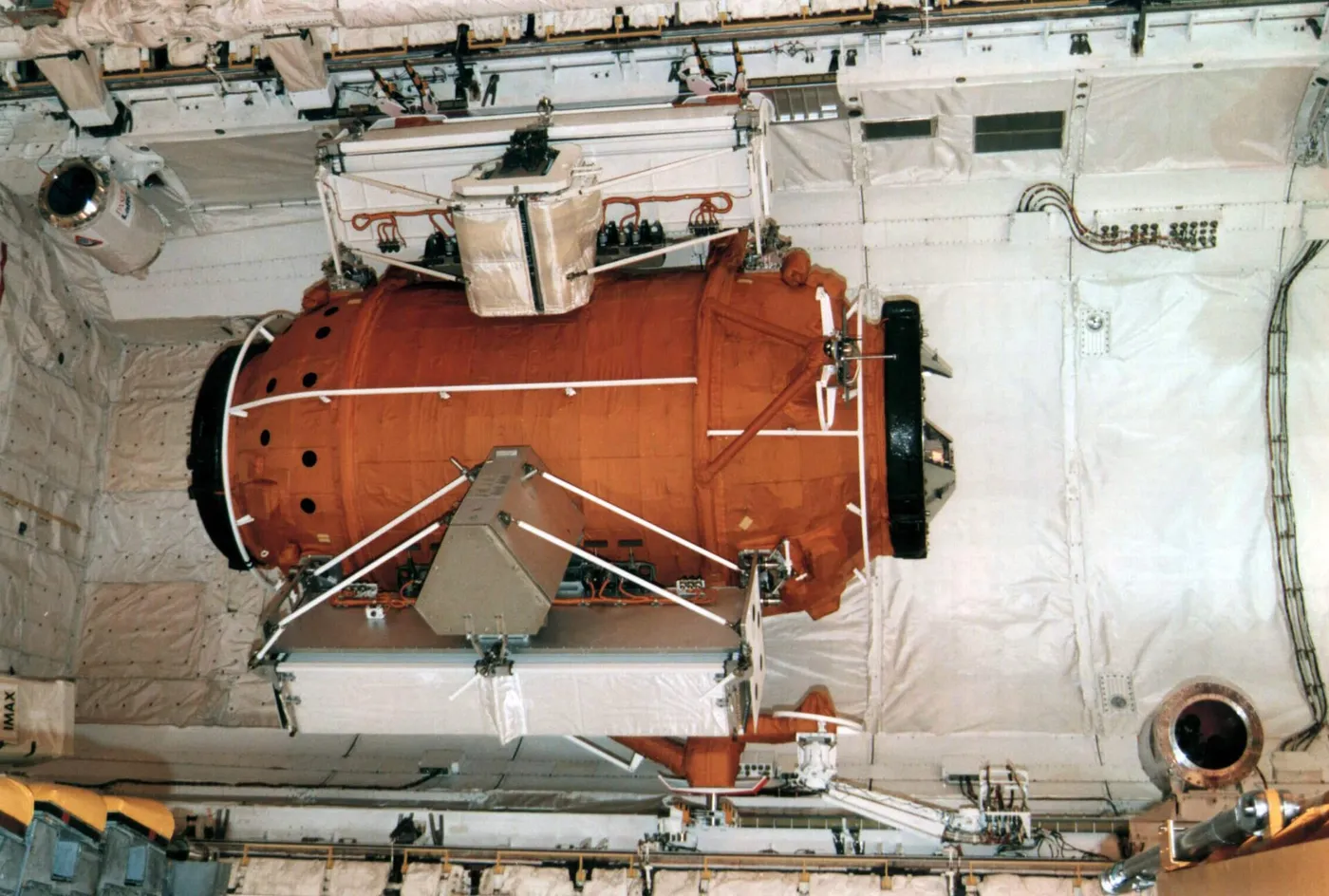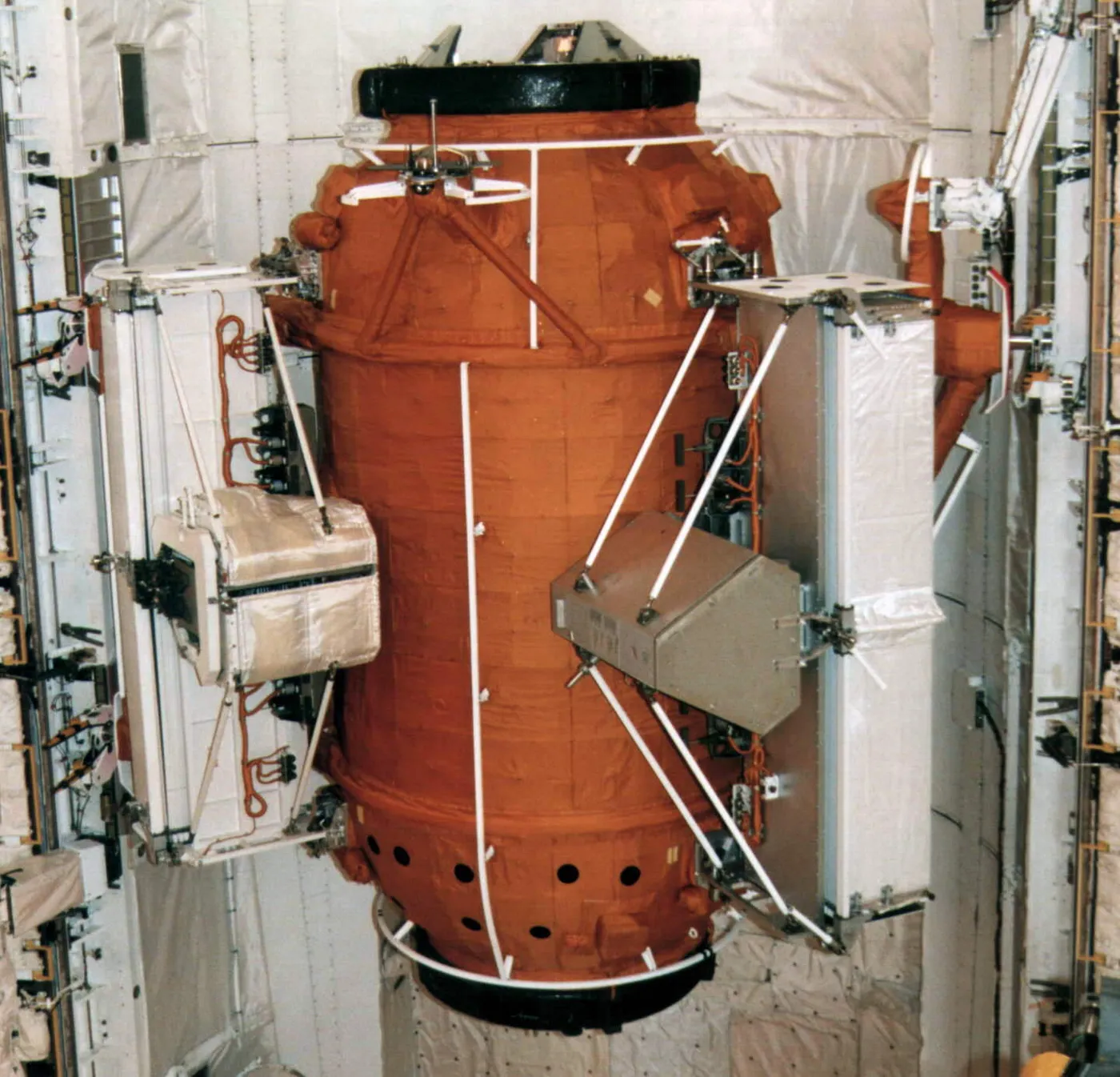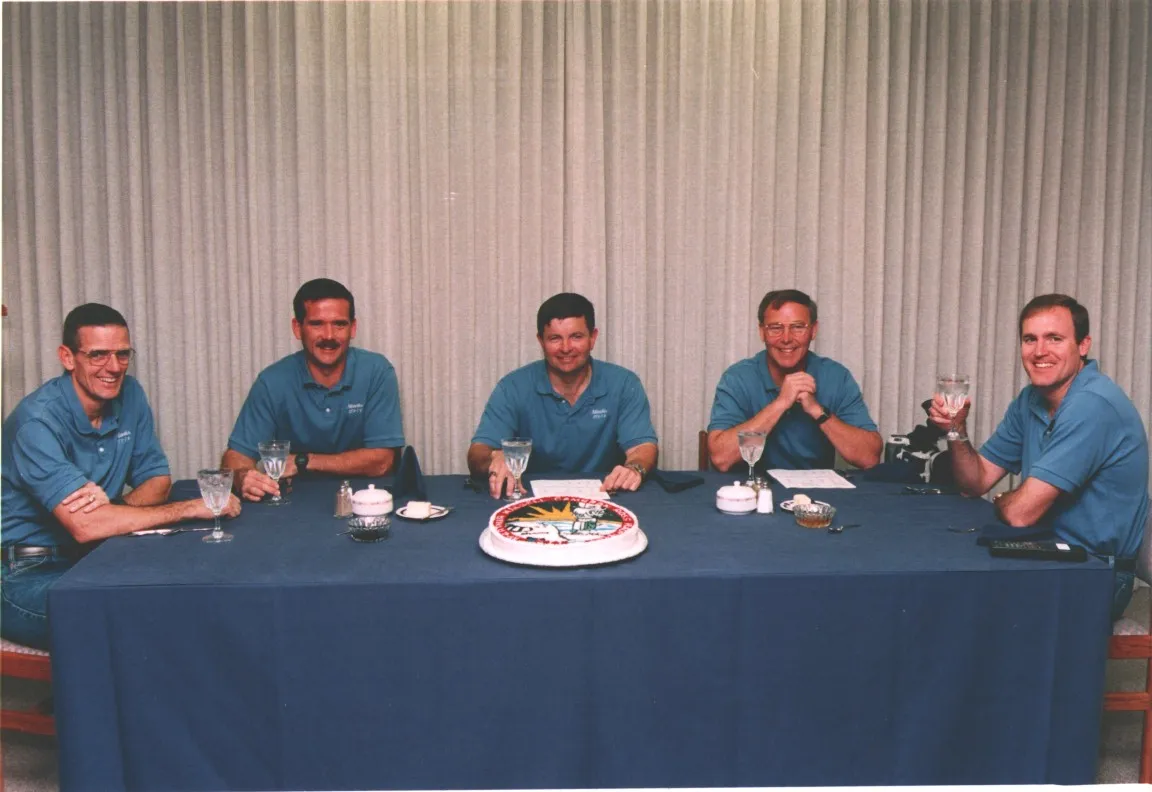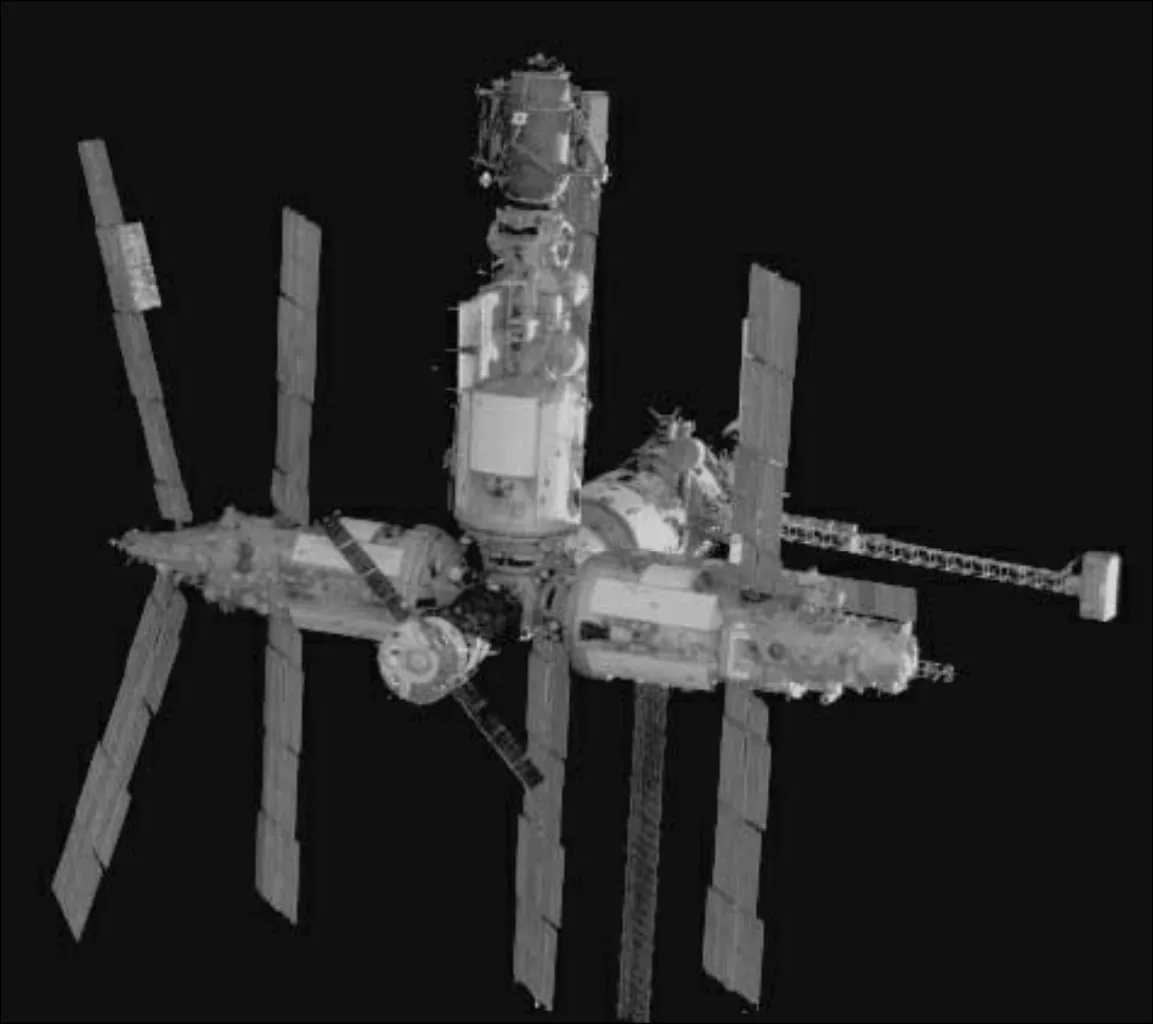
Atlantis flew the second Shuttle-Mir docking in November 1995, and this time it left something behind. The crew of five carried a Russian-built docking module in the bay and attached it permanently to Mir, giving future Shuttles a better berth and easing the tight clearances that had complicated the first docking that summer.
The five-day mission delivered supplies, water and equipment to the station and returned experiment results to Earth, deepening the routine of joint operations. By installing infrastructure on Mir rather than simply visiting, Atlantis showed how the two programmes were beginning to build shared hardware in orbit — a small but concrete step toward the far larger assembly task that the International Space Station would soon demand.
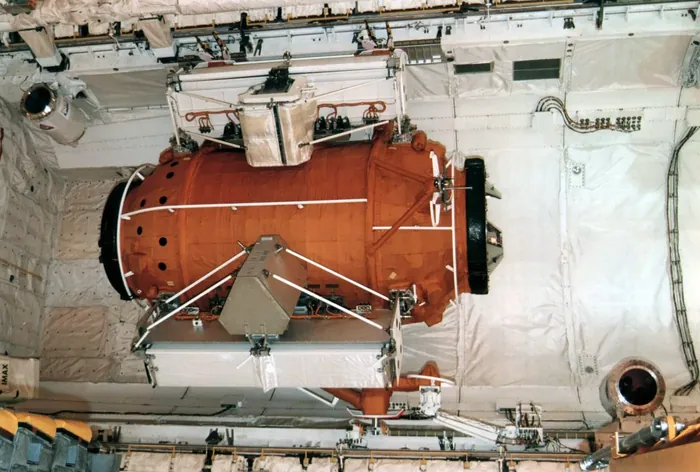
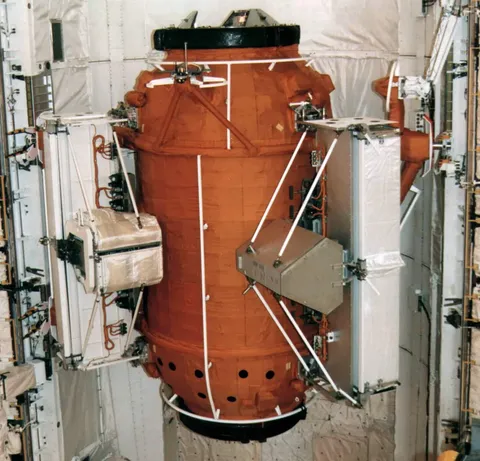
Atlantis returned to Mir in November 1995 carrying a Russian-built module in its payload bay — an arrangement that would have been unimaginable a decade earlier. The docking module was a five-metre cylinder built at Energia in Moscow, launched by an American orbiter, and left permanently attached to a Russian station.
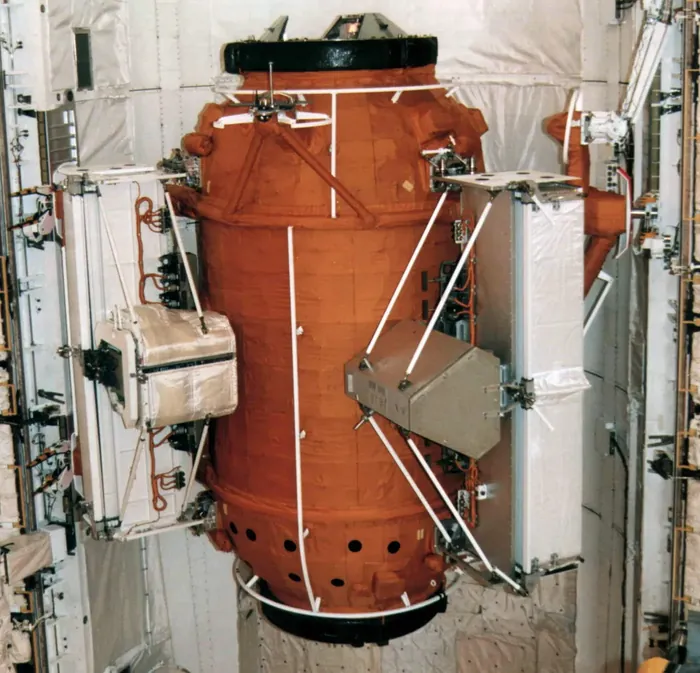
It solved a geometry problem. Atlantis's docking system could reach Mir only in an awkward configuration that risked its solar arrays, and the new module acted as an extension arm, giving the Shuttle clearance for every subsequent visit. Installing it meant lifting the module out with the robotic arm, mating it to the orbiter's own docking system, and then flying the whole assembly up to the station.
The mission also carried two new solar arrays for Mir and several tonnes of water and supplies, and it was the first Shuttle flight to dock with the station without exchanging crew members. Chris Hadfield operated the arm, becoming the only Canadian ever to visit Mir. The docking module stayed in place until the station was deorbited in 2001.