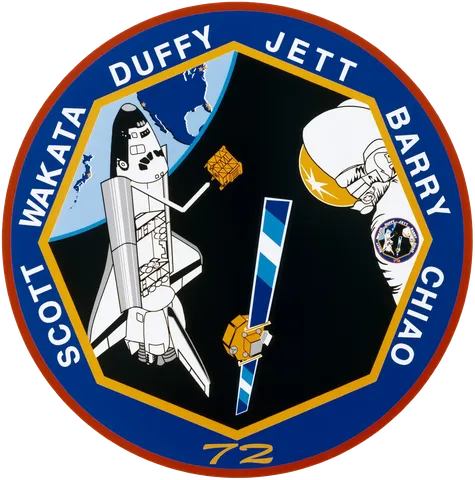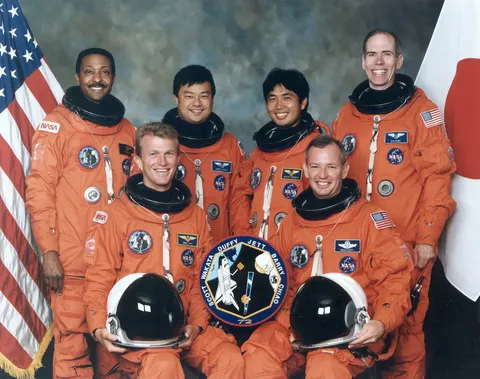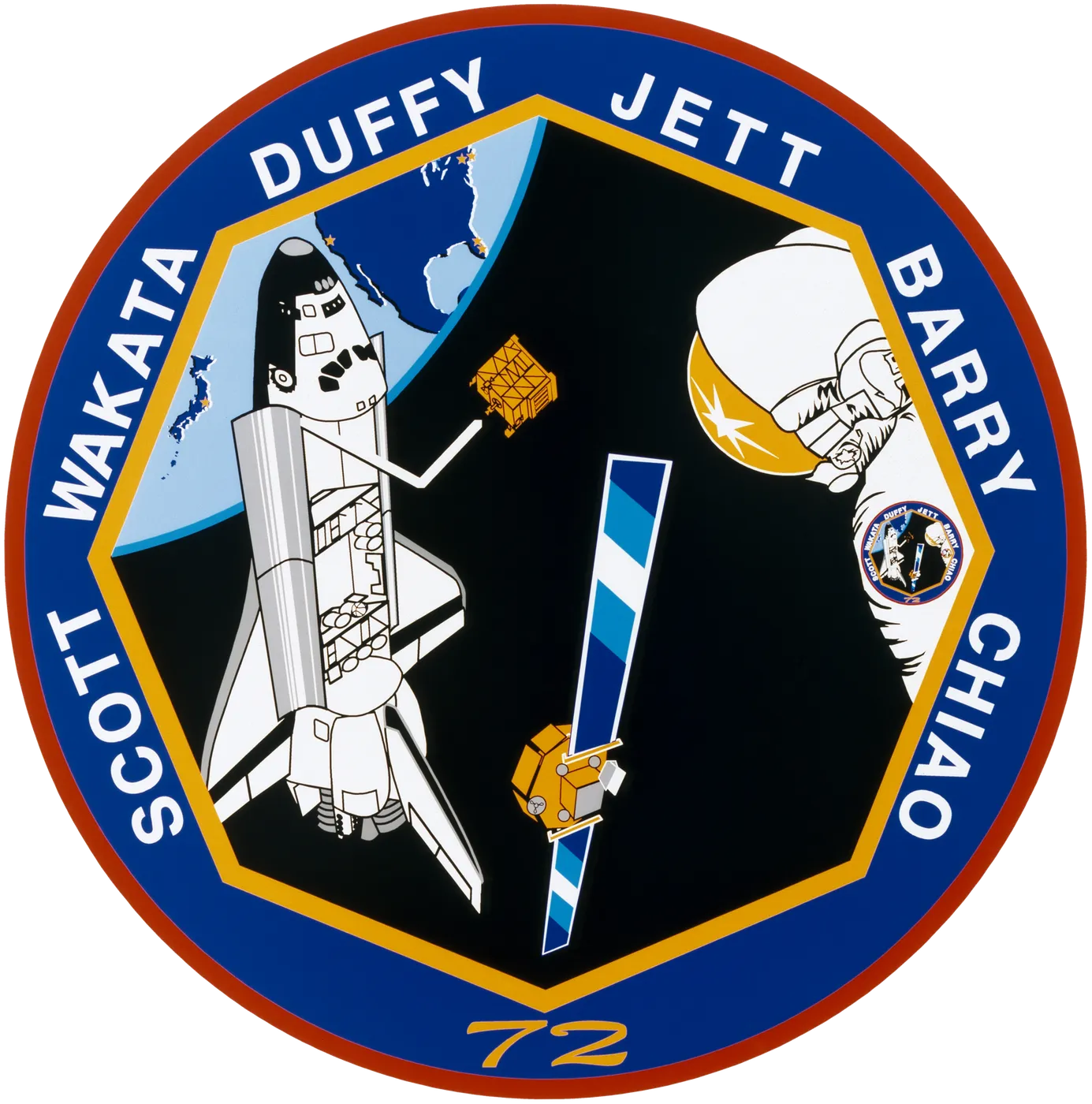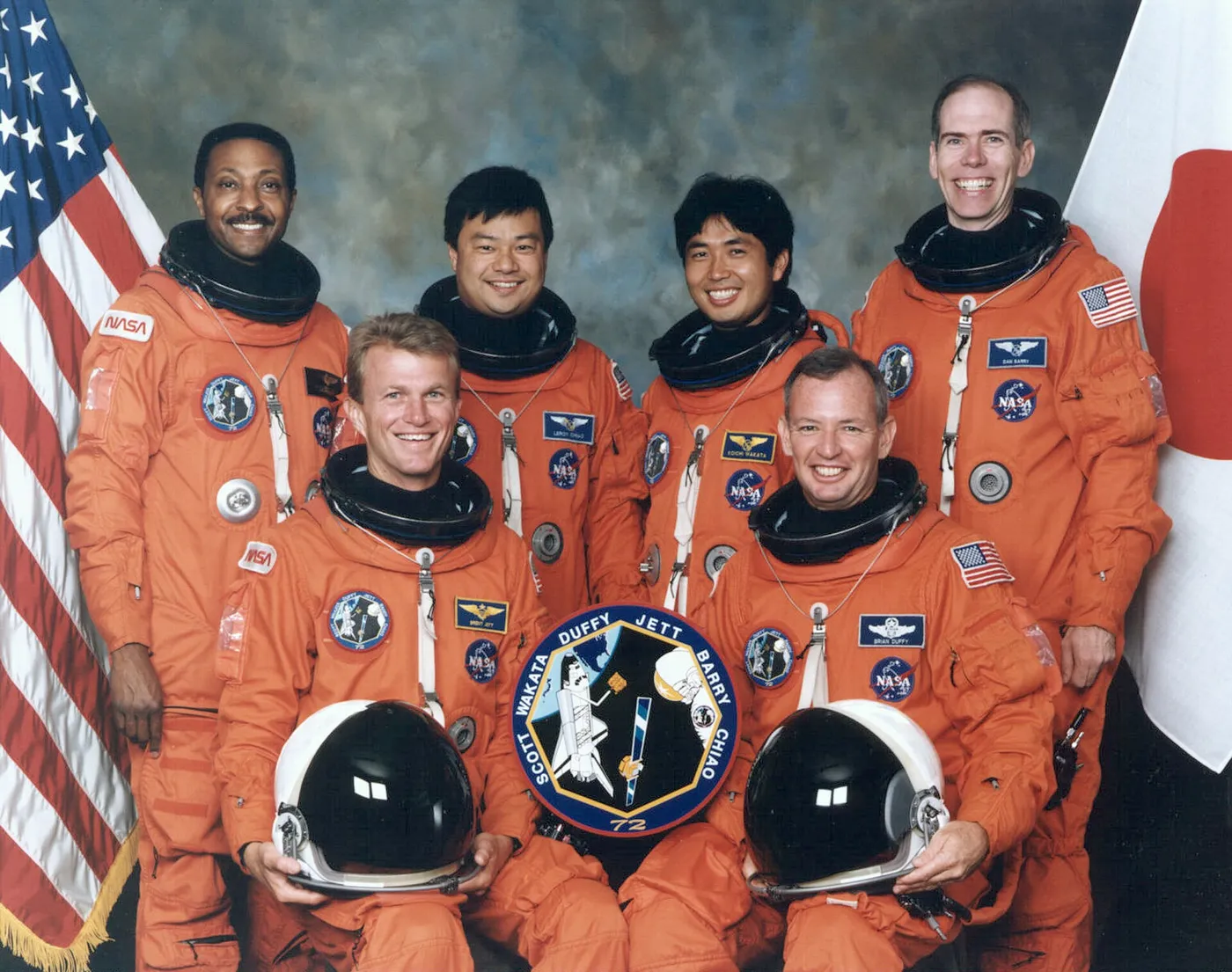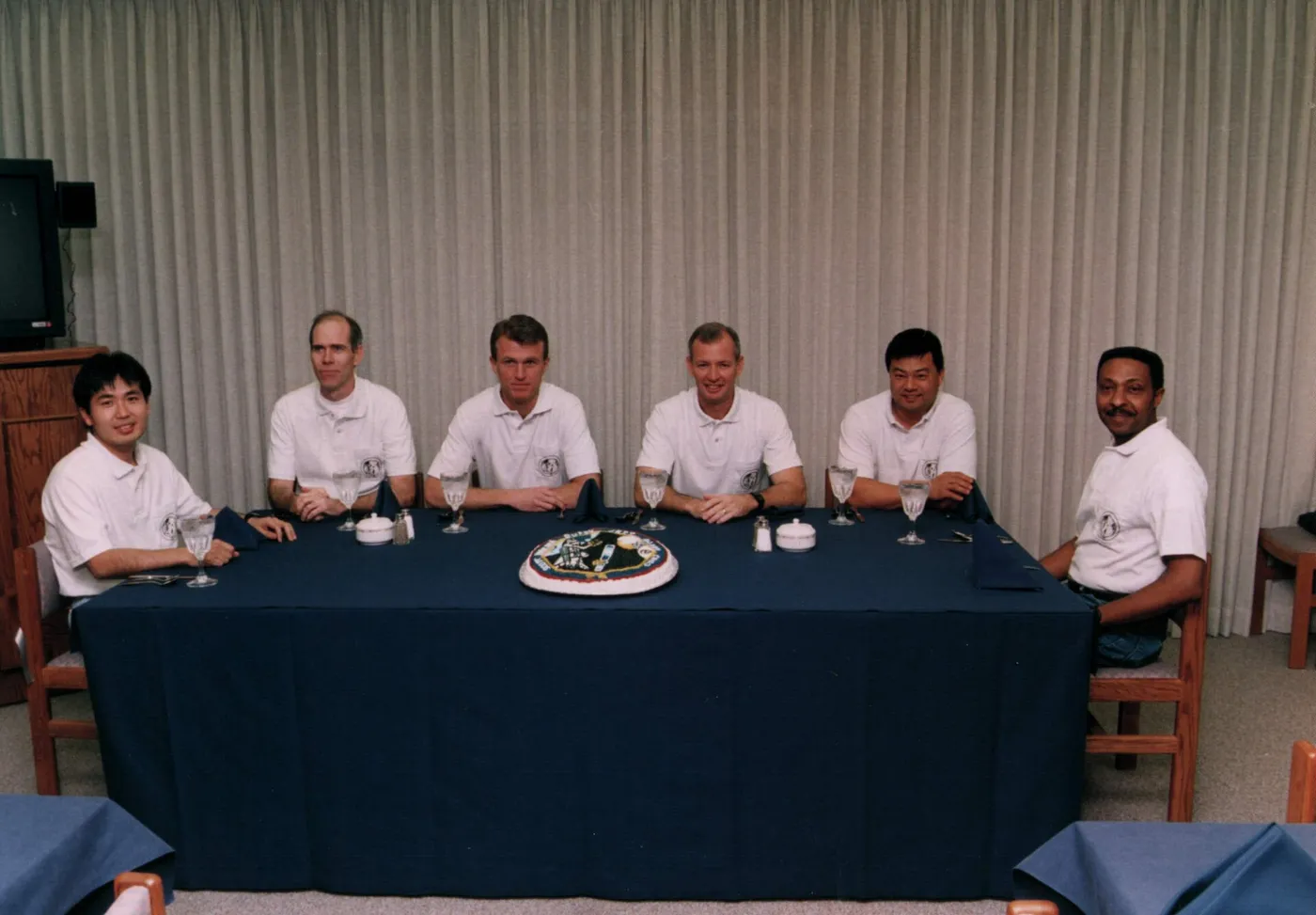
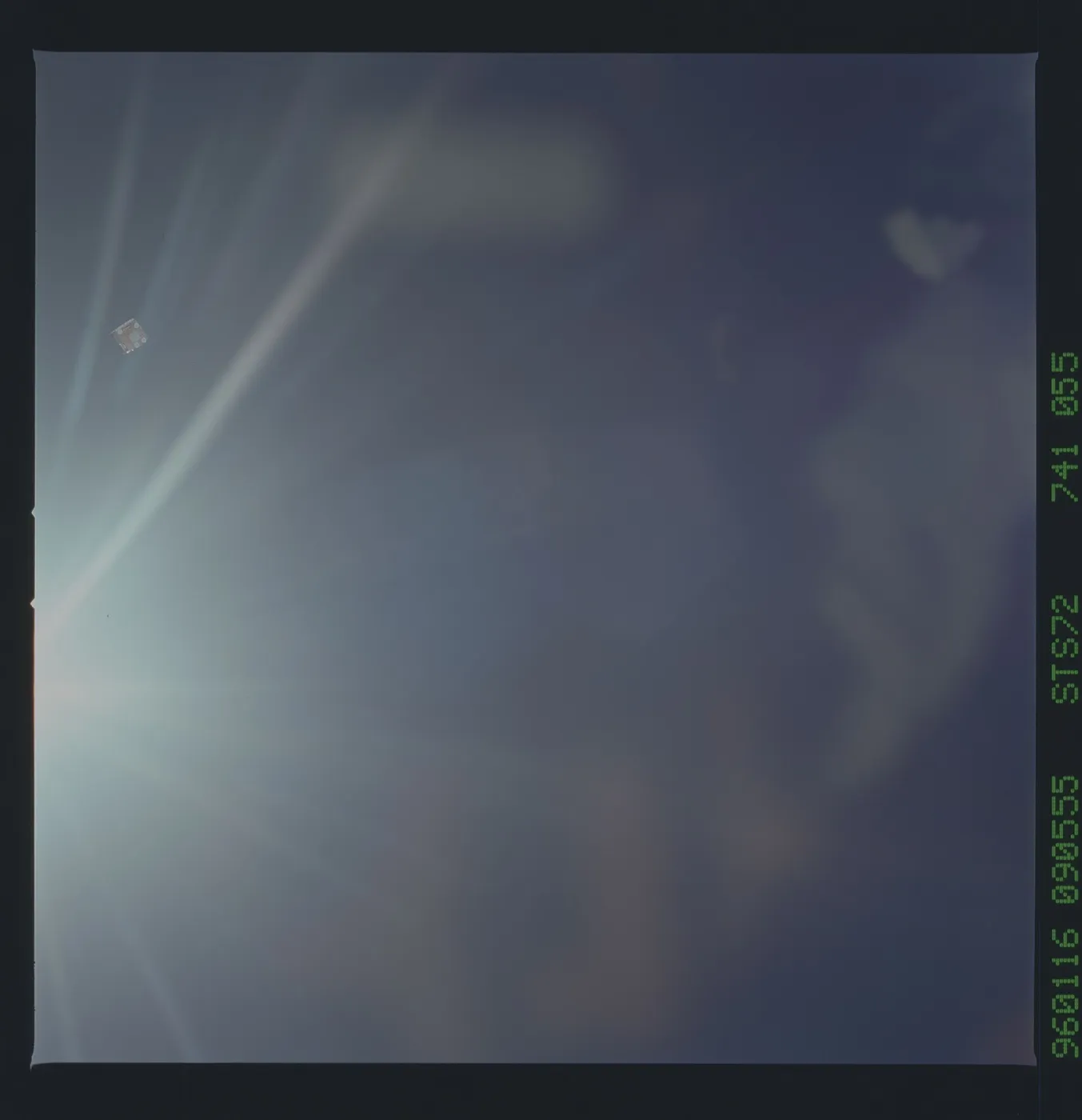
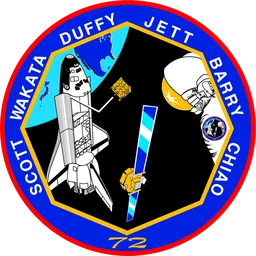
Endeavour's January 1996 flight was a retrieval mission, chasing down a Japanese science satellite that had been launched months earlier and left to conduct experiments in solar power and materials before its recovery. The crew of six caught the free-flying spacecraft with the robotic arm and secured it in the bay for the return to Earth.
The mission also featured two spacewalks to test tools, techniques and equipment for assembling the International Space Station, whose construction was drawing near. Endeavour's crew practised the kind of methodical outdoor work — handling large components, evaluating gloves and hardware in the cold — that would define the station-building years, making the nine-day flight as much a rehearsal for the future as a service to an existing satellite.
Endeavour went up in January 1996 to collect a Japanese satellite. The Space Flyer Unit had been launched from Japan ten months earlier and had been conducting materials and biology experiments on its own; retrieving it required matching orbits precisely and then grappling a spacecraft built by another agency to another set of standards.
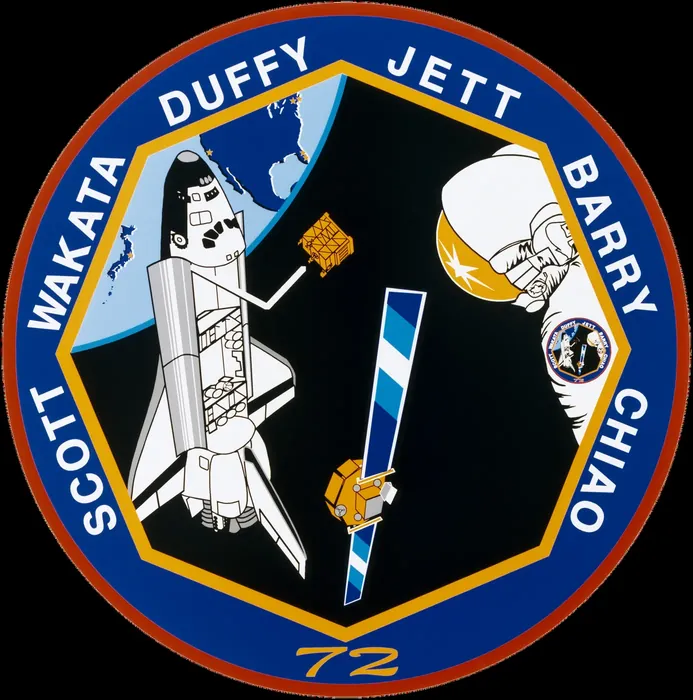
Koichi Wakata, on his first flight, operated the robotic arm for the capture — the first Japanese astronaut to do so, working on his own country's spacecraft. One of the satellite's solar arrays refused to retract and had to be jettisoned before the rest could be safely stowed, a decision taken quickly and calmly with the panel drifting away over the Pacific.
The crew also deployed and recaptured a small American free-flyer, and made two spacewalks to rehearse assembly techniques for the space station — testing tools, portable work platforms and the handling of large objects in the cold. Wakata went on to command the ISS in 2014, the first Japanese astronaut to do so.