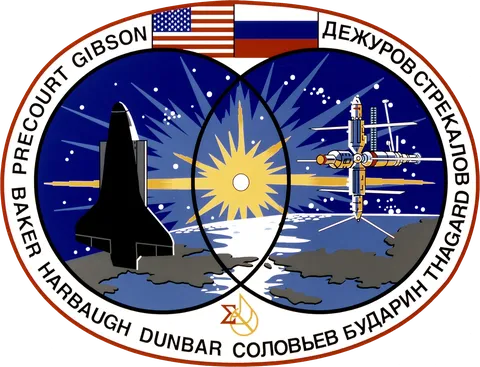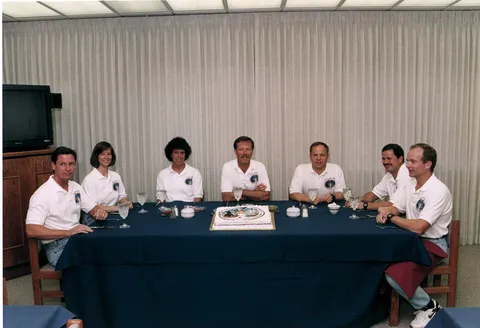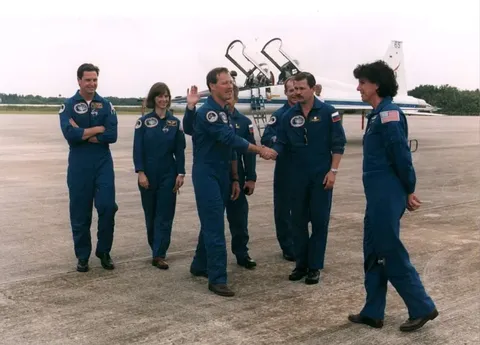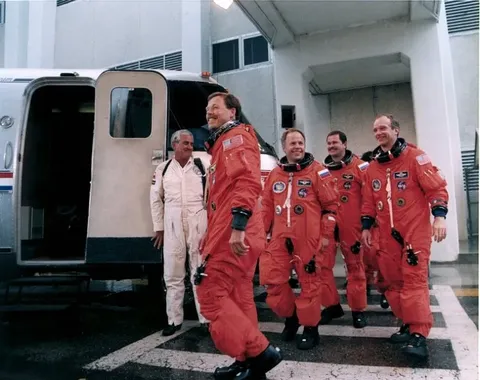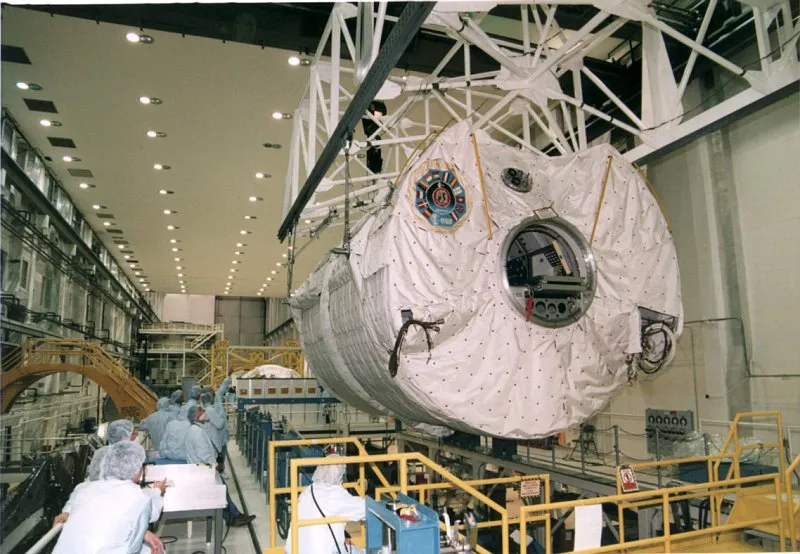
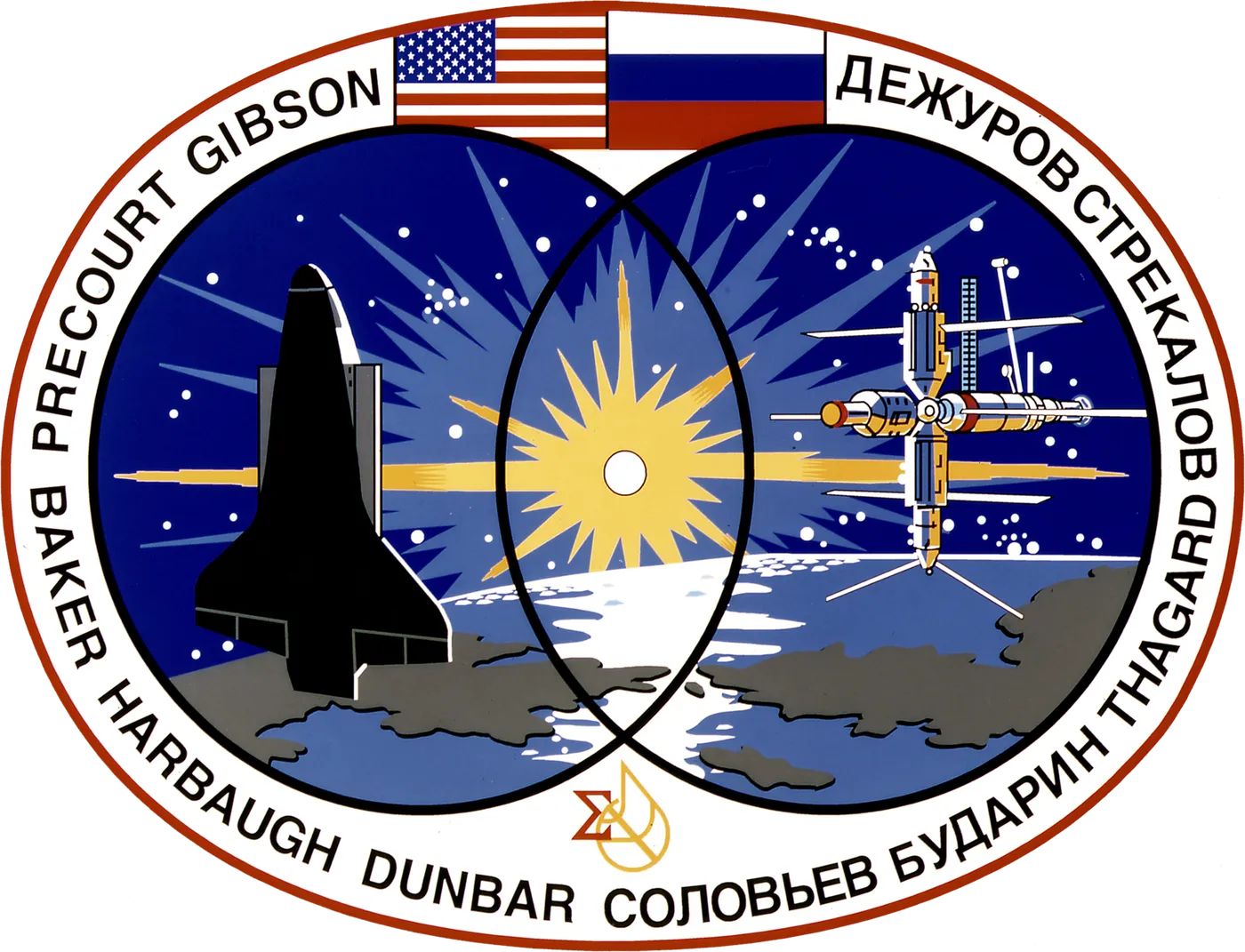
In June 1995 Atlantis made history as the first Shuttle to dock with the Russian space station Mir, physically joining the two nations' human spaceflight programmes for the first time since a symbolic handshake in orbit two decades earlier. The linked spacecraft briefly formed the largest structure ever assembled in orbit to that point.
Atlantis delivered a fresh crew to Mir and brought home cosmonauts along with American astronaut Norman Thagard, who had set a US endurance record during months aboard the station. The mission was the centrepiece of the Shuttle-Mir programme, a first phase of cooperation meant to teach NASA how to conduct long-duration missions and how to work with Russia before the two built a station together. The docking turned a political partnership into a working reality.
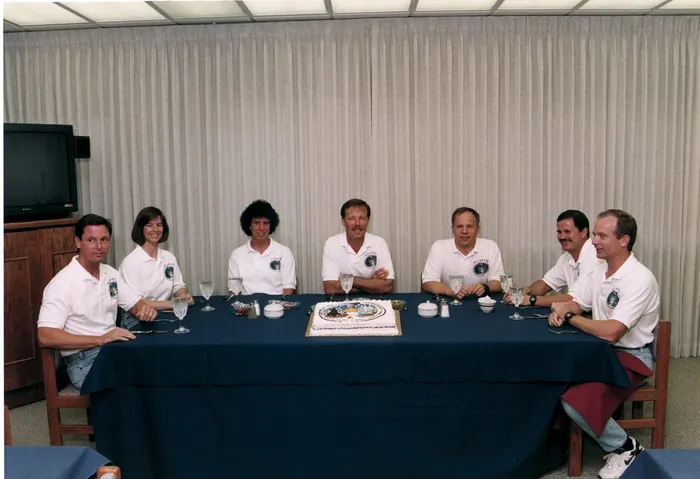
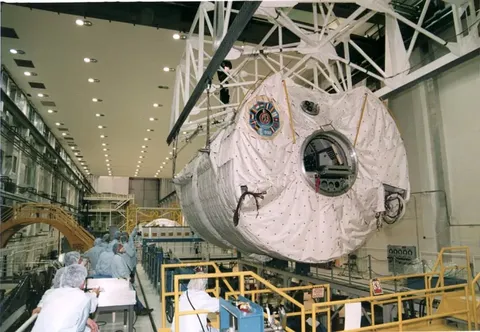
On 29 June 1995 Atlantis docked with Mir, and for the first time an American and a Russian spacecraft were joined in orbit since the Apollo-Soyuz handshake twenty years before. The combined vehicle massed something over 200 tonnes, making it the largest object ever assembled in space to that date, and the hatch opening was broadcast with the ceremony the moment deserved.
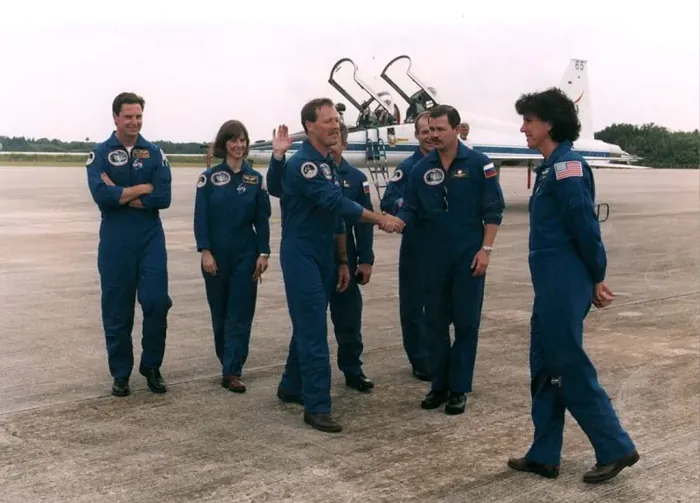
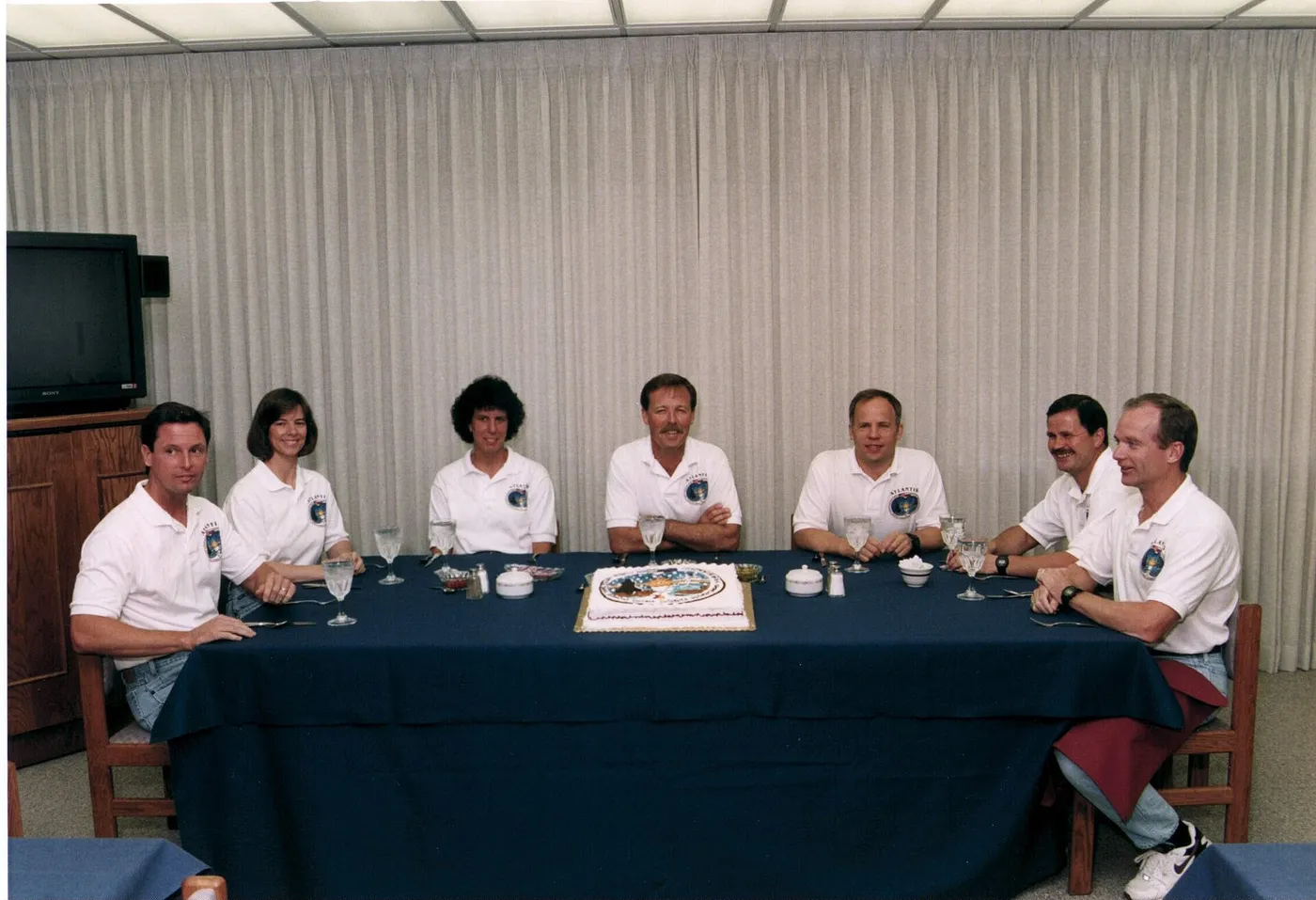
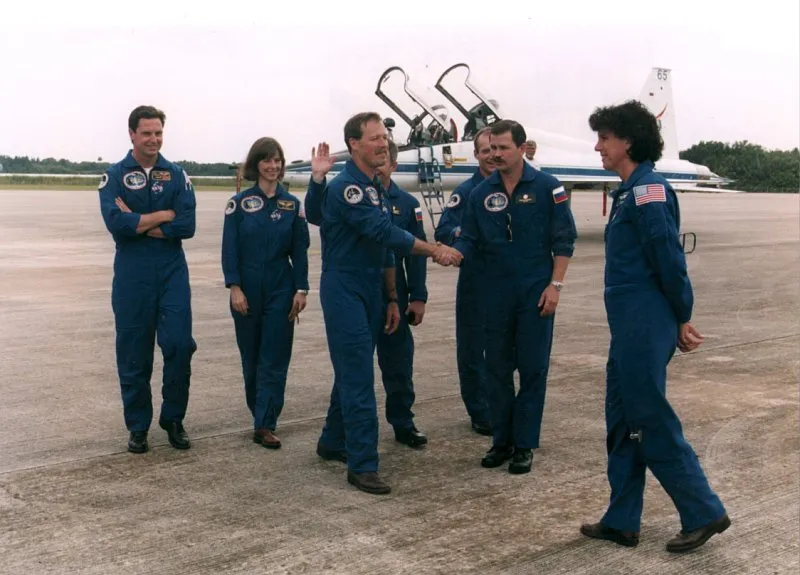
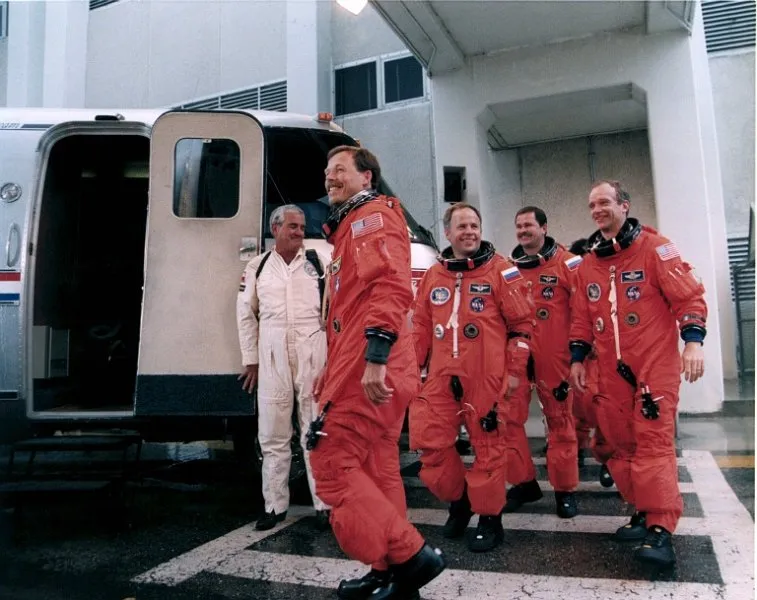
The flight was also a crew rotation, which was the genuinely new part. Atlantis carried up two cosmonauts to take over Mir and brought home Norman Thagard, who had spent 115 days aboard and set an American endurance record in the process. Thagard's experience was a warning as much as an achievement: isolated among Russian speakers, short of the food he could stomach, with little to do once his experiments ran out, he came back thinner and franker than NASA had expected about how hard long duration flight is on the mind.
Those lessons were the real cargo of the whole Shuttle-Mir era. Over seven visits and seven American residents, NASA learned how to hand over a station, how to argue with a partner agency in two languages, and how people fare over months rather than days — knowledge that had simply never existed in the American programme, and without which the International Space Station would have been built by people guessing.