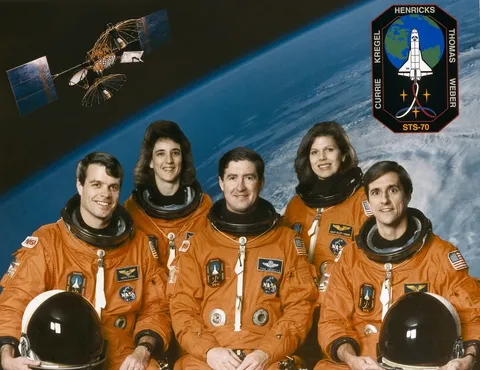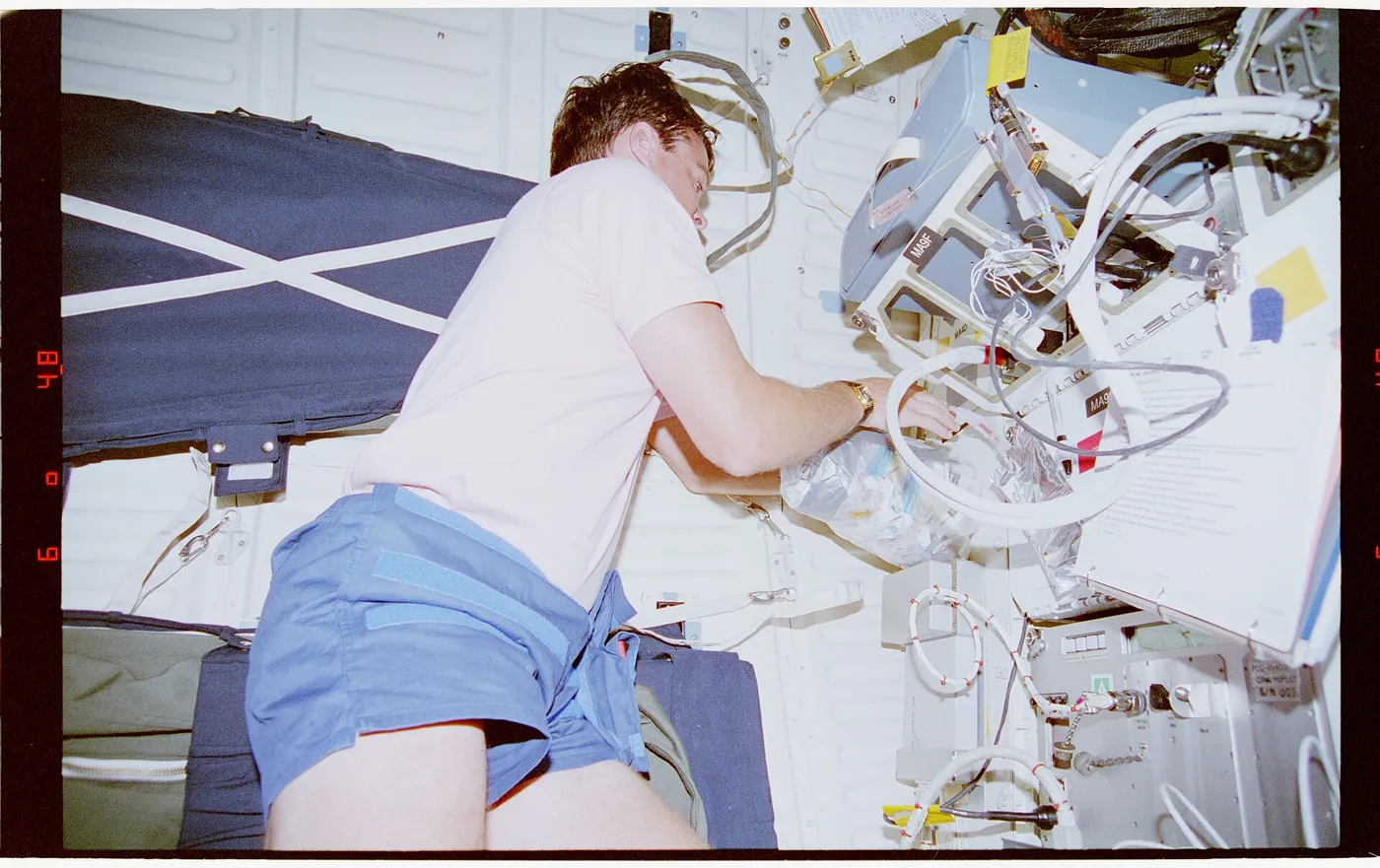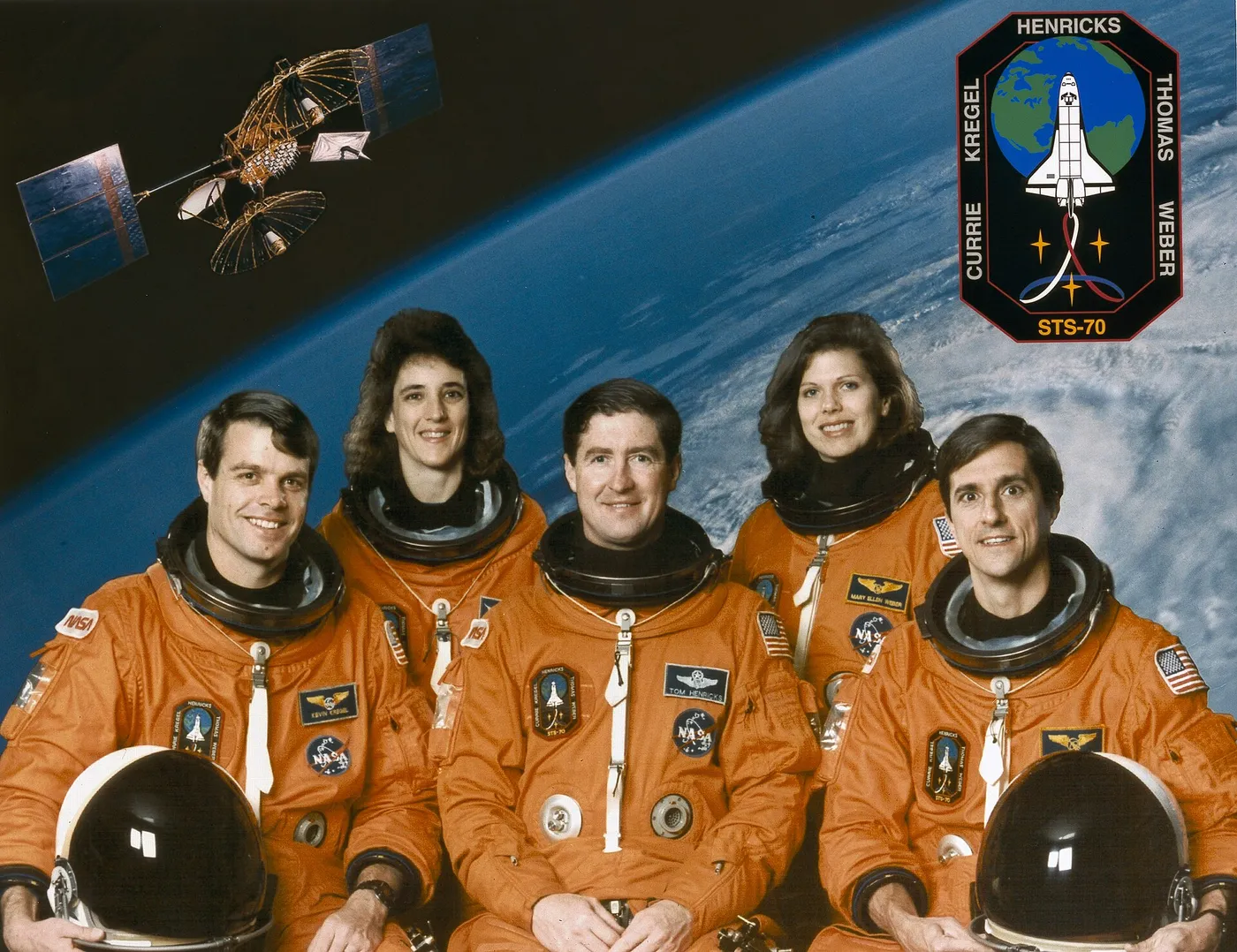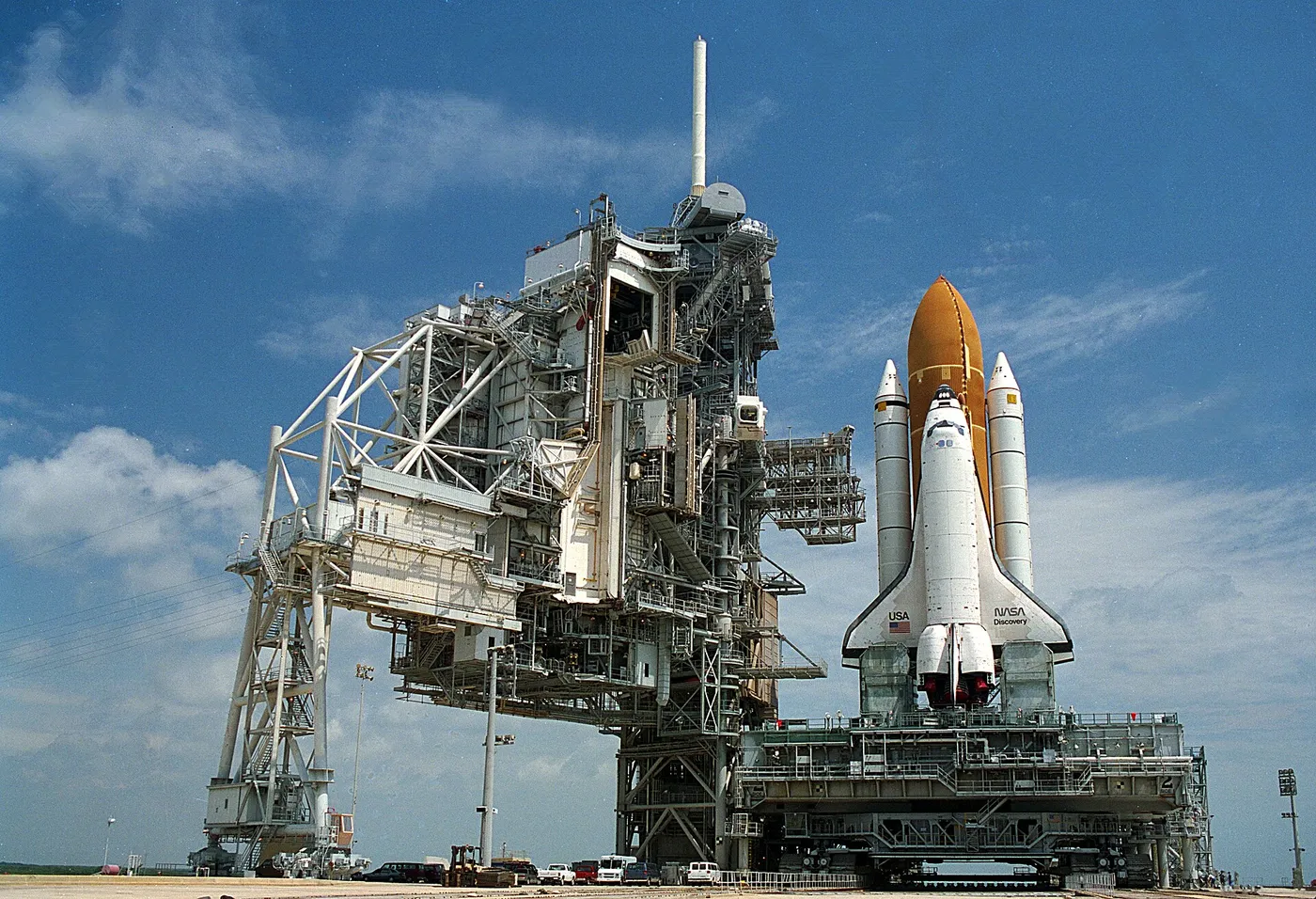
Discovery flew a satellite-deployment mission in July 1995, releasing another Tracking and Data Relay Satellite to maintain the orbiting communications network the fleet and its payloads relied upon. The crew of five sent the satellite on its way early in the flight before turning to a slate of biomedical and materials experiments.
The mission is fondly remembered for its unlikely delay: woodpeckers had drilled dozens of holes in the foam insulation of the external tank while the Shuttle sat on the pad, forcing repairs and a slip in the schedule. Once the birds' damage was patched, Discovery flew a clean eight-day mission, adding a note of natural comedy to a programme more accustomed to worrying about hardware than wildlife.
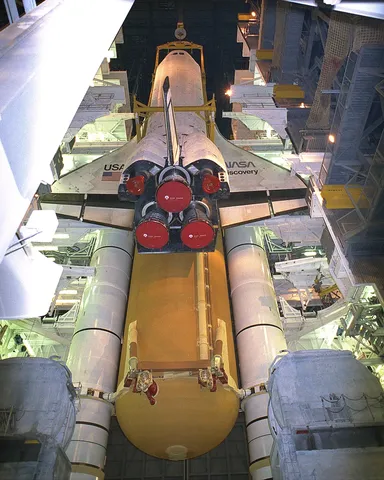
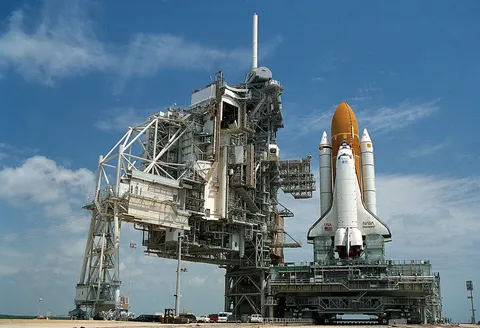
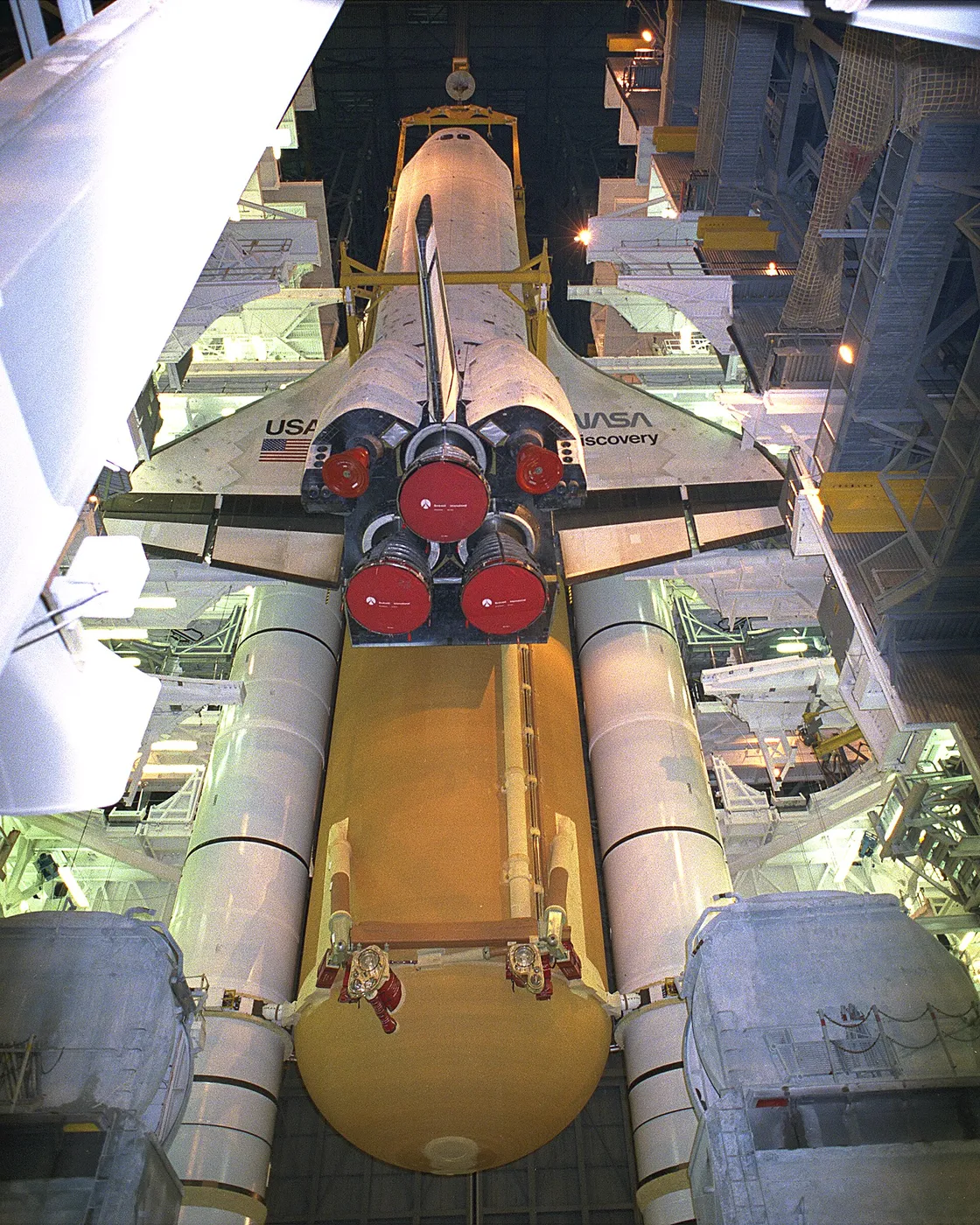
This flight is remembered for the woodpeckers. In late May 1995, with Discovery on the pad, a pair of northern flickers took an interest in the external tank's foam insulation and drilled some two hundred holes in it — the birds apparently finding the material ideal for excavating nest cavities. The vehicle had to be rolled back to the assembly building for repairs.
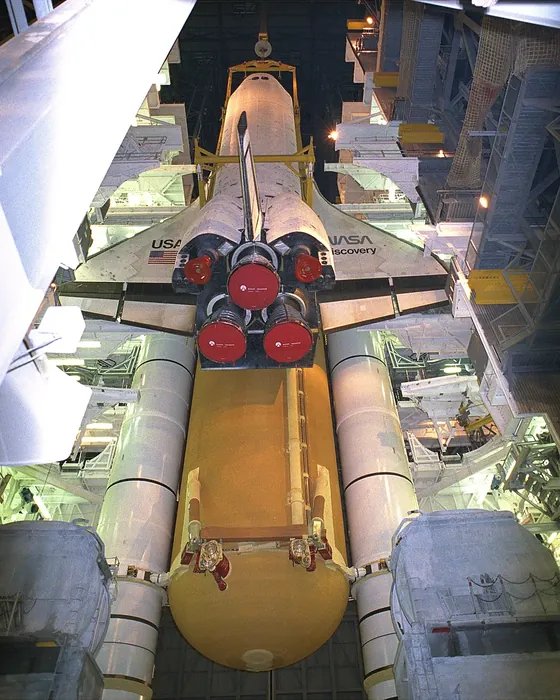
NASA's response was a lesson in the unglamorous side of operations: plastic owls, balloons with predator eyes painted on them, and an air-horn patrol, assembled into a bird-deterrent programme that has been maintained at the pad ever since. The flickers were a protected species, so nothing more robust was permissible.
When it finally flew in July, the mission deployed the seventh and last of the original Tracking and Data Relay Satellites, completing the network begun twelve years earlier, and flew the first of the block-upgraded main engines. It was also the flight that made the term 'woodpecker damage' a permanent entry in Shuttle programme documentation.