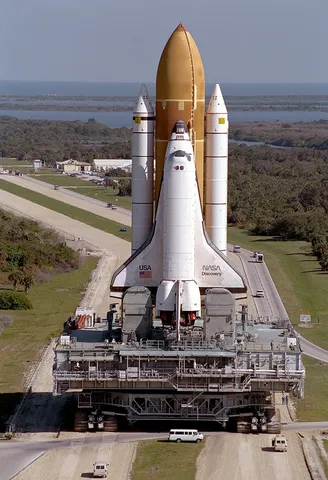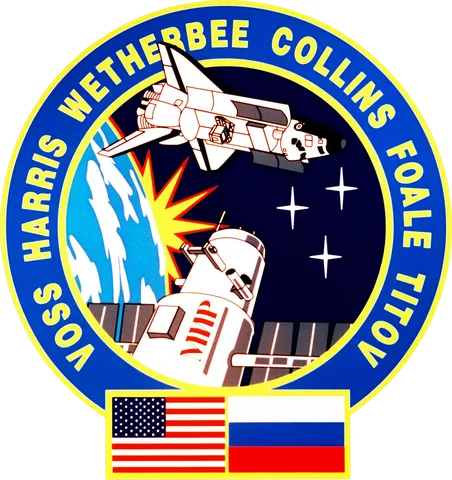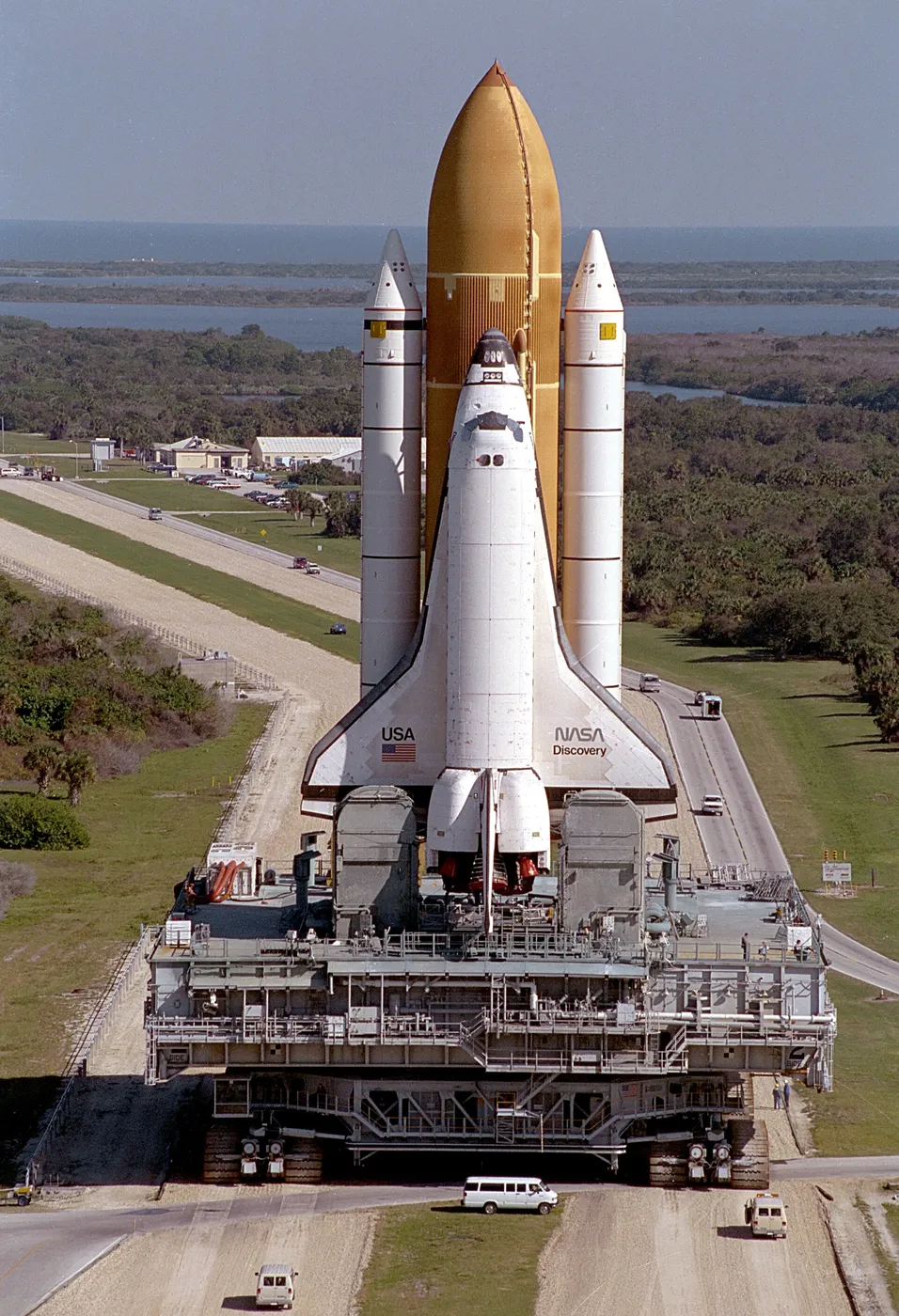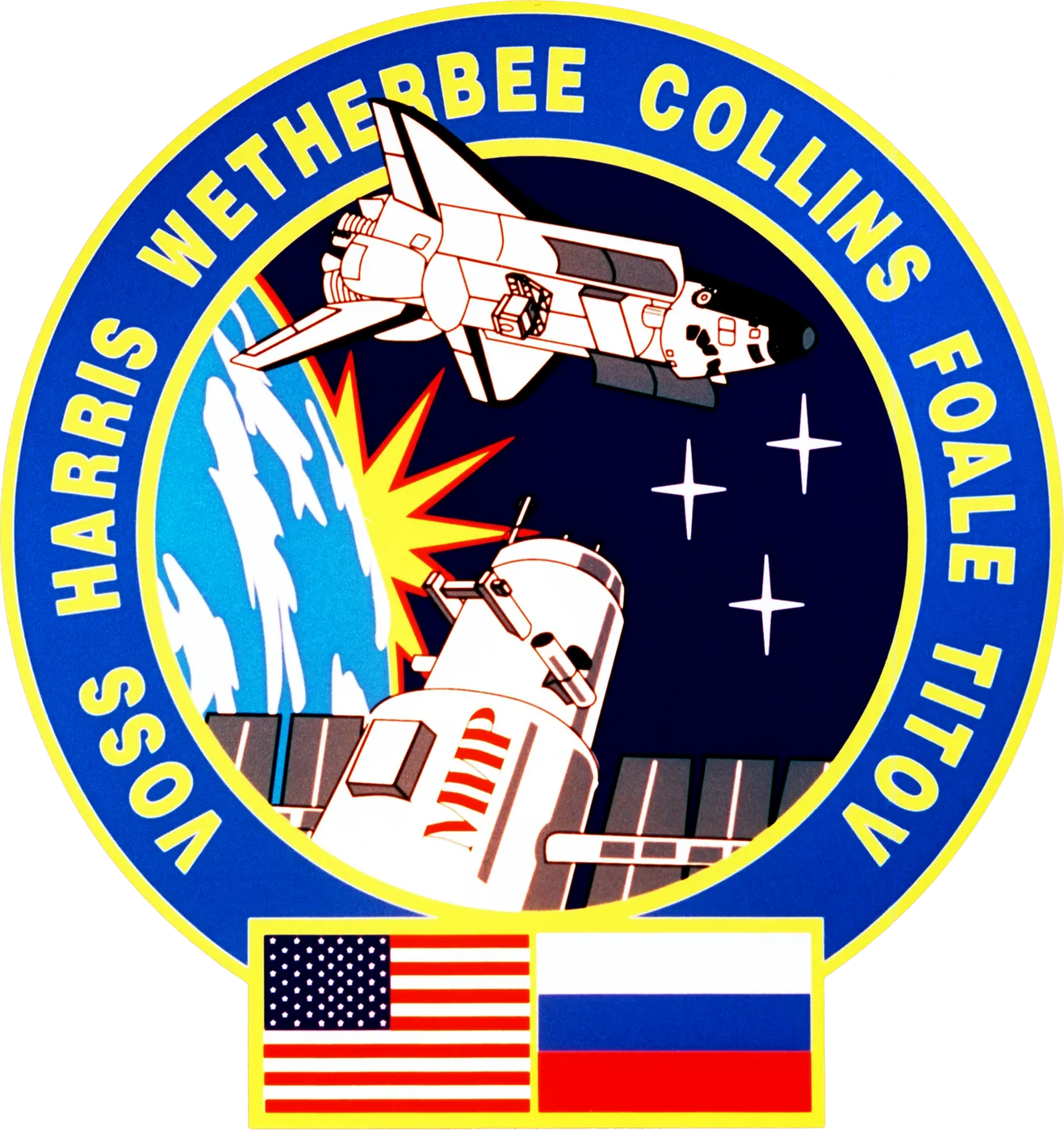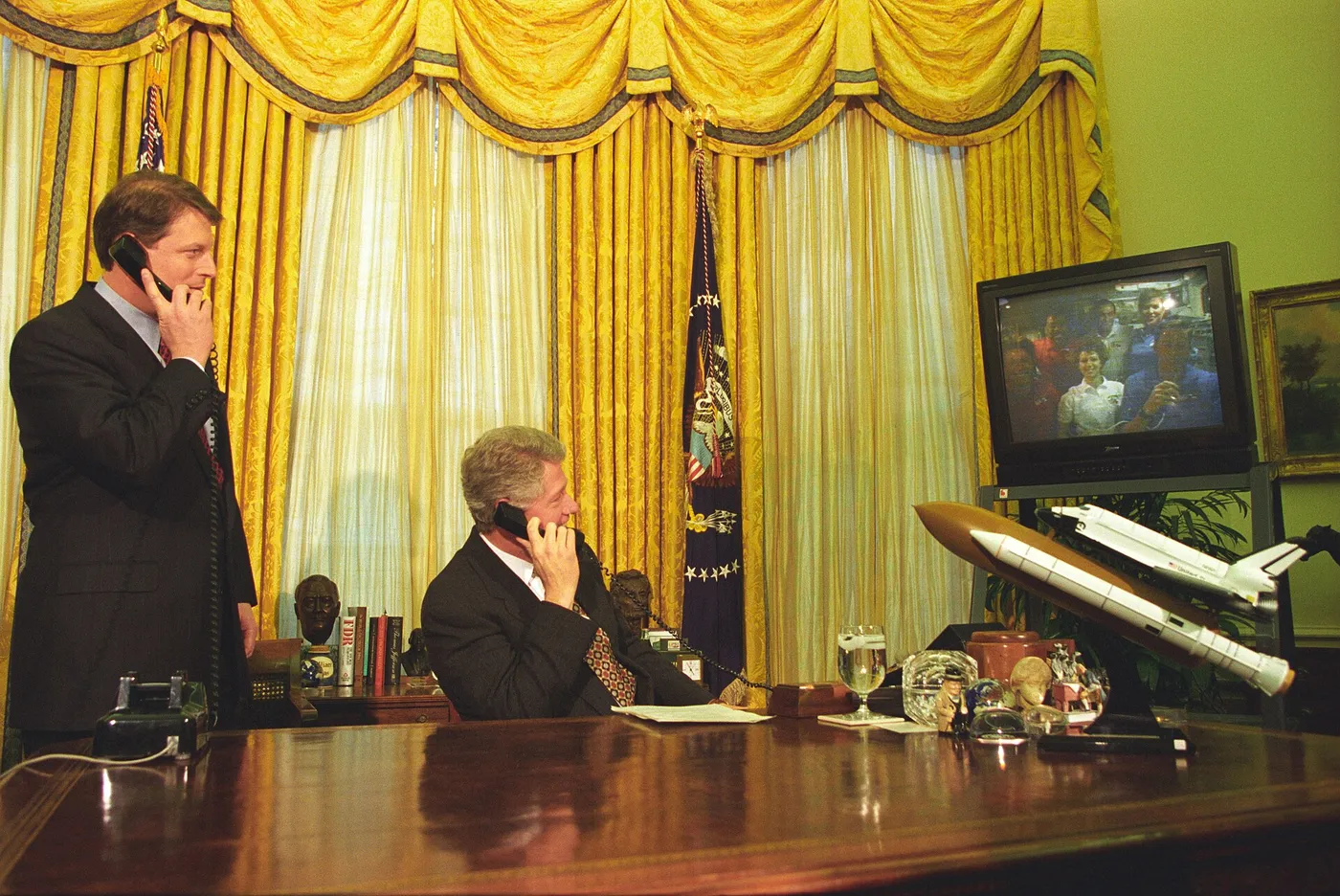
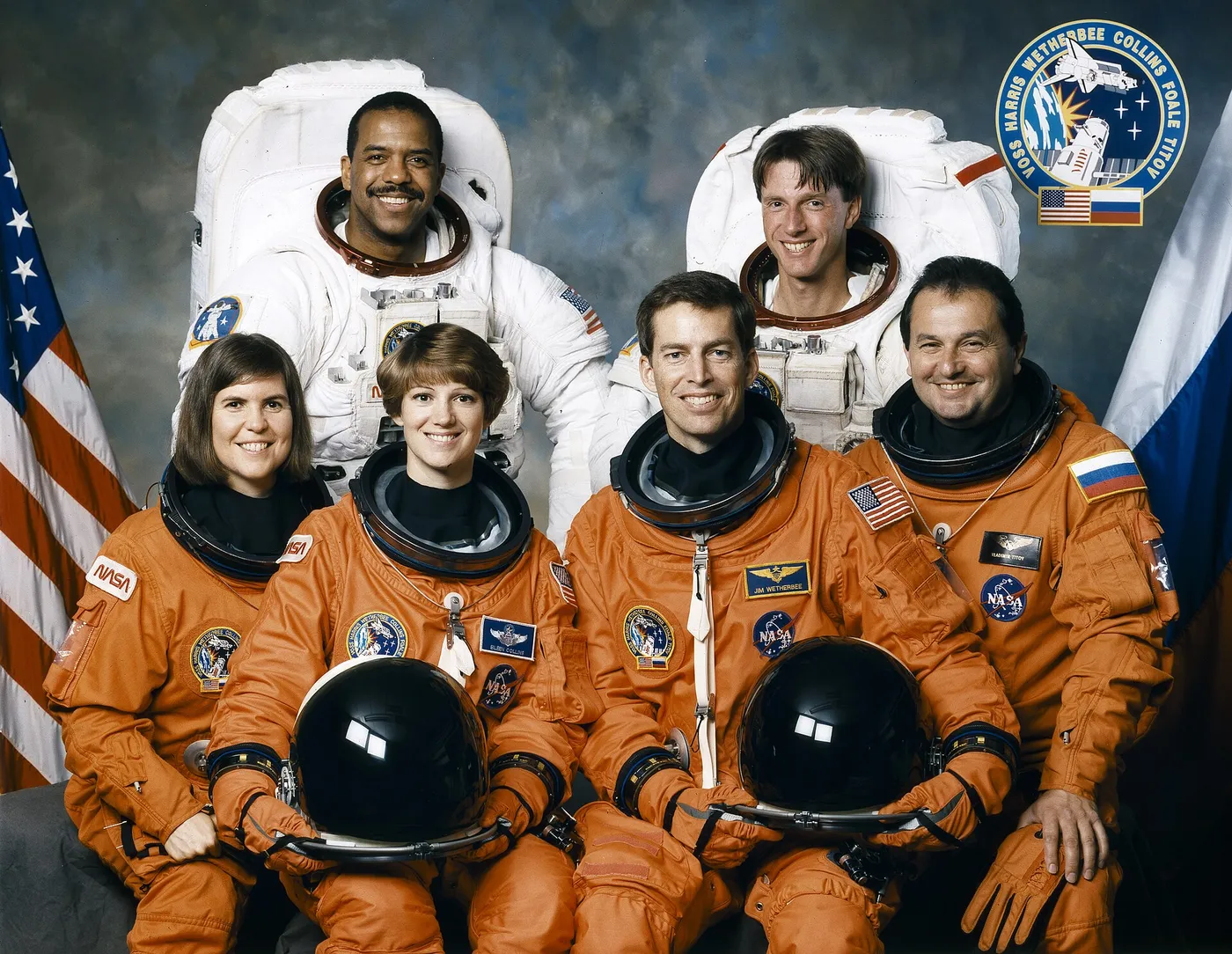
Discovery's February 1995 flight was a dress rehearsal for the docking missions to come, flying up to the Russian space station Mir and approaching within about ten metres without touching. The careful close approach tested the navigation and piloting needed before an actual docking could be attempted, with cosmonauts watching from Mir's windows.
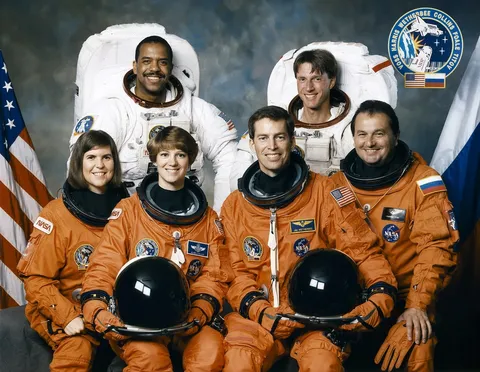
The mission carried two firsts of note: Eileen Collins flew as the first woman to pilot the Shuttle, and Michael Foale and Bernard Harris made the first spacewalk by a British-born astronaut and the first by an African American, respectively, testing how the cold of space affected their suits. Deploying and retrieving a free-flying telescope along the way, the flight advanced both the Mir partnership and the fleet's operational skills.
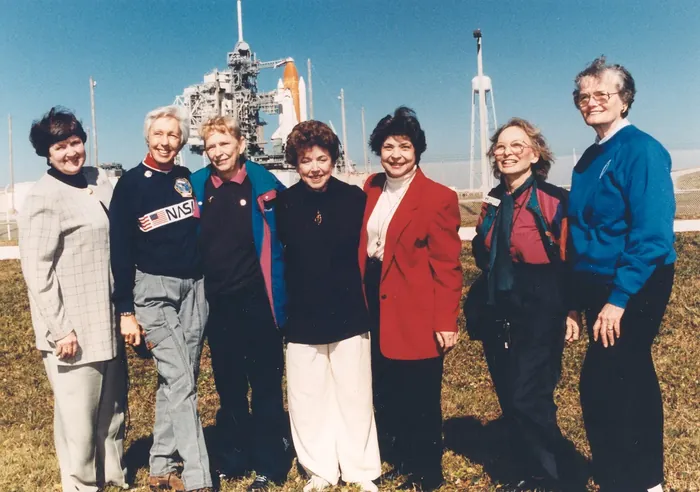
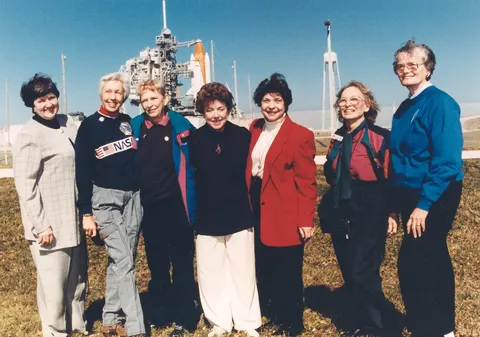
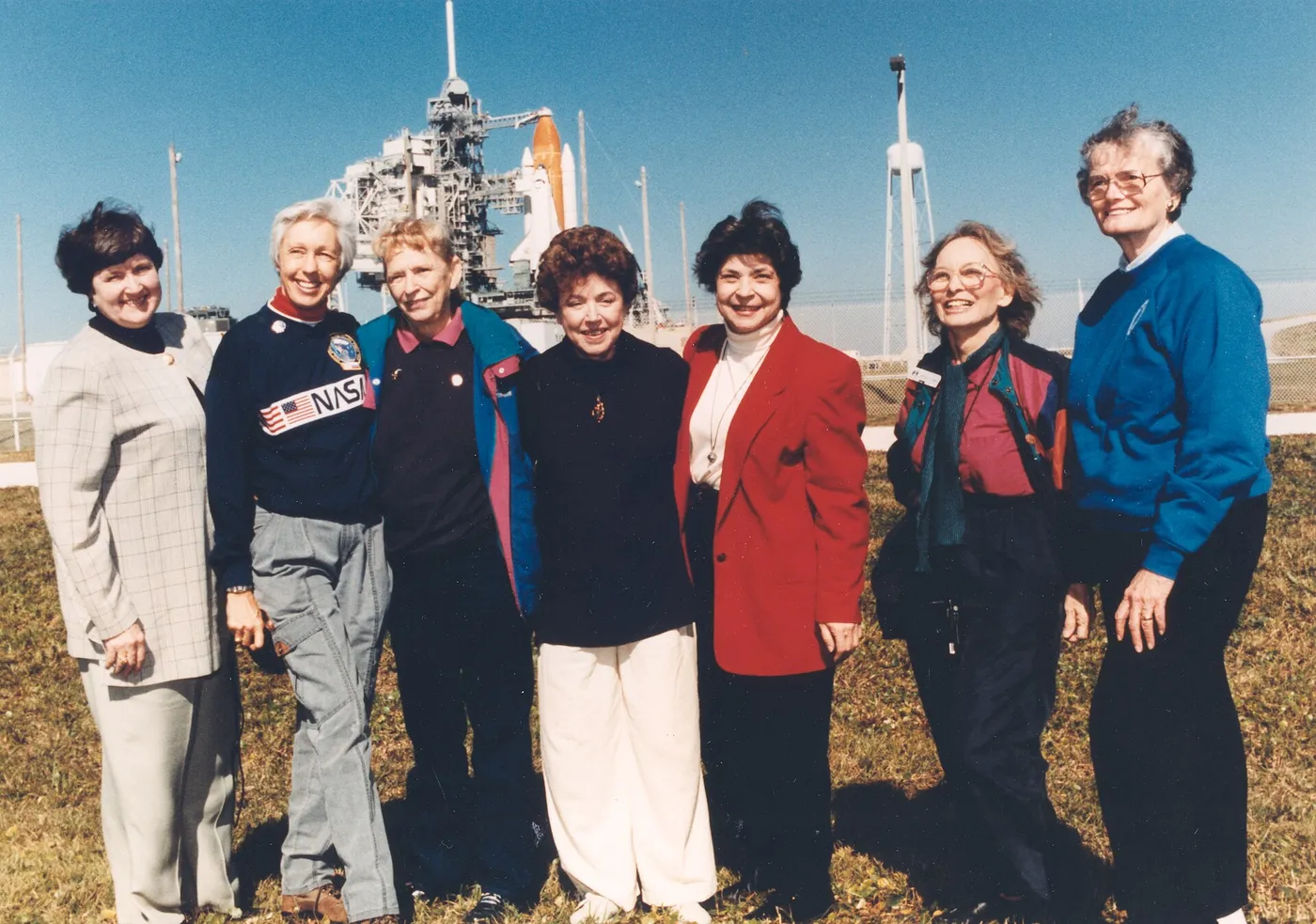
Eileen Collins flew this mission as the first woman ever to pilot a spacecraft, twenty years after NASA had begun accepting women as astronauts and thirty-two after Tereshkova. A former Air Force instructor pilot, she had been quietly determined about it for most of her career; among the guests she invited to watch the launch were the surviving members of the Mercury 13, the women who had passed the astronaut medical tests in the early 1960s and never been allowed to fly.
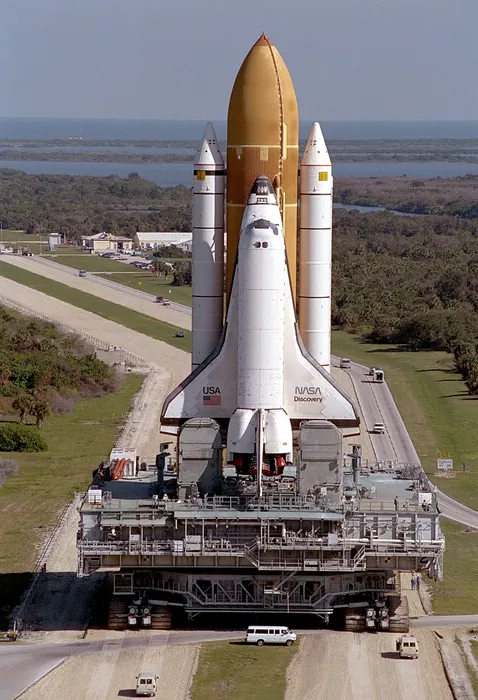
The mission's purpose was a dress rehearsal for docking: fly Discovery to within a few metres of Mir without touching it, and prove the two programmes could manage a close approach. It nearly did not happen. A reaction-control thruster began leaking on the way up, and the Russians — reasonably enough — objected to a leaking spacecraft approaching their station. Days of negotiation and careful troubleshooting followed before approval came, and Discovery closed to about eleven metres while the two crews photographed each other through the windows.
Outside, Bernard Harris became the first African-American to walk in space, working alongside Michael Foale in a spacewalk cut short when both men grew dangerously cold — the suits had trouble keeping up with the shadowed side of the orbit, and the experience fed directly into later glove and heater redesigns. It was the kind of unglamorous data that only comes from people being uncomfortable in the real thing.