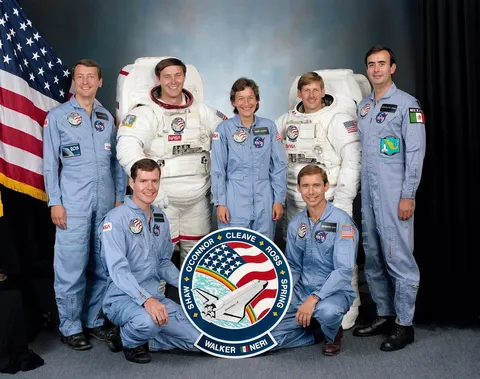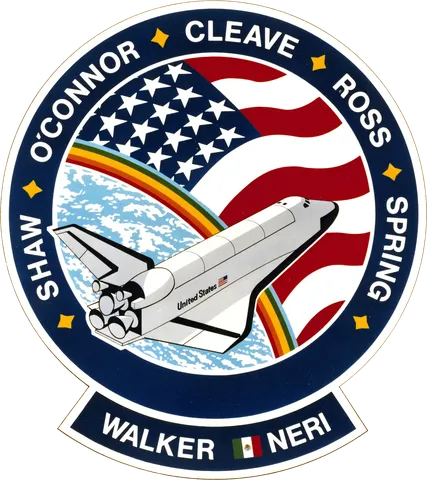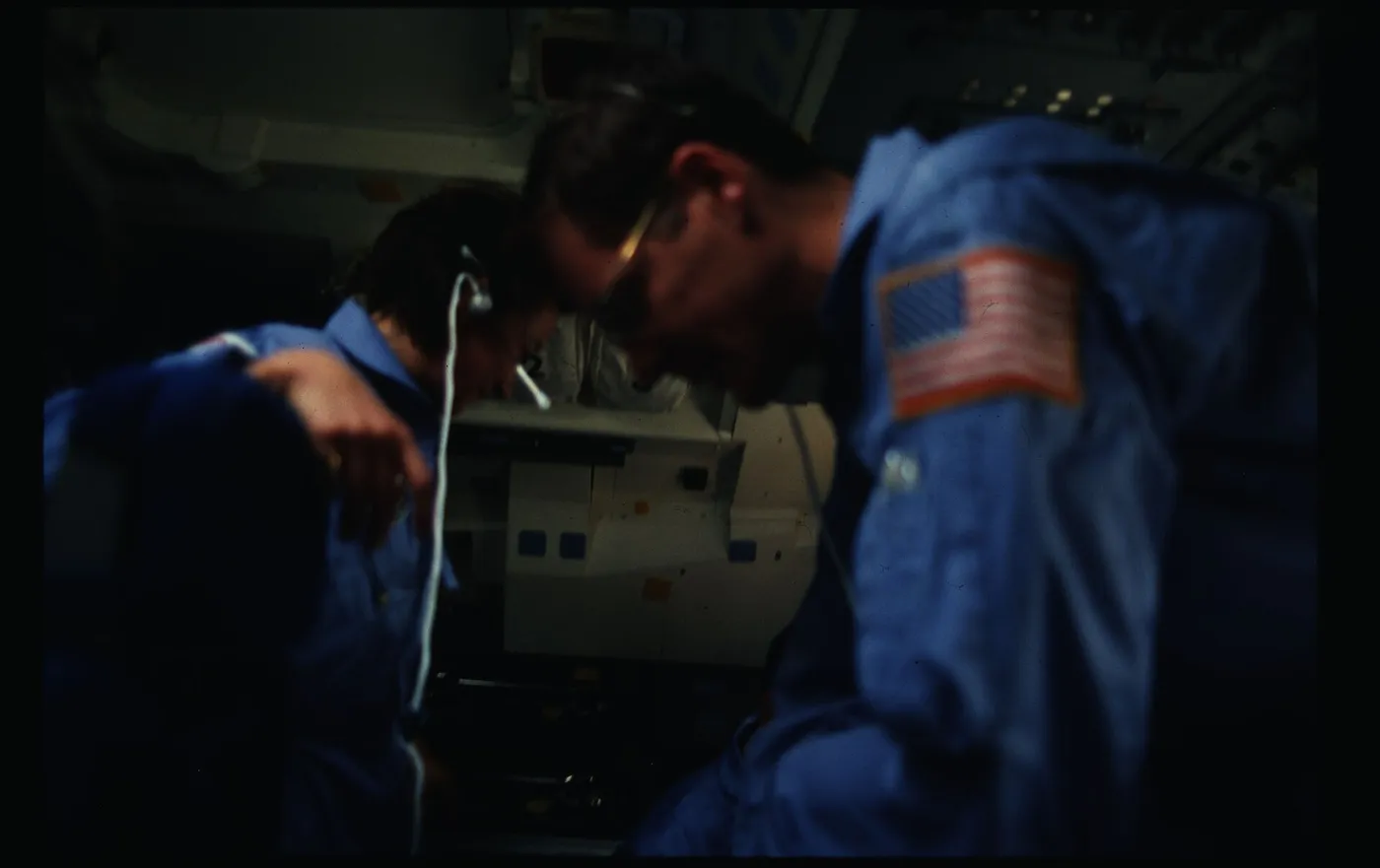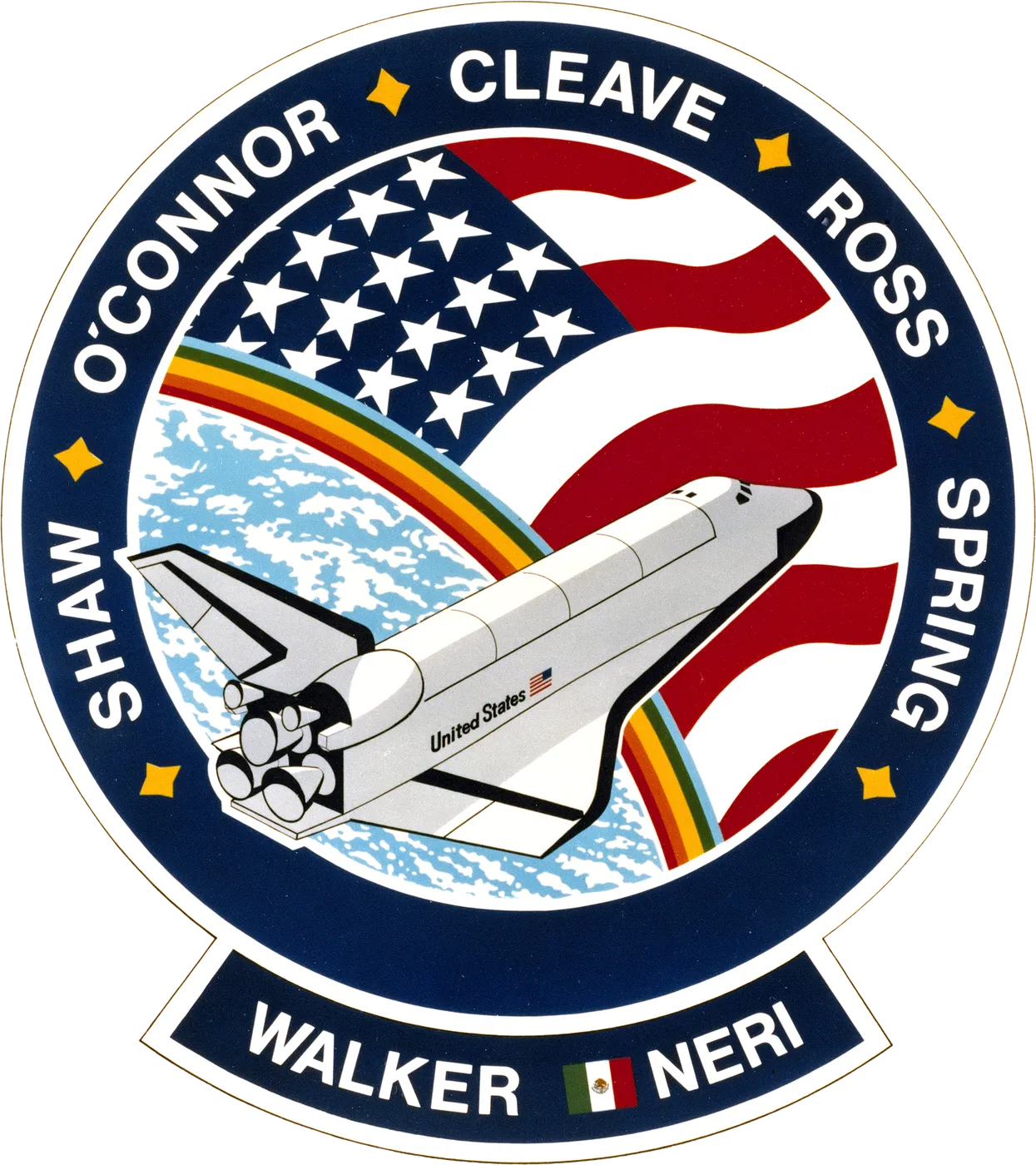
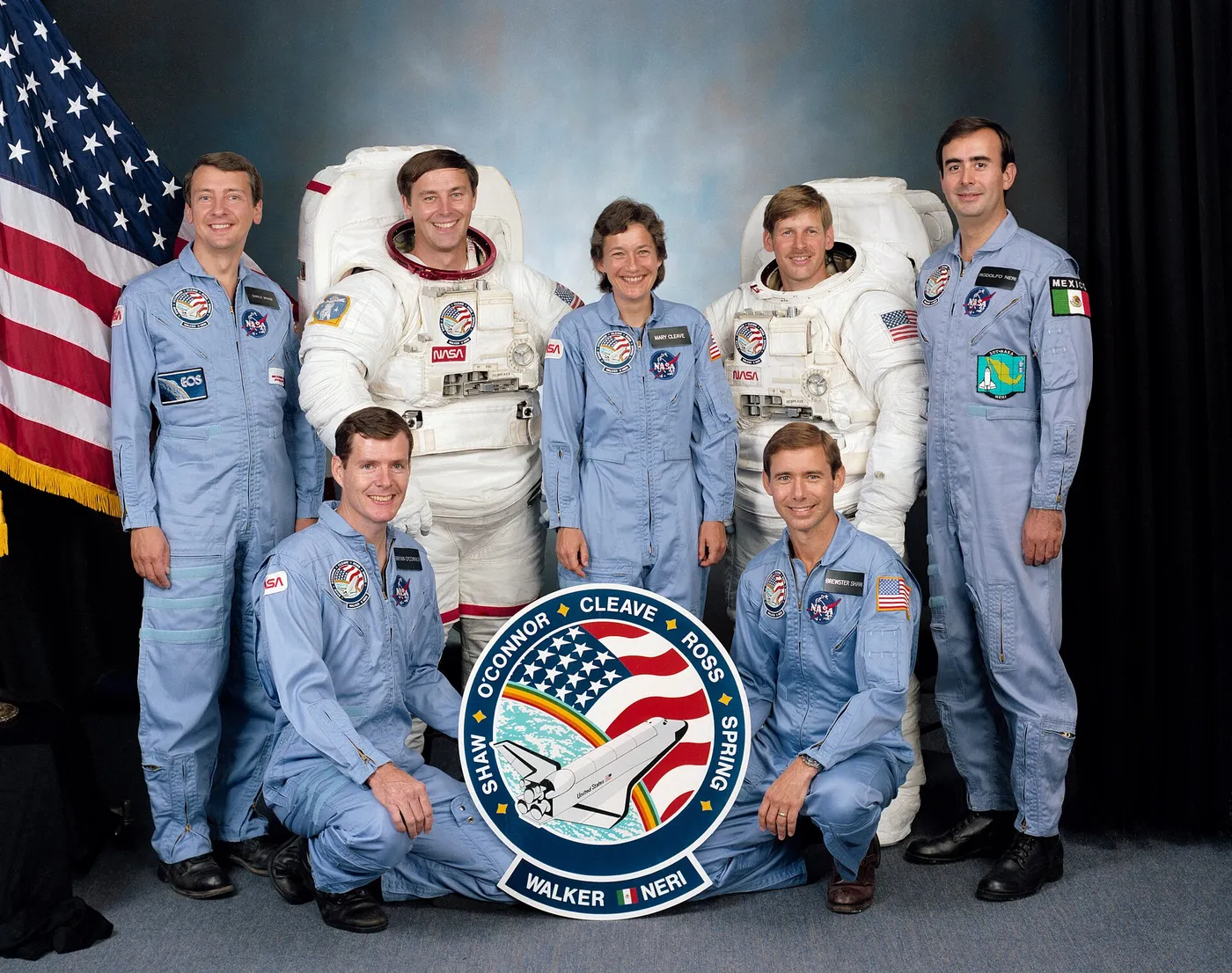
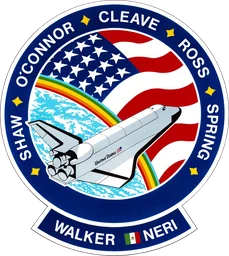
Atlantis's second flight, in November 1985, combined a busy commercial deployment with a look ahead to how large structures might be built in orbit. The crew of seven, which included Rodolfo Neri Vela, the first Mexican in space, released three communications satellites in a single mission — matching the deployment record of the era's satellite-launching heyday.
The forward-looking work happened outside. On two spacewalks, astronauts Jerry Ross and Sherwood Spring assembled and dismantled experimental frameworks of struts and nodes in the payload bay, testing by hand whether crews could build trusses in space. Those construction experiments were a direct rehearsal for the assembly of a space station, still years away but already shaping how NASA trained its people to work in the void.
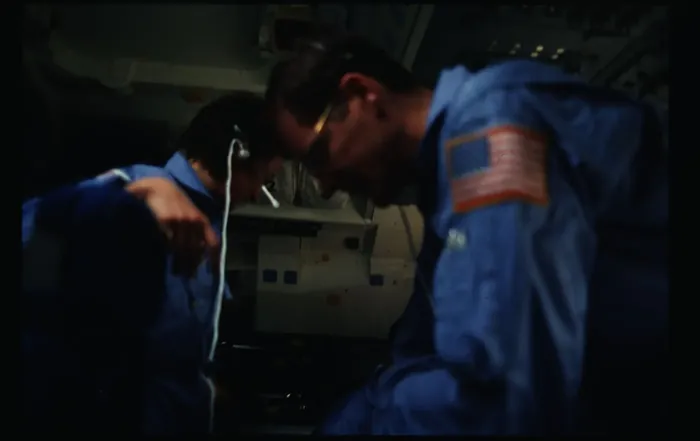
Atlantis's second flight was a rehearsal for building things in space, eleven years before anyone laid the first piece of the International Space Station. Two experiments, EASE and ACCESS, had astronauts assemble truss structures by hand in the payload bay — clipping together aluminium struts and nodes into towers and pyramids, over and over, while engineers timed them and watched what tired them out.
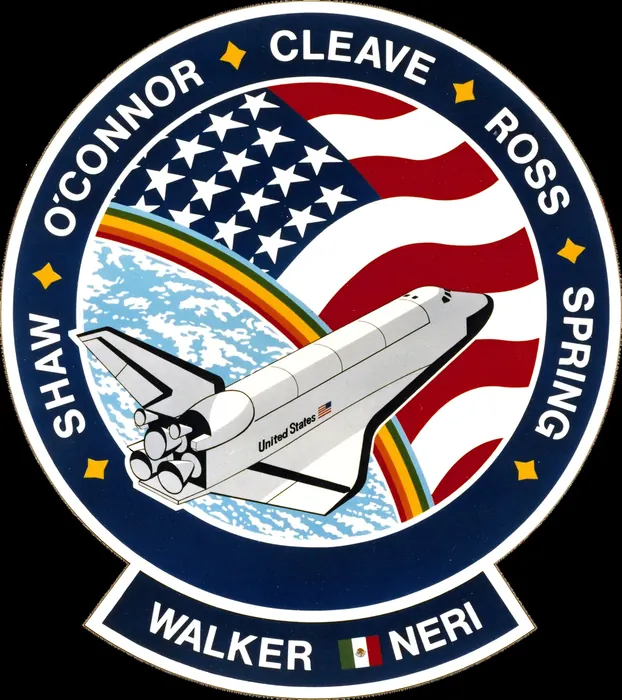
The findings were unglamorous and enormously valuable: that assembly work in a pressurised suit is dominated by hand fatigue, that foot restraints matter more than tools, and that structures should be designed so a tired person in stiff gloves cannot install a part backwards. Every truss bolted onto the ISS two decades later inherited those lessons.
The flight also deployed three communications satellites, the busiest single deployment of the programme, and carried Rodolfo Neri Vela as the first Mexican in space, aboard alongside a Mexican-owned satellite. It was the penultimate flight before Challenger, and one of the last of the brief period when the Shuttle really did look like the routine, high-cadence, commercial workhorse it had been sold as.