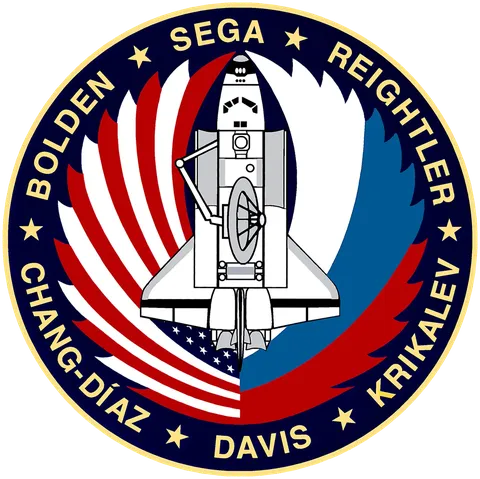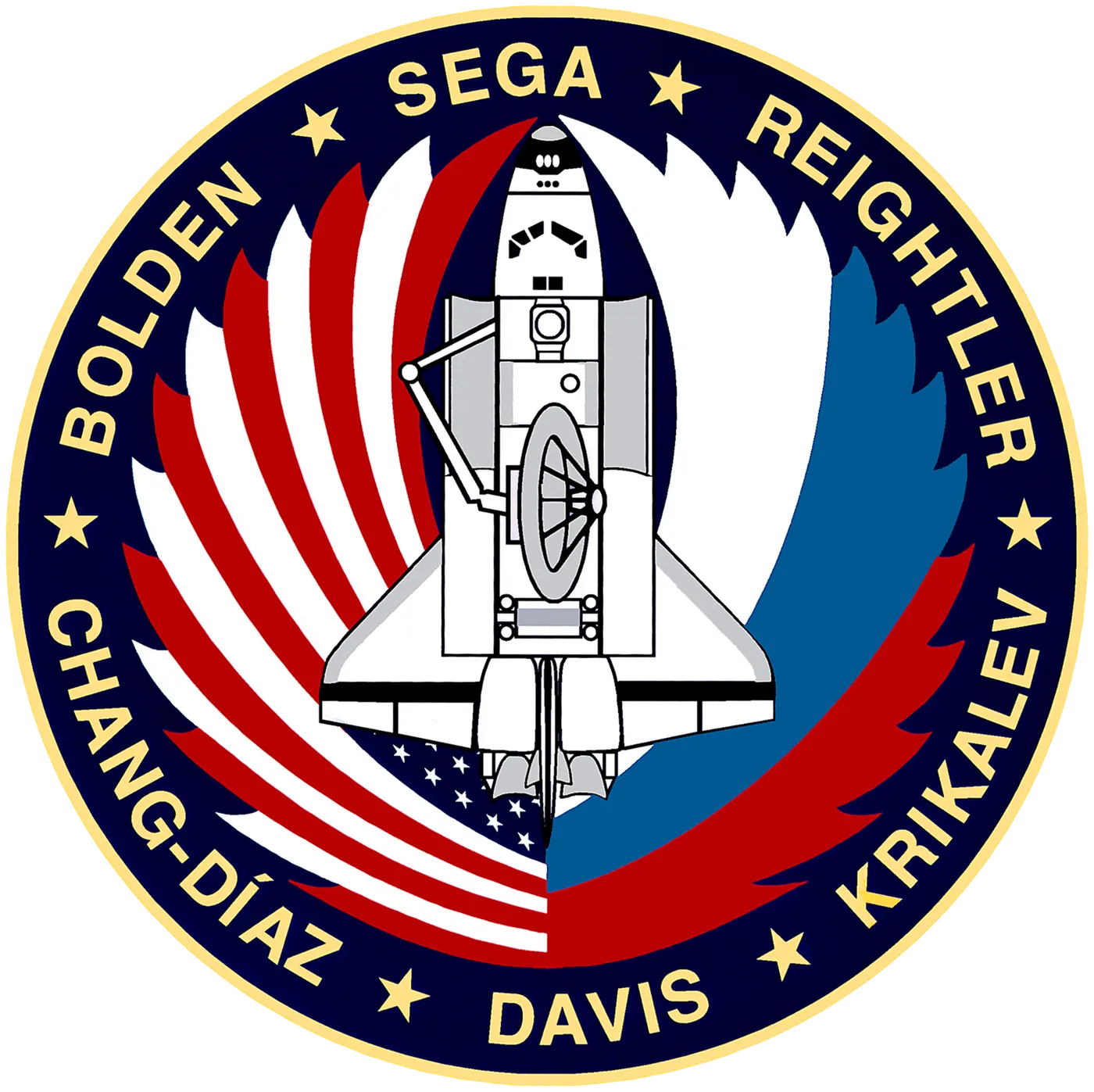
Discovery's February 1994 flight marked the first tangible step in a new partnership, carrying cosmonaut Sergei Krikalev as the first Russian to fly aboard an American spacecraft. Barely three years after the Cold War's end, the sight of a Russian flight engineer in a Shuttle cockpit signalled the cooperation that would build the International Space Station.
The crew of six worked in a commercial Spacehab module and attempted to fly a Wake Shield Facility, a disk meant to create an ultra-pure vacuum in its lee for growing advanced semiconductor films, though technical trouble kept it on the arm rather than free-flying. The mission's real significance lay less in its science than in its symbolism: former rivals now flying together, rehearsing a joint future in orbit.
In February 1994 a Russian rode an American spaceship for the first time. Sergei Krikalev, a flight engineer with two Mir expeditions behind him, flew aboard Discovery as a full crew member — an arrangement that would have been unthinkable five years earlier, when the two agencies still assumed they were racing each other.
Krikalev brought an unusual biography with him. He had gone up to Mir in May 1991 as a citizen of the Soviet Union and come down ten months later into a country that no longer existed, his return delayed while the system that launched him dissolved beneath him. The press nicknamed him the last Soviet citizen, a title he wore with visible patience.
The flight's own experiments were mixed — a free-flying wafer factory called the Wake Shield Facility misbehaved and had to be worked on the end of the robotic arm rather than released — but the cargo was never really the point. STS-60 was the opening move of the Shuttle-Mir programme, the rehearsal for a partnership that would put Americans on a Russian station, Russians on American orbiters, and eventually both on a station neither could have built alone.