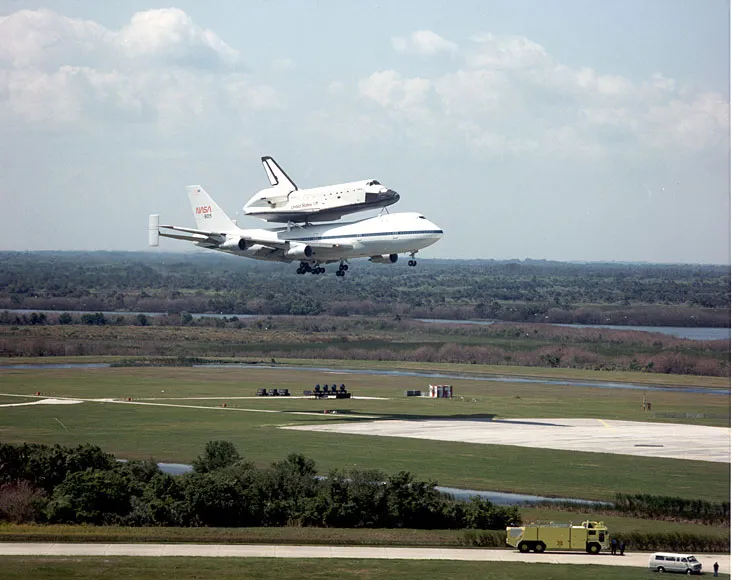
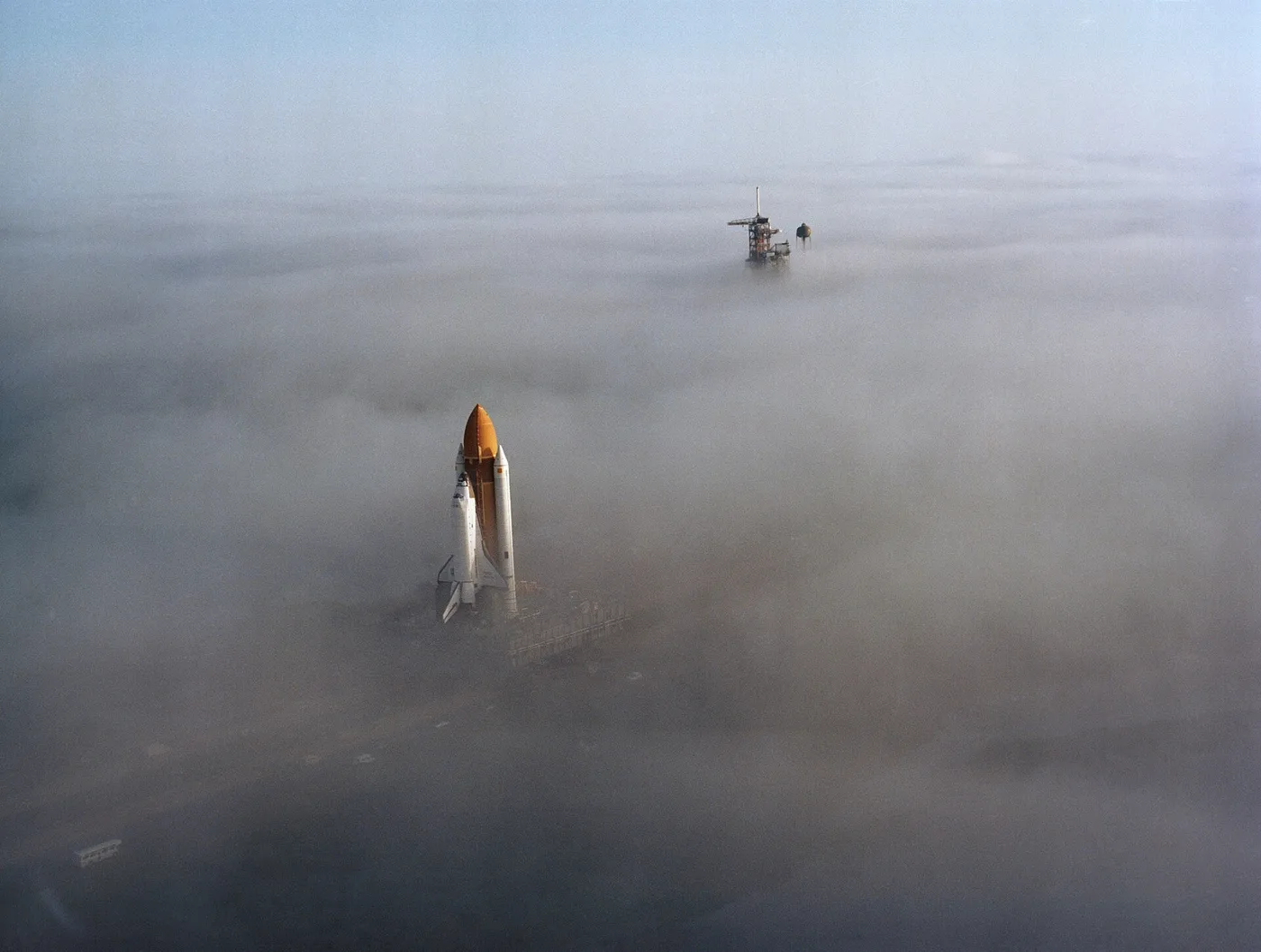
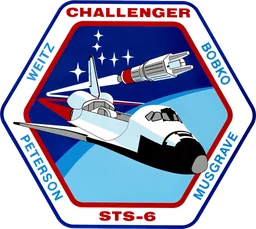
The second orbiter, Challenger, made its debut in April 1983, lighter than Columbia and built with the lessons of the test programme baked in. Its maiden flight finally delivered the spacewalk that STS-5 had been denied: Story Musgrave and Donald Peterson floated out into the open bay in redesigned suits, the first Americans to walk in space since the Skylab era a decade earlier.
The main cargo was just as consequential. The crew deployed the first Tracking and Data Relay Satellite, the opening node of an orbiting network that would let controllers stay in near-constant contact with the Shuttle and, later, the space station — ending the era of scattered ground stations and long radio blackouts.
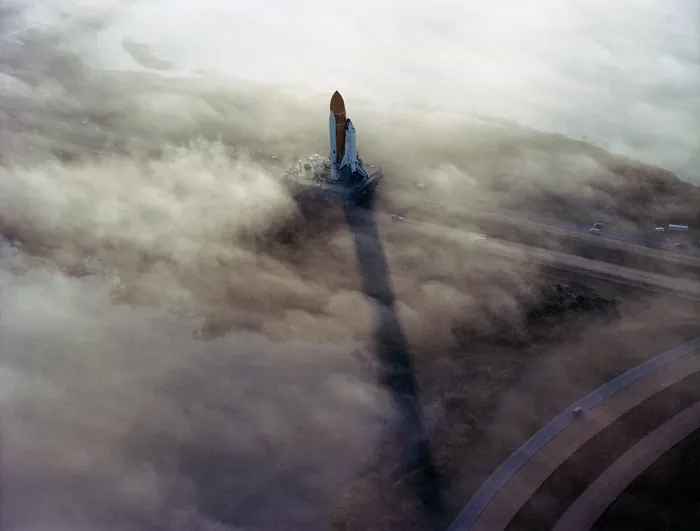
Challenger's first flight in April 1983 delivered the first Tracking and Data Relay Satellite, the keystone of a network intended to replace the chain of ground stations that had limited every mission since Mercury to brief windows of contact. With relay satellites in high orbit, a crew could talk to Houston almost continuously.
The deployment nearly ruined it. The satellite's upper stage suffered a failure in its second-stage nozzle and left TDRS-1 tumbling in a badly wrong orbit, apparently a total loss. Over the following months controllers nursed it to its proper station using its own small attitude thrusters — a salvage of extraordinary patience, firing tiny jets hundreds of times and exhausting most of the fuel meant to last its operational life.
The flight also produced the first American spacewalk since Skylab nine years earlier, when Story Musgrave and Donald Peterson spent four hours in the payload bay proving the new suits and the handrails and foot restraints that every later assembly mission would depend on. Musgrave, a physician and pilot who would eventually fly six times, was on his first flight at 47.