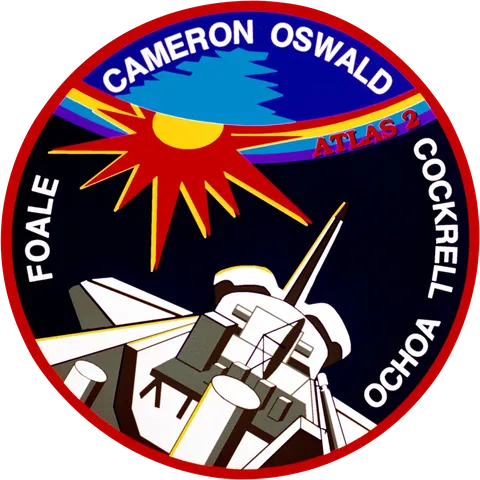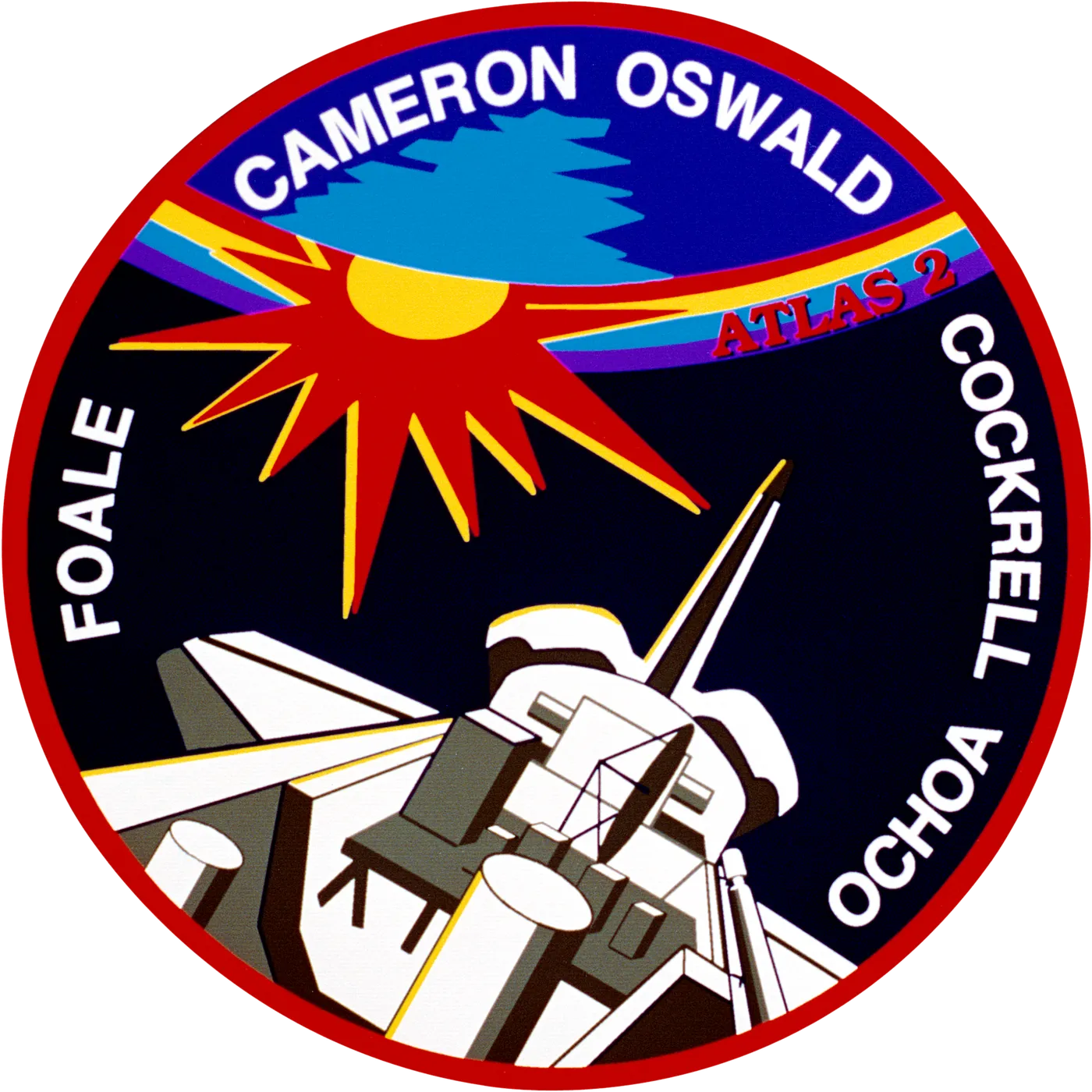
Discovery flew the second ATLAS atmospheric-science mission in April 1993, continuing the effort to watch the Sun and its effects on Earth's fragile ozone layer across a solar cycle. The crew of five aimed the pallet of instruments from the bay to measure solar output and the chemistry of the middle atmosphere.
The flight also deployed and retrieved a small free-flying platform called Spartan, which spent two days studying the solar wind and the Sun's corona before the crew caught it again with the robotic arm. Timed to coincide with atmospheric measurements from the ground and from balloons, the mission fed a growing global dataset on how the atmosphere was changing — science with direct bearing on the environmental debates of the decade.
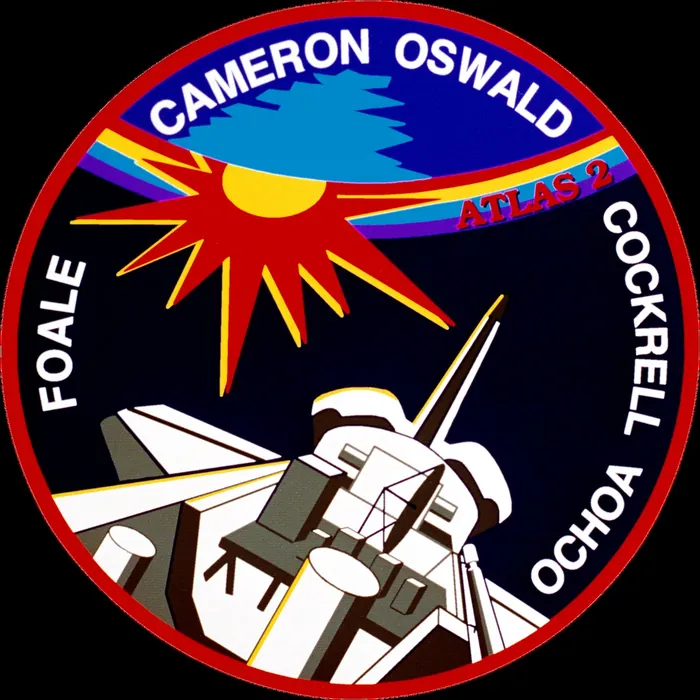
The second ATLAS mission flew in April 1993 to repeat the previous year's atmospheric measurements at a different point in the solar cycle — the whole design of the series being to separate what the Sun does to the ozone layer from what humans do to it. Six instruments measured the middle atmosphere's chemistry while others watched the Sun's output directly.
The crew also deployed and retrieved SPARTAN-201, a small free-flying observatory that spent two days studying the solar corona and the acceleration of the solar wind before being recaptured with the robotic arm. Flying a satellite alongside the orbiter, letting it observe without the contamination and vibration of a crewed vehicle, and then bringing it home was a trick only the Shuttle could perform.
Ellen Ochoa, on this flight, became the first Hispanic woman in space — an optical physicist with patents to her name who operated the arm for the SPARTAN retrieval, and who would later run the Johnson Space Center. The mission is a fair portrait of the early 1990s Shuttle: unglamorous, internationally entangled, and quietly producing the atmospheric record that climate policy would rest on.