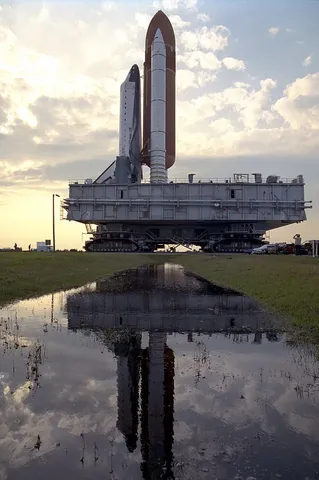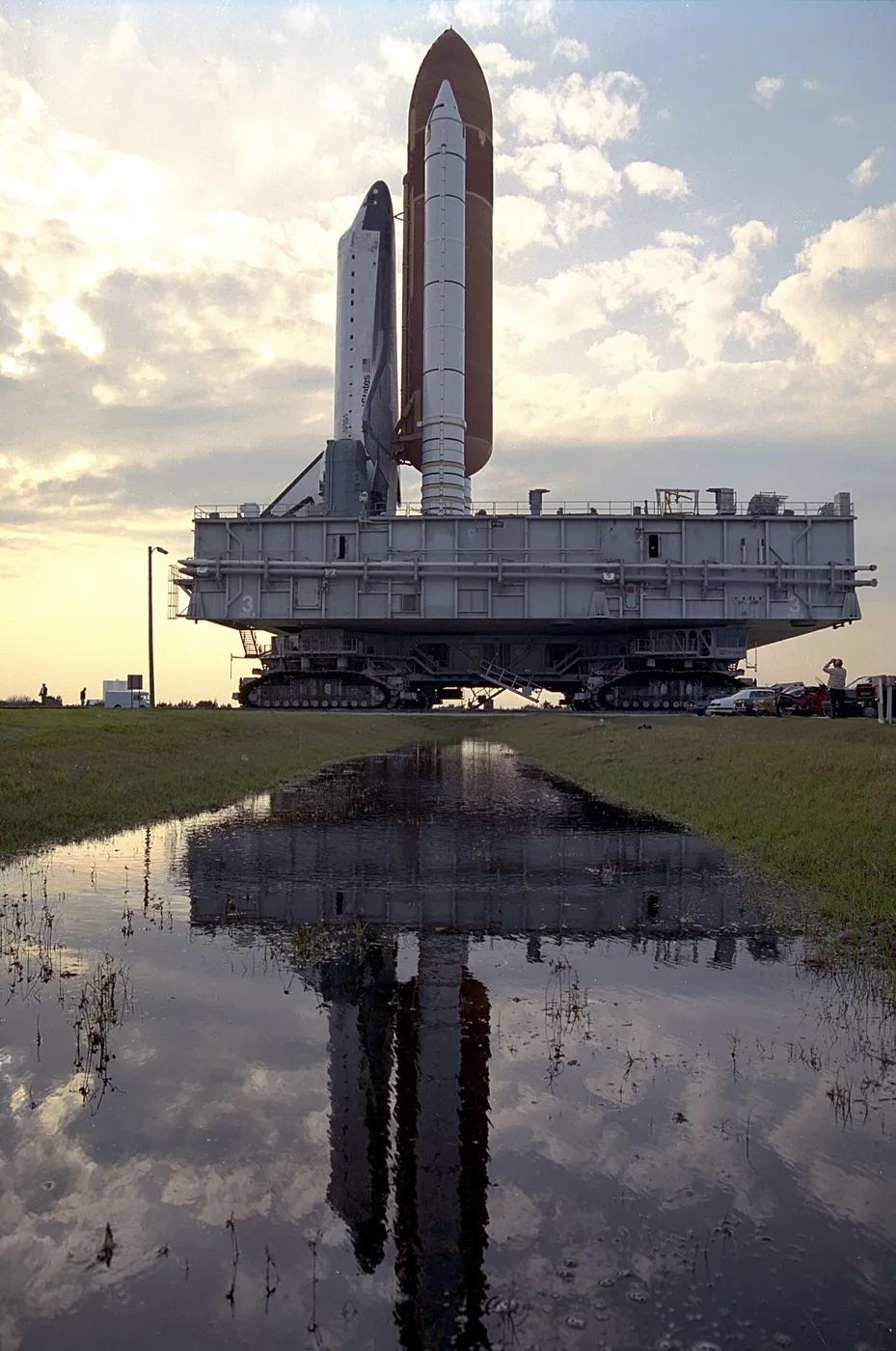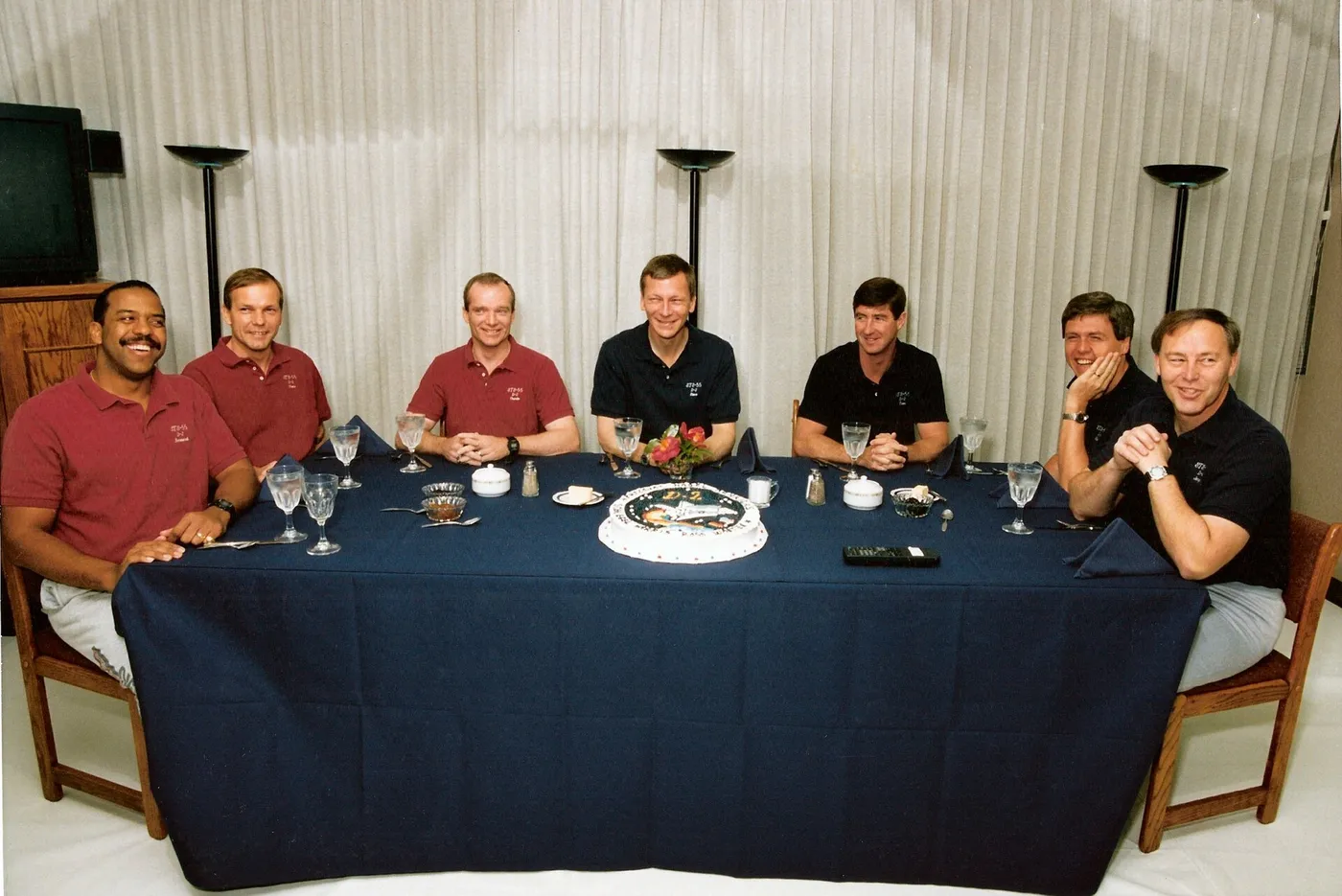
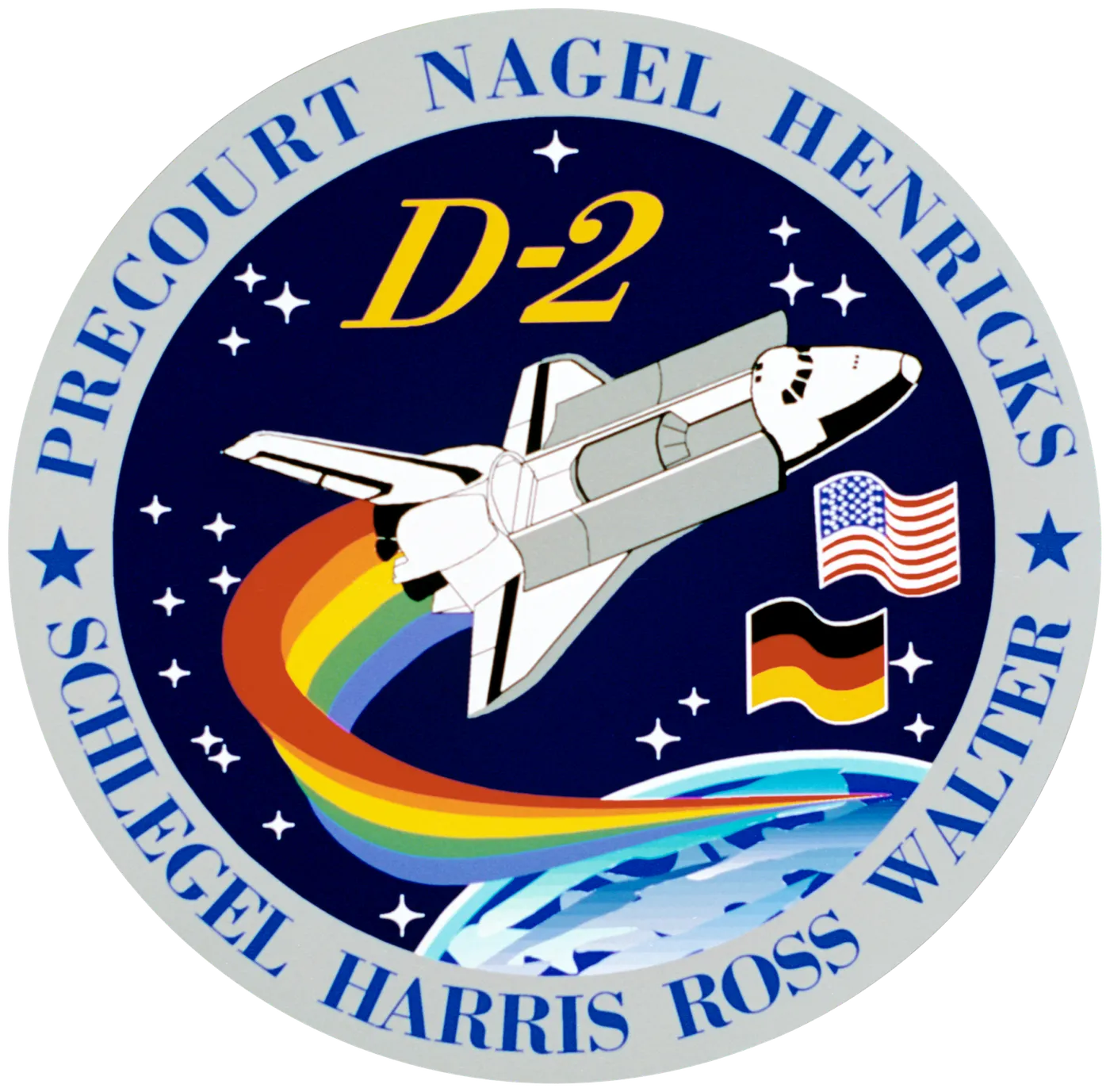

Columbia flew the second German Spacelab mission, D-2, in April 1993, a research flight directed in large part from a control centre in Germany. The launch came only after a dramatic pad abort the previous month, when the main engines ignited and were shut down at the last instant as sensors flagged trouble — one of the programme's several harrowing on-pad aborts.
Once flying, the crew of seven ran some ninety experiments in materials, biology and medicine over ten days, working around the clock in two shifts. The mission extended the German-led laboratory science begun before the Challenger accident and reaffirmed the deep partnership between NASA and Europe, a relationship that would carry forward into the shared laboratories of the International Space Station.
The second German Spacelab mission was very nearly not flown at all. On 22 March 1993 the countdown reached ignition and all three main engines lit — then shut down three seconds before liftoff when a computer detected incomplete combustion in one of them. It was the third such on-pad abort of the programme, and it left a crew strapped above a vehicle whose engines had just started and stopped.

The engines were replaced and Columbia flew a month later with a German-directed science programme of some ninety experiments, controlled from a centre near Munich as its predecessor had been. Two German payload specialists, Hans Schlegel and Ulrich Walter, ran materials, biology and robotics work in a module funded almost entirely by their own government.
The flight was extended by a day when the science ran well, and it closed the German Spacelab series. Schlegel would return fifteen years later on the mission that delivered Europe's own permanent laboratory to the International Space Station — a direct line from a rented module in a payload bay to a module of Europe's own, bolted on for good.