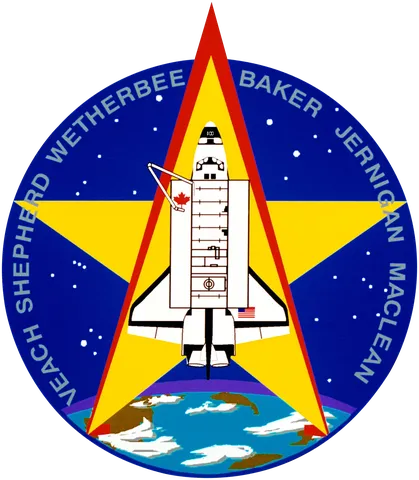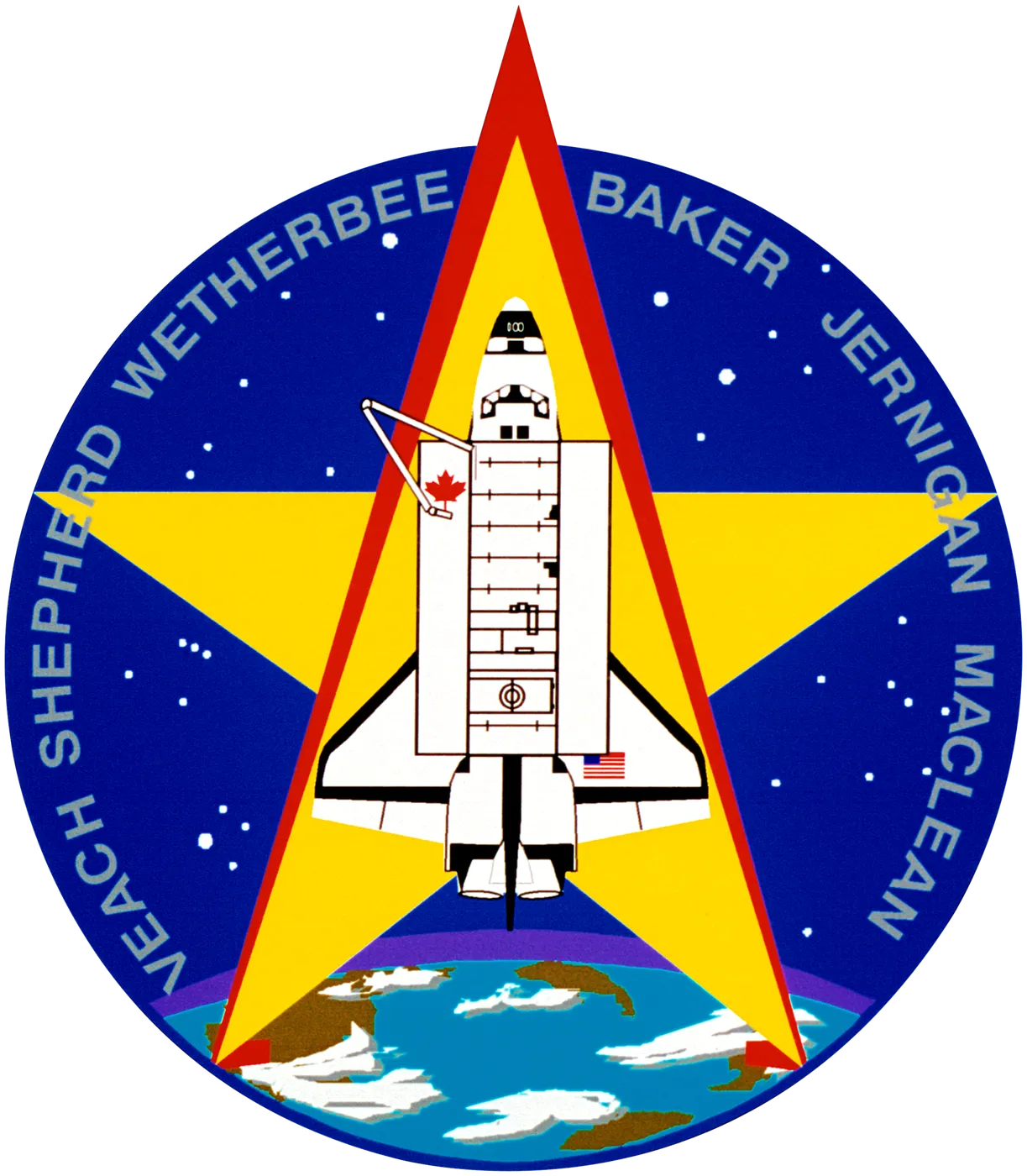
Columbia's October 1992 flight combined an Italian-built laser-ranging satellite with a materials-science payload. The crew of six deployed the spherical LAGEOS-II satellite, a passive target covered in mirrors that scientists on the ground would bounce lasers off for decades to measure the slow drift of continents and subtle wobbles in Earth's shape.
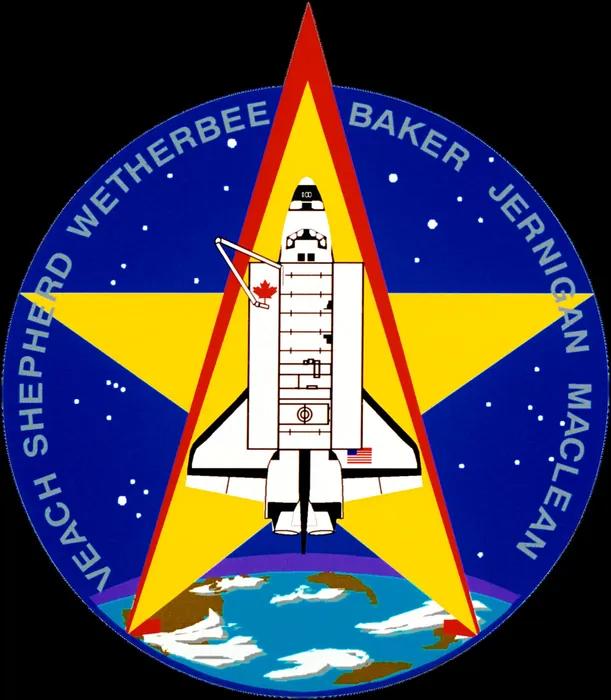
The mission also carried the first United States Microgravity Payload, a set of experiments run in the bay, and marked the first spaceflight of a Canadian on a Canadian-designed robotic-arm task, Steve MacLean testing a vision system for space assembly. Across ten days the flight blended precise geodesy, industrial research and international cooperation into a single, productive mission.
Columbia's October 1992 flight deployed one of the simplest and most durable spacecraft ever built. LAGEOS-II is a sphere of brass and aluminium 60 centimetres across, studded with 426 corner-cube mirrors and containing no electronics whatsoever — a passive target that laser stations on the ground shoot at to measure their own positions with millimetre precision.
That measurement is how geophysics tracks the drift of continents. By timing laser pulses off LAGEOS satellites over years, researchers watch tectonic plates move, sea level rise, and the Earth's gravity field shift as ice sheets melt. The satellites were also used, much later, in a test of a prediction of general relativity — the dragging of spacetime by a rotating mass.
Built by Italy and launched with an Italian upper stage, LAGEOS-II is in an orbit so high and so free of drag that it is expected to remain there for something like eight million years. Its predecessor carried a plaque designed by Carl Sagan showing the arrangement of Earth's continents past, present and future, on the assumption that whoever eventually finds it will not be us.