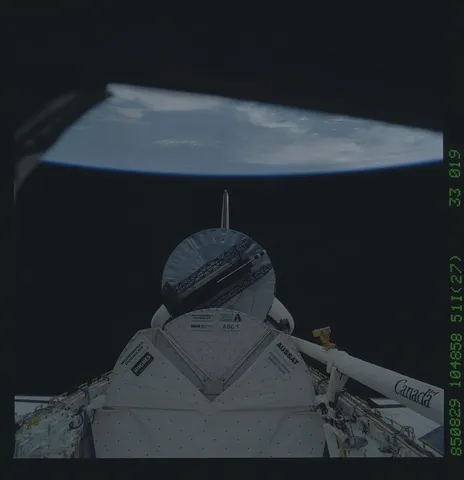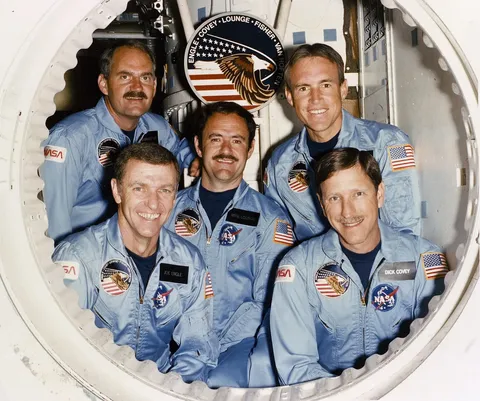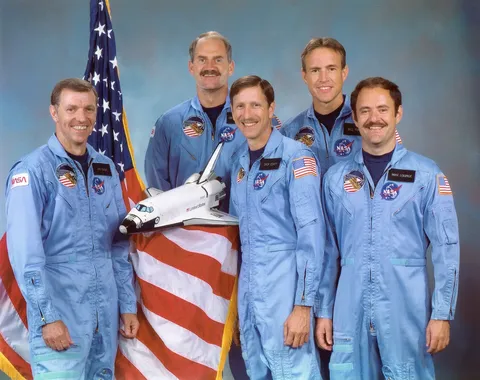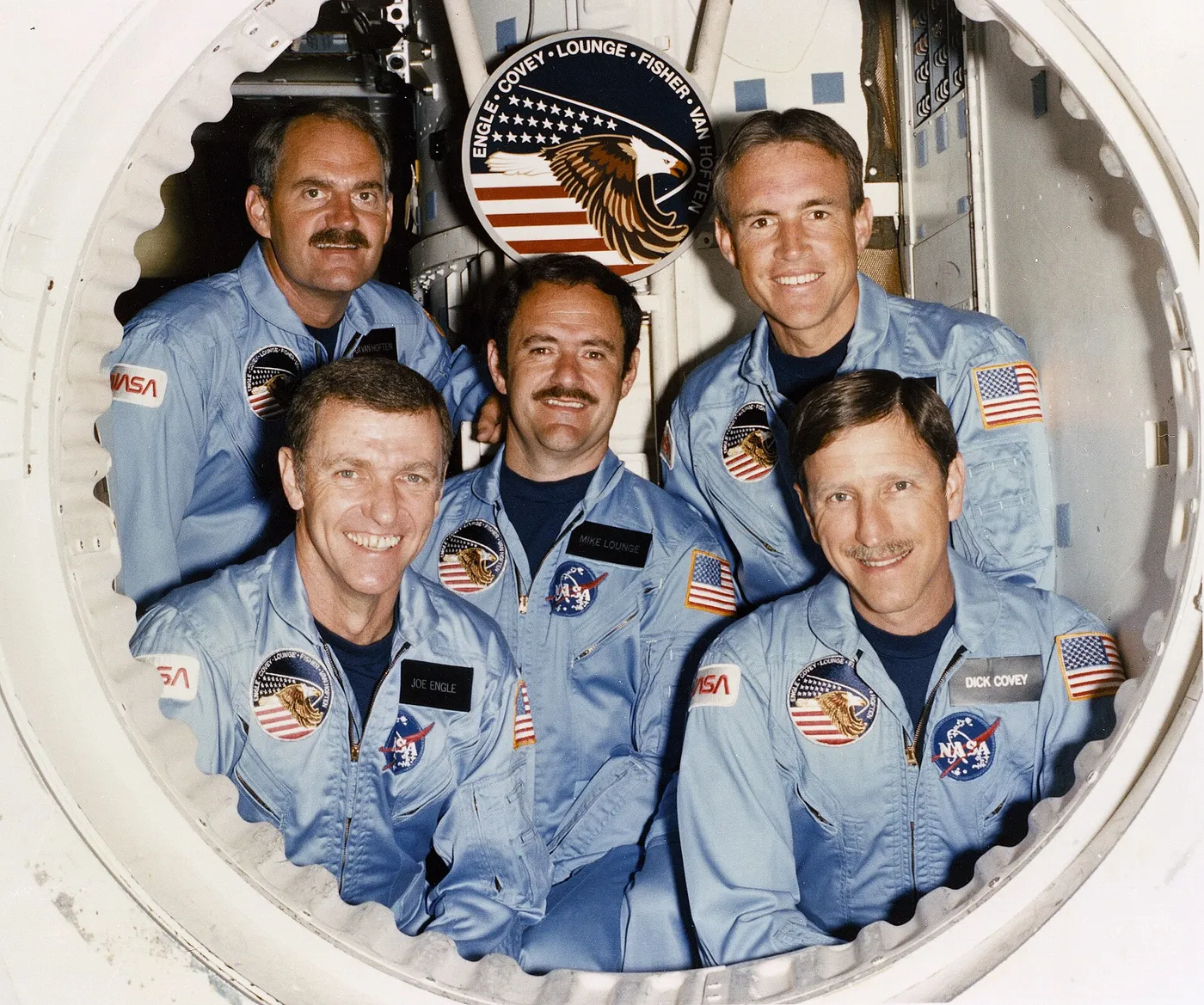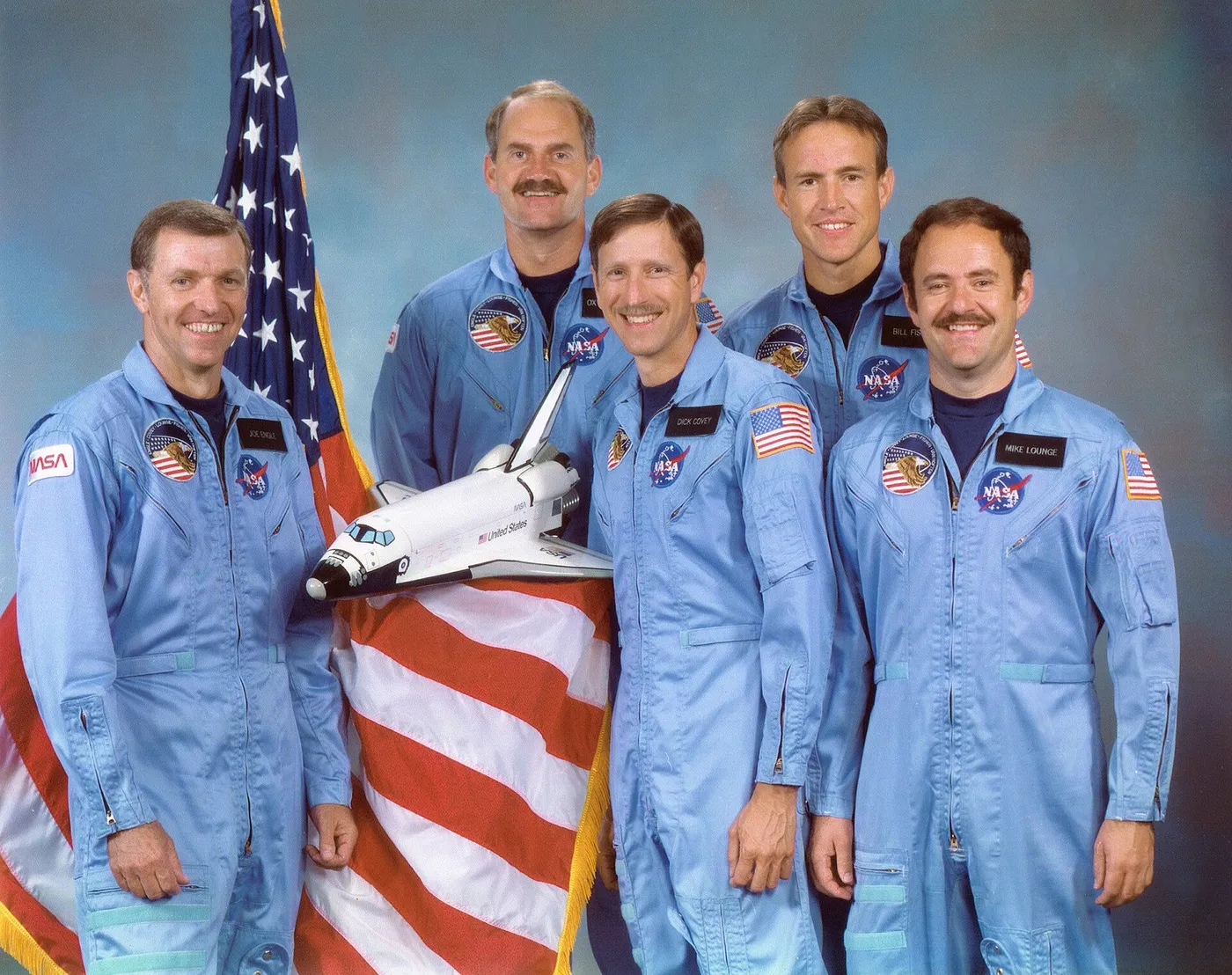
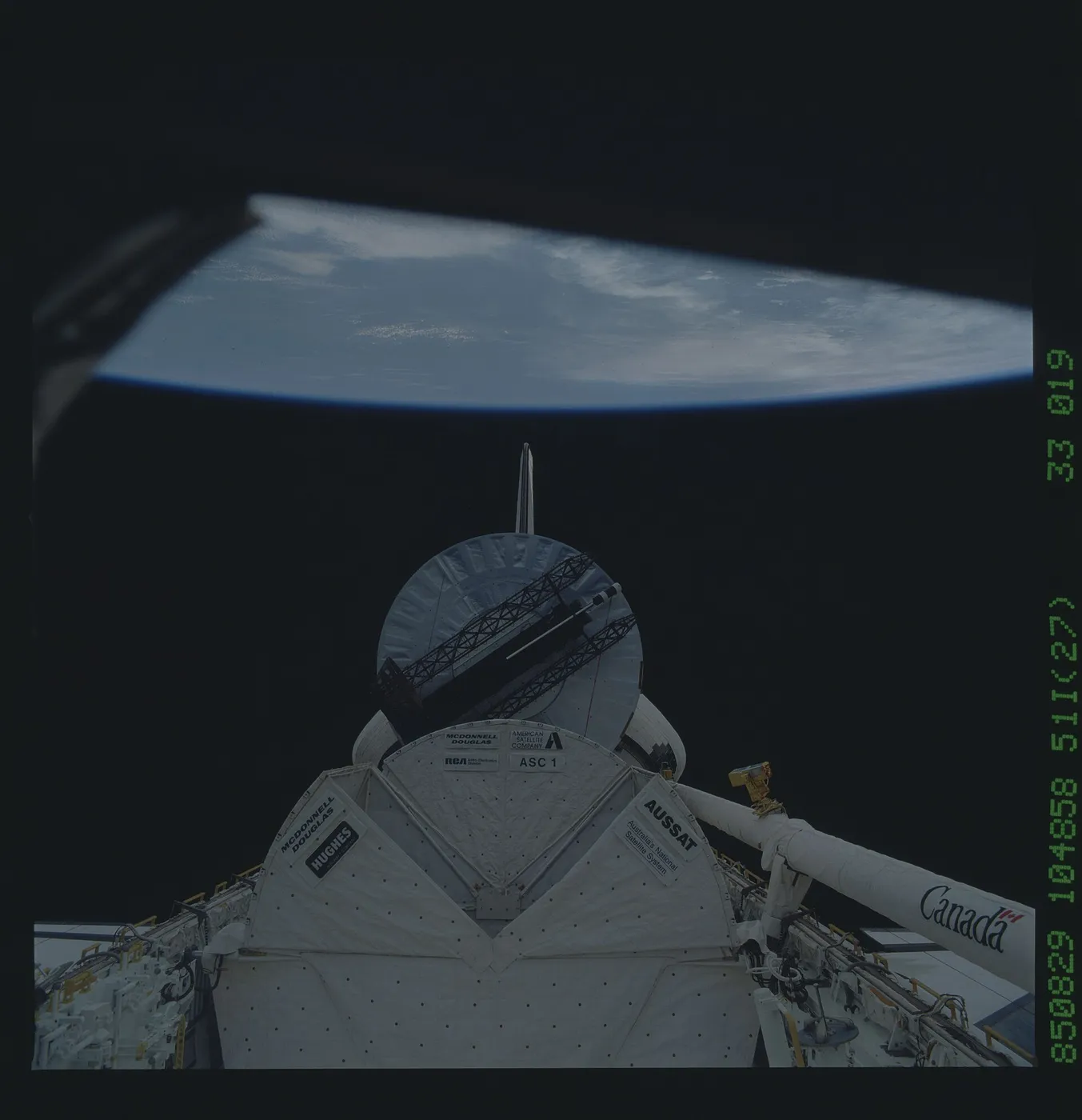

Discovery's August 1985 mission paired routine satellite deployments with a second daring salvage. The crew released three communications satellites, then turned to unfinished business: Leasat-3, the satellite left dead in orbit that April. Spacewalkers William Fisher and James van Hoften captured the drifting five-tonne craft by hand, wired in a bypass to revive it, and pushed it back on its way with muscle power.
Van Hoften, spinning the massive satellite to stabilise it before release, gave the era one of its enduring images of astronauts as orbital mechanics. The rescue worked where the flyswatter improvisation had failed, and Leasat-3 eventually reached its station — a vindication of the idea that a crew in the right place could salvage hardware that would otherwise have been written off.
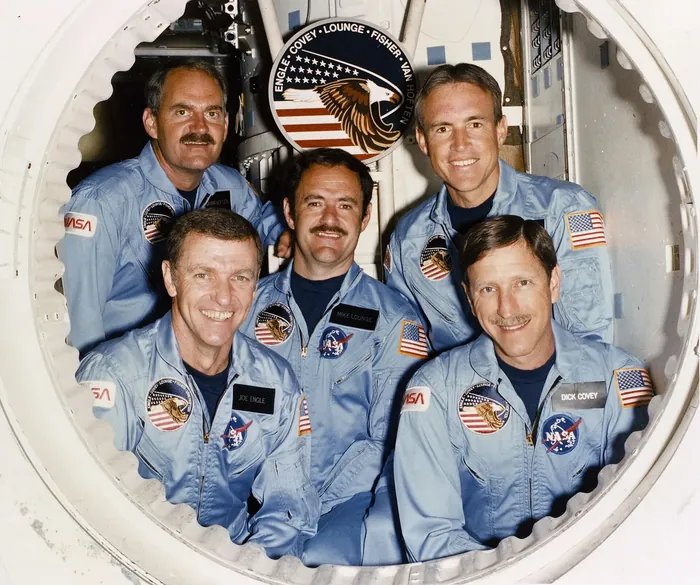
Four months after one crew failed to start Leasat-3 with a homemade flyswatter, another crew went up and fixed it properly. The satellite was seven tonnes, spinning, uncooperative and had never been designed to be touched by human hands, and the plan was for two astronauts to catch it bodily.
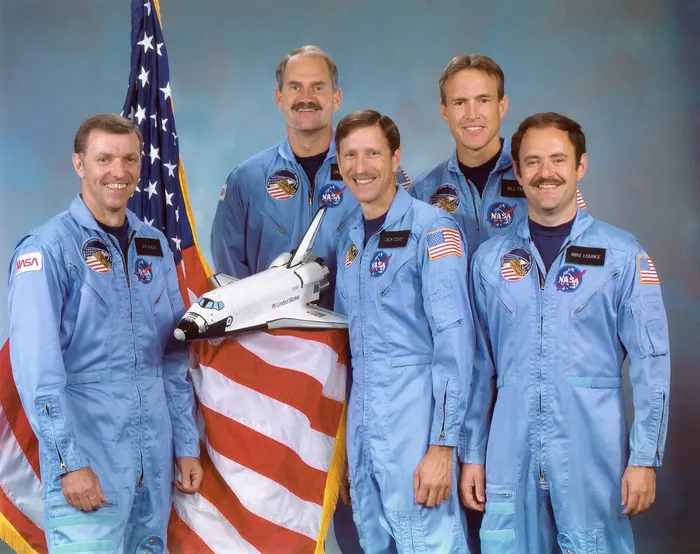
James van Hoften — a former college football player whose colleagues called him Ox — stood in a foot restraint on the robotic arm and grabbed the rotating satellite as it came past, absorbing the momentum with his arms and stopping it. He and William Fisher then spent hours installing bypass electronics and a new timer, effectively hot-wiring the spacecraft, before van Hoften pushed it away by hand and set it spinning again with his own muscles.
It worked. Leasat-3 fired its motor as commanded and served for years. The two spacewalks were the longest of the era, and the images of a man manhandling a satellite the size of a small bus remain the clearest illustration of what the Shuttle was uniquely able to do — and of how much of that capability depended on people improvising with their hands.