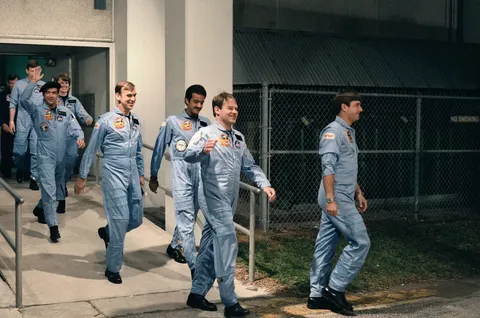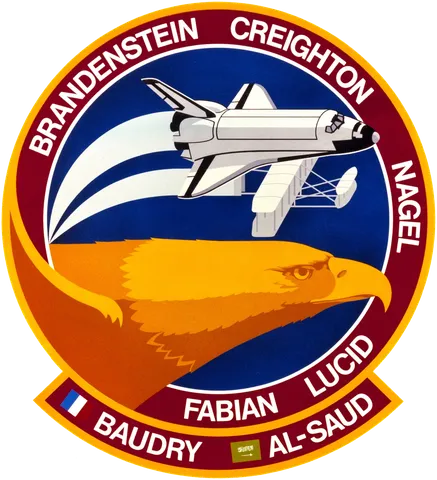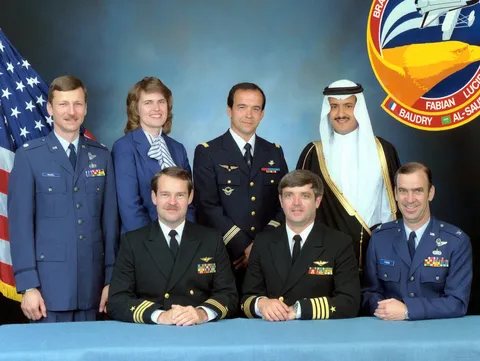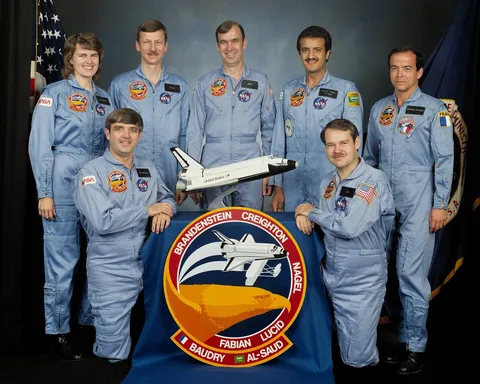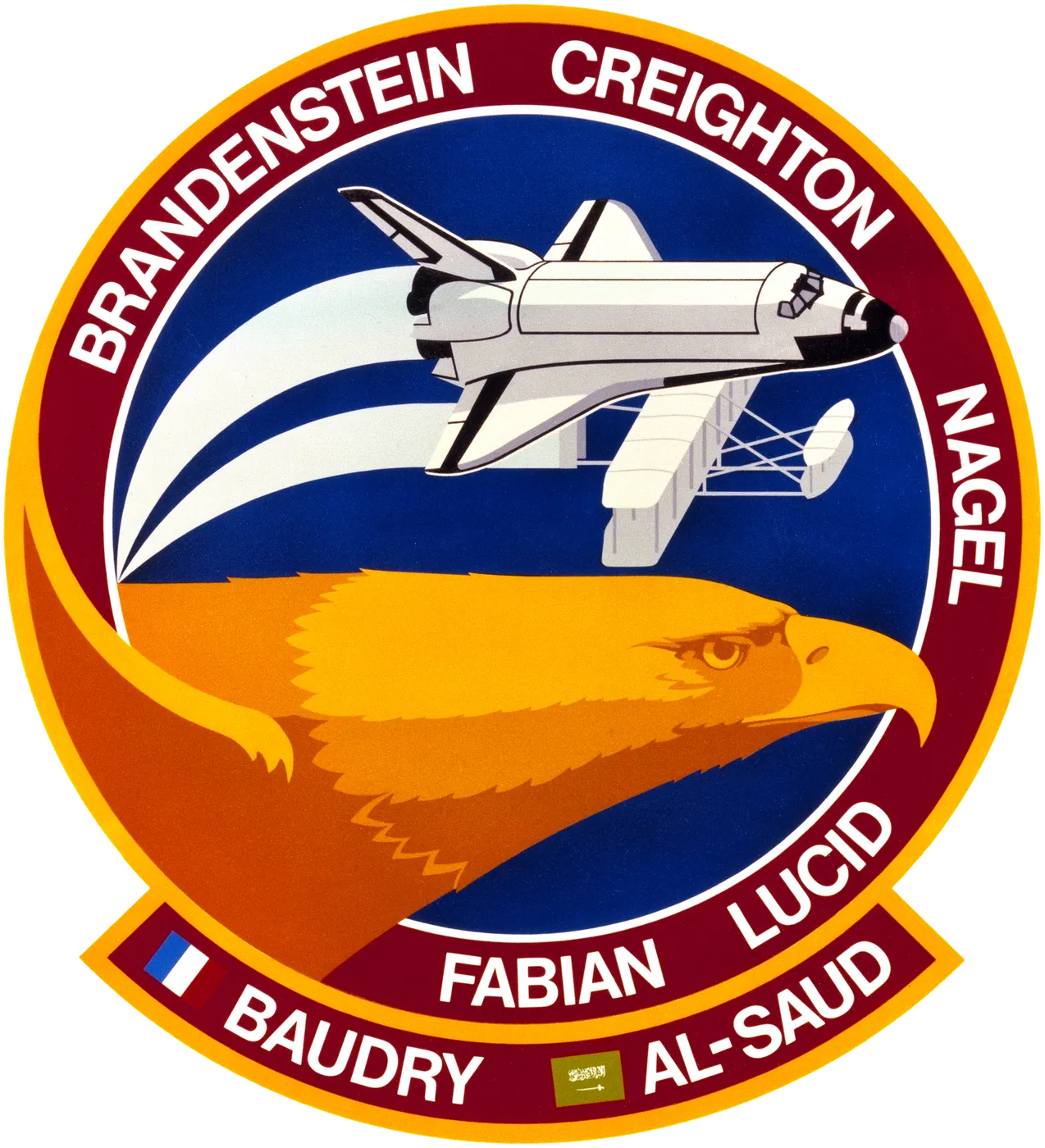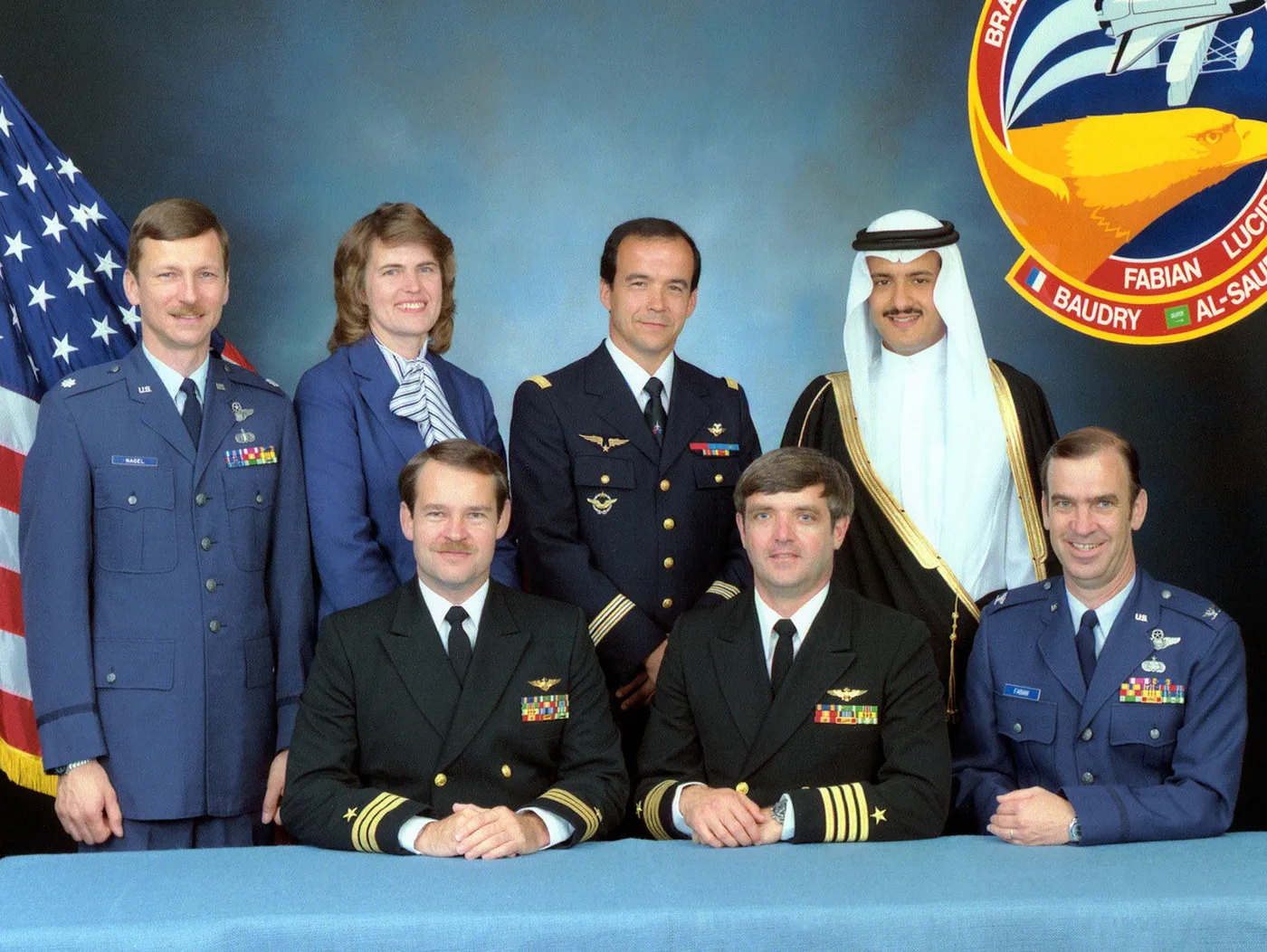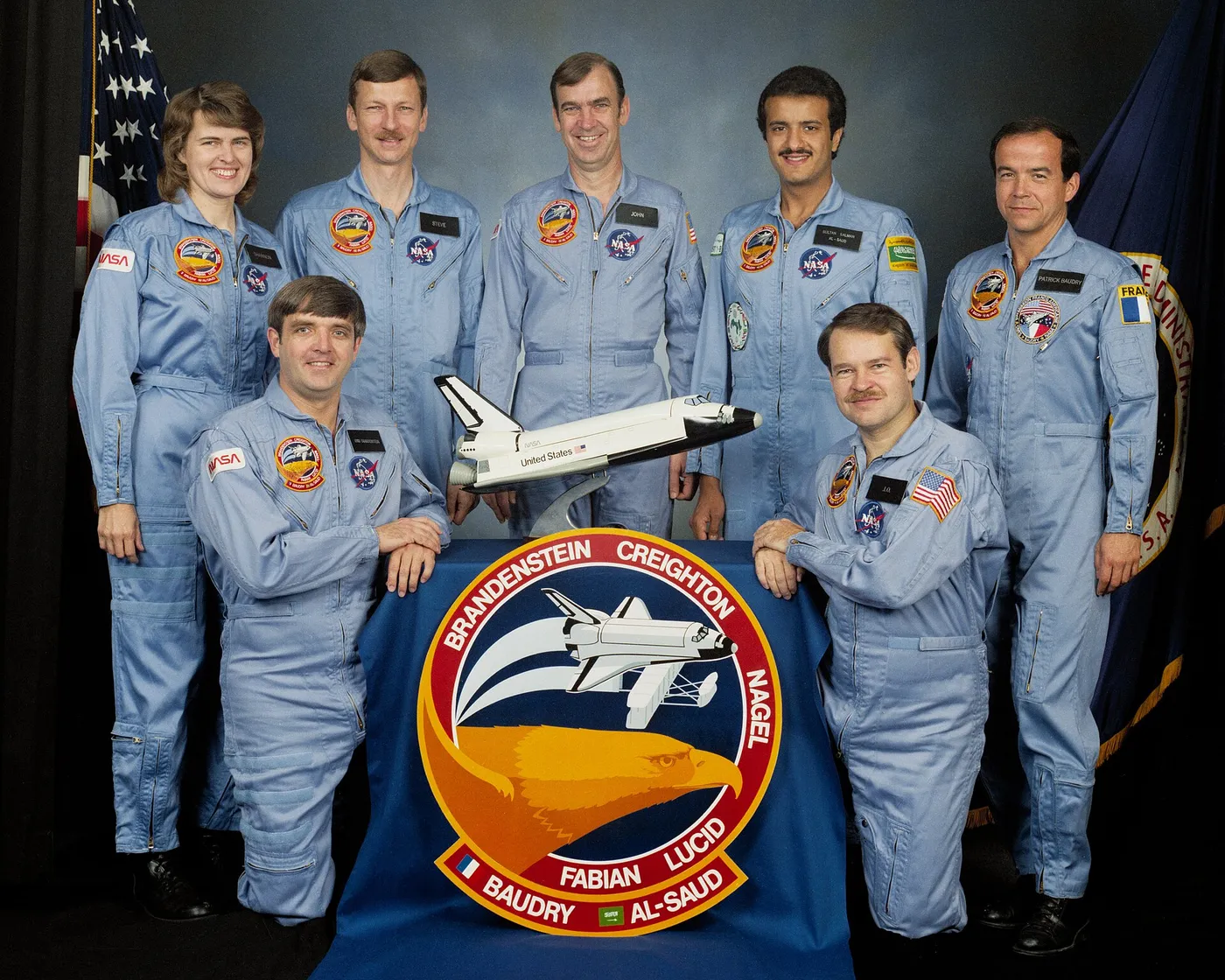
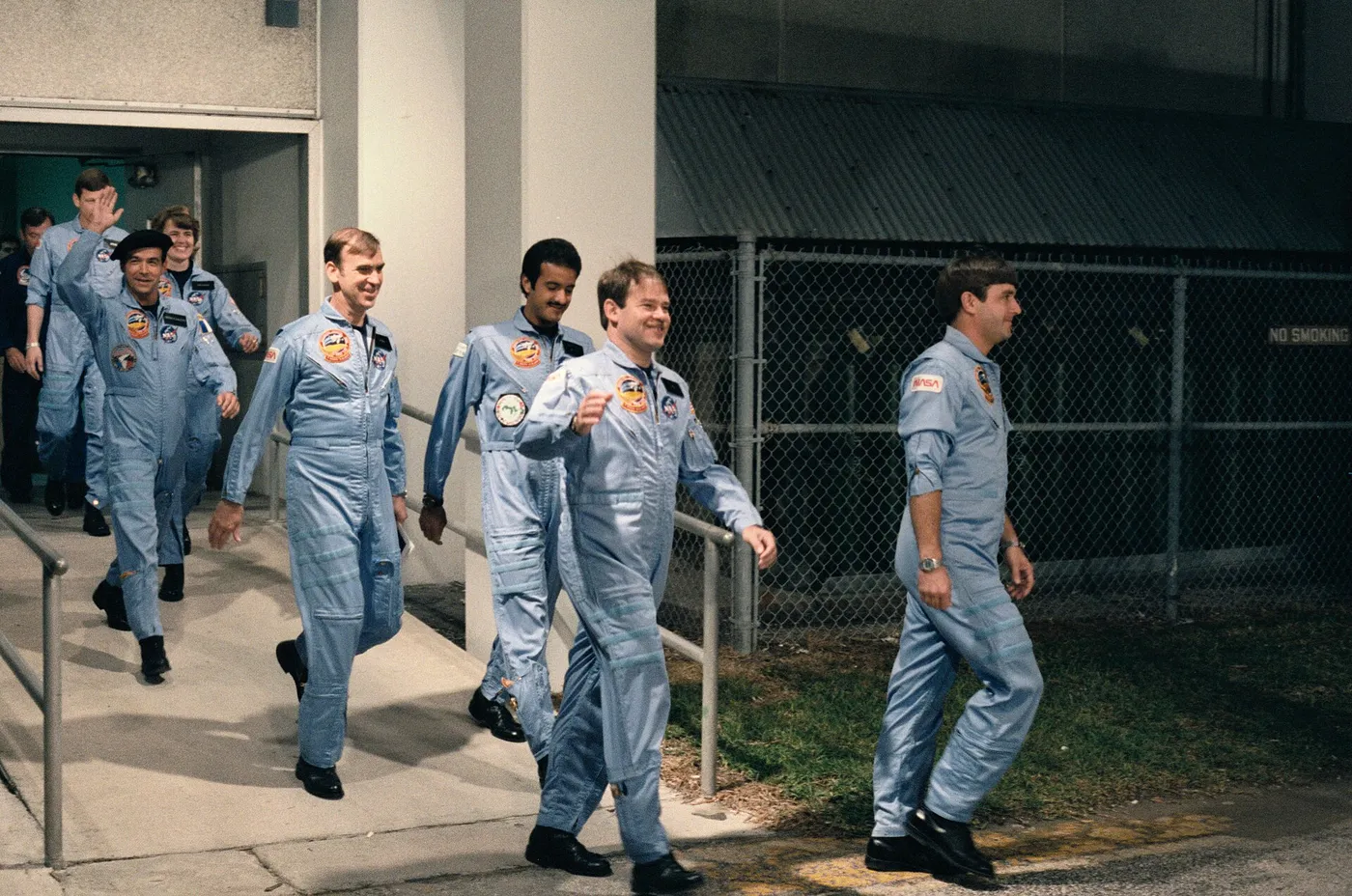
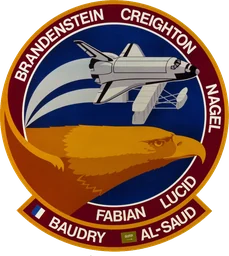
June 1985 saw Discovery fly one of the most international crews of the era, including Prince Sultan bin Salman of Saudi Arabia — the first Arab, the first Muslim and the first member of a royal family to reach space — and Patrick Baudry of France. The Saudi prince oversaw the deployment of an Arab League communications satellite, one of three comsats the crew released on a brisk, efficient flight.
Discovery also deployed and later retrieved a free-flying platform called Spartan, which spent a day observing X-rays from distant galaxies before the crew caught it again with the robotic arm. The mission captured the optimistic, almost commercial spirit of the pre-Challenger programme, when the Shuttle seemed on its way to becoming the world's launch service.
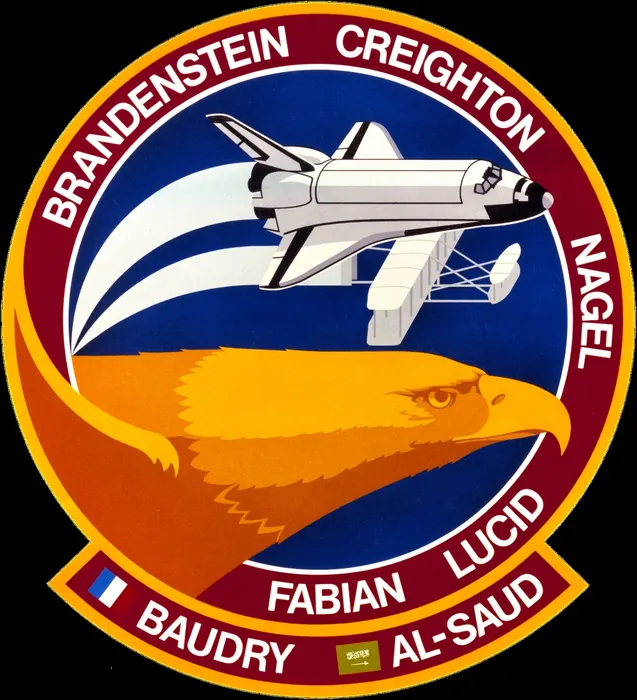
This flight is remembered less for its cargo than for its passenger list. Sultan bin Salman Al Saud, a 28-year-old Saudi prince and air force pilot, flew as a payload specialist accompanying an Arabsat satellite — becoming the first Arab, the first Muslim and the first member of a royal family to reach orbit. He observed Ramadan aboard and later described the shift in perspective that so many astronauts report: that from up there the borders people fight over simply are not visible.
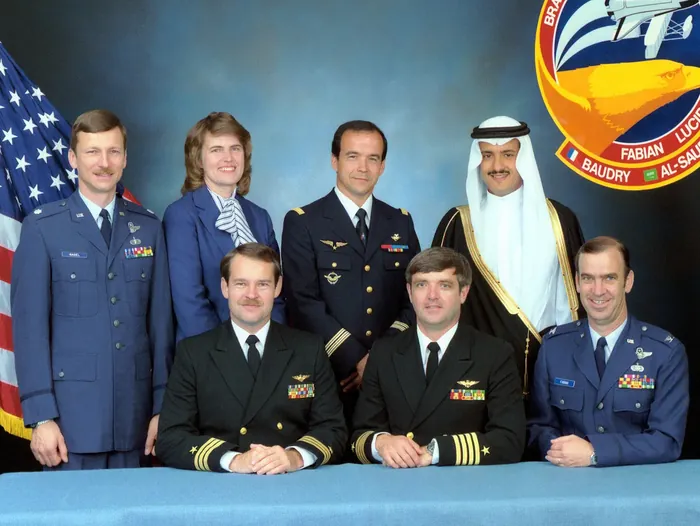
Beside him sat Patrick Baudry of France, and the seven-person crew deployed three communications satellites in three days for Mexico, the Arab League and the United States — a rhythm that made the Shuttle look, briefly, like the reliable delivery service its budget had promised.
The flight also carried a Strategic Defense Initiative experiment that bounced a laser off a mirror mounted in Discovery's window, an early and little-noticed sign of how entangled the civilian Shuttle had become with military work. Within eighteen months that entanglement, and the commercial satellite business, would end abruptly on a cold morning in January.