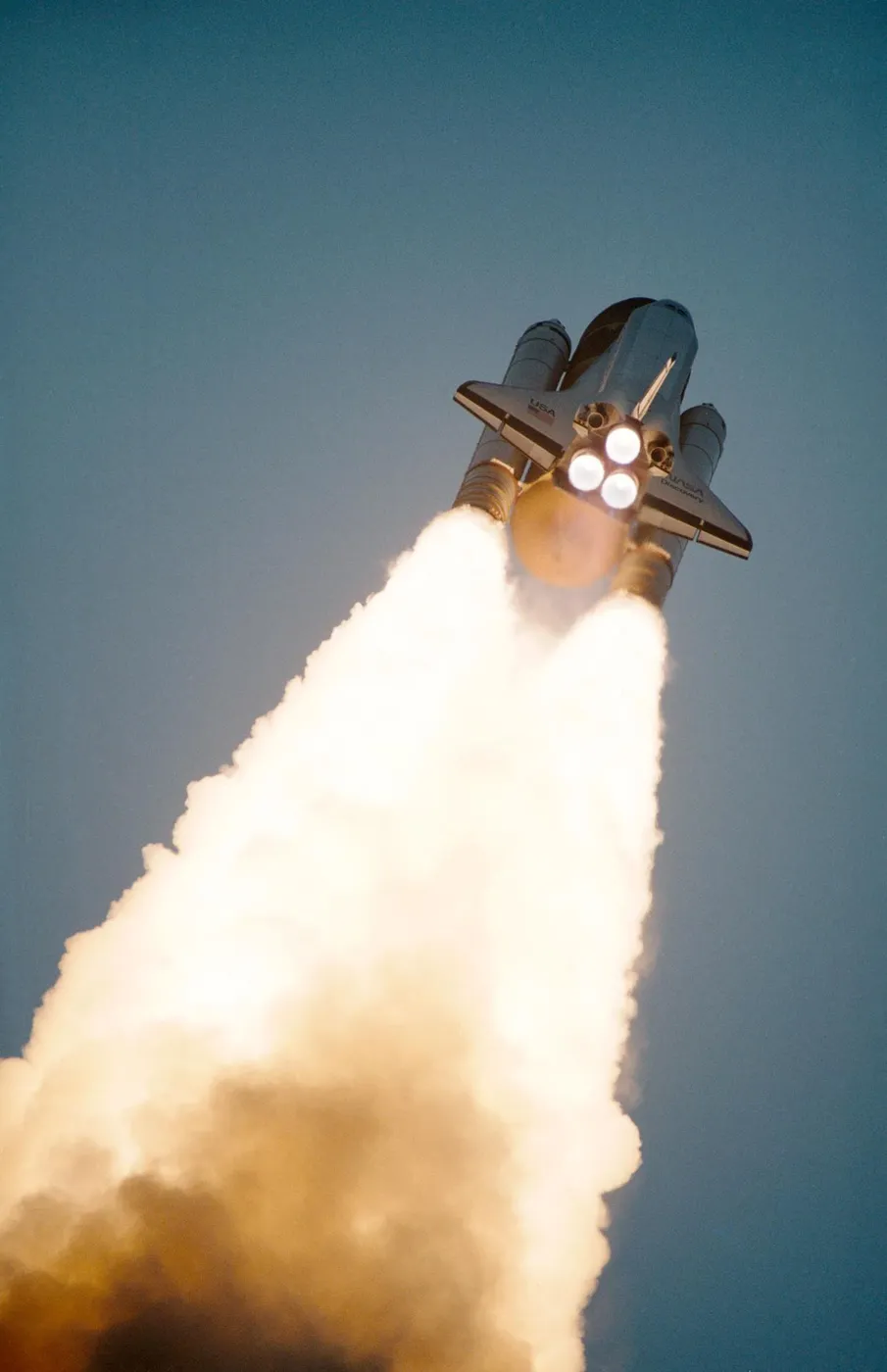
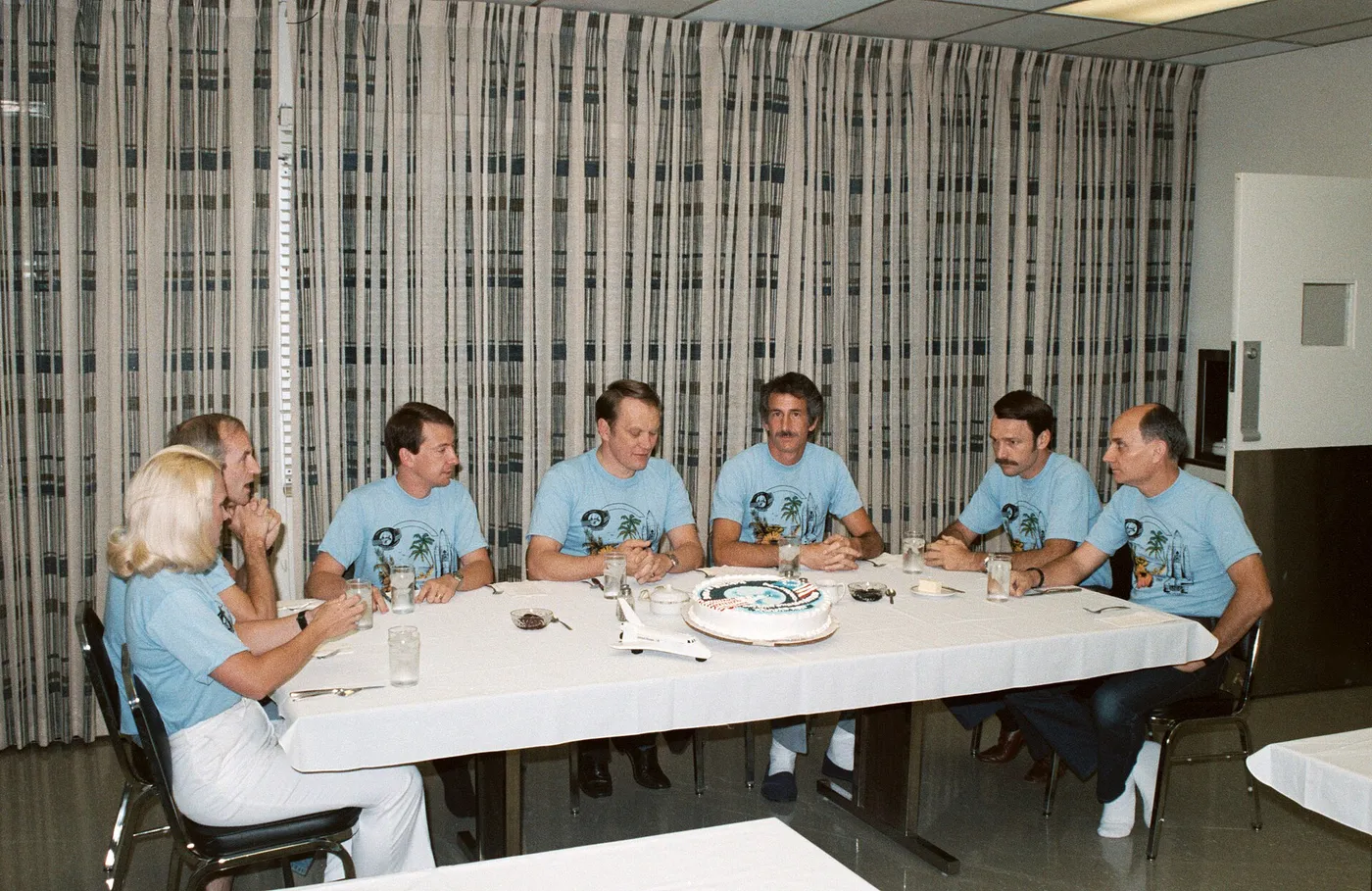

Discovery's April 1985 flight carried an unusual passenger: Senator Jake Garn of Utah, chairman of the subcommittee that funded NASA, who flew as a congressional observer and became a byword among astronauts for space sickness. The crew of seven deployed two communications satellites, but one of them, Leasat-3, drifted off inert after its activation lever failed to trip.
Rather than abandon it, the crew improvised. Ground teams had the astronauts tape makeshift "flyswatter" tools to the robotic arm, and on a hastily arranged spacewalk they snagged the satellite's switch lever and tried to start it — a clever fix that ultimately did not work, though a later mission would return to rescue it. Discovery's landing blew a tyre, adding a push to develop better brakes and, eventually, a drag chute.
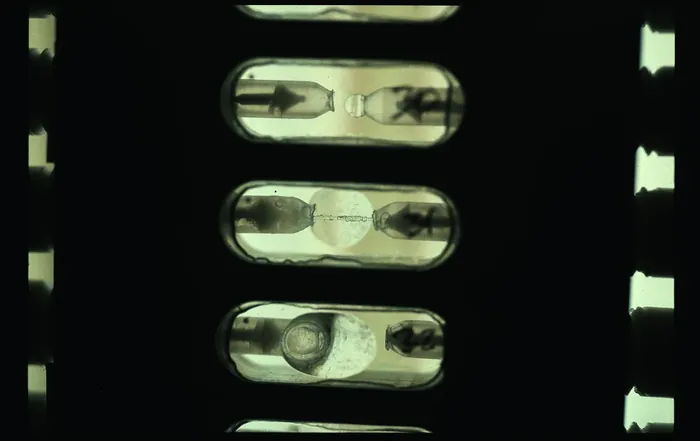
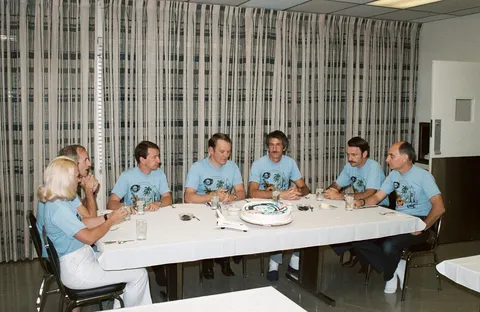
Senator Jake Garn of Utah flew this mission as the first sitting politician in space, in an arrangement that raised eyebrows then and has not aged well — he chaired the subcommittee that oversaw NASA's budget. Garn was, by every account, an agreeable crewmate and spectacularly, memorably ill. The astronaut corps subsequently defined the informal Garn scale of space sickness, on which one Garn represents total incapacitation.
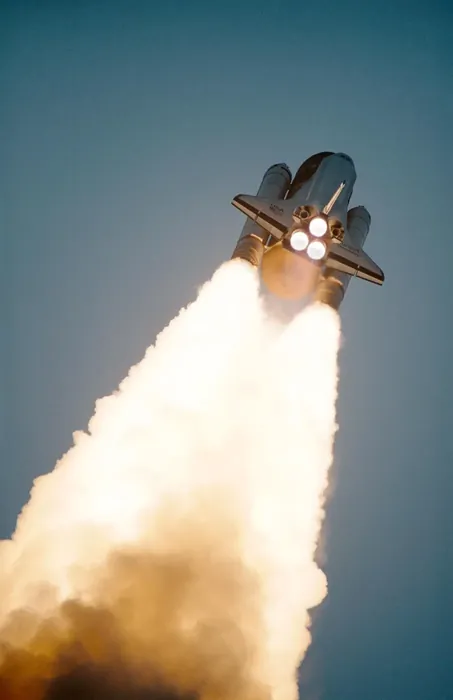
The flight's real drama was a satellite that would not start. Leasat-3 was deployed and then simply sat there, its activation lever apparently unmoved. With no plan for such a thing, the crew improvised: using plastic book covers, tape and a hacksaw blade, they built two contraptions christened the flyswatter and the lacrosse stick, and Rhea Seddon flew them on the robotic arm to snag the lever as the satellite drifted past. It was ingenious, it was televised, and it did not work.
The landing was worse. Discovery blew a tire and lost brakes on the runway at Kennedy, veering off the centreline, and the near-accident sent Shuttle landings back to the long dry lakebed at Edwards for the next several years while the brakes and nosewheel steering were redesigned. The stranded satellite was salvaged four months later by a different crew.