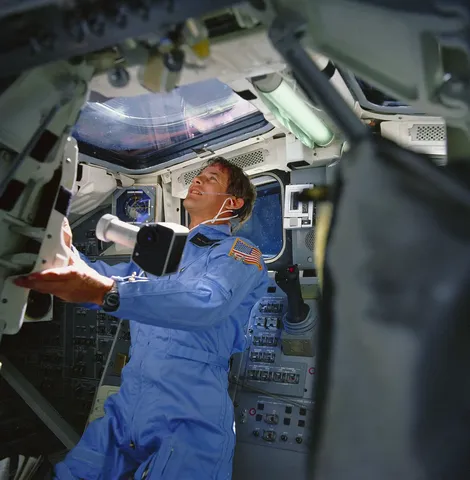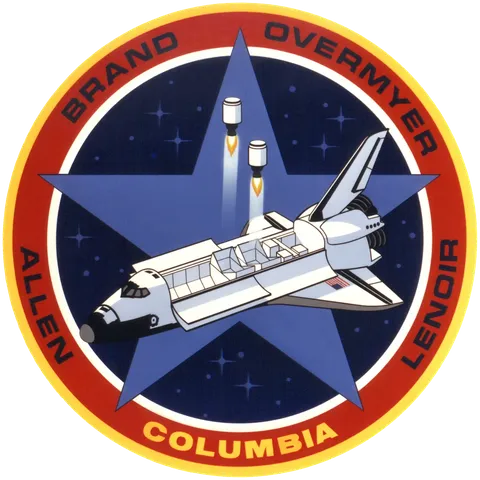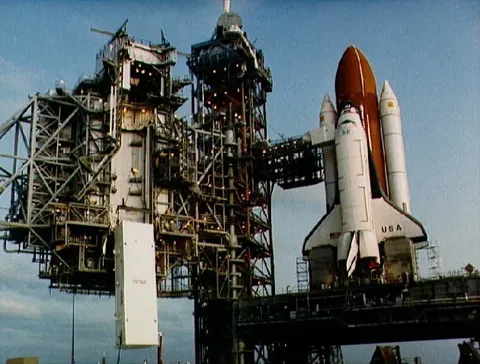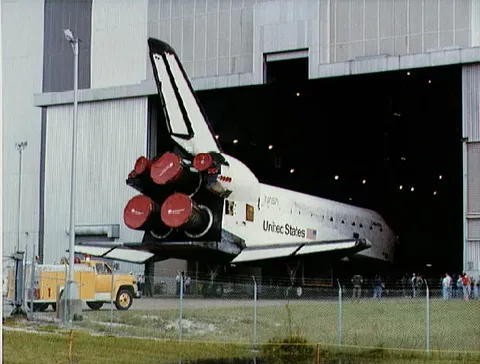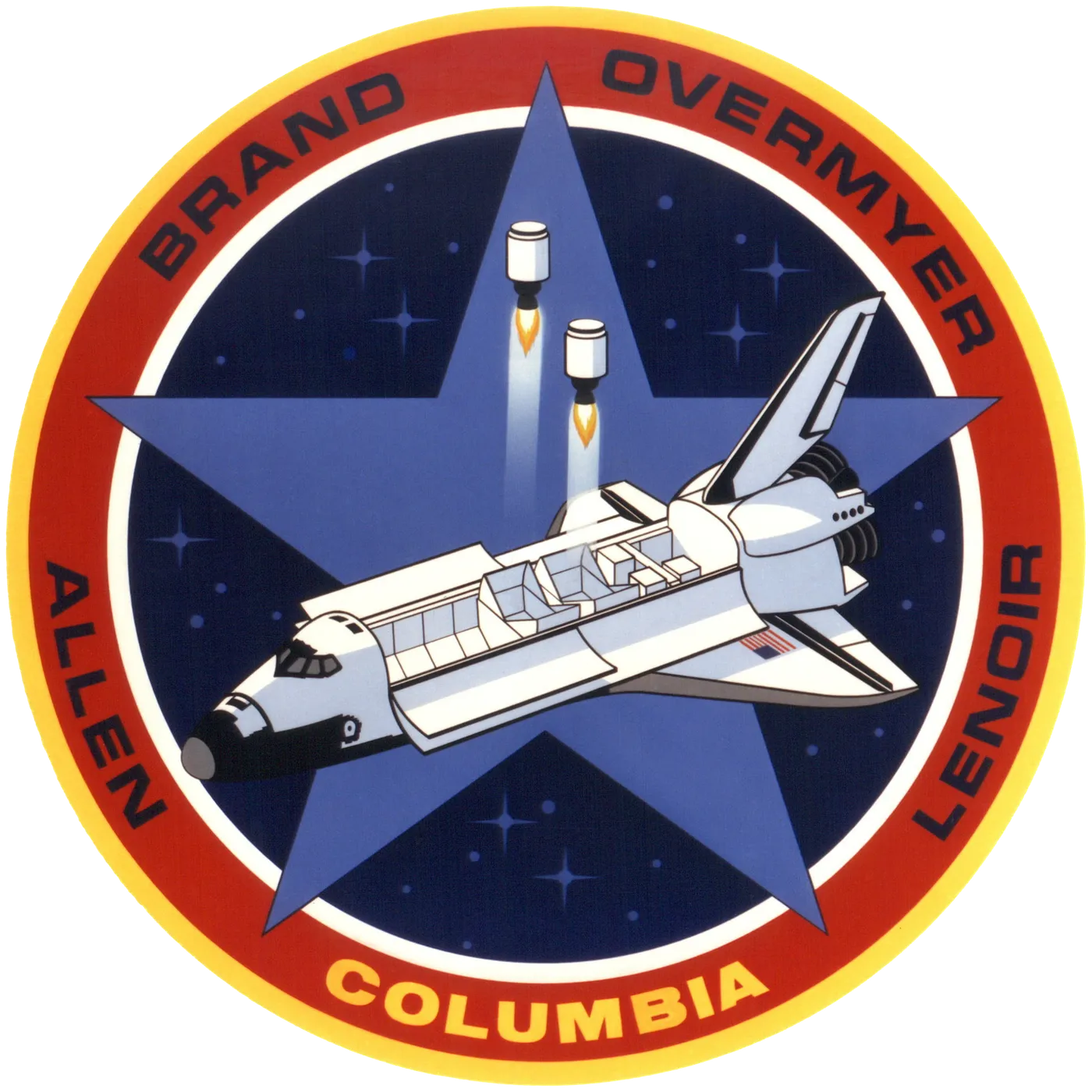
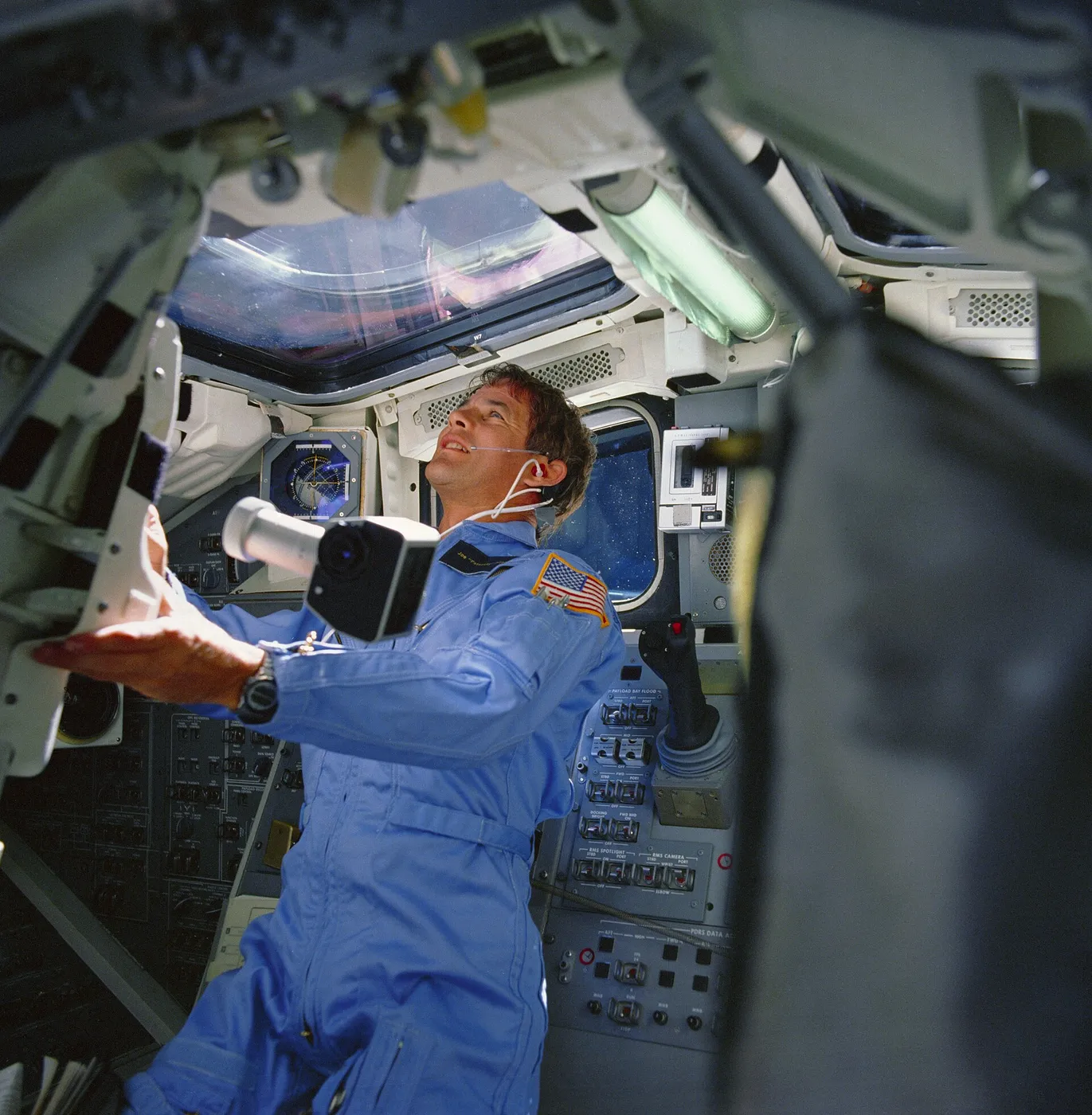
Declared operational at last, Columbia flew its first working mission in November 1982 with a crew of four — the largest yet — commanded by Vance Brand. The flight's business was commerce: the astronauts deployed two communications satellites, SBS-3 and Anik C-3, spring-ejected from the payload bay and boosted to their high orbits. A hand-lettered sign in the window joked that the "fast, courteous service" was open for business.
The crew had also hoped to make the programme's first spacewalk, but balky spacesuits kept the airlock hatch shut and the excursion was scrubbed. It was a small reminder that "operational" did not mean routine, and that the Shuttle's most demanding capability — sending people outside — still had to be earned.
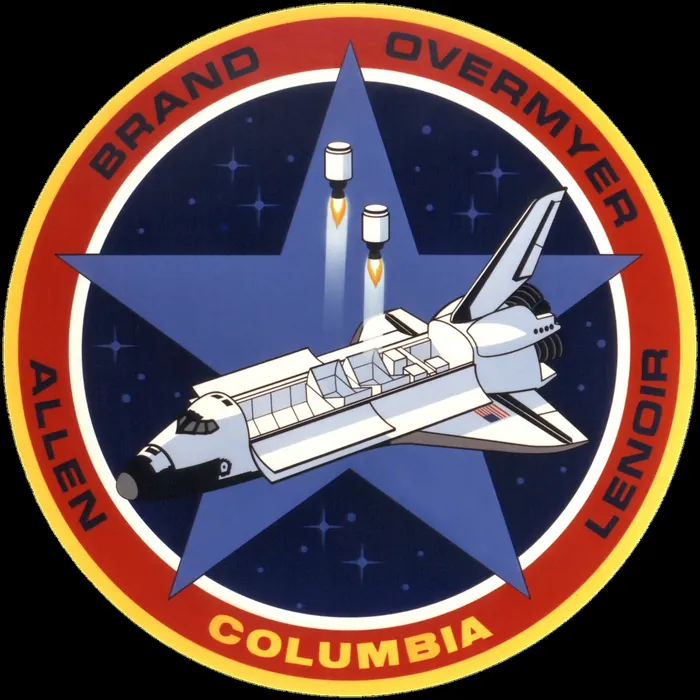
This was the first flight NASA called operational, and it looked the part: four astronauts instead of two, no ejection seats, and two commercial communications satellites deployed for paying customers within two days. The crew held up a hand-made sign reading “Satellite deployment by the ace moving co. — fast and courteous service” and, less modestly, “We deliver.”
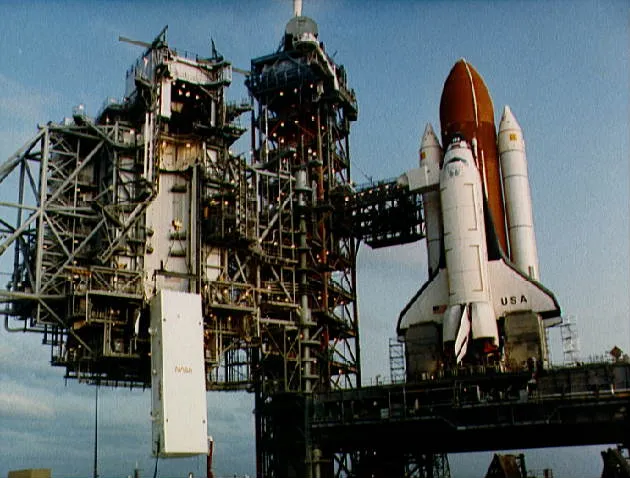
The satellite business was, briefly, the Shuttle's whole justification. Here was a reusable truck putting hardware into orbit for commercial operators at prices meant to undercut expendable rockets, and for a few years the manifest filled with paying payloads. Challenger ended that entirely: after 1986 commercial satellites were barred from the Shuttle and returned to expendable launchers, and the vehicle's economics never recovered.
The mission's other objective failed. The first spacewalk of the Shuttle era was to have been made by Joseph Allen and William Lenoir, and it was cancelled when one suit's ventilation fan ran erratically and the other's oxygen regulator misbehaved. Both men were bitterly disappointed. The suits were fixed, and the first Shuttle EVA slipped to Challenger's maiden flight five months later.