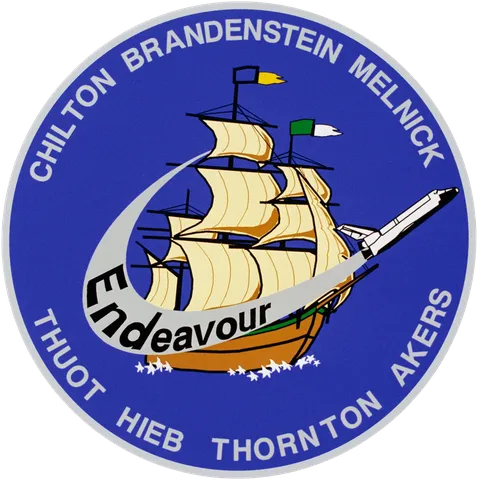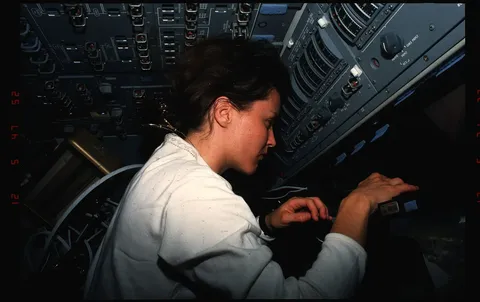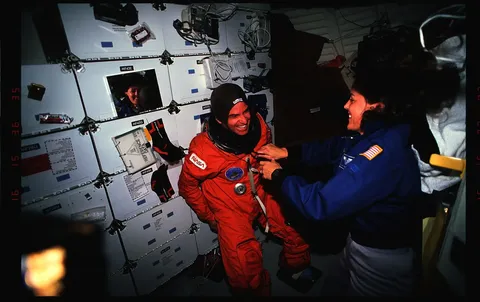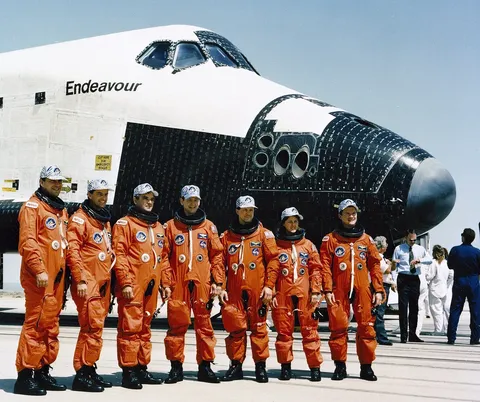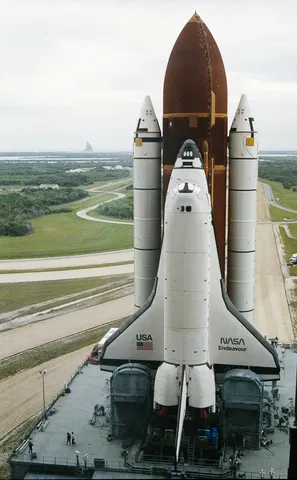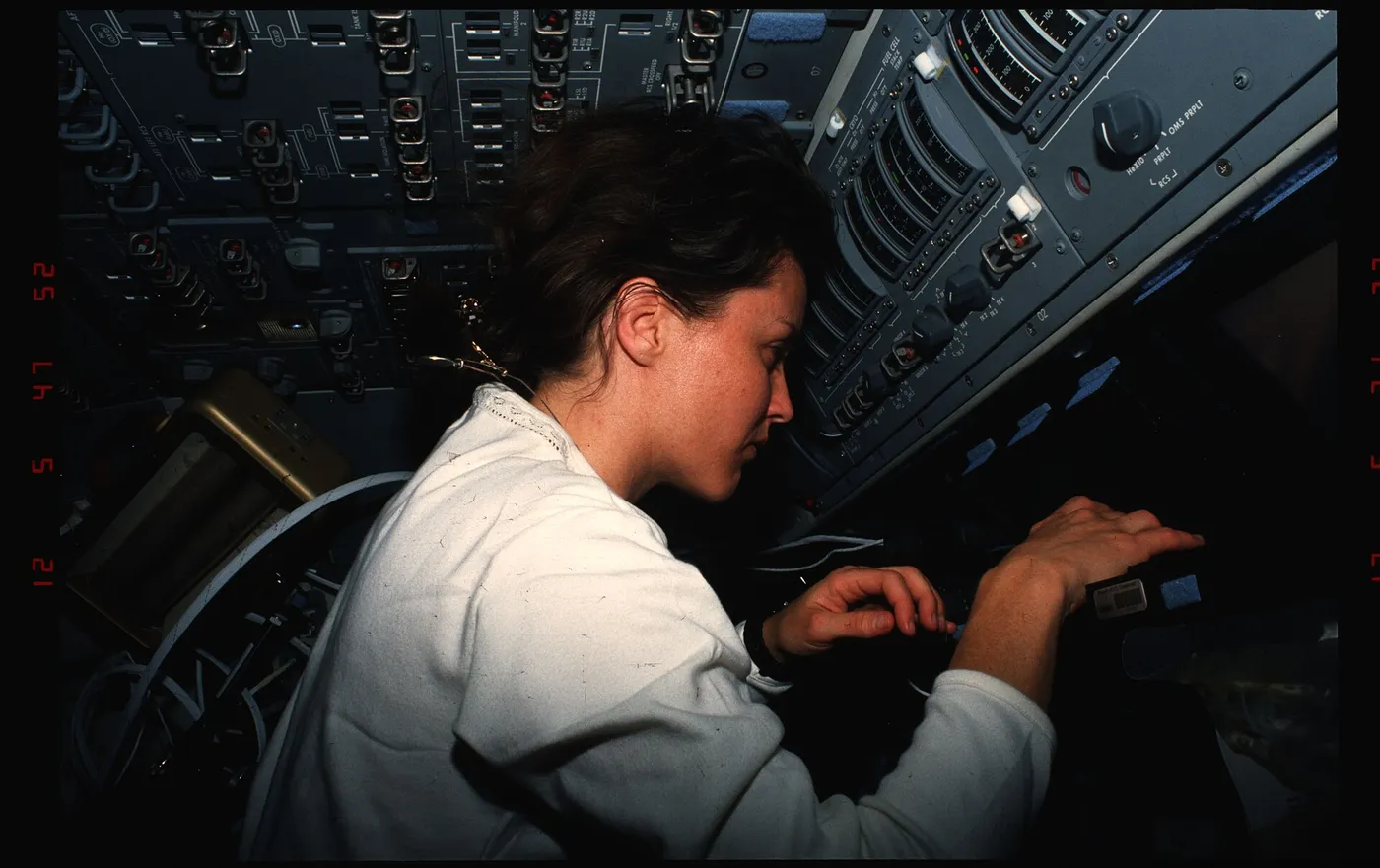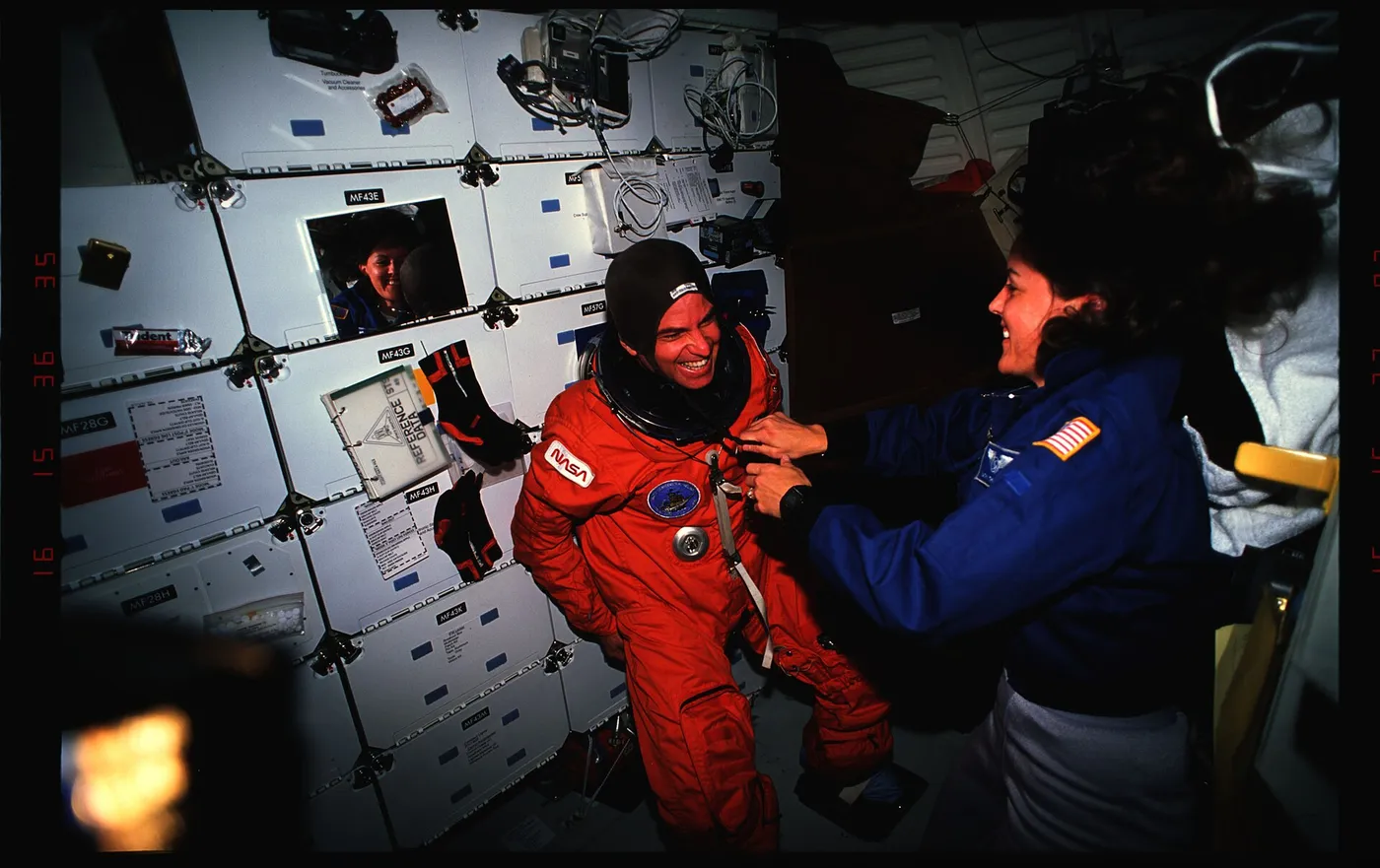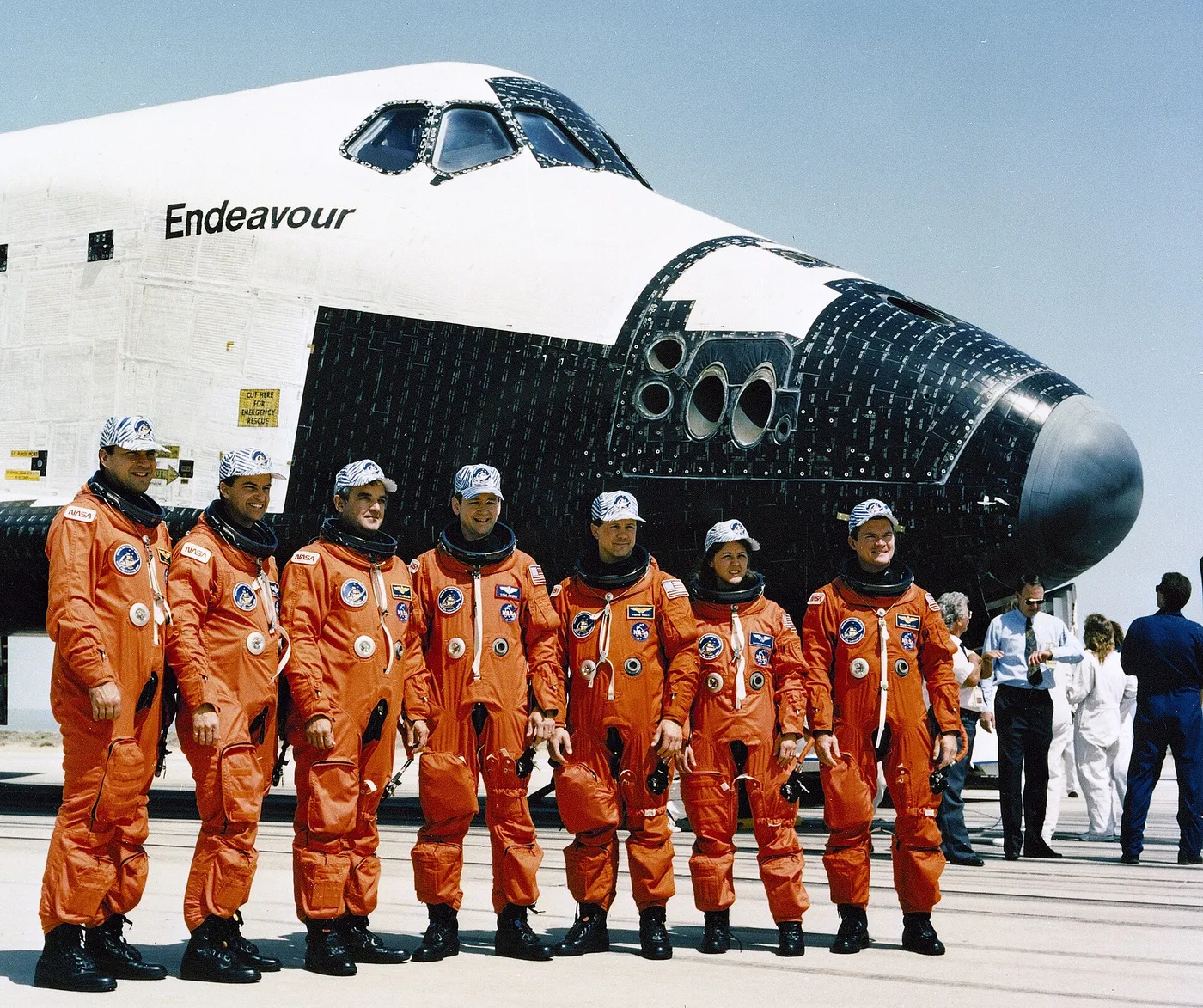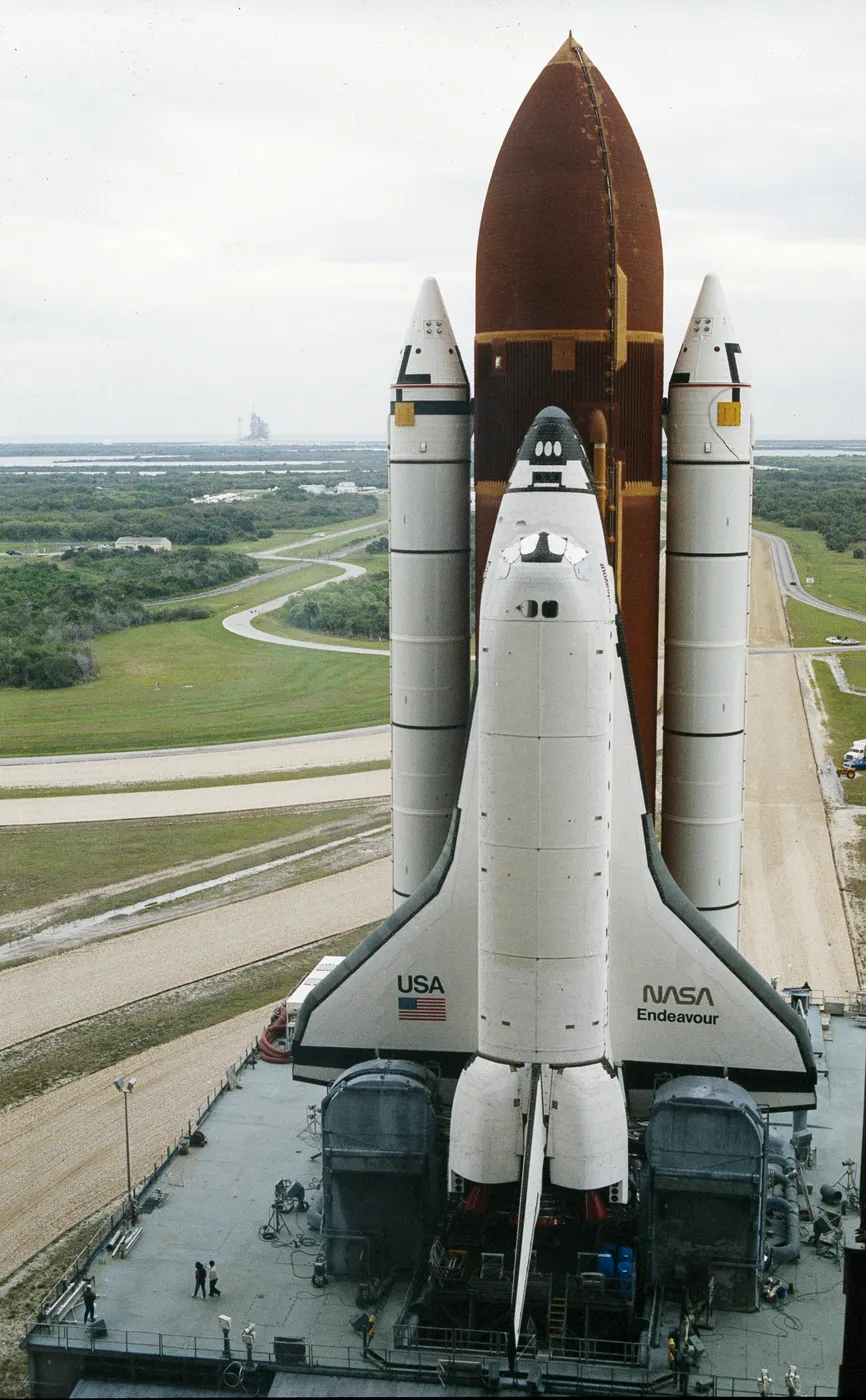
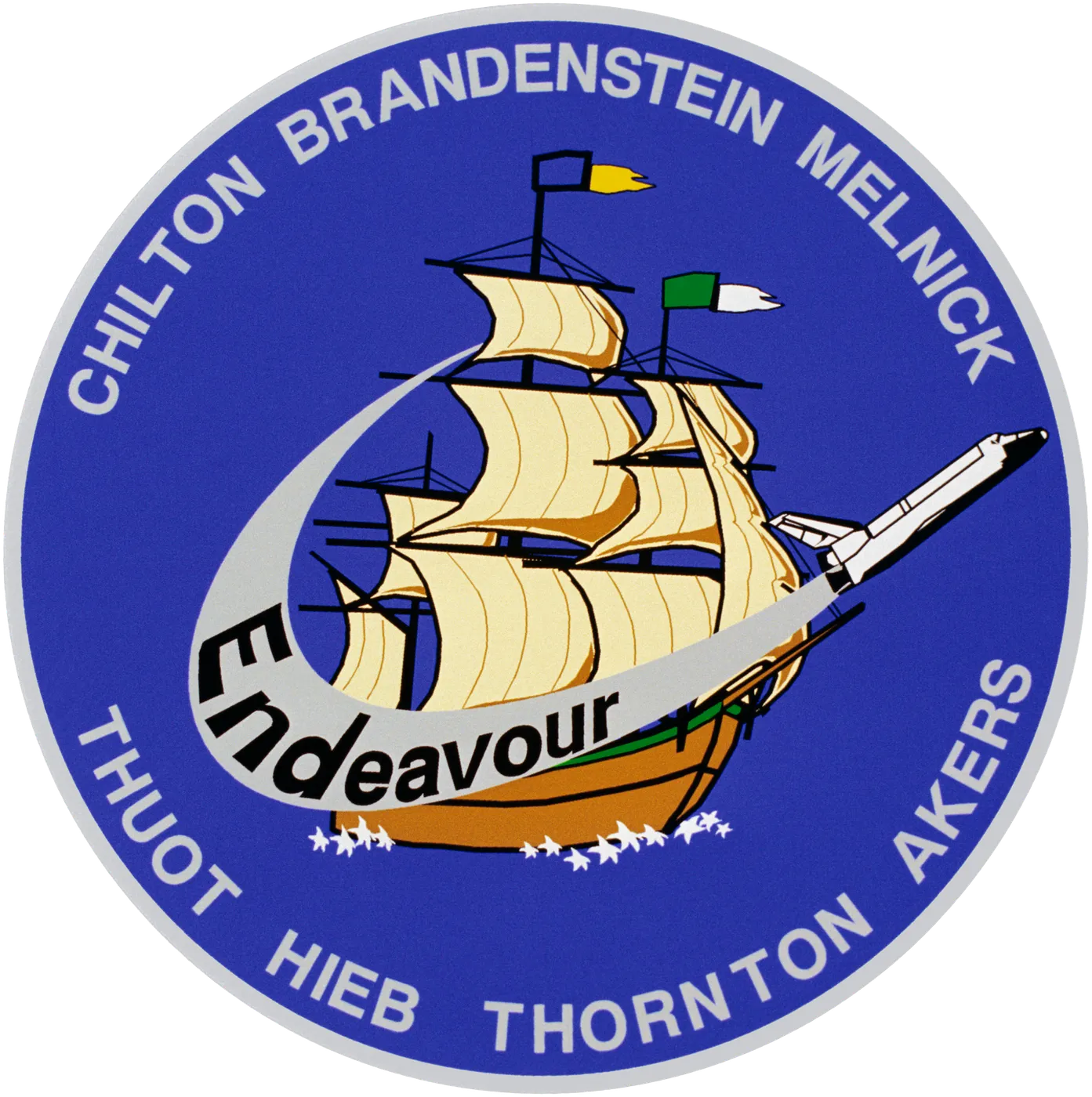
Endeavour, built to replace Challenger, made its maiden flight in May 1992 with a dramatic rescue as its centrepiece. A stranded Intelsat communications satellite sat uselessly in low orbit, and the plan to capture it with a special bar failed twice, leaving the crew improvising. In the end three spacewalkers crowded into the bay and grabbed the four-tonne satellite by hand — the only three-person spacewalk ever flown.
Once secured, the crew fitted a new booster and released the satellite to climb to its proper orbit at last. The same mission ran spacewalks to practise techniques for assembling a space station, and its record-setting excursions put the new orbiter through an unusually demanding trial. Endeavour's debut proved both the fleet's replacement and the enduring value of having capable hands in orbit.
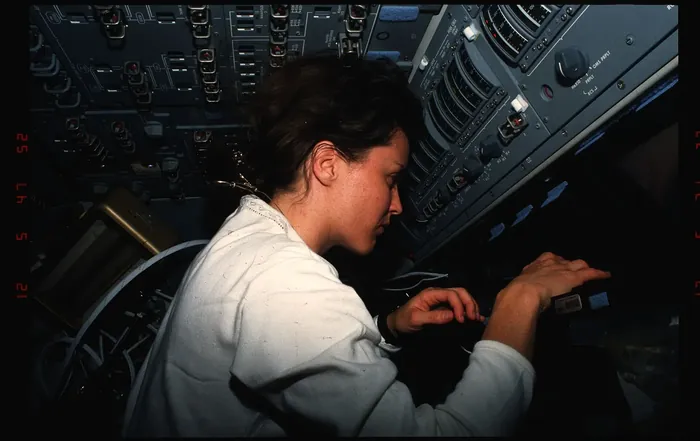
Endeavour's first flight in May 1992 turned into the most improvised rescue in the programme's history. The target was Intelsat VI, a four-tonne communications satellite stranded in the wrong orbit for two years, and the plan was for a spacewalker to attach a capture bar to it using a specially built fixture.
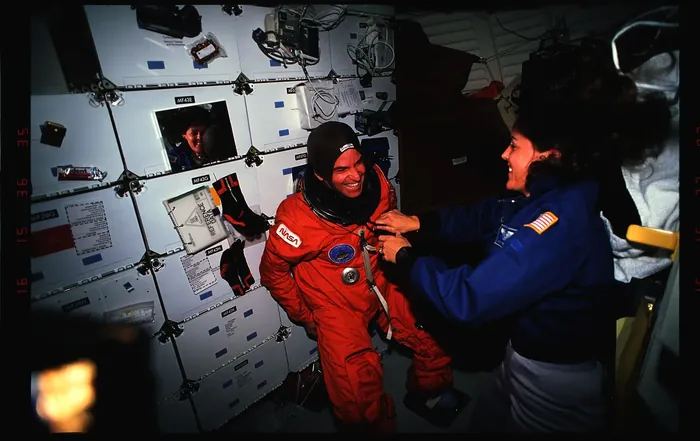
The fixture would not catch. Pierre Thuot tried three times over two separate spacewalks, and each attempt nudged the satellite into a worse wobble. With the mission running out of days, the crew proposed something not in any manual: send three people outside at once — something never done before — and simply grab the satellite with their hands. Managers agreed overnight, and the astronauts practised in the airlock.
It worked. Thuot, Rick Hieb and Tom Akers braced themselves in the bay, caught the slowly rotating satellite between them and held it while the capture bar was fitted, in a spacewalk lasting eight and a half hours — the longest anyone had yet made. Intelsat VI got a new upper stage and went to work. The flight is a reminder that the Shuttle's real advantage was never cost or cadence, but the presence of people who could improvise when the plan collapsed.