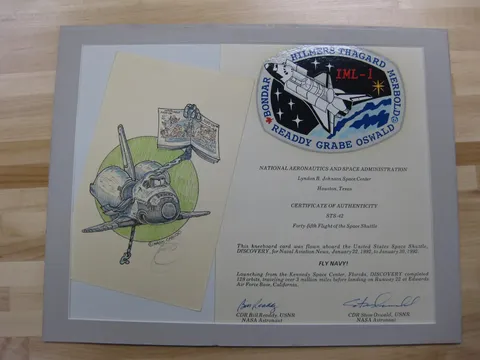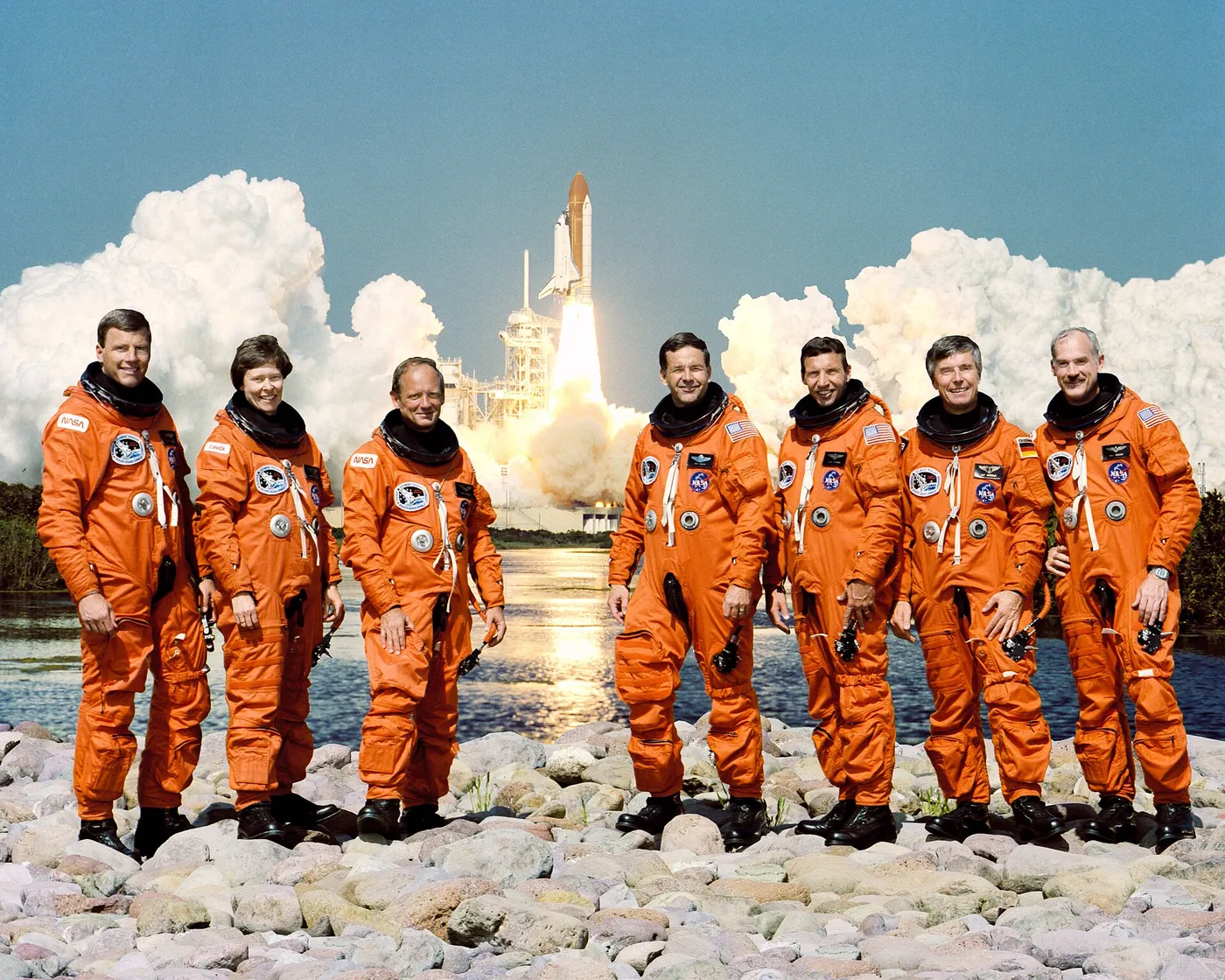
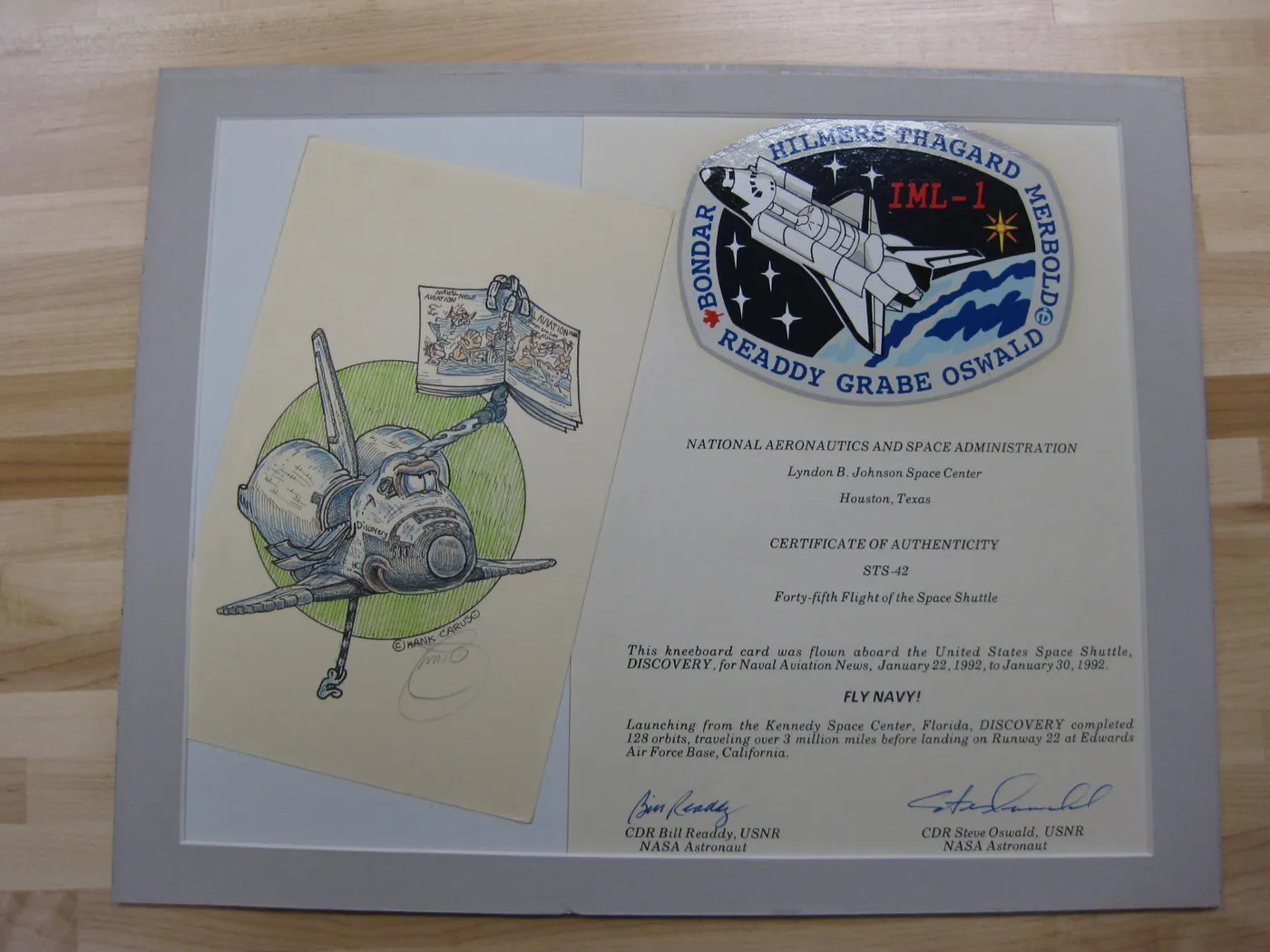

Discovery flew the first International Microgravity Laboratory in January 1992, a Spacelab mission that gathered experiments from more than a dozen nations into a single shared research flight. The crew of seven, working in two shifts, studied how materials solidify, how crystals grow and how living things from bacteria to the astronauts themselves respond to weightlessness.
Among the crew was Roberta Bondar, the first Canadian woman in space, and researchers from Europe and beyond, reflecting the mission's collaborative spirit. The eight-day flight was a preview of the multinational science model that the space station would later embody, showing that scientists from rival and allied nations alike could pool their work aboard a single American spacecraft.

The first International Microgravity Laboratory flew in January 1992 with experiments from a dozen countries packed into a Spacelab module, and its crew list read like a deliberate statement about who the programme was now for. Roberta Bondar, a neurologist from Ontario, became the first Canadian woman in space and the first neurologist to fly.
Alongside her was Ulf Merbold, back for a second flight nine years after becoming the first ESA astronaut aboard a Shuttle — by now an experienced hand in a laboratory he had helped prove. The module ran around the clock in two shifts for eight days on materials processing, crystal growth and, above all, the biology of adaptation.
Bondar's own research went to the heart of it: how the human nervous system rewires itself when the inner ear stops reporting which way is down, and what happens on return. She spent years afterwards studying the crew members she had flown with, following their recovery, and the work fed directly into understanding balance disorders in patients who had never left the ground.