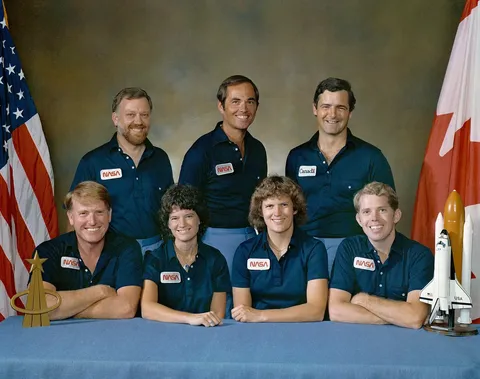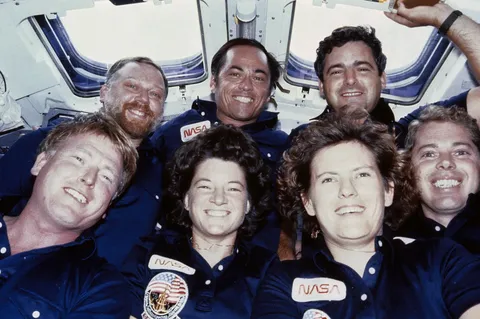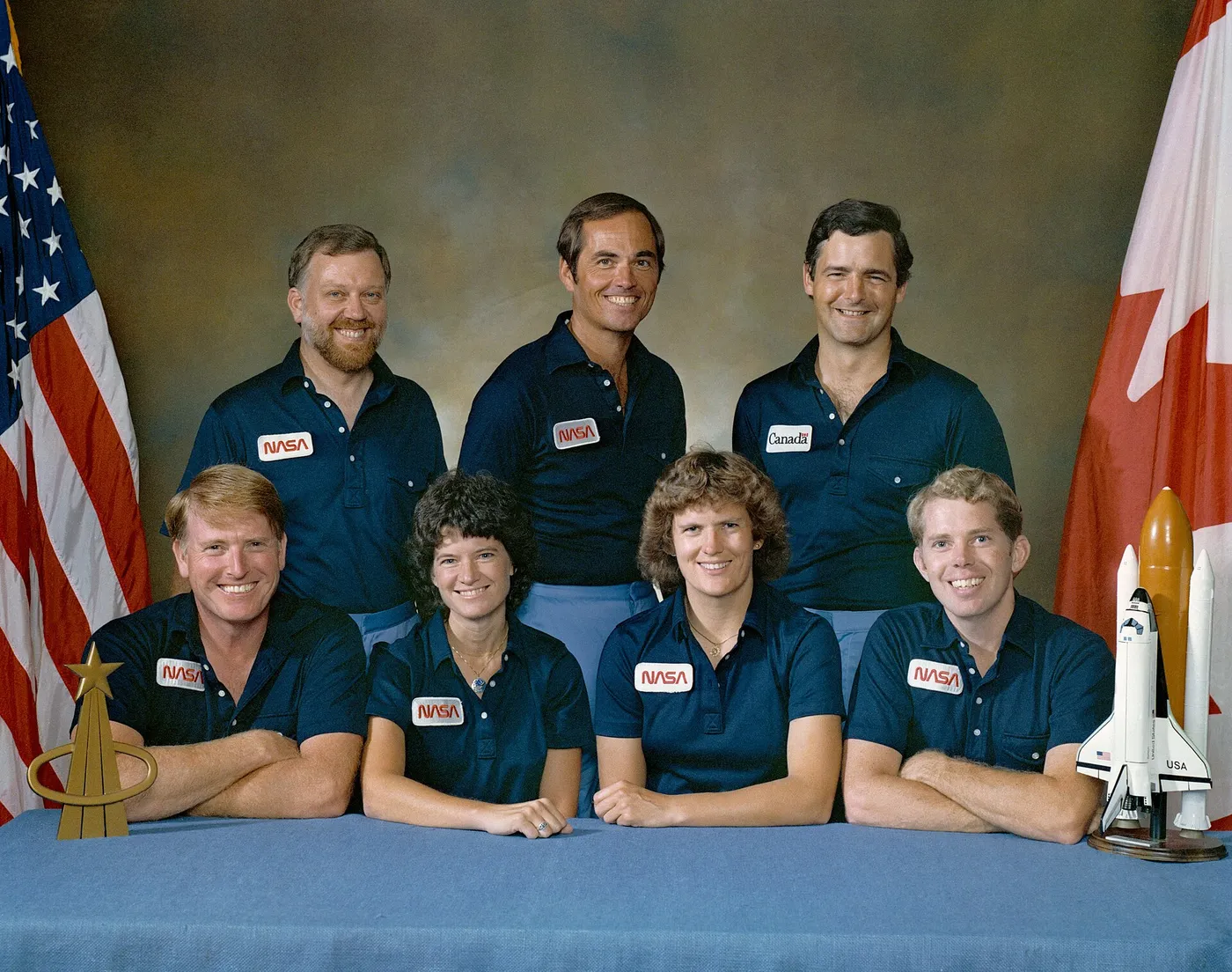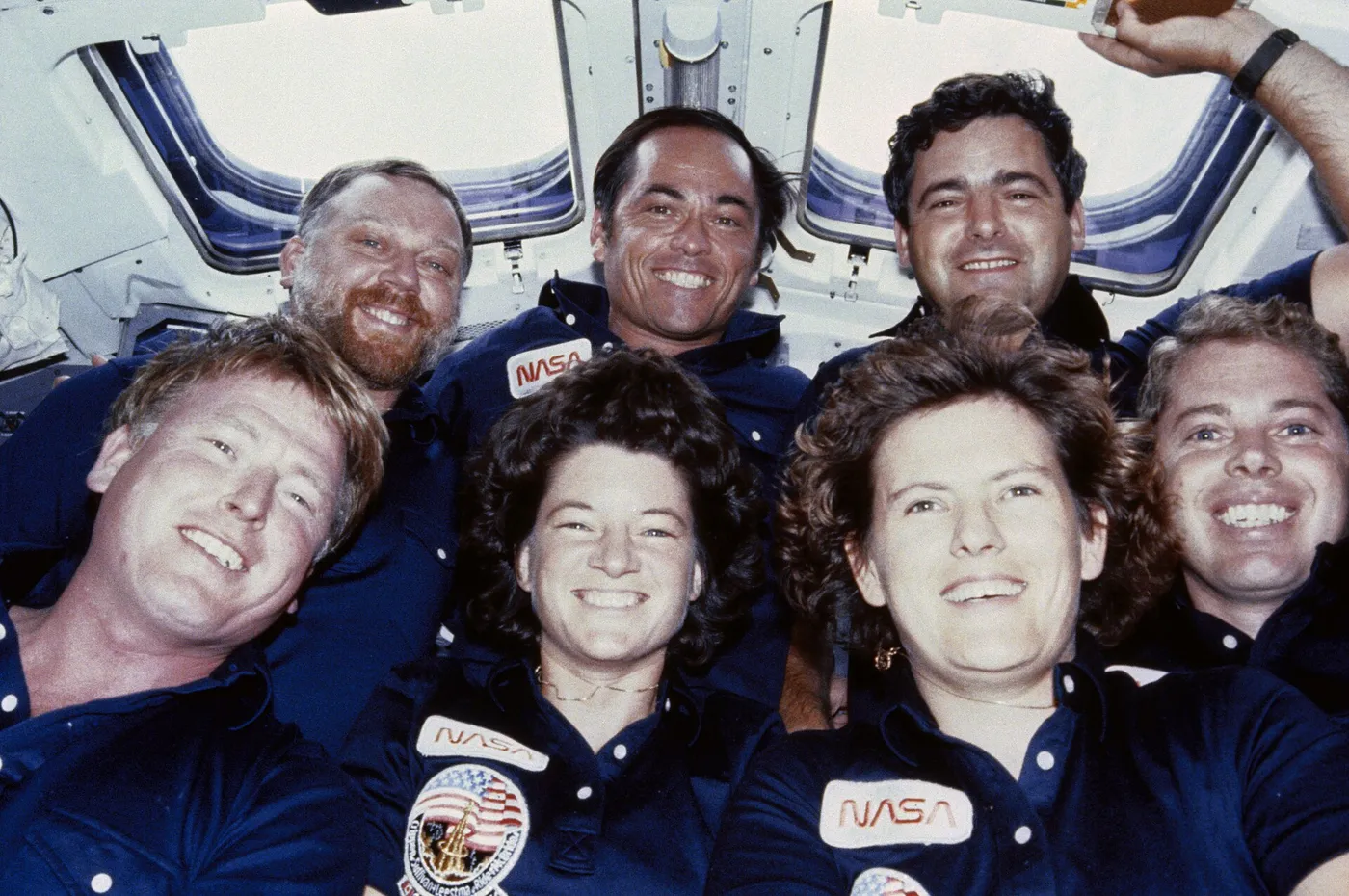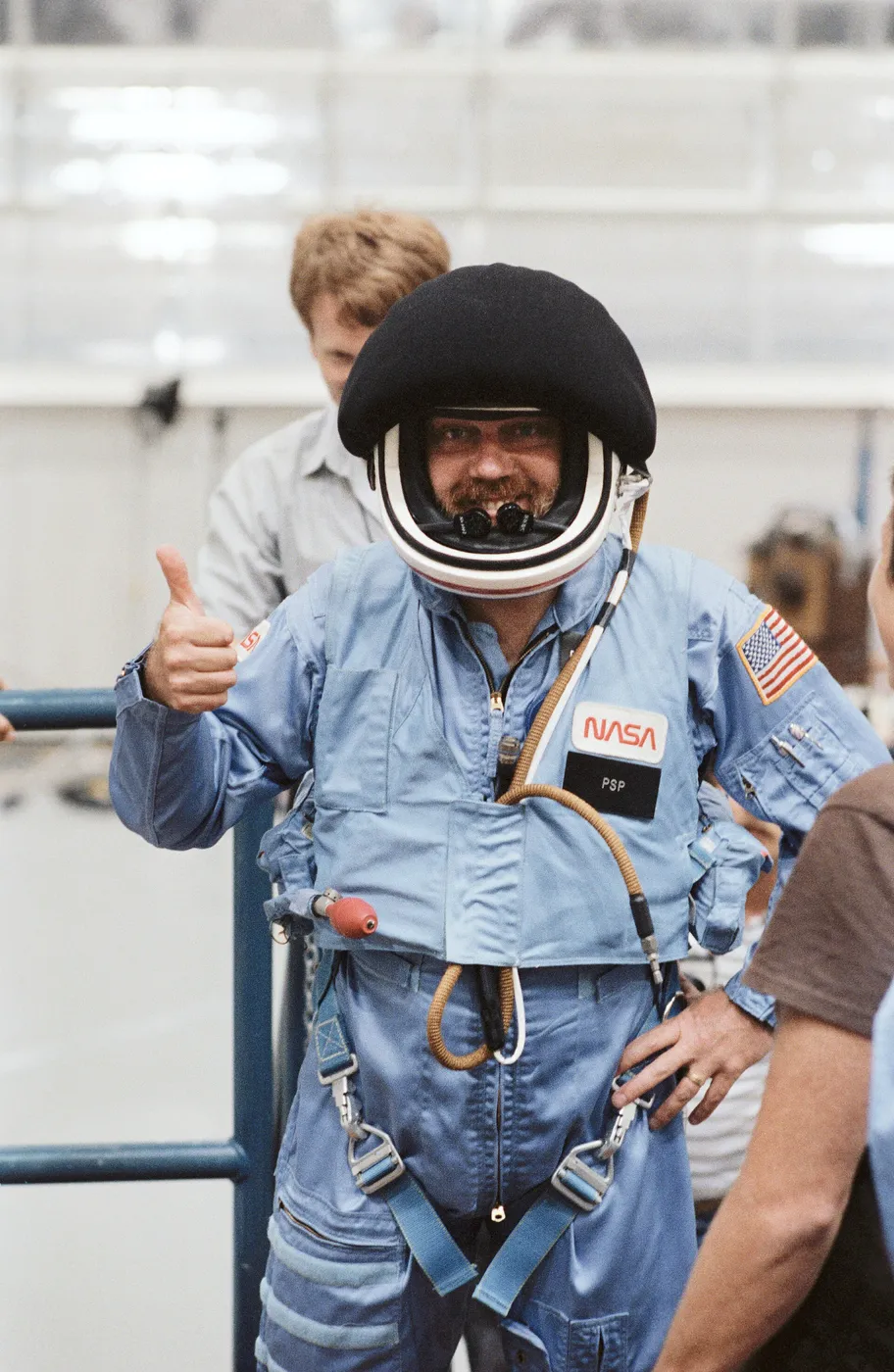
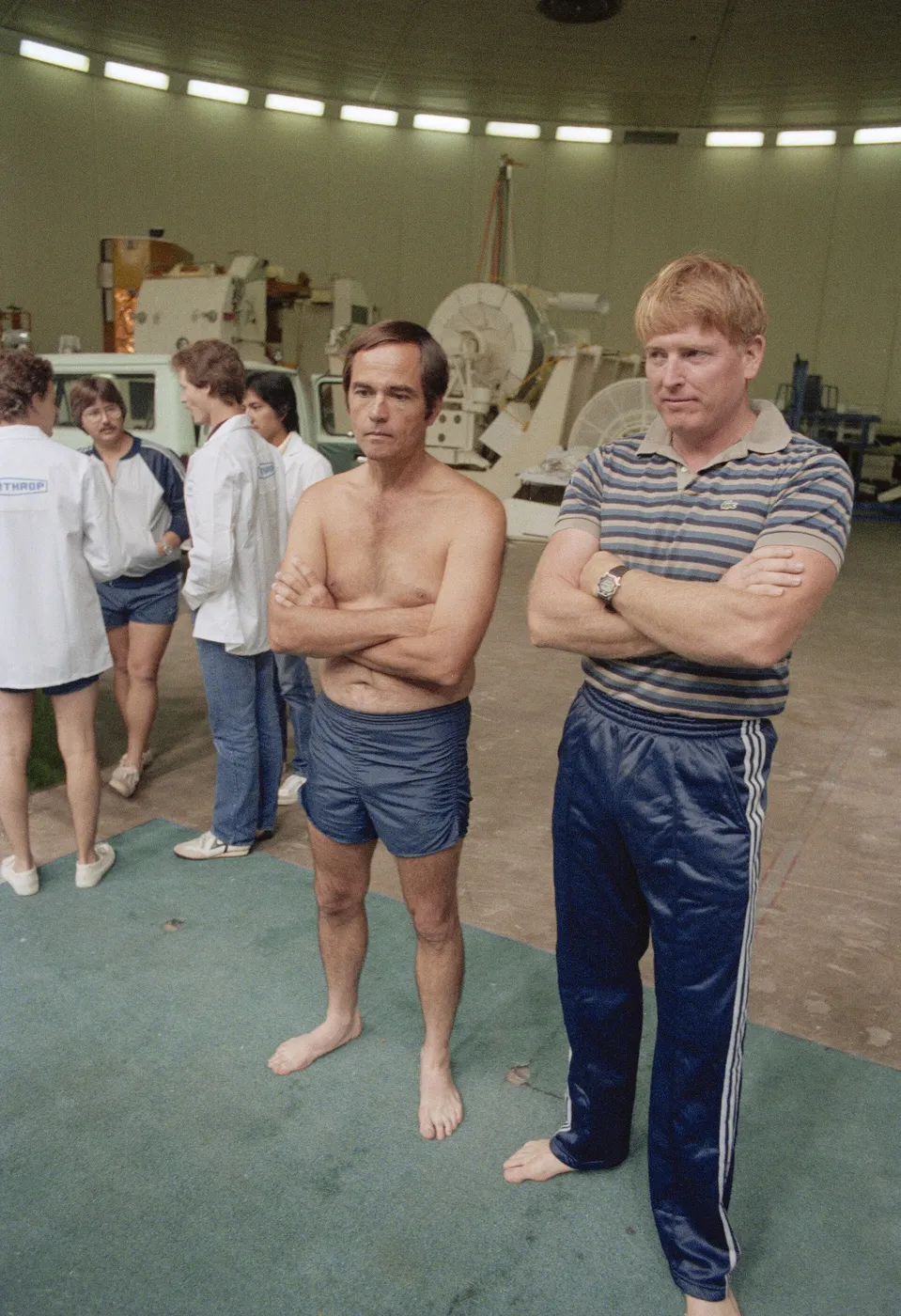
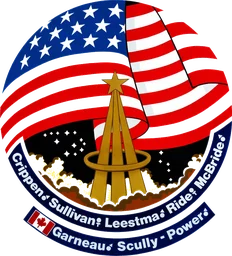
October 1984 saw Challenger fly the first crew to include two women, Sally Ride returning alongside Kathryn Sullivan, in a group of seven that also carried the first Canadian in space, Marc Garneau. The mission's headline came when Sullivan floated out into the bay to become the first American woman to walk in space, sealing a symbolic milestone in the same flight where a woman flew for the second time.
The practical work was Earth science. The crew deployed a satellite to measure the planet's radiation budget and ran an imaging radar that mapped the surface through cloud and darkness, along with an ambitious test of refuelling a satellite in orbit. It was a dense, capable flight that showed how varied a single Shuttle mission could be.
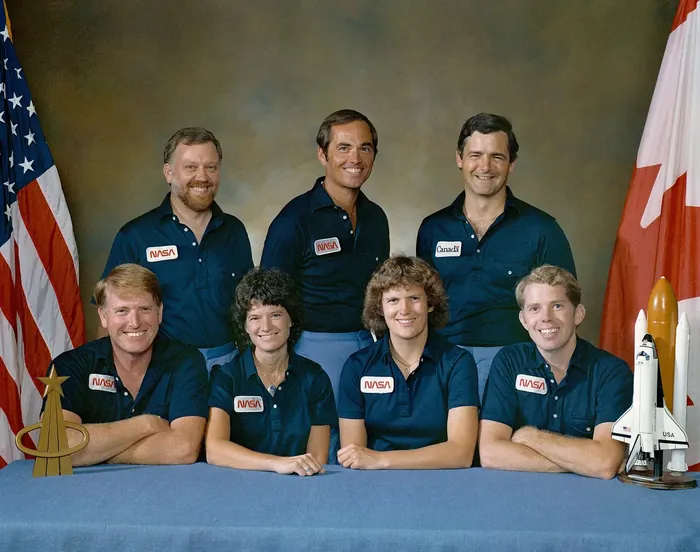
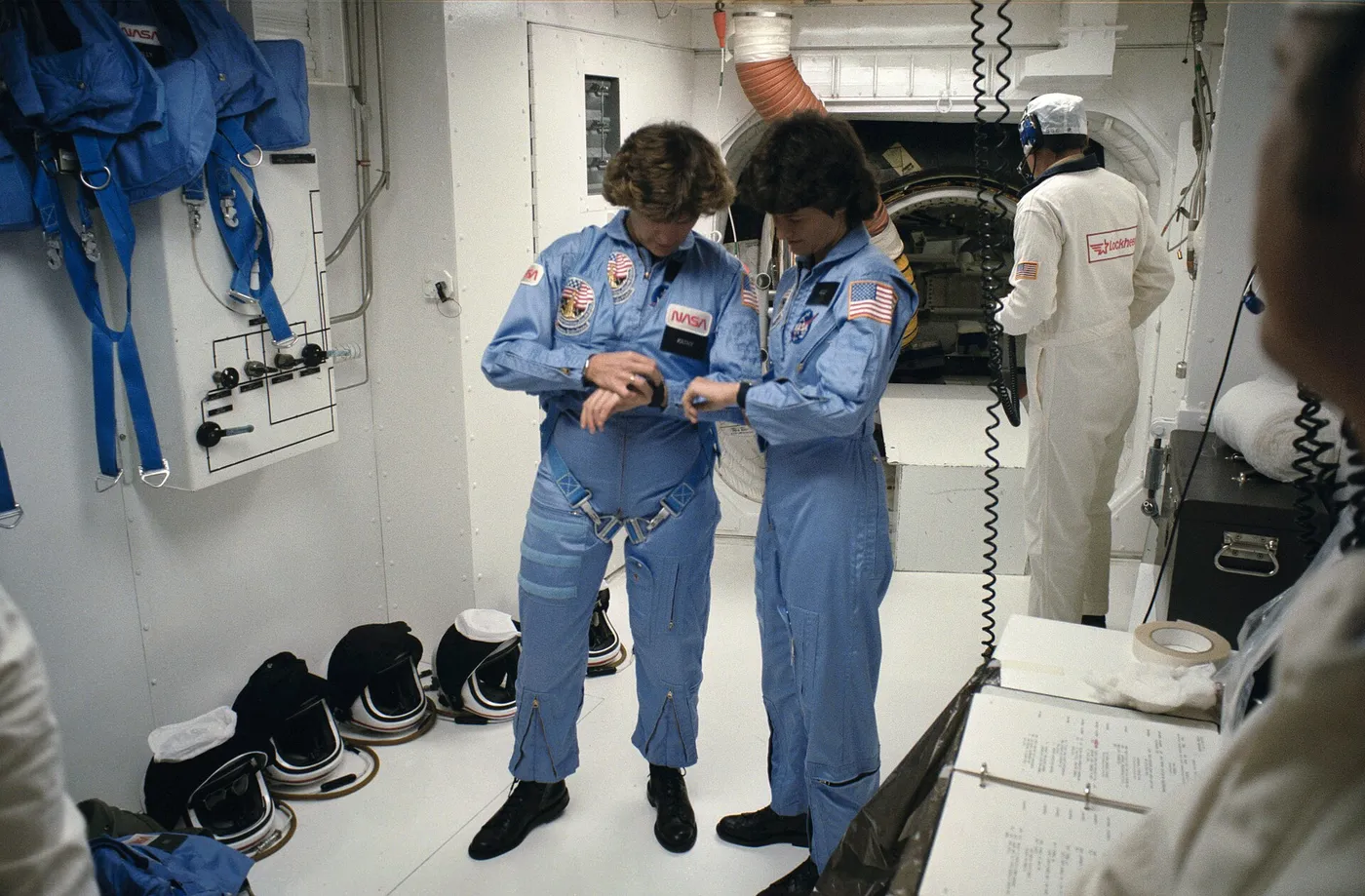
This flight carried seven people, the largest crew yet, and two of them were women — the first time any spacecraft had flown with more than one. Sally Ride was making her second flight; Kathryn Sullivan, a geologist, made the first spacewalk by an American woman, working with David Leestma on a demonstration of refuelling a satellite in orbit.
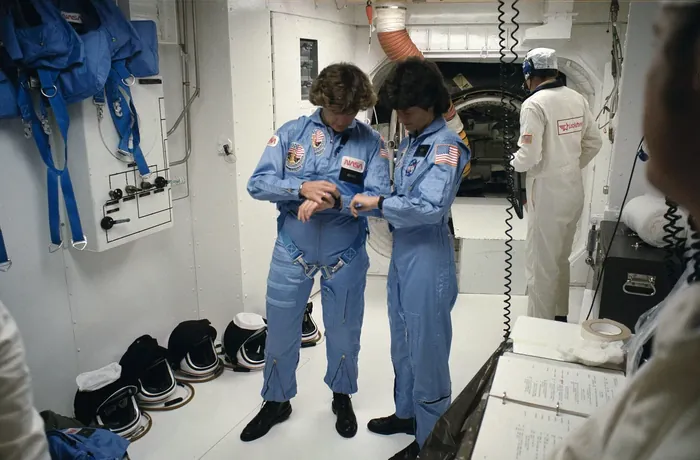
The crew was unusually cosmopolitan for 1984. Marc Garneau became the first Canadian in space, and Paul Scully-Power, an oceanographer born in Australia, flew as the first person aboard whose job was simply to look at the ocean and describe what he saw — spotting spiral eddies that changed how oceanographers understood surface circulation.
The primary payload was the Earth Radiation Budget Satellite, deployed to measure how much sunlight the planet absorbs and how much it radiates away — one of the foundational climate instruments. Its solar array stuck on deployment and Ride freed it by nudging the satellite with the robotic arm. It went on working for more than two decades, and finally fell out of orbit in 2023.