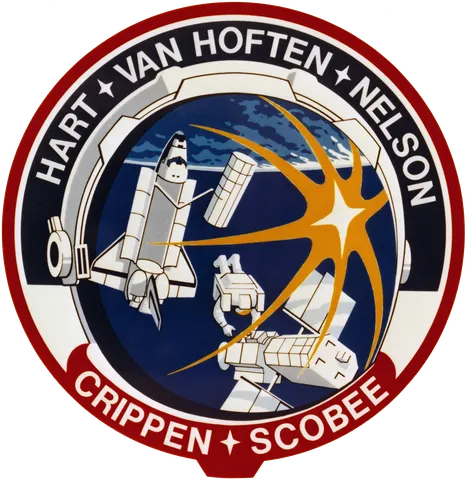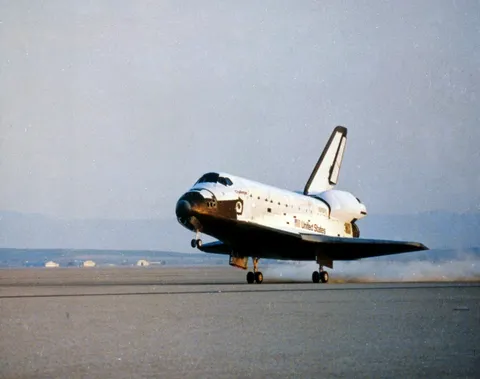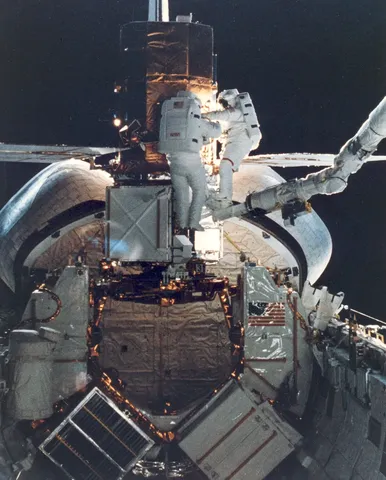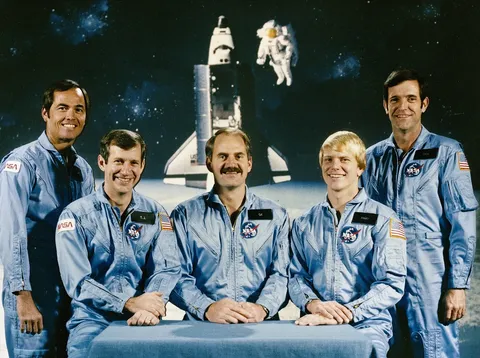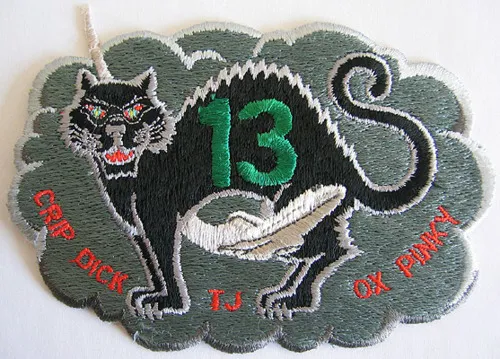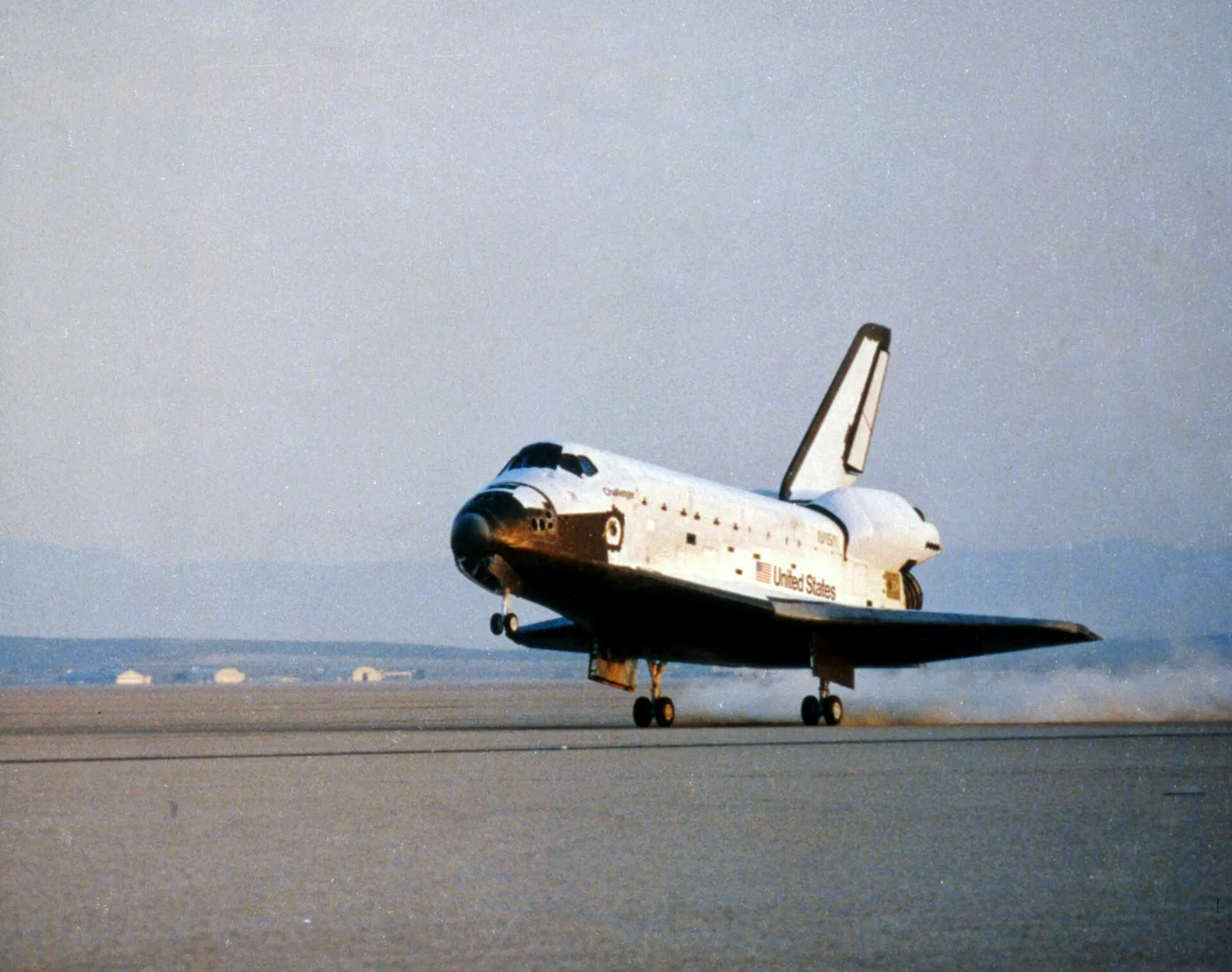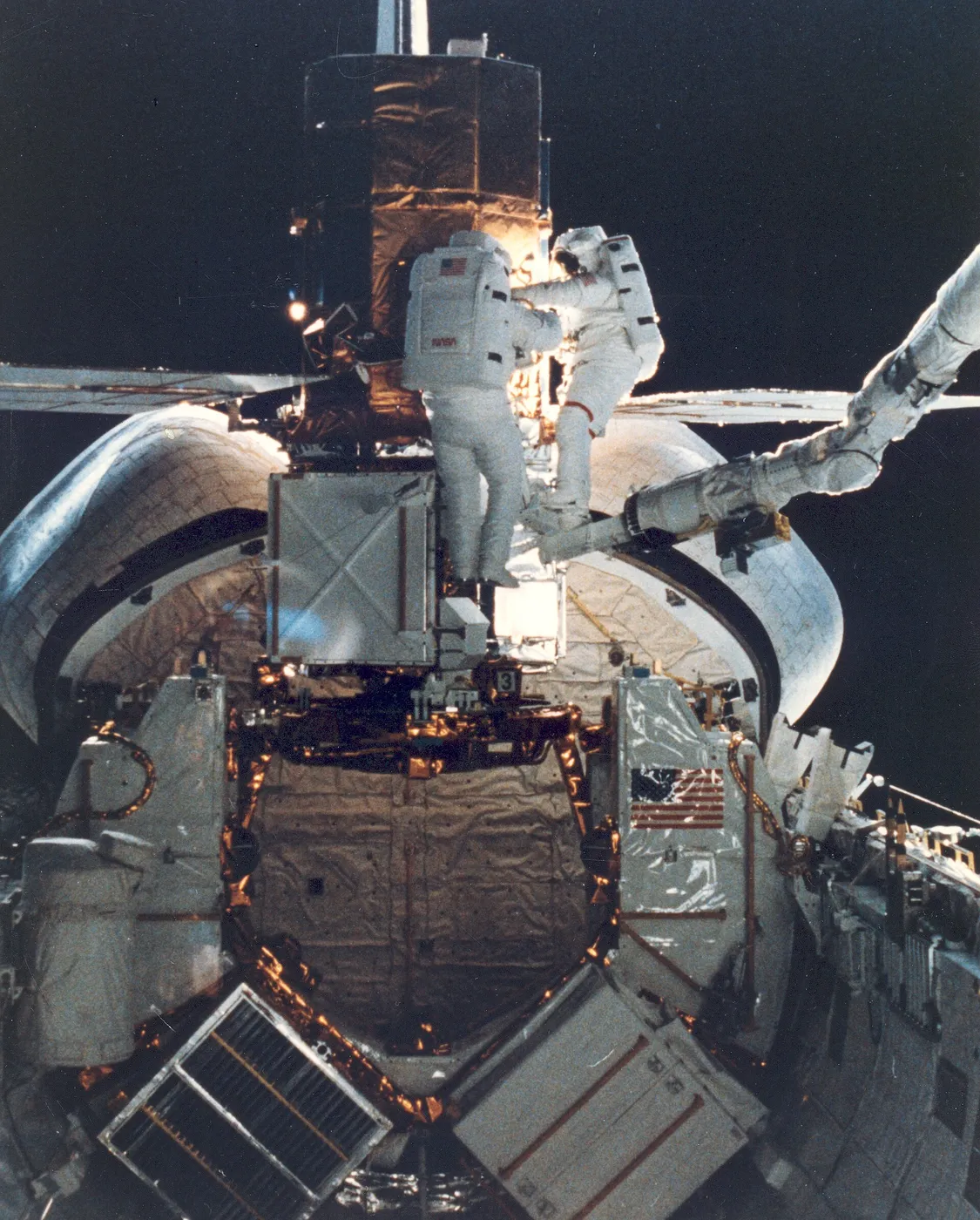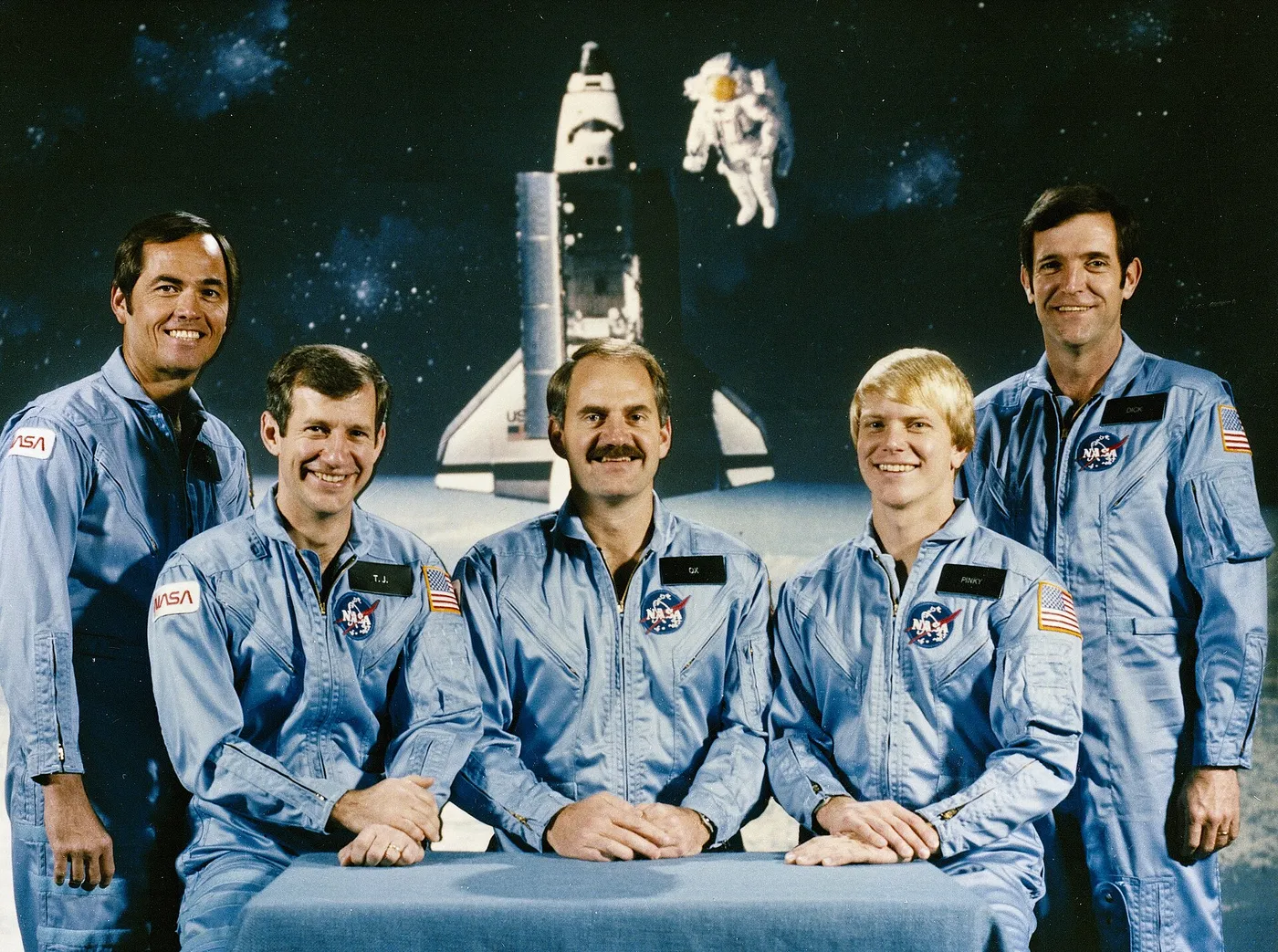
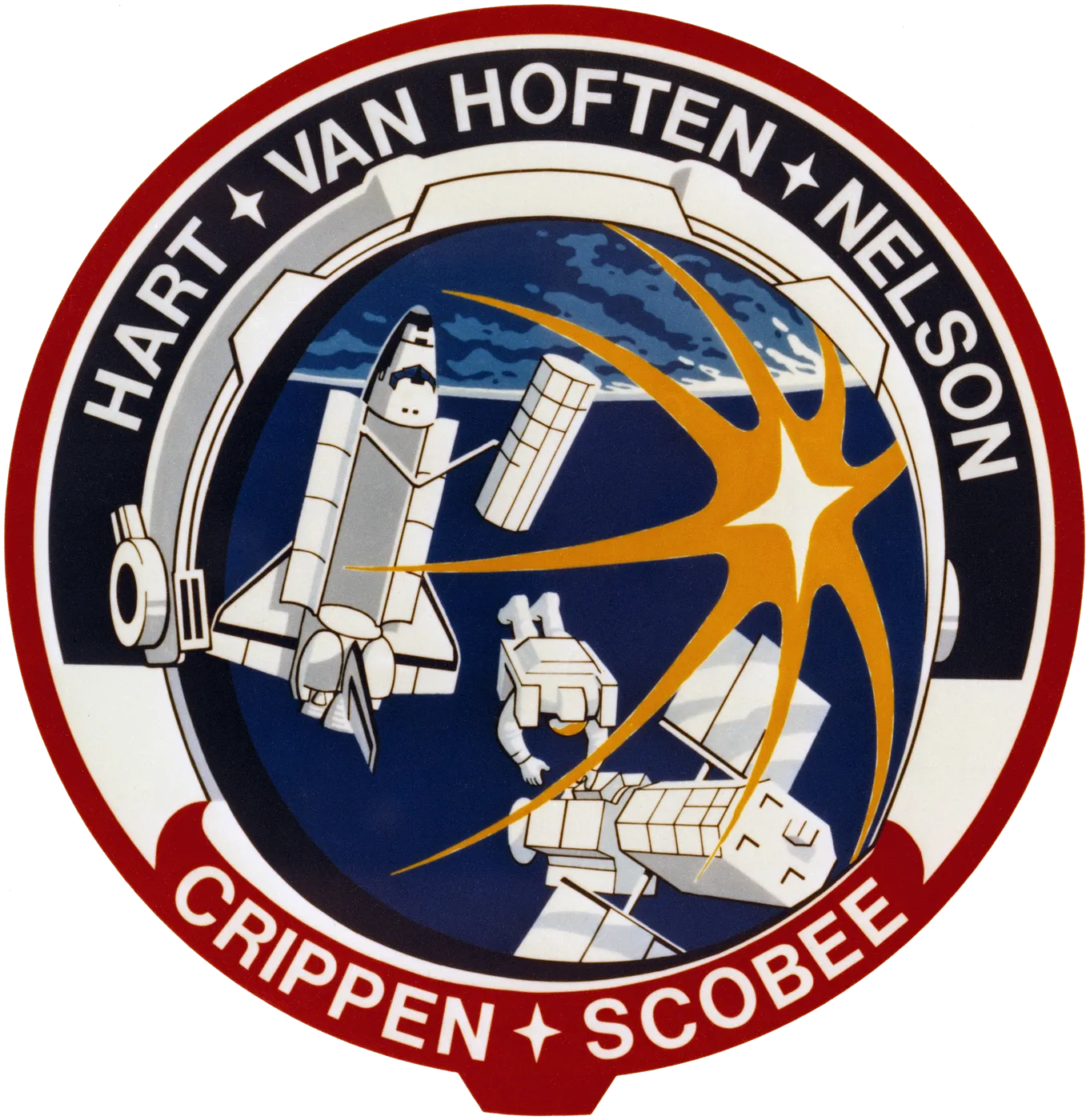
In April 1984 Challenger flew a mission that proved the Shuttle could not only launch satellites but heal them. The target was Solar Max, a Sun-watching observatory crippled by failed electronics and tumbling uselessly since 1980. After a first, frustrating attempt to grab it with a docking device failed, the crew used the robotic arm to capture the satellite, berth it in the bay, and let spacewalkers replace its broken modules before releasing it back to work.
It was the first repair of an orbiting spacecraft, a vivid demonstration of the case for a reusable, crewed vehicle. The same flight also deployed a bus-sized cylinder called LDEF, packed with materials samples and left in orbit to soak up years of exposure — a time capsule the fleet would return to collect much later.
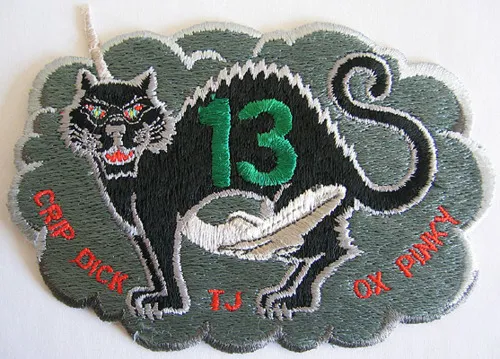
The Solar Maximum Mission satellite had been crippled by blown fuses since 1980, and this flight went up to fix it — the first time anyone had attempted to repair a spacecraft in orbit rather than replace it. The plan called for George Nelson to fly out on a jet backpack, latch onto the tumbling satellite with a docking device and steady it for capture.
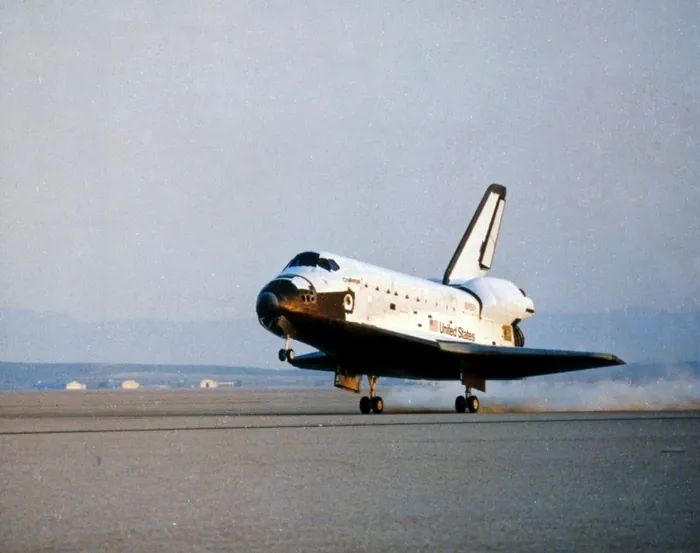
The device would not grip. Nelson tried repeatedly, then attempted to grab a solar array by hand, and instead knocked Solar Max into a faster, wilder tumble that put it beyond reach entirely. It was a public failure with the satellite drifting away, and the mission looked lost until controllers at Goddard spent an anxious night nursing its dying batteries and coaxing its magnetic torquers into damping the spin.
The next day the satellite was stable enough for Challenger's robotic arm to pluck it out of the sky and lower it into the bay, where Nelson and James van Hoften replaced its attitude control box and a faulty electronics unit. Solar Max went back to work for another five years. The lesson — that expensive hardware could be salvaged rather than written off — became the justification for a great deal of what the Shuttle did next, up to and including Hubble.