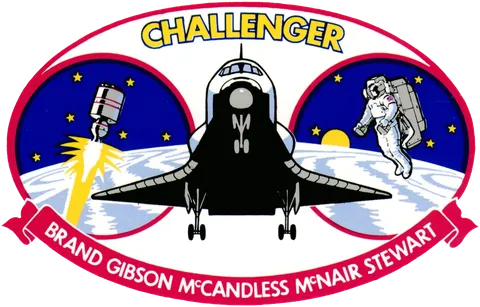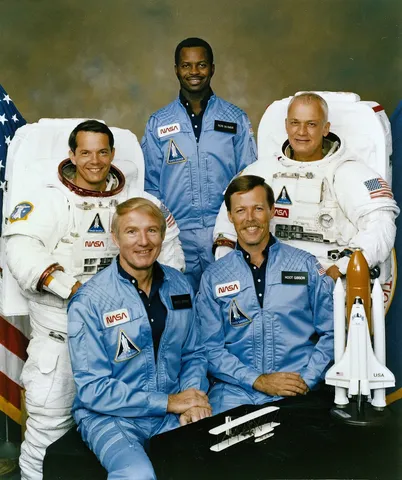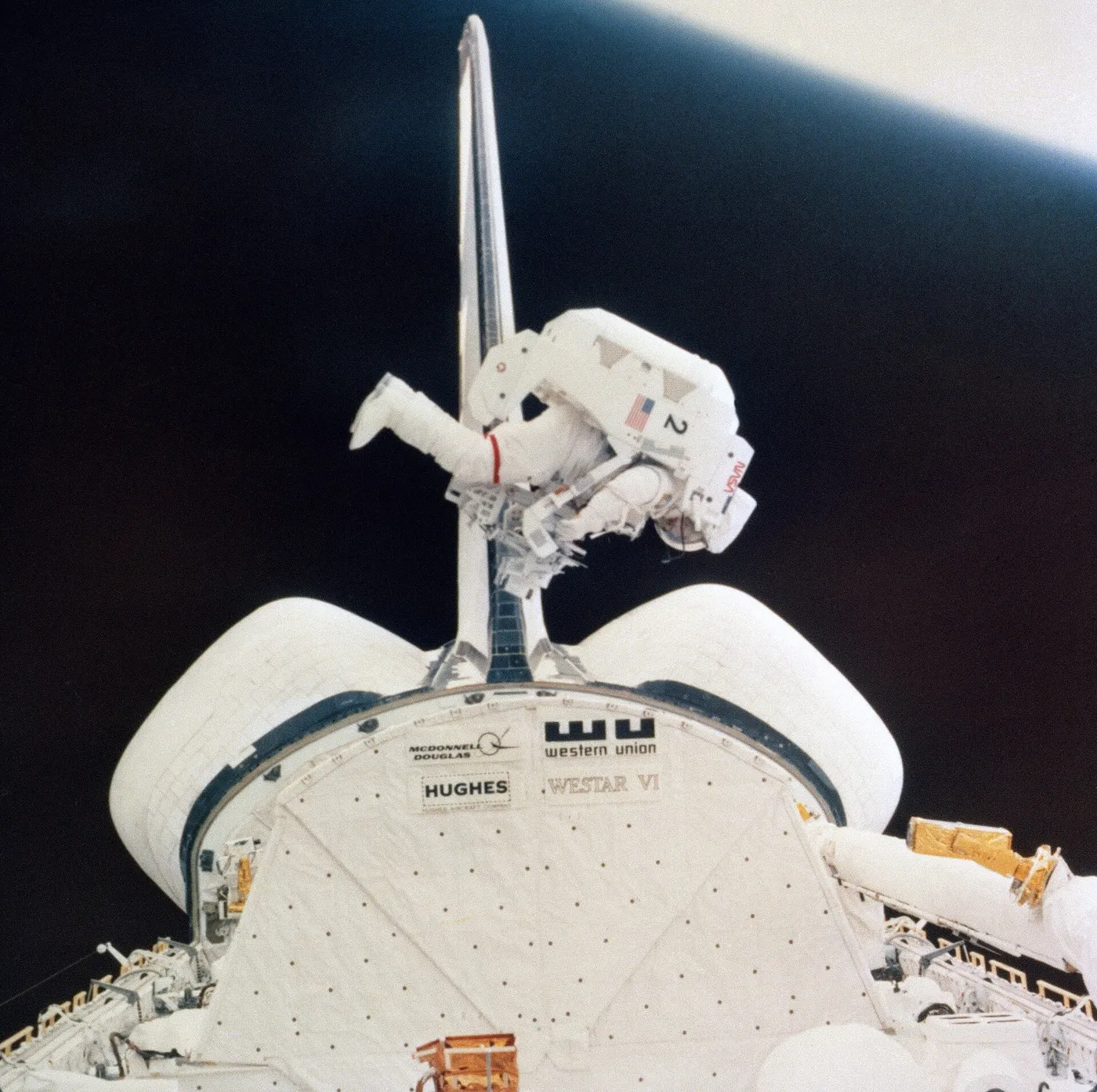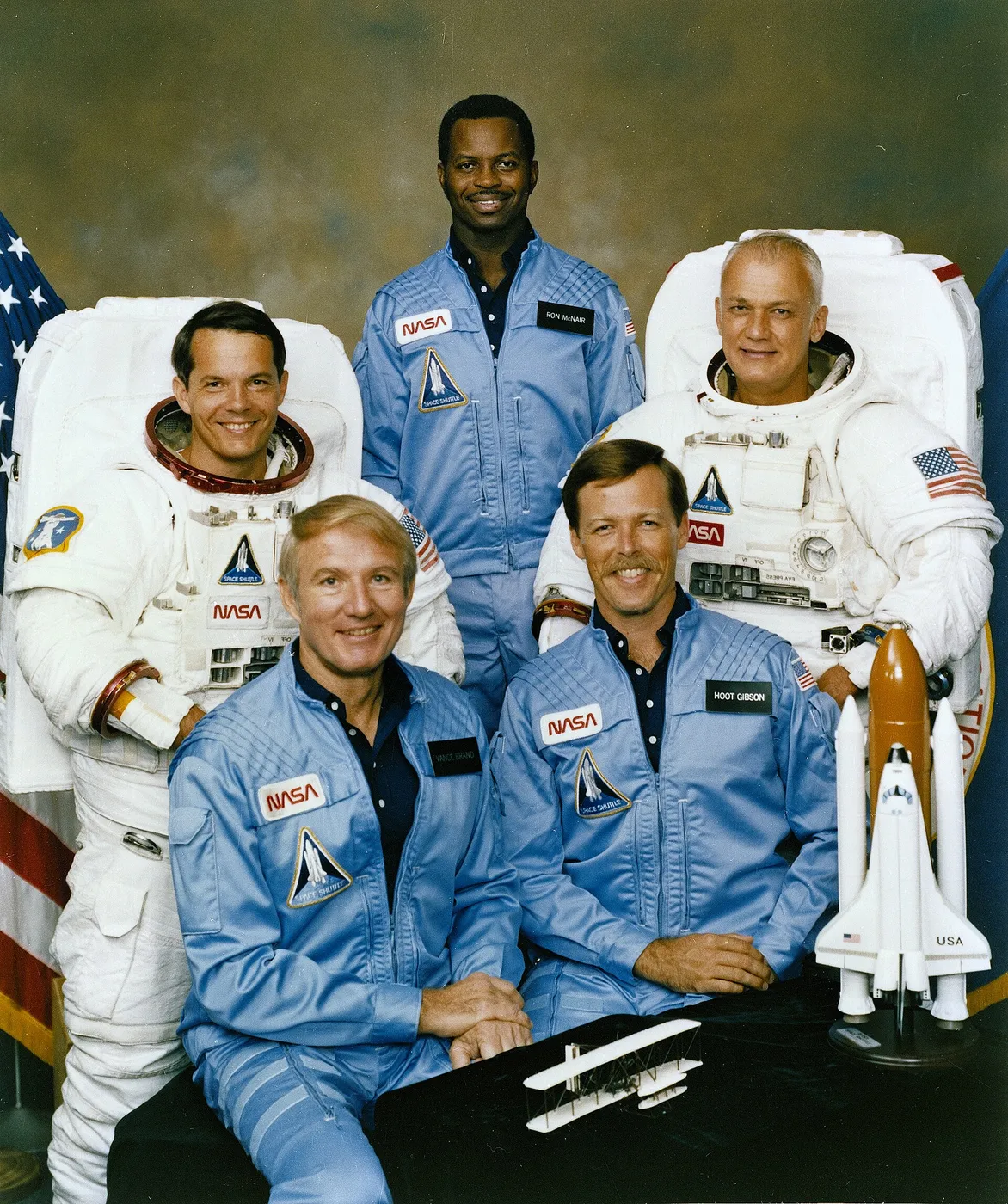
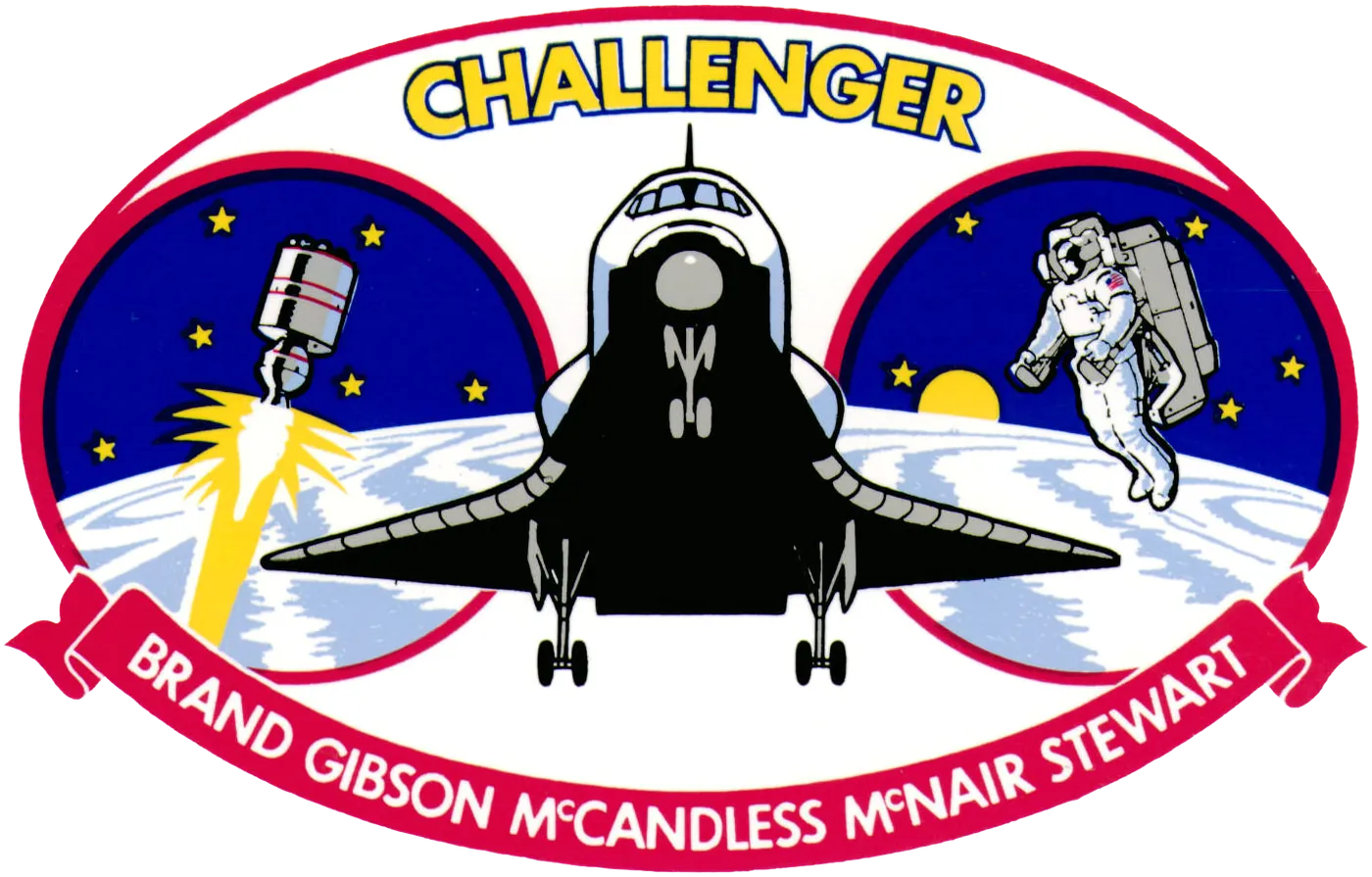

By early 1984 NASA had abandoned its tidy flight numbers for a confusing new code, and STS-41-B carried Challenger and a crew of five into orbit that February. The flight's signature moment belonged to Bruce McCandless, who backed out of the payload bay strapped into a jet-powered backpack and flew away from the orbiter with no tether at all — the first human satellite, drifting more than a hundred metres out over the blue curve of the Earth.
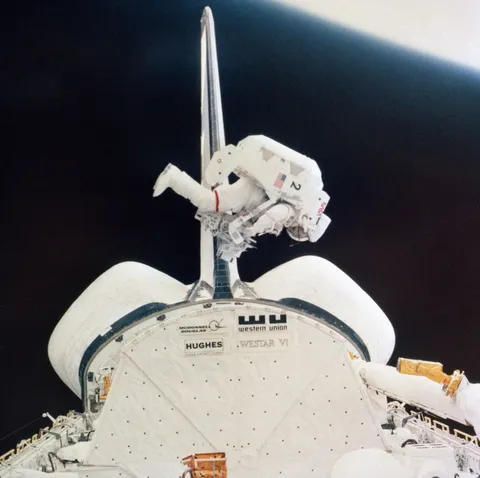
The photograph of that lone white figure against the void became one of the most famous images of the age. The mission's commercial side went badly, with two communications satellites stranded in useless orbits by failed boosters, but Challenger redeemed the flight with the programme's first landing back at the Kennedy launch site in Florida.
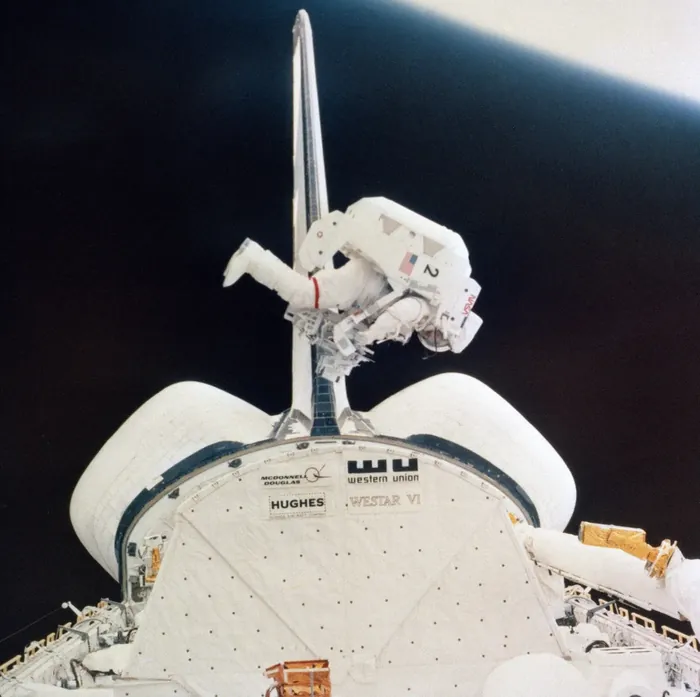
On 7 February 1984 Bruce McCandless stepped out of the payload bay and kept going. Strapped into a nitrogen-jet backpack called the Manned Manoeuvring Unit, he flew about 98 metres from Challenger with nothing attaching him to the ship or the Earth — the first human being to become, briefly, an independent satellite. The photograph taken from the orbiter, a white figure alone against absolute black, is one of the few images from the Shuttle era that everyone recognises.
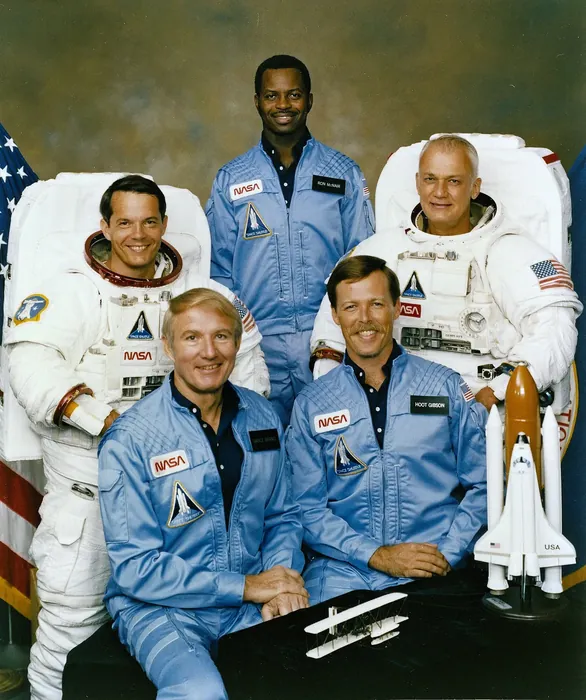
McCandless had waited a very long time for it. He had been the voice on the loop in Houston when Armstrong stepped onto the Moon, and had spent much of the intervening decade helping to design the very backpack he was now flying. His own quip on drifting free — a small step for Neil, a heck of a big leap for me — was delivered with the dryness of a man who had earned it.
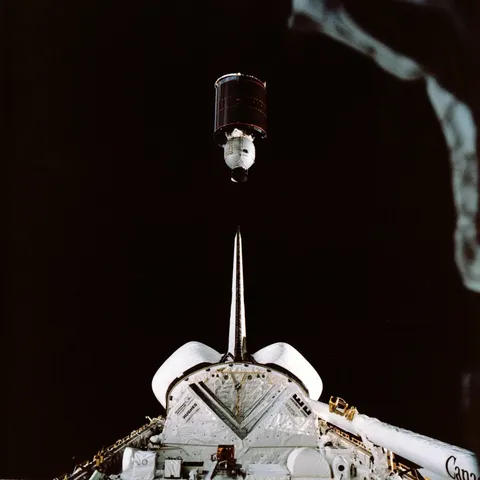
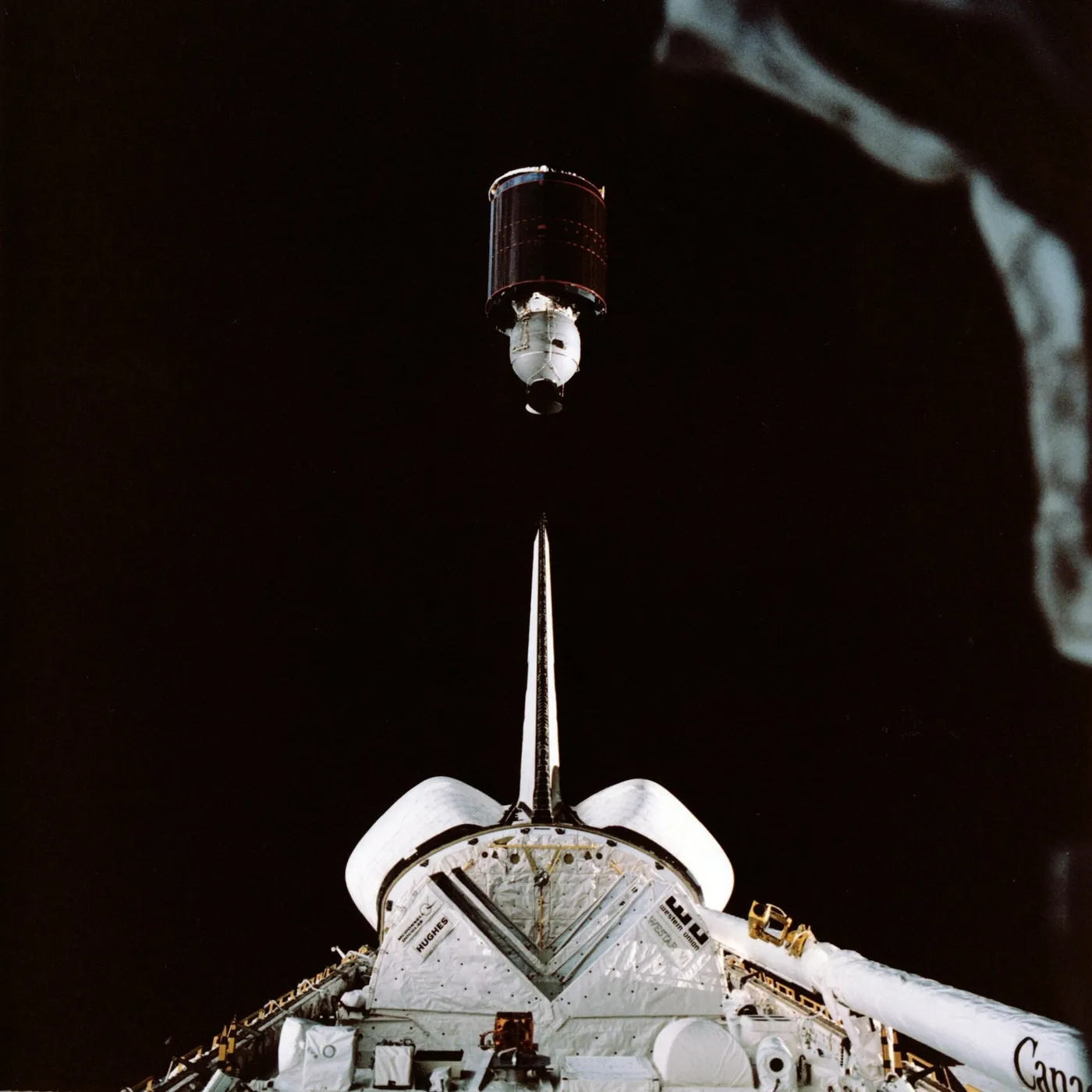
The rest of the mission went badly. Two communications satellites, Westar VI and Indonesia's Palapa B2, were released on schedule and both were stranded in useless orbits when their upper stages misfired. It was an expensive embarrassment that set up one of the programme's great salvage stories nine months later, when a crew went up and brought both of them home.