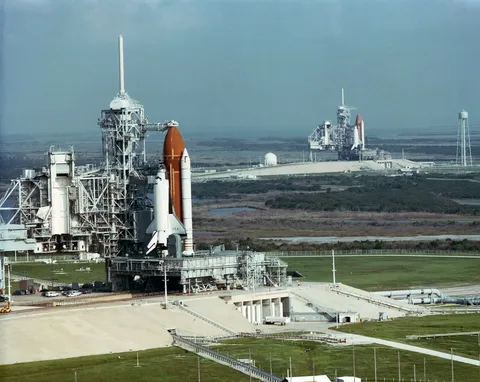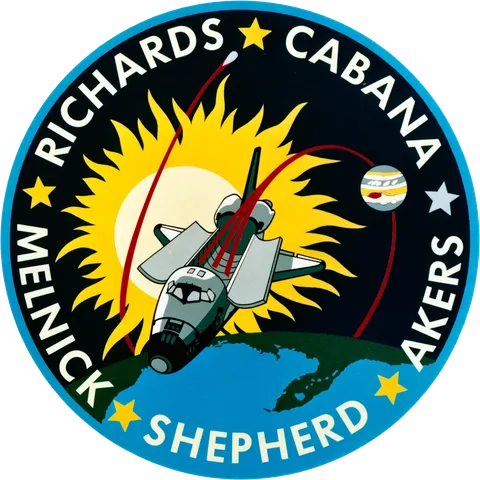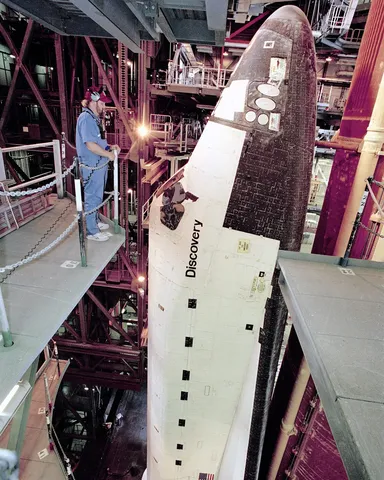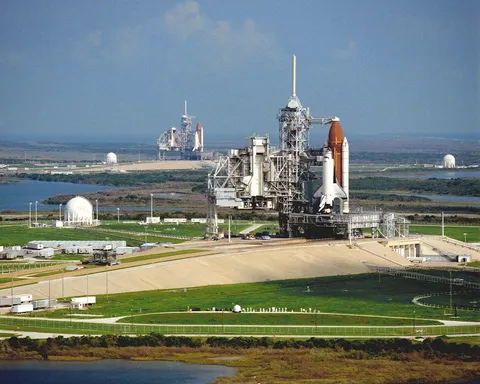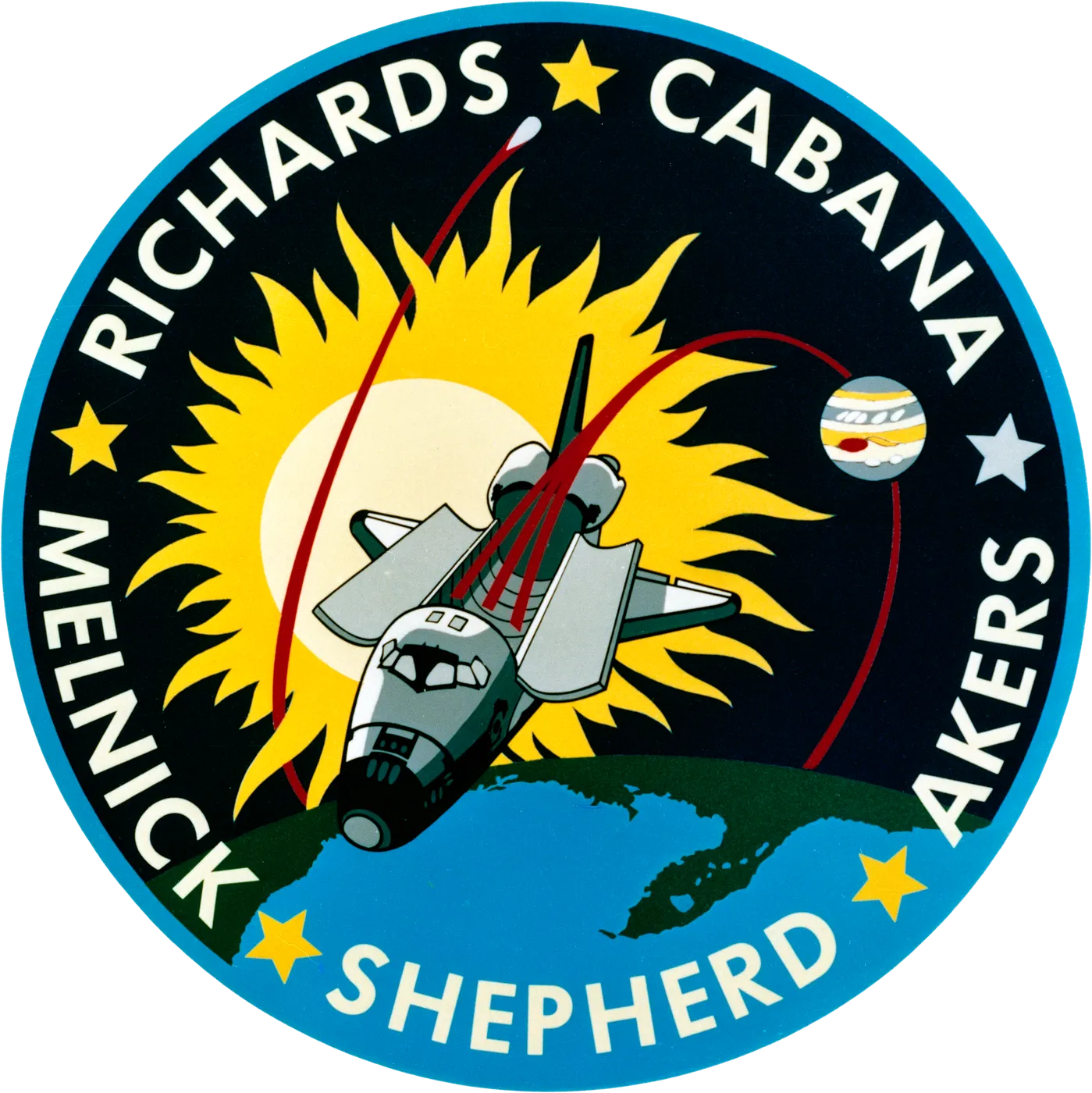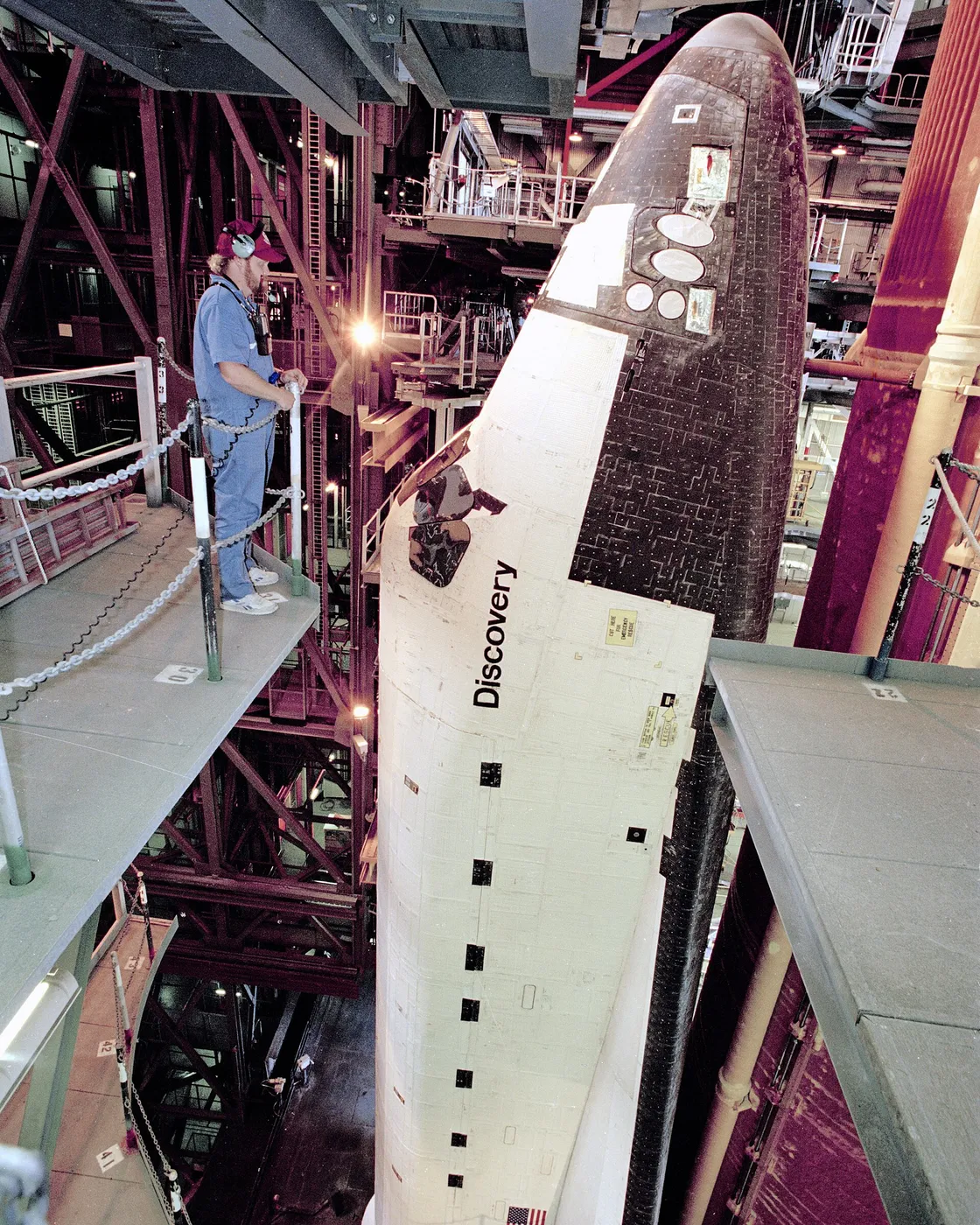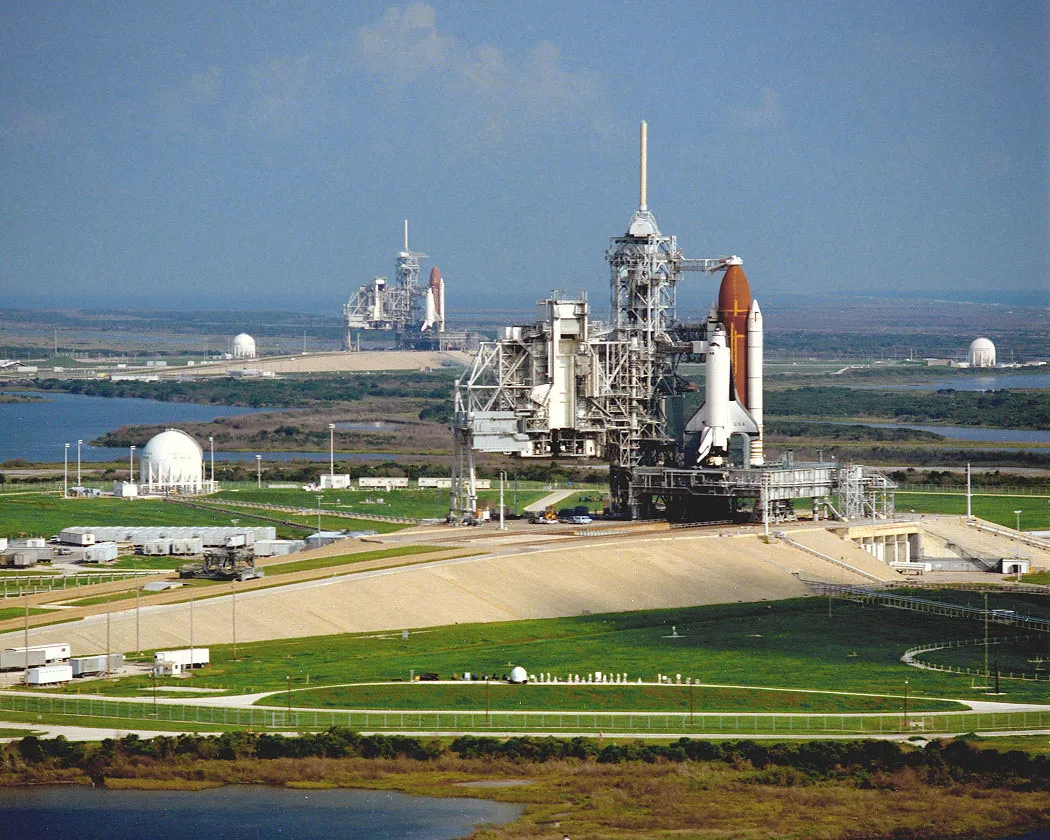
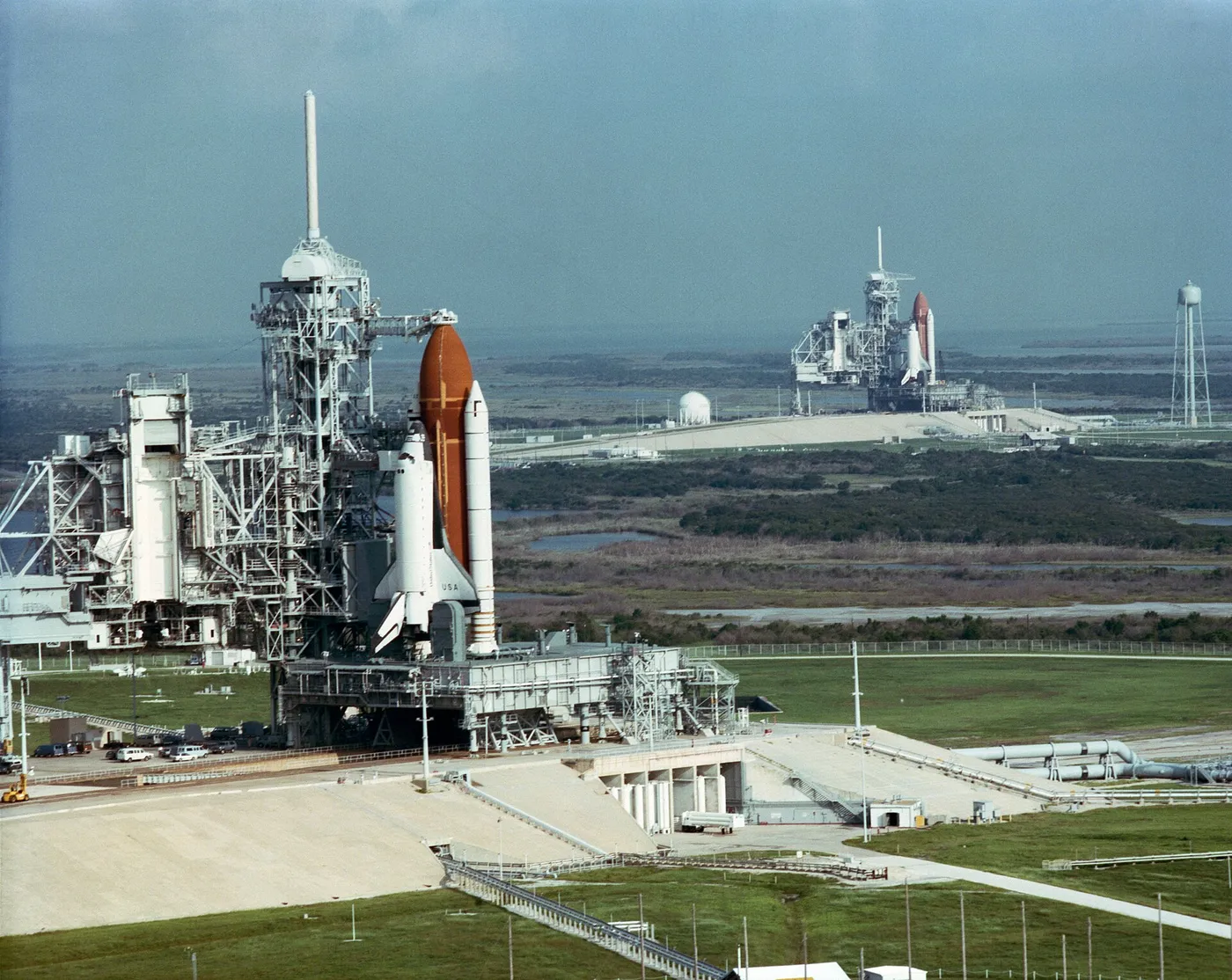
Discovery's October 1990 mission dispatched the Ulysses probe on an audacious errand: to fly over the poles of the Sun, a region no spacecraft had ever surveyed. Reaching such an orbit required first flinging the probe all the way out to Jupiter, using the giant planet's gravity to bend its path up and out of the plane in which the planets orbit.
To get there, the crew of five deployed Ulysses atop a two-stage booster combination that made it the fastest human-made object yet launched, leaving Earth at record speed. The European-built probe went on to circle the Sun's poles for years. The flight was another entry in the Shuttle's brief but brilliant career as a launcher of ambitious interplanetary science.
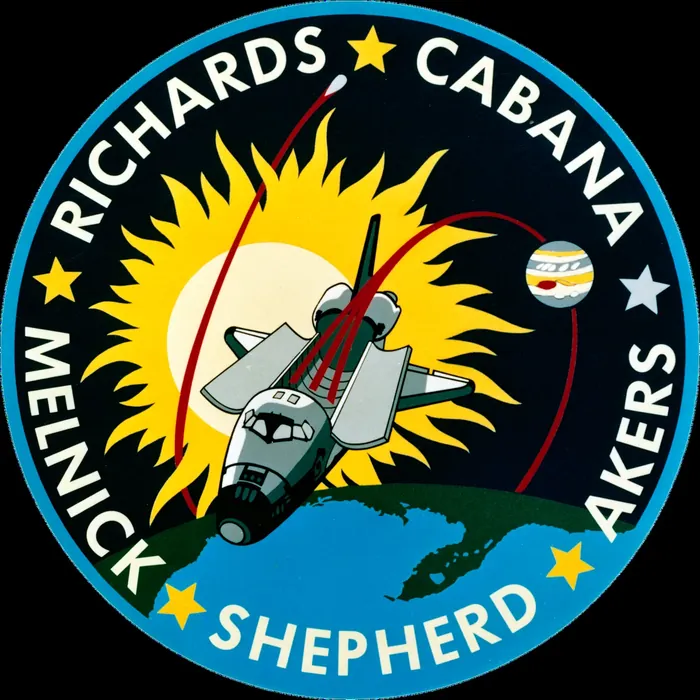
Ulysses was launched to look at the Sun from above, and to do it the probe first had to fly to Jupiter. No rocket in existence could throw a spacecraft out of the plane in which the planets orbit — the energy required is enormous — so the trajectory sent it outward for sixteen months to let Jupiter's gravity fling it steeply south, out of the ecliptic entirely.
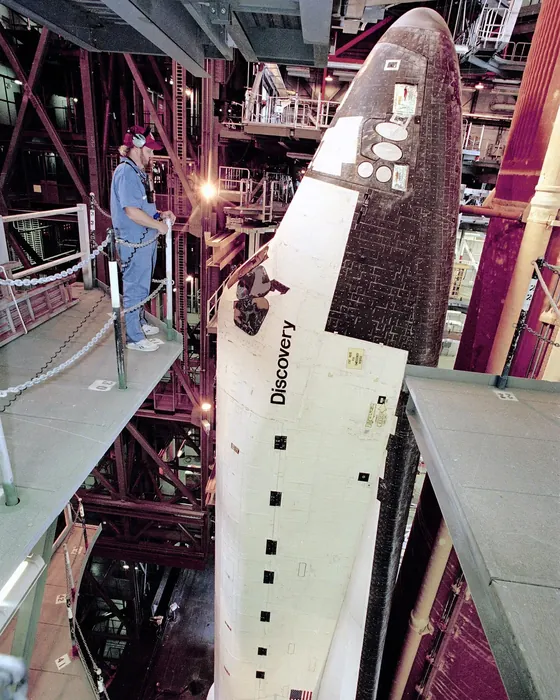
Discovery's crew released it in October 1990 on the most energetic departure the Shuttle ever staged, a two-stage combination that made Ulysses the fastest human-made object ever launched to that point. The spacecraft was a joint European and American project, built in Europe and tracked from California, and it had already survived years of budget threats and the post-Challenger backlog.
It repaid the effort for eighteen years. Passing over both solar poles three times, Ulysses found the solar wind behaving quite differently at high latitudes than at the equator, mapped the Sun's magnetic field in three dimensions for the first time, and happened to fly through the tails of three comets. It was finally switched off in 2009, when its fuel grew too cold to keep the transmitter warm.