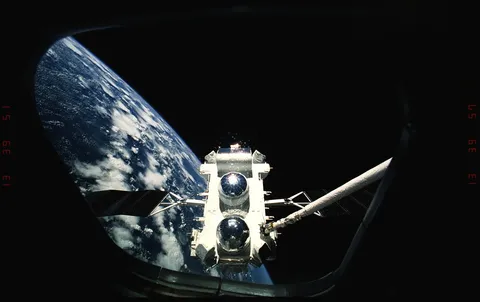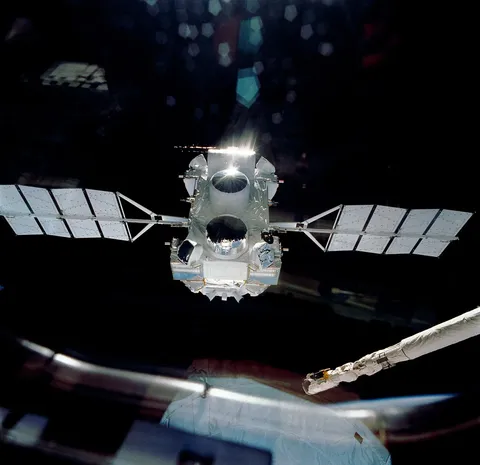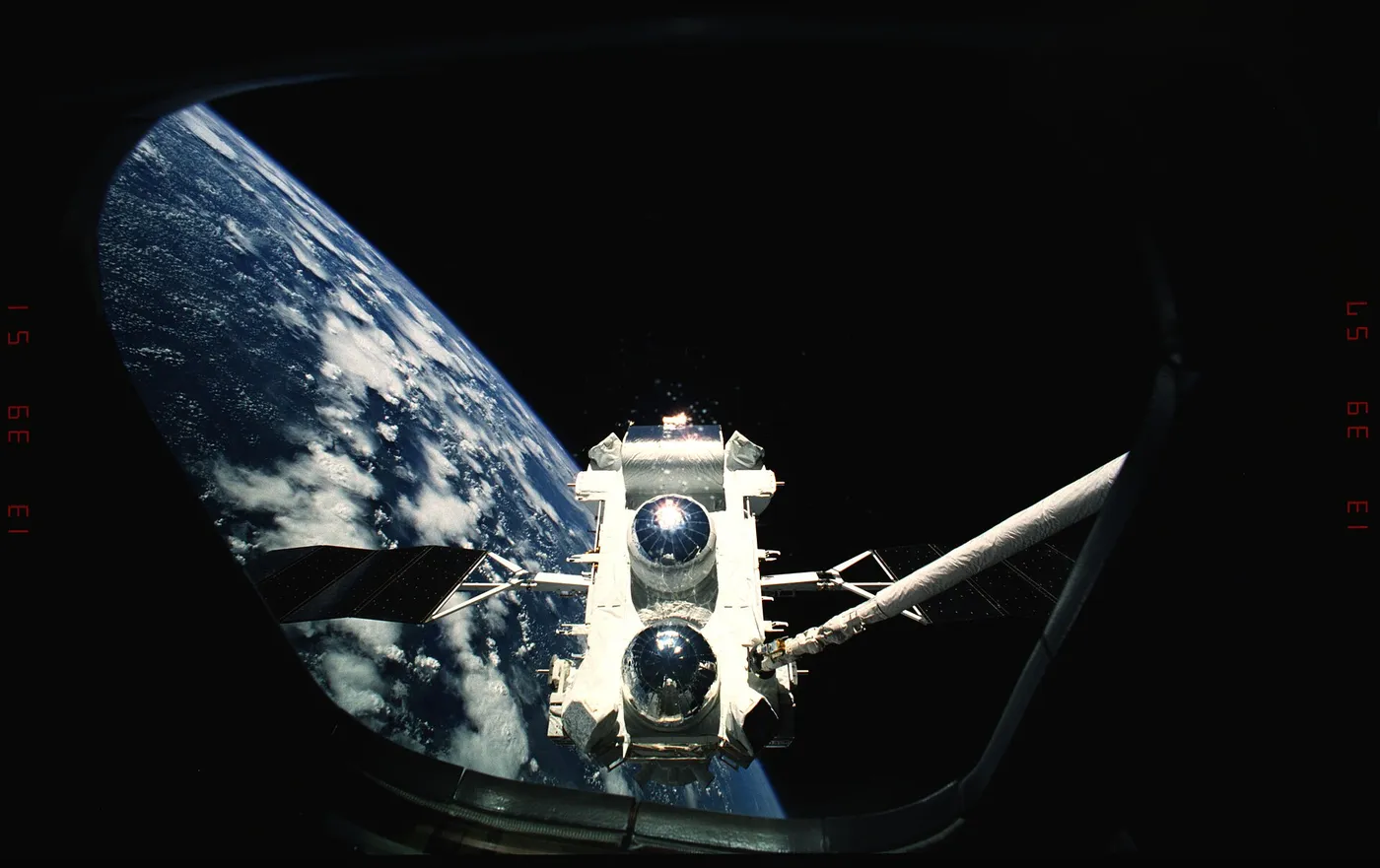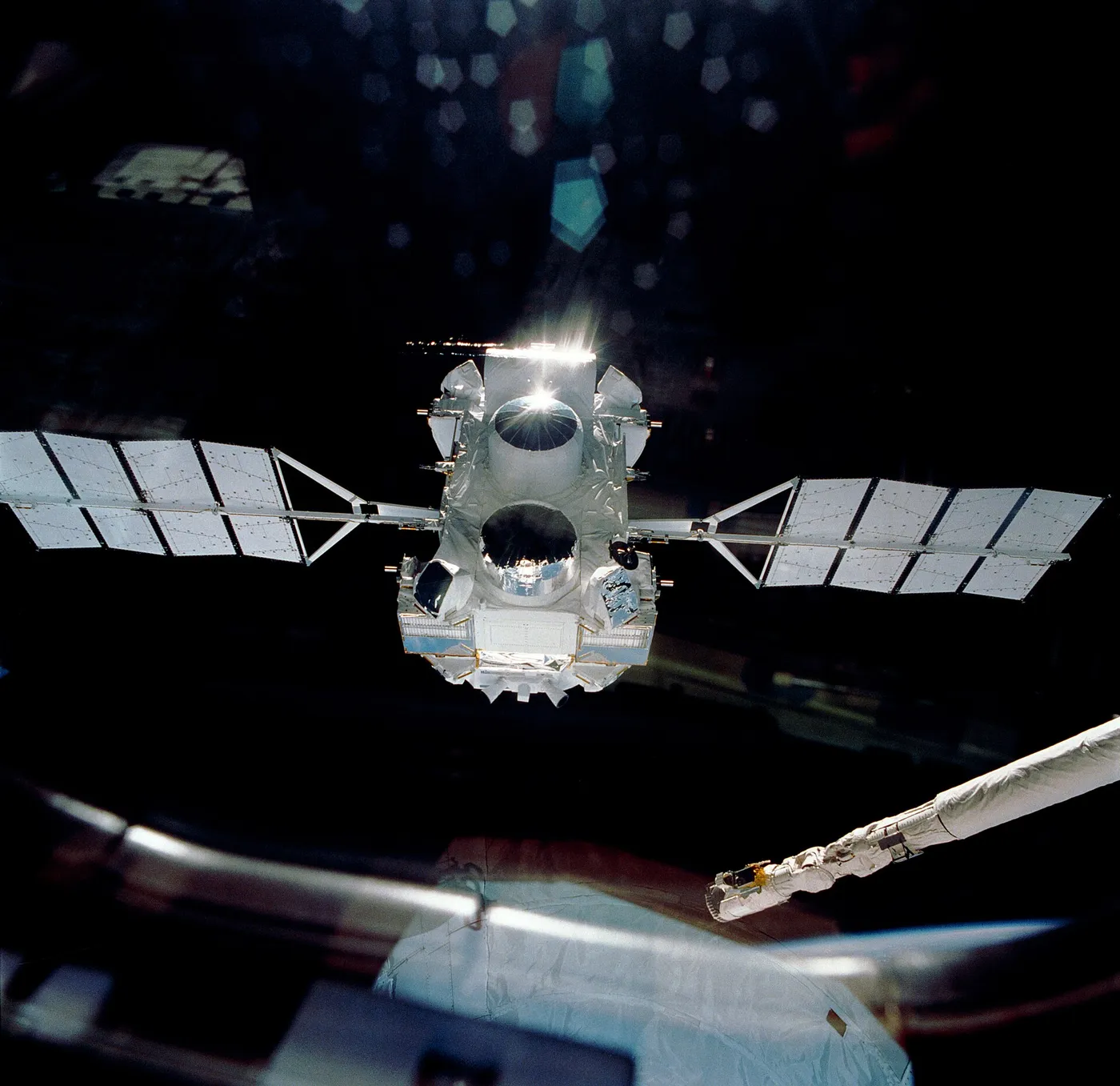
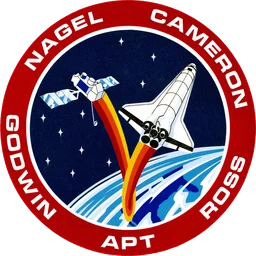
Atlantis launched the Compton Gamma Ray Observatory in April 1991, the second of NASA's Great Observatories and, at seventeen tonnes, one of the heaviest payloads the Shuttle ever carried. The mission nearly faltered at the crucial moment when the observatory's high-gain antenna refused to deploy, threatening its ability to return data.
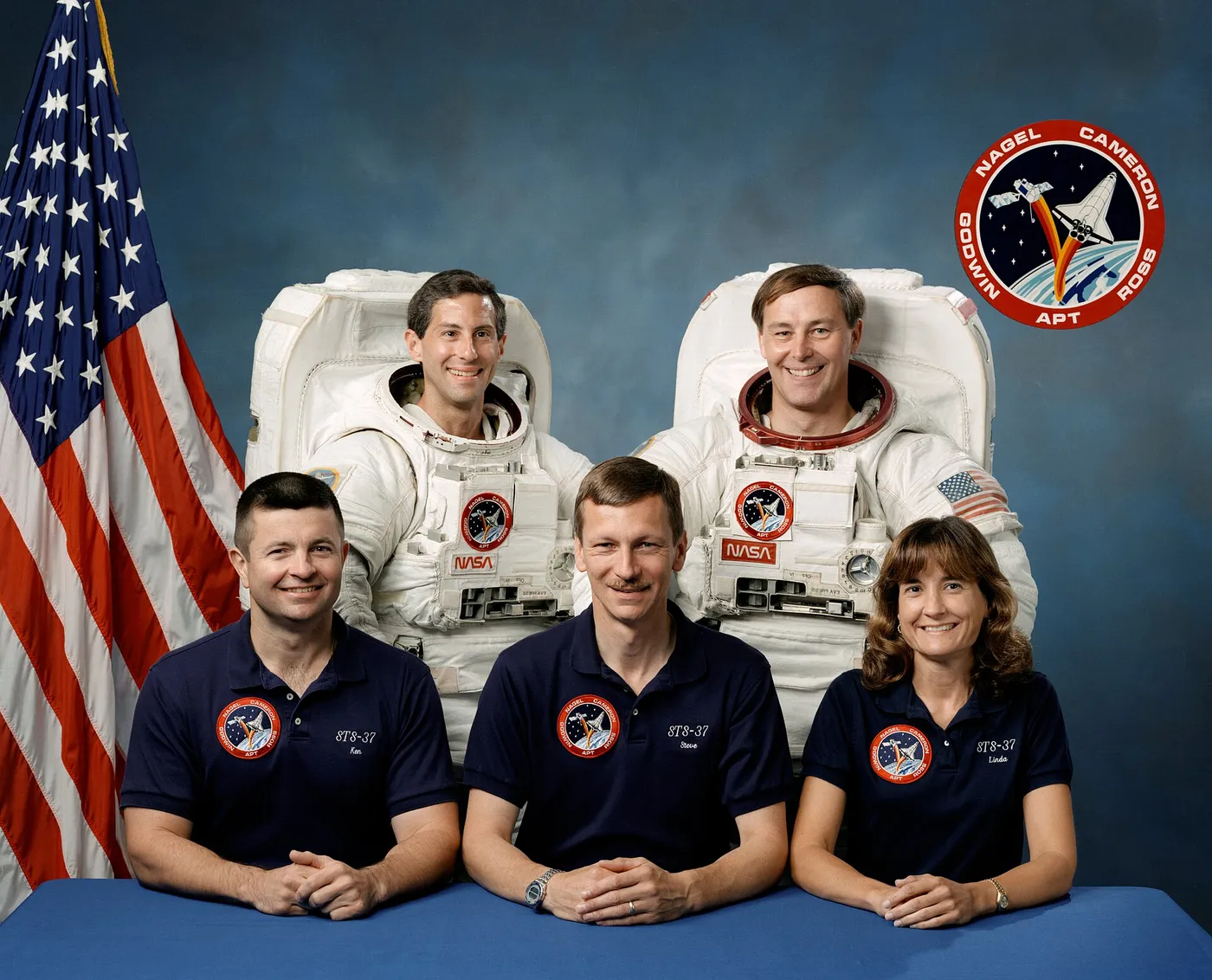
Spacewalker Jerry Ross climbed out and freed the stuck antenna by hand, an unplanned excursion that salvaged the mission. He and Jay Apt then carried out a scheduled spacewalk testing equipment for future station assembly, including a small rail cart for moving crew along a structure. Compton went on to survey the gamma-ray sky for nine years, and the flight showed once again how a crew on the spot could rescue a mission from failure.
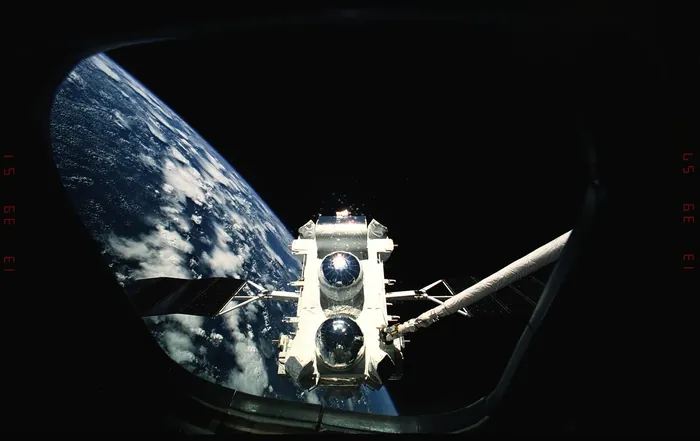
The Compton Gamma Ray Observatory was seventeen tonnes of instrument, the heaviest science payload the Shuttle had yet carried and the second of NASA's Great Observatories. Deploying it in April 1991 should have been straightforward, and it was not: the high-gain antenna, the dish through which all the science data would flow, jammed part-way and refused every command.
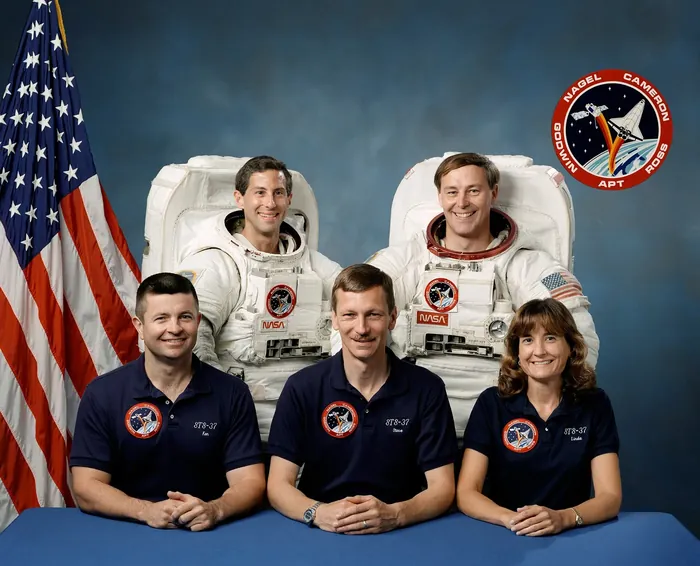
Jerry Ross and Jay Apt went outside to fix it — the first unplanned contingency spacewalk in six years. Ross worked his way to the stuck boom and freed it by hand, shaking it until the mechanism released, and an observatory that would otherwise have been nearly useless went to work for nine years, mapping gamma-ray bursts and proving they came from across the universe rather than from our own galaxy.
The second, planned spacewalk produced a quieter scare. Testing a hand-powered cart for moving equipment along a rail — a rehearsal for space station assembly — Apt felt nothing unusual, but back inside the crew found a small hole punched through the palm of his glove by a protruding metal pin. It had pierced the pressure layer and his skin; his flesh had sealed the leak without him noticing. Glove design and inspection procedures changed as a result.