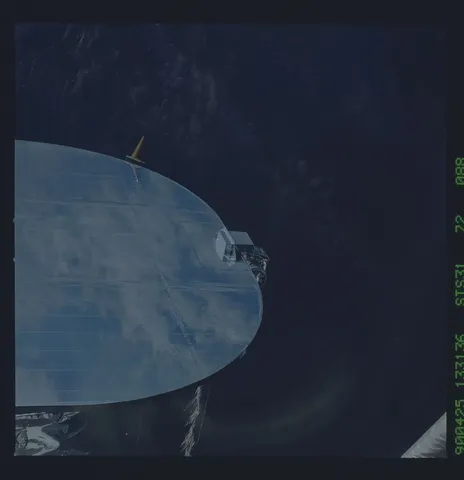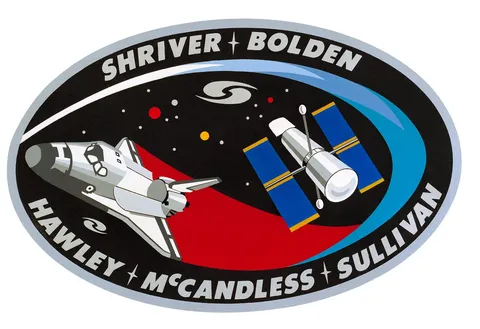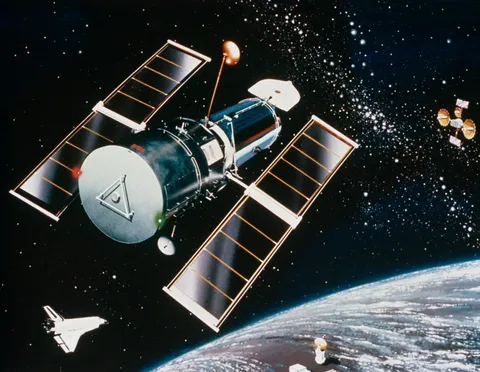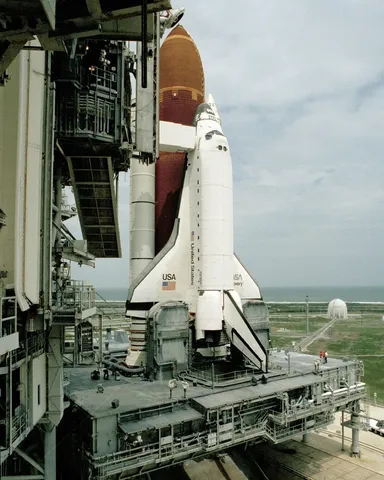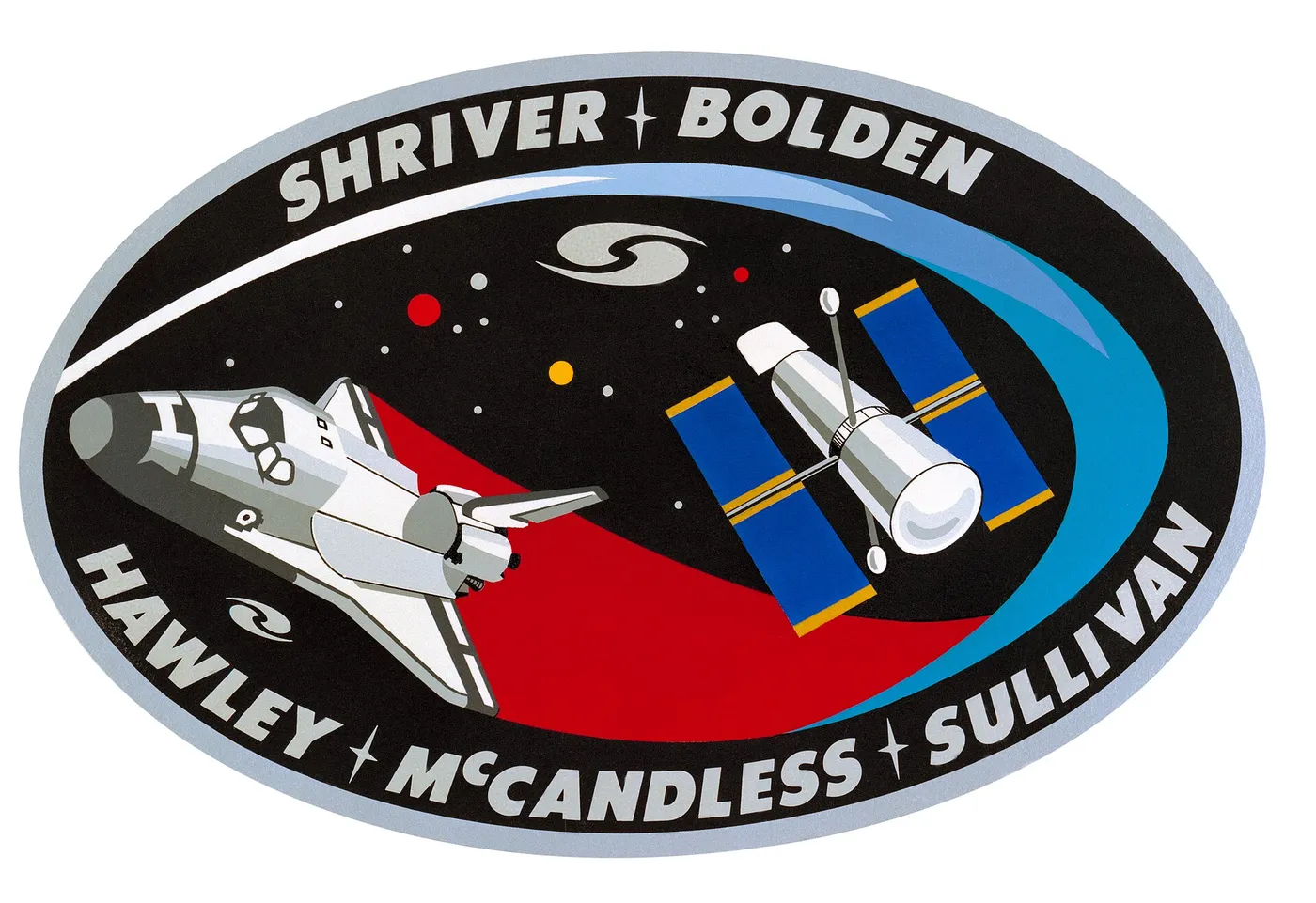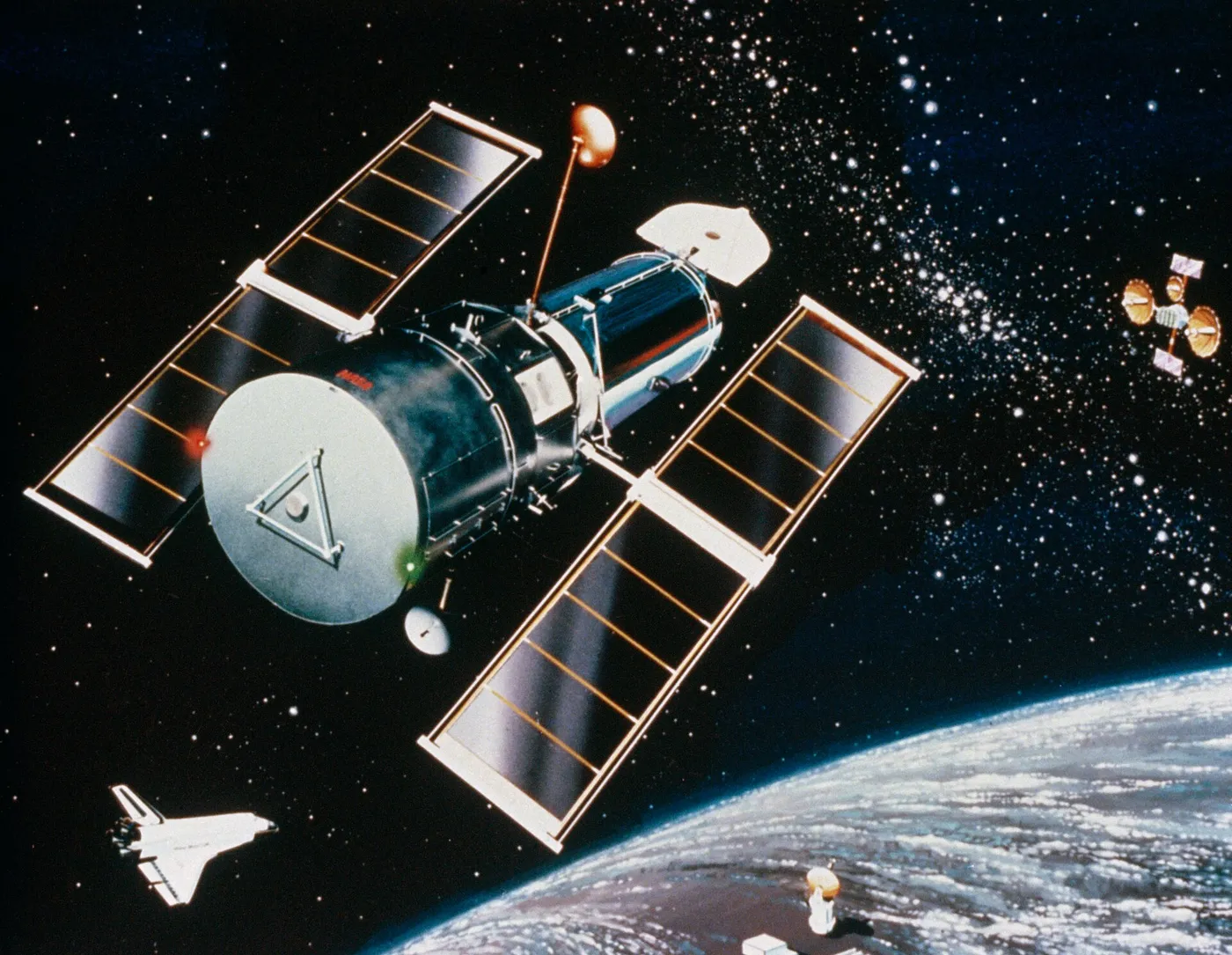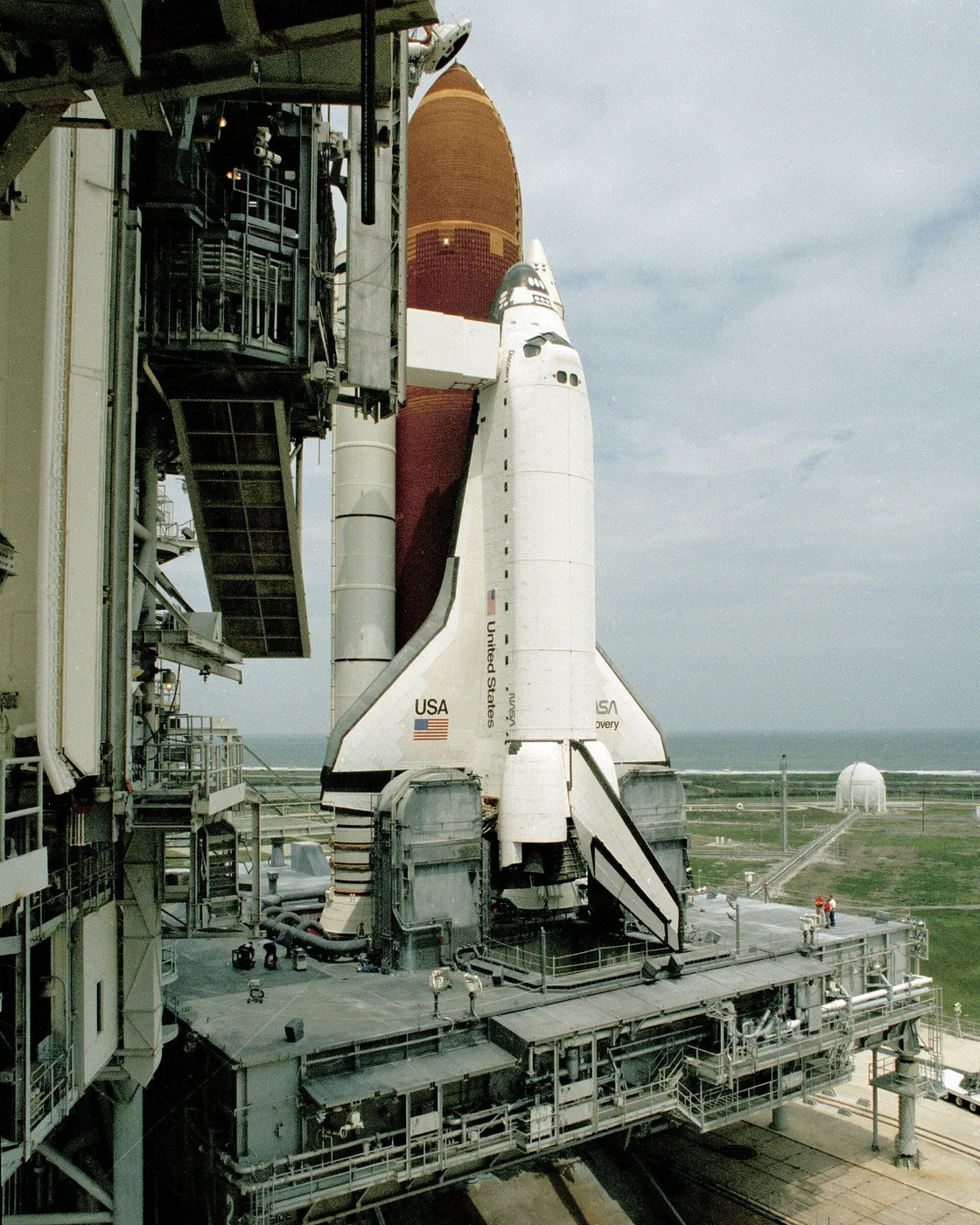
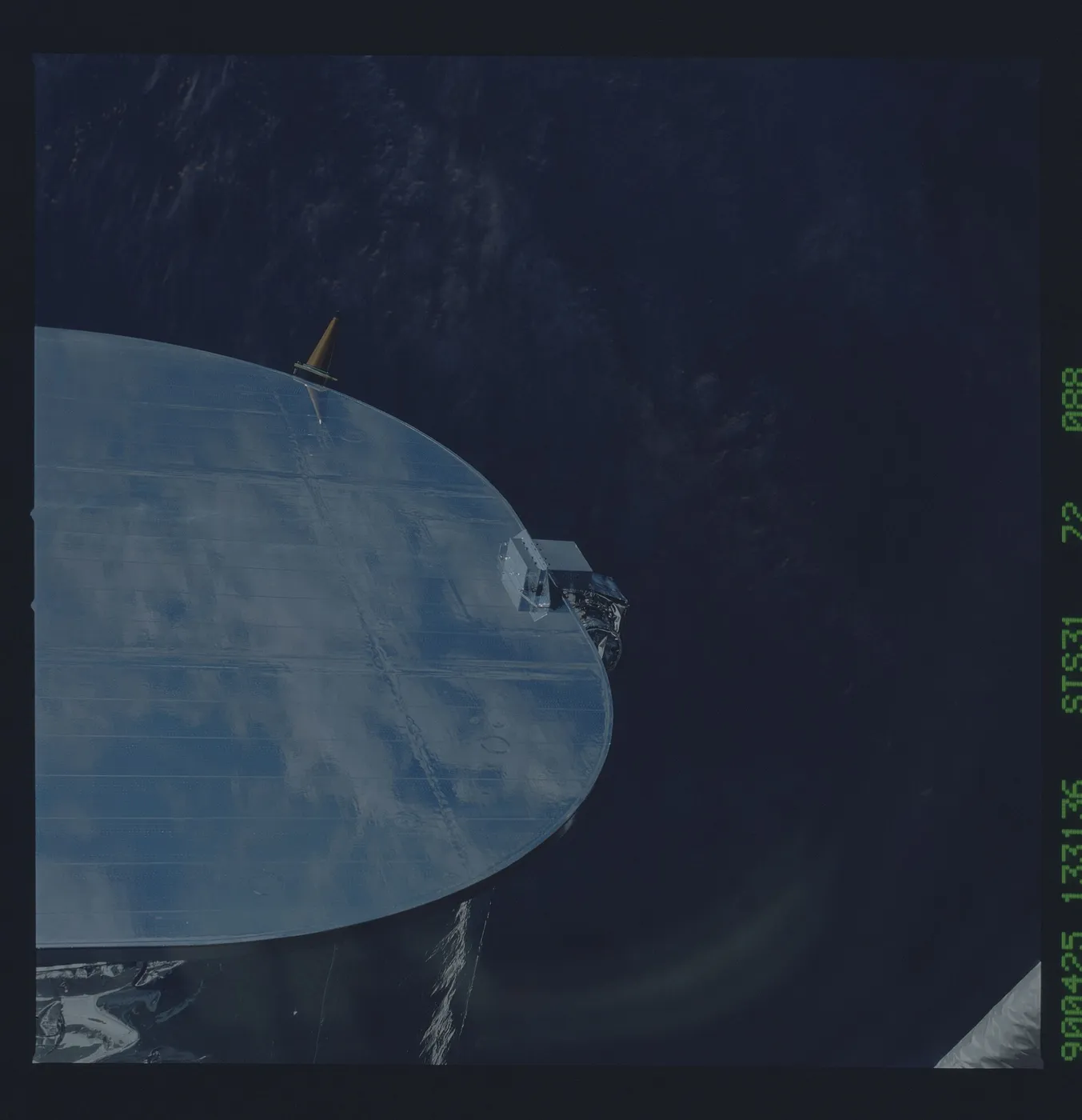
On 24 April 1990 Discovery carried the Hubble Space Telescope to orbit, launching an instrument that would remake humanity's picture of the cosmos. To give Hubble the clearest possible view, the crew of five flew higher than any Shuttle mission before, and from that lofty perch they lifted the school-bus-sized telescope out of the bay on the robotic arm and released it into the void.
A tense moment came when one of Hubble's solar arrays stuck while unfurling, with spacewalkers standing by to intervene before it finally deployed. The telescope's flawed mirror would soon disappoint astronomers, but that same flaw set up one of the programme's proudest chapters: the servicing missions that turned Hubble into a triumph. STS-31 opened a partnership between telescope and Shuttle that would last two decades.
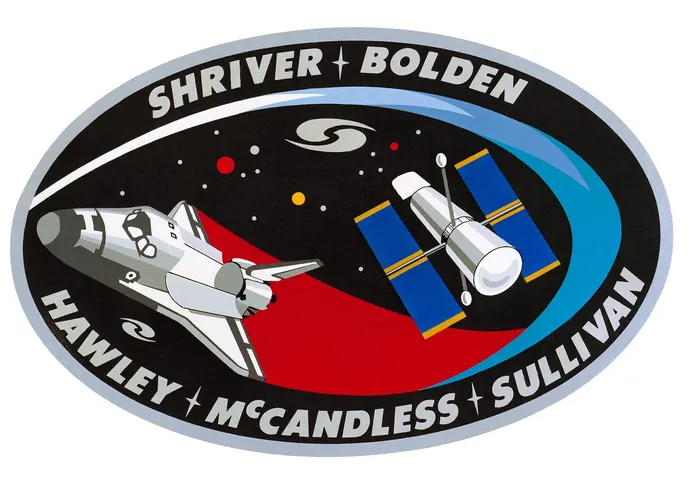
Discovery flew higher than any Shuttle had before to release the telescope — around 615 kilometres, chosen to keep Hubble above the worst of the atmospheric drag and give it a long life. It was near the orbiter's limit, and the crew trained for the possibility of an emergency return from an altitude where the usual abort options thinned out.
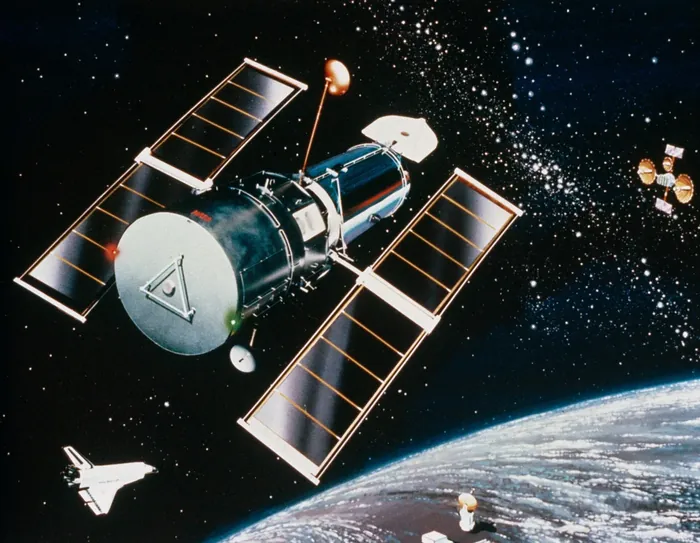
Bruce McCandless and Kathryn Sullivan spent much of the deployment day sealed in the airlock in their suits, ready to go outside and crank the solar array open by hand if the automatic deployment failed. It nearly came to that; the array stalled twice as its tensioning system reported excess load, and only a software override commanded from the ground persuaded it to continue. The spacewalk was called off with the crew already depressurised.
Weeks later came the discovery that the primary mirror was the wrong shape — ground too flat at its edge by about a fiftieth of the width of a human hair, because a test instrument at the manufacturer had itself been assembled incorrectly and nobody had cross-checked it against a second measurement. The images came back blurred, the programme was publicly humiliated, and the repair three years later became one of the Shuttle's finest hours.