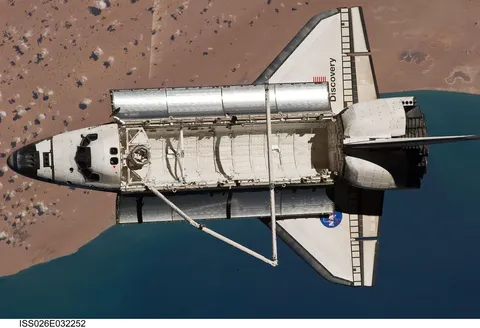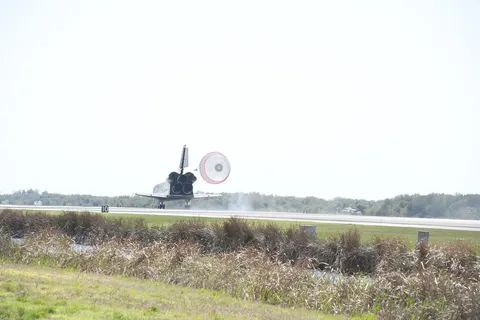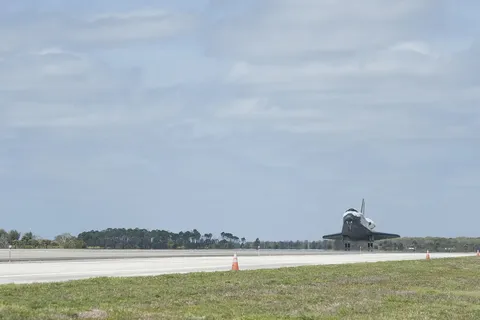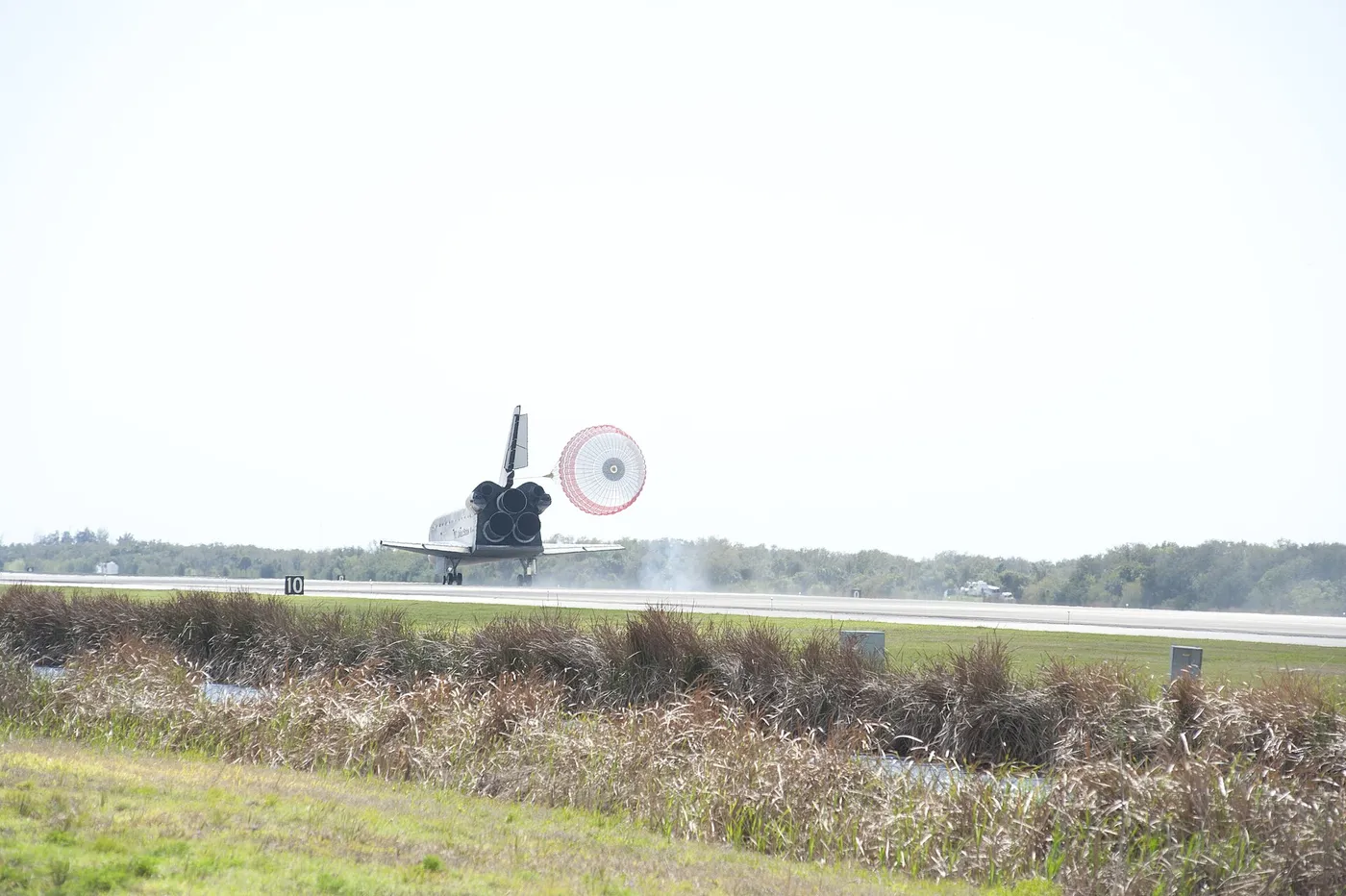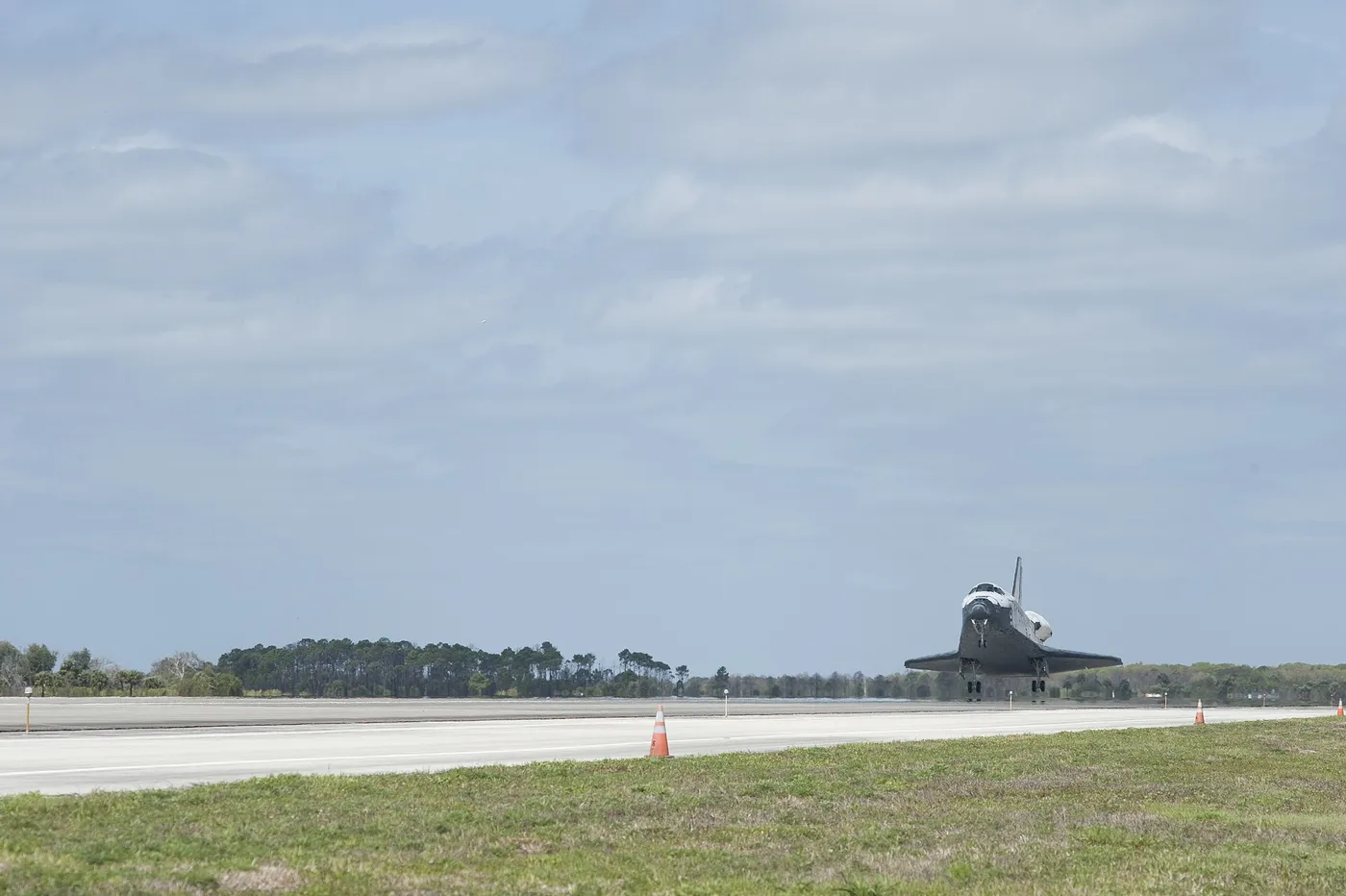
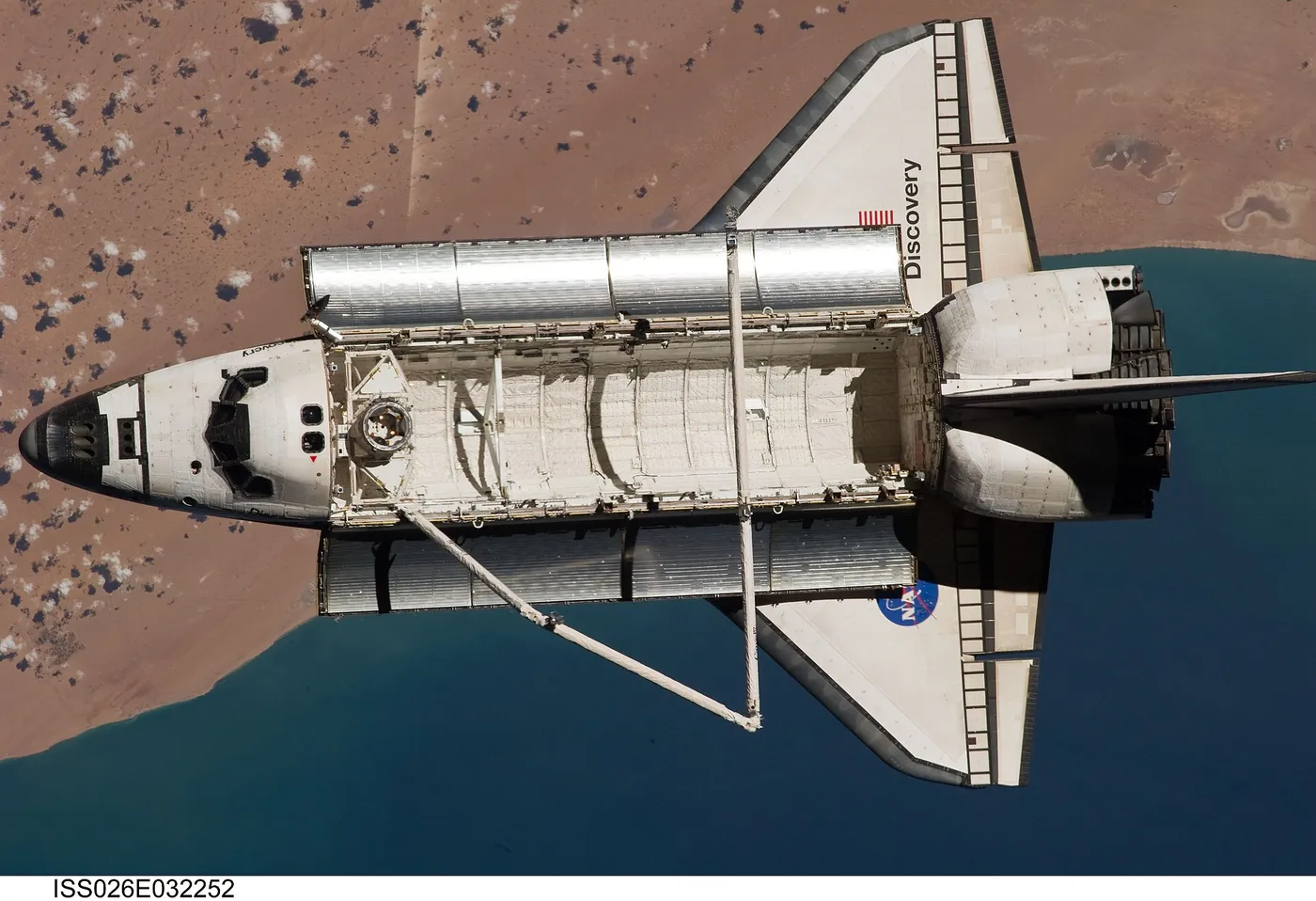
Discovery flew its final mission in February 2011, delivering a permanent storage module and the first humanoid robot to the International Space Station. The crew of six installed a converted Italian cargo module as a permanent closet for the outpost and carried up Robonaut 2, an experimental robot torso meant to test whether machines could one day help with routine tasks in orbit.
Two spacewalks handled maintenance and installed hardware on the station. The flight retired Discovery, the fleet's most-flown orbiter, after nearly twenty-seven years and thirty-nine missions — more spaceflights than any other spacecraft in history. As the program drew to a close, the veteran orbiter's last voyage combined practical resupply with a glimpse of a robotic future, before heading to a museum to be preserved.
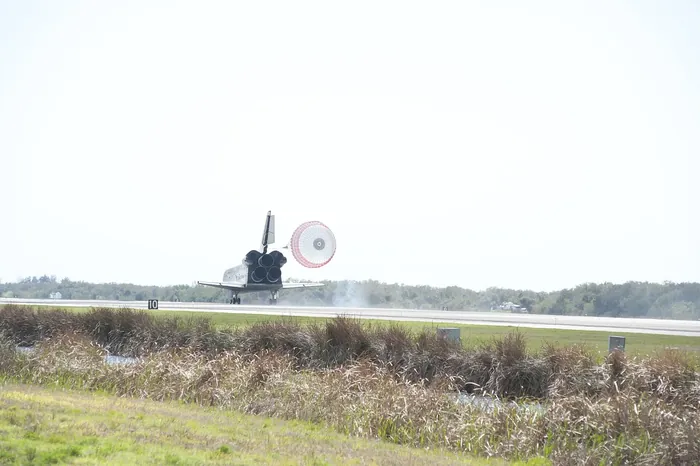
Discovery's last flight had been delayed since the previous autumn by cracks found in the external tank's structural supports — small fractures in the aluminium-lithium stringers that took months to understand and repair. When it finally launched in February 2011, it was the most-flown spacecraft in history taking its thirty-ninth and final trip.
The cargo included a permanent storage module — the Leonardo logistics carrier, modified to be left attached to the station rather than returned — and, in a container inside it, Robonaut 2: a humanoid torso with two dexterous arms, the first humanoid robot flown into space, intended to test whether a machine built to human proportions could use tools and interfaces designed for people.
Discovery had carried the Hubble Space Telescope, flown the return to flight after both accidents, made the first Mir rendezvous and delivered John Glenn back to orbit at 77. It logged 365 days in space across twenty-seven years — a full year aloft, accumulated a fortnight at a time — and is now on display outside Washington with its scorch marks left deliberately unwashed.