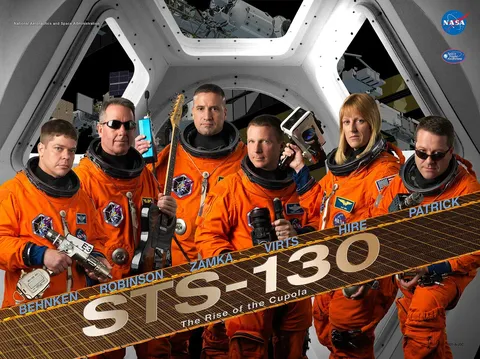
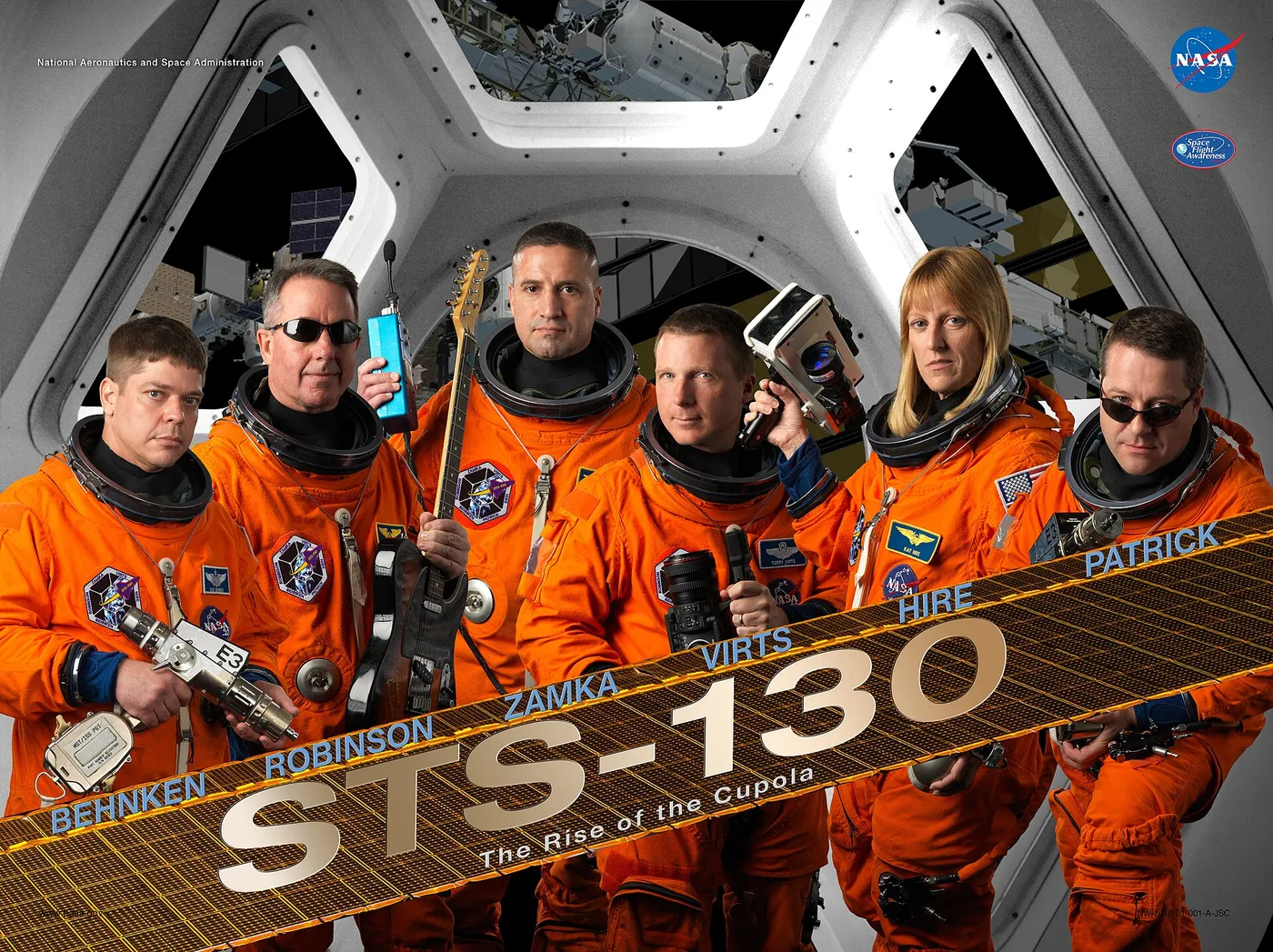

Endeavour delivered the Tranquility node and the Cupola to the International Space Station in February 2010, adding both vital life-support space and the outpost's most beloved feature. The crew of six installed the connecting module, which housed the station's advanced air- and water-recycling systems, and attached the Cupola, a dome of seven windows offering panoramic views of Earth.
Three spacewalks connected the new module and prepared it for use. When the crew first opened the Cupola's shutters, the sweeping view of the planet below was breathtaking, and the robotic workstation inside became a favourite spot for operating the station's arm and for the Earth photography that crews would share with the world. The additions rounded out the station's habitability in its final assembly phase.
The station got a window on this flight — not a porthole but a cupola, a dome of seven panes offering a 360-degree view, built in Italy and installed on the Tranquility node that Endeavour delivered in February 2010. It was the last major American pressurised element to be added.
Tranquility itself was the utility room: it houses the water recycling equipment, the oxygen generator, the toilet and the exercise machines, consolidating the life-support hardware that had accumulated across the station. The cupola was bolted to its Earth-facing port, and crews use it to operate the robotic arm with a direct view of what they are doing.
What it became, though, was the place where astronauts go to look. Almost every widely-shared photograph of the Earth taken from the station in the past fifteen years was made through those windows, and more than one resident has described the cupola as the single feature that makes six months aboard bearable. Endeavour's launch was the last night launch of the programme.