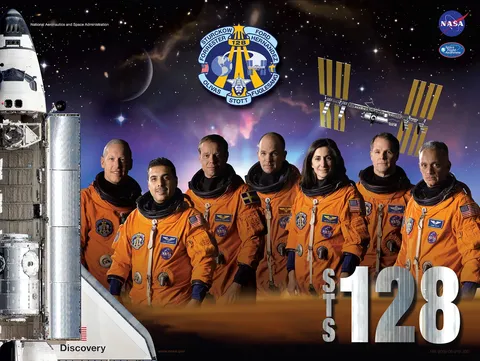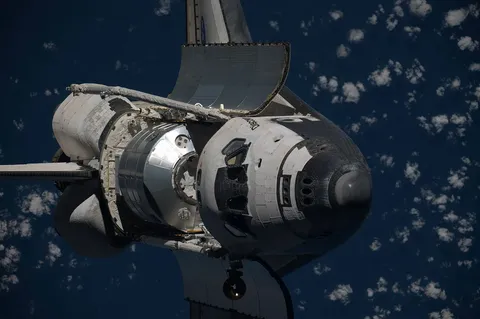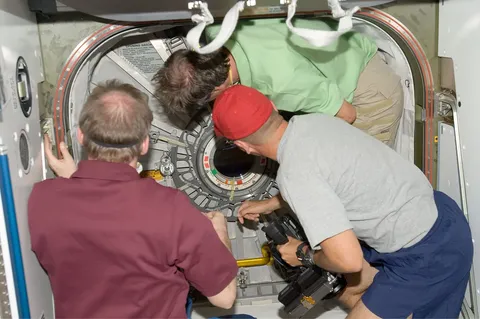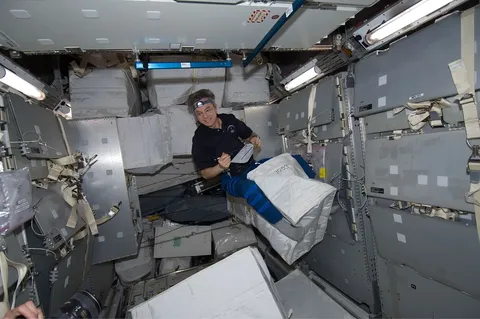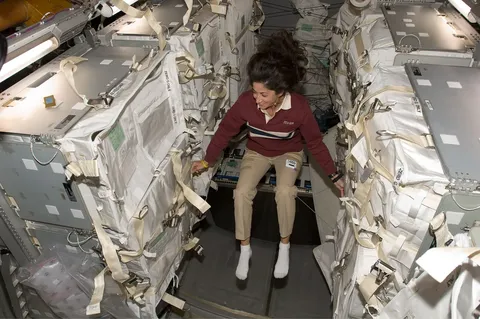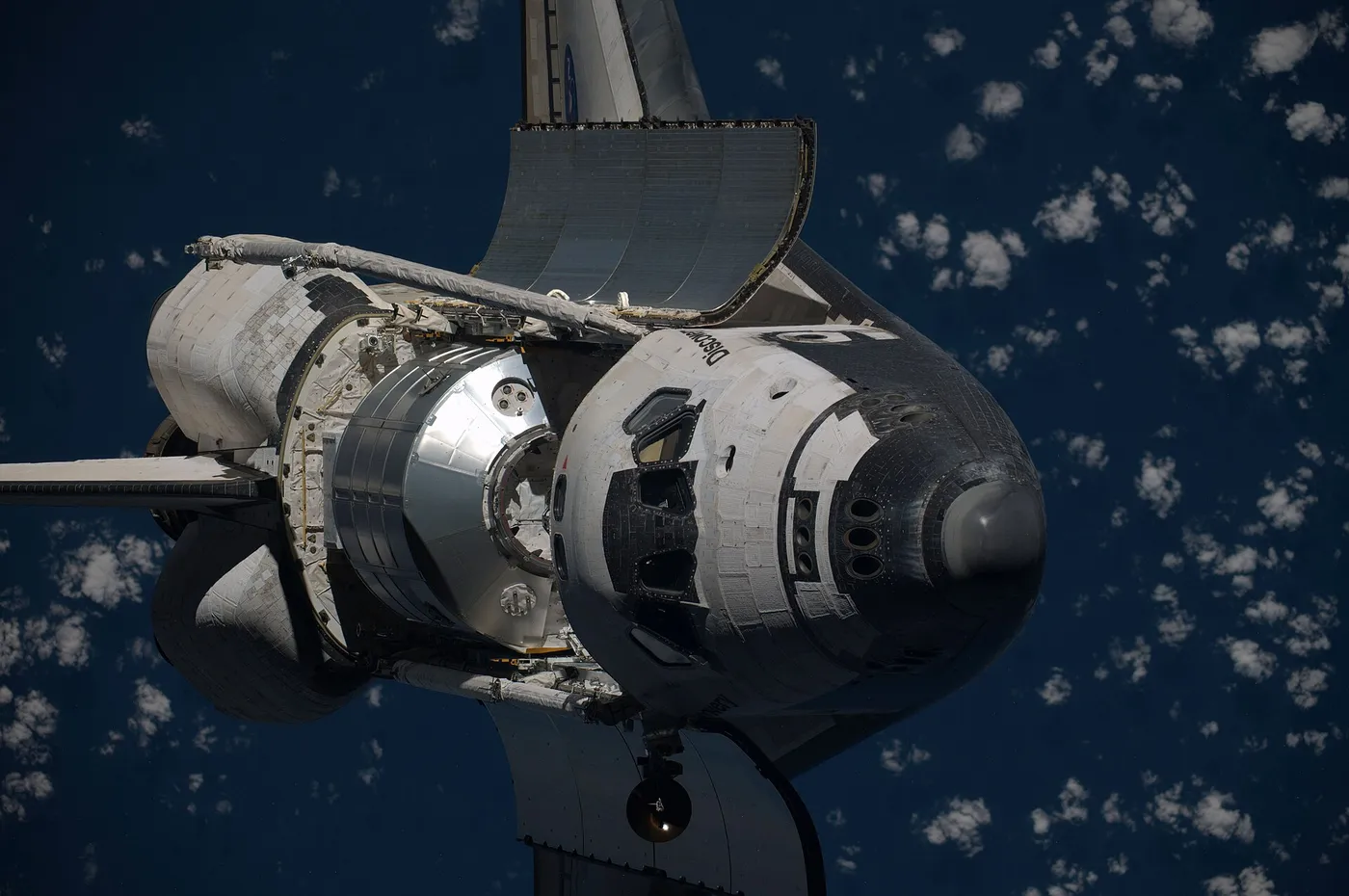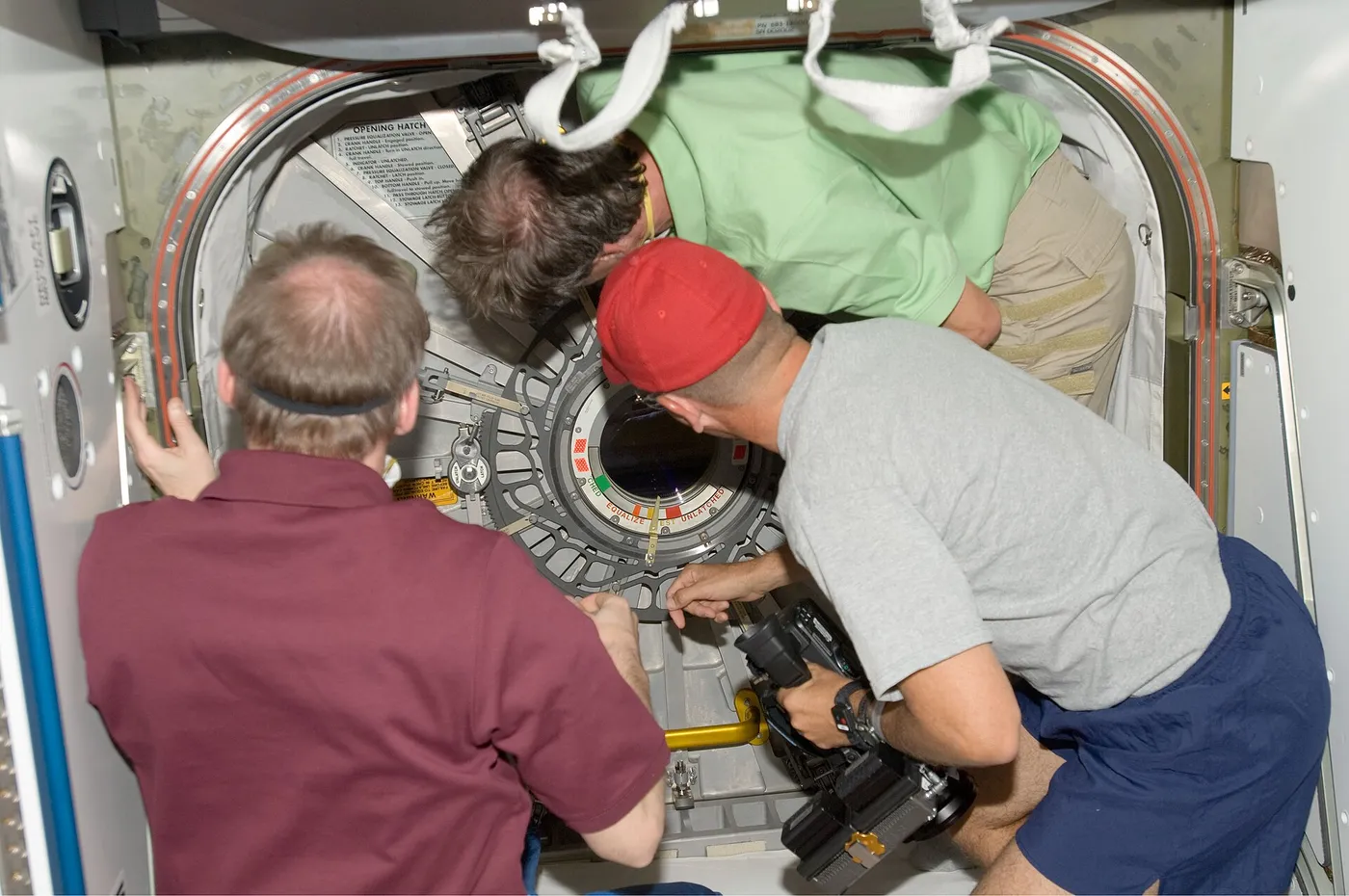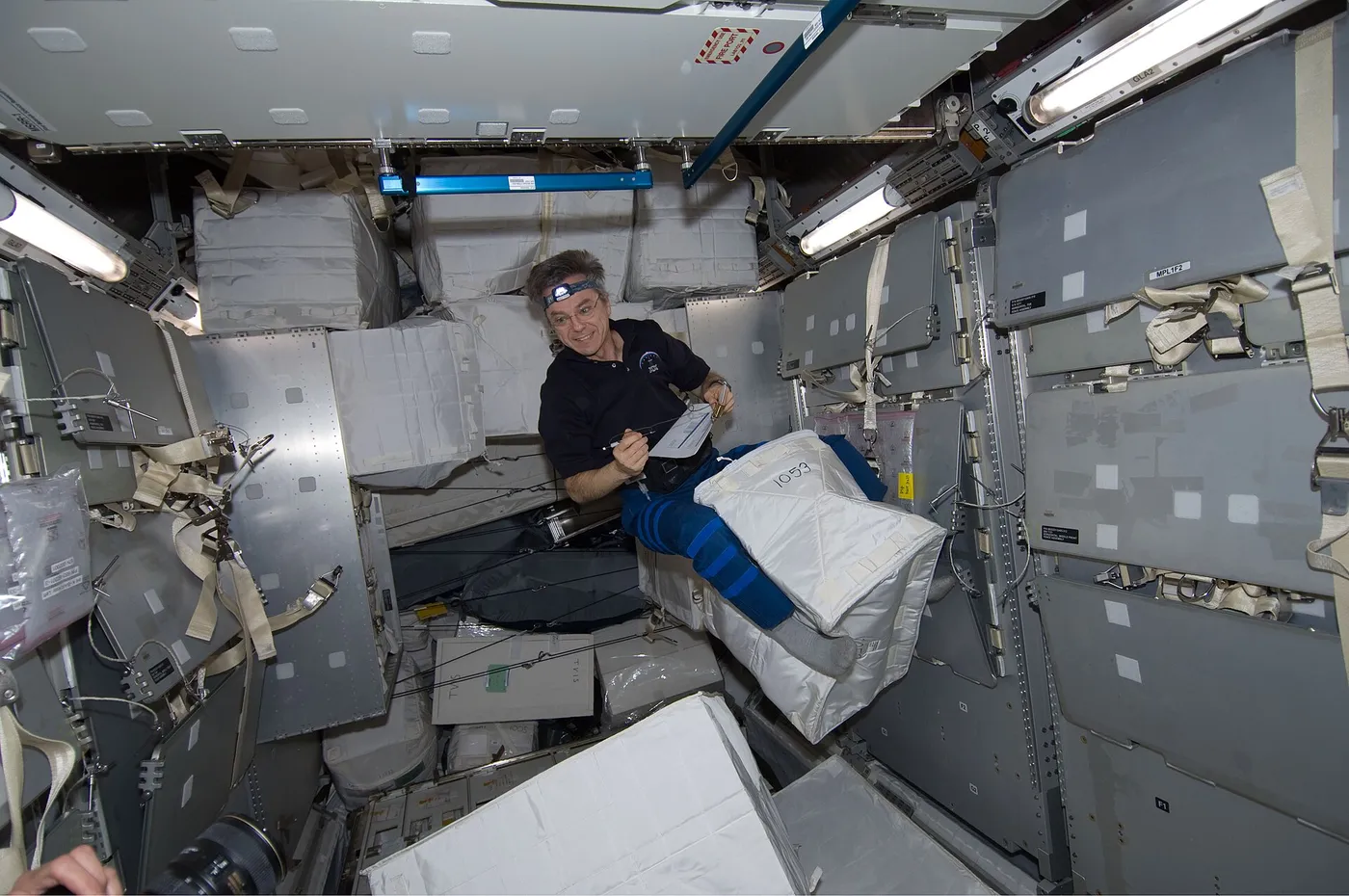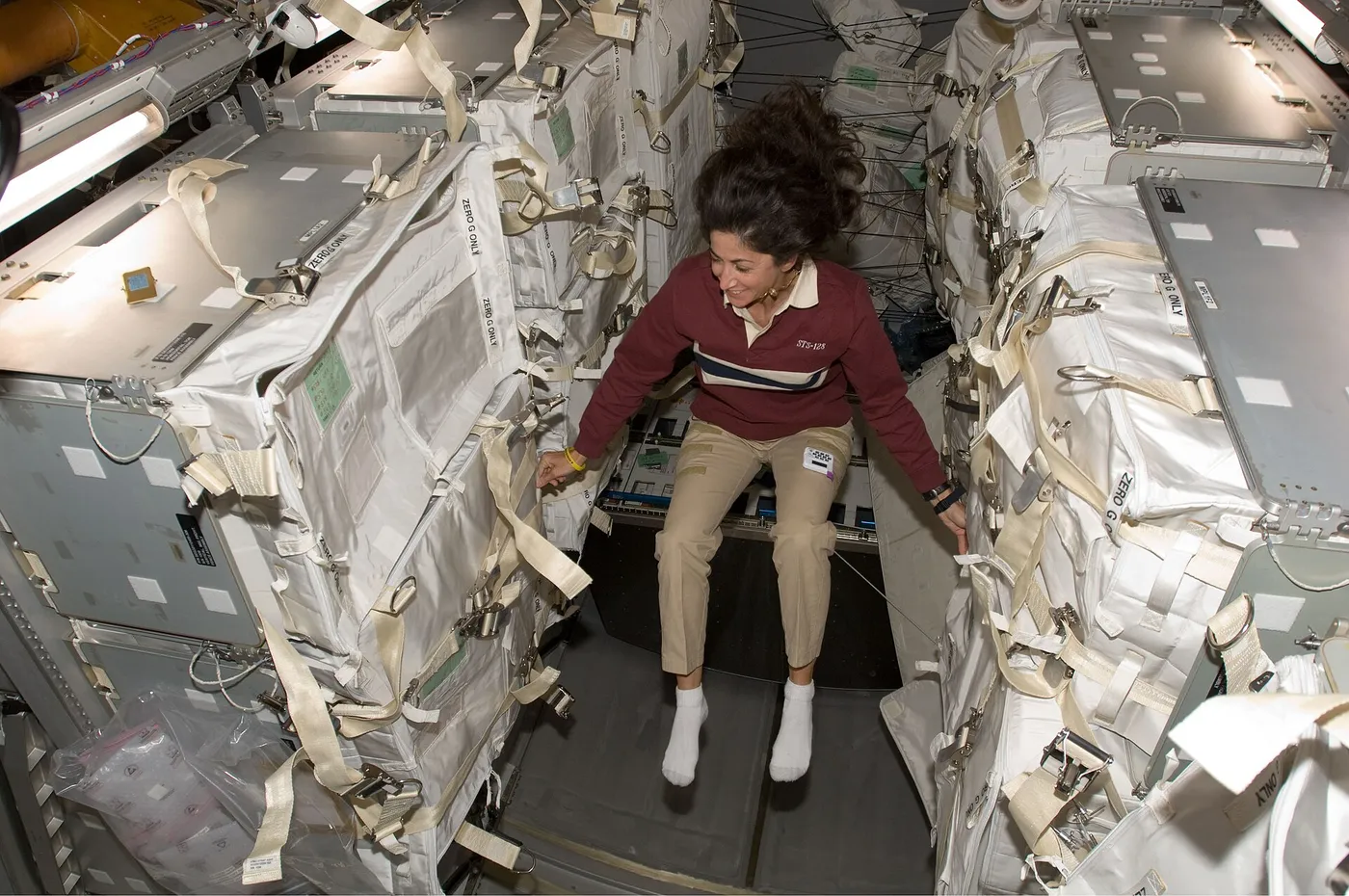
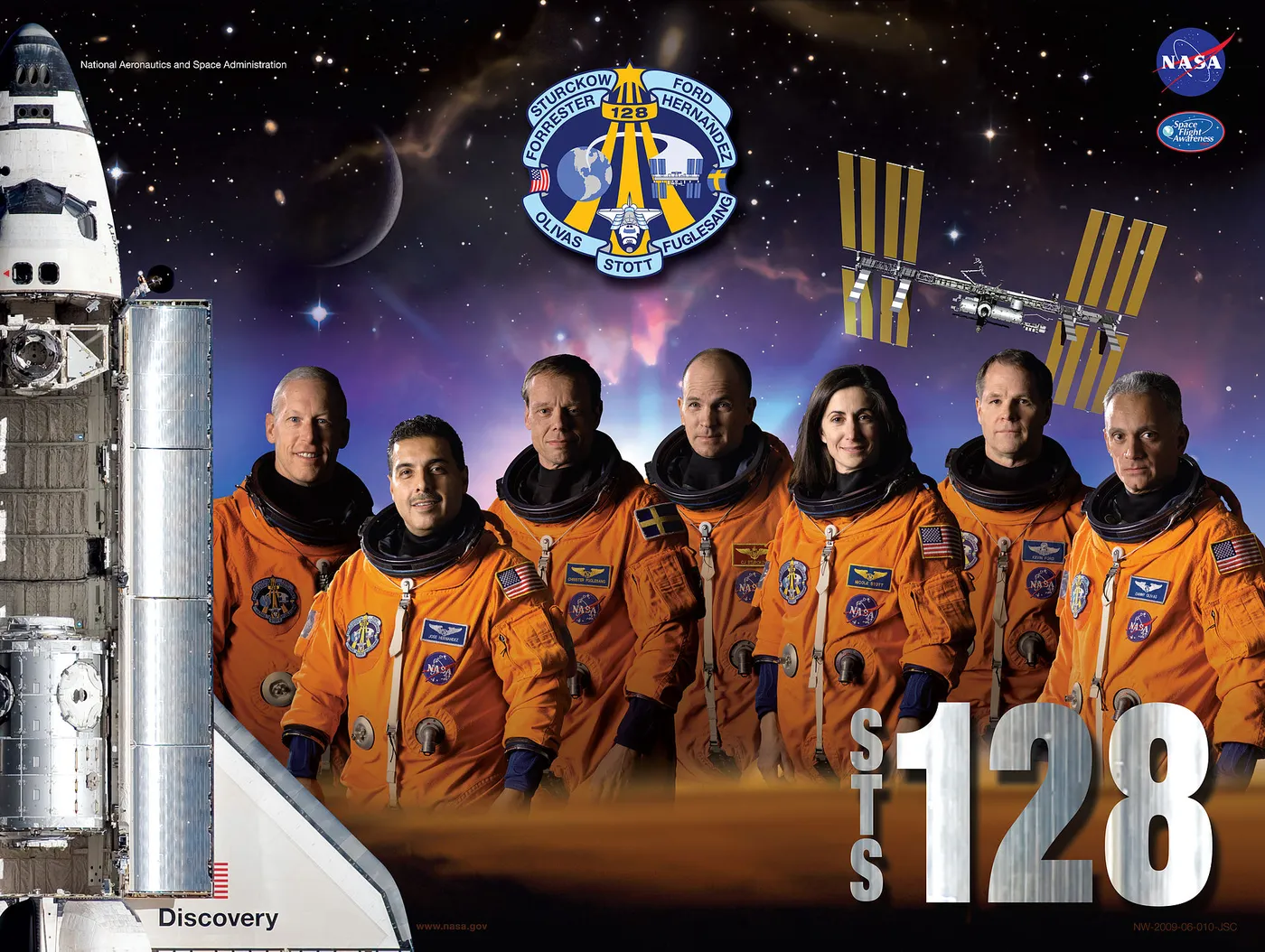
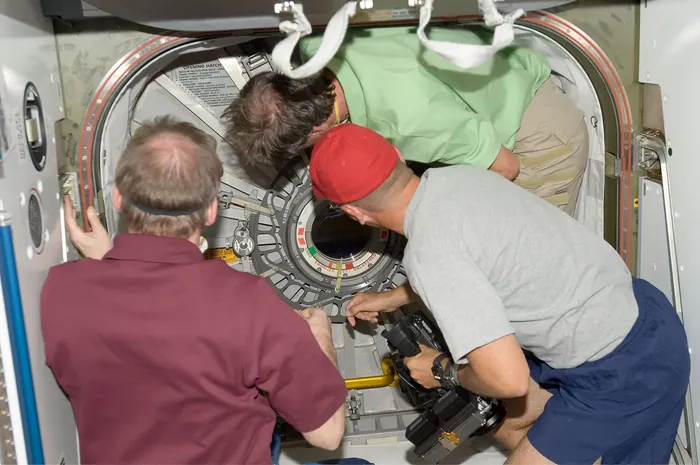
Discovery flew a resupply mission to the International Space Station in August 2009, delivering science equipment and provisions in an Italian cargo module to sustain the outpost's newly enlarged crew of six. The crew of seven transferred tons of supplies and returned finished experiments and used hardware to Earth.
Three spacewalks replaced an ammonia coolant tank and handled maintenance on the station's exterior. The mission exchanged a resident crew member, delivering a new flight engineer and returning astronaut Tim Kopra. Flights like this, less dramatic than the great assembly missions, were the logistical lifeblood of the station during its productive years, keeping it stocked, maintained and staffed while its laboratories ran a full slate of research for the international partnership.
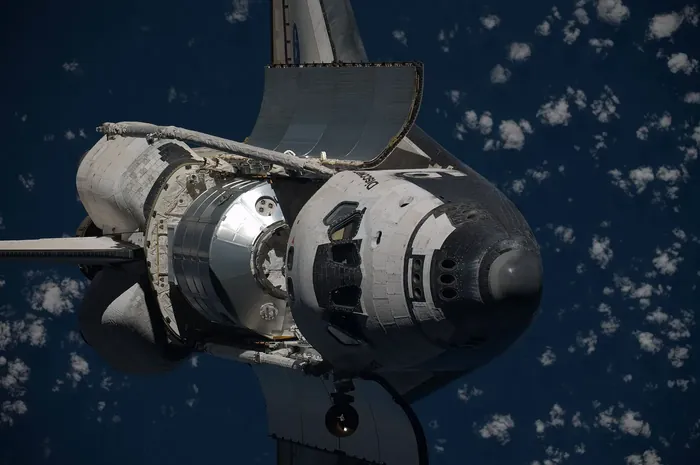
Discovery carried the Leonardo logistics module up in August 2009 loaded with the equipment of a station shifting from construction to full-time research: a new crew quarters, an air-purification unit, a freezer for biological samples, and a treadmill.
The treadmill had a name chosen by the internet. NASA had run an online poll to name a station module and the comedian Stephen Colbert had encouraged his audience to write him in, winning comfortably; the agency gave the module a different name and awarded Colbert the treadmill instead, backronymed into the Combined Operational Load Bearing External Resistance Treadmill. It became one of the most-used pieces of hardware aboard, because bone loss is the central medical problem of long flights.
The mission also rotated a crew member, bringing Timothy Kopra home and leaving Nicole Stott, and made three spacewalks to replace an ammonia tank and retrieve external experiments. Routine by 2009 — which was, after twenty-eight years, the point.